Parking an RV or boat outside through a Canadian winter exposes it to snow, ice, UV and moisture. Indoor storage at a commercial facility can be hard to find and expensive every season. That is why many owners build their own RV storage building in steel. This guide explains how to size and plan a steel RV or boat storage building, from door height to floor and permits.
Table of Contents
- Why steel works well for RV and boat storage
- Start with the height of your RV or boat
- Choosing the right building size
- Floor: slab or gravel?
- Winter storage, moisture and power
- Adding living space or a workshop
- Permits and zoning
- What affects the cost of an RV storage building
- Frequently Asked Questions
Why steel works well for RV and boat storage
- Tall, clear-span space. A steel building provides tall walls and an open interior with no posts to manoeuvre around.
- Large door openings. Wide, tall overhead doors are framed into the structure.
- Built for snow. The building is engineered for the snow and wind loads at your location.
- Low maintenance. Steel does not rot or attract pests, so it protects your investment for decades.
Start with the height of your RV or boat
Height is the most important measurement. Measure the tallest point, including air conditioners, antennas, ladders, a boat’s tower or windshield, and the trailer. In Ontario, the maximum legal height for a vehicle on the road is 4.15 m (about 13 ft 7 in), so large motorhomes and fifth-wheel trailers can be close to that.
As a guide:
- Door height. Allow at least a foot of clearance above your tallest unit. A 14 ft tall door is common for large motorhomes and fifth-wheels.
- Wall height. The wall must be taller than the door to leave room for the door header and the door mechanism. A 16 ft wall height is a common choice for RV storage.
- Door width. A 12 ft wide door is a minimum for most RVs. Wider doors make backing in much easier.
Our guide to overhead door sizes explains how door and wall heights work together.
Choosing the right building size
Measure the length of your RV or boat, including the hitch, and add room to walk around it. Then decide what else you want to store.
| Building size | What it fits |
|---|---|
| 20×40×16 | One trailer or motorhome up to about 35 ft |
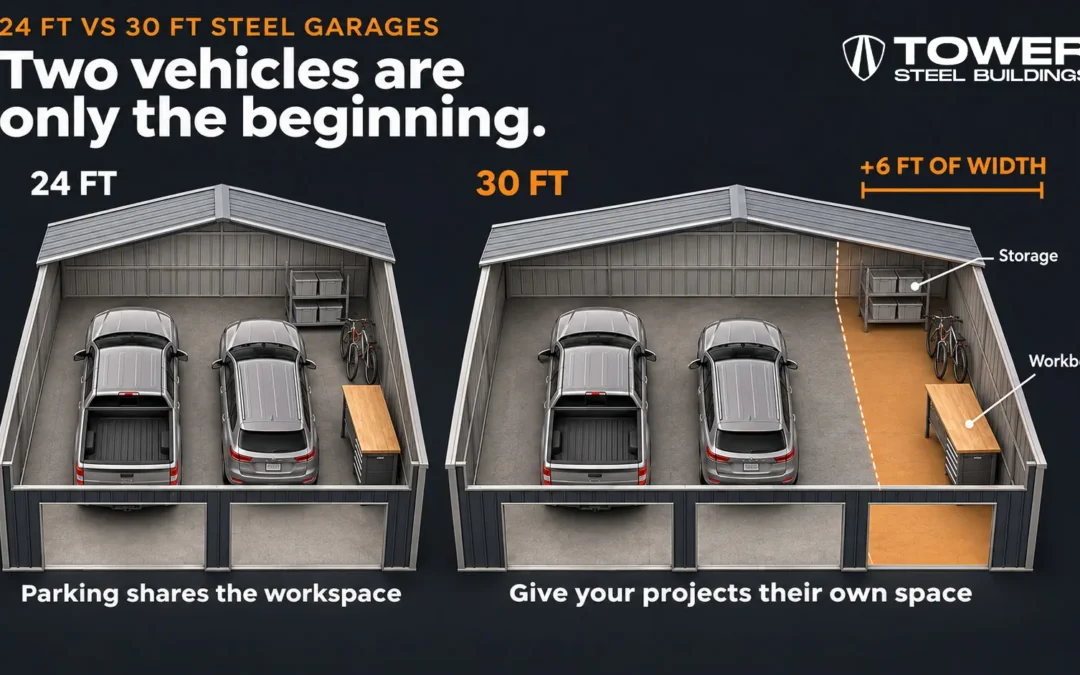
| 30×40×16 | One RV plus a vehicle, boat or storage |
| 30×50×16 | Longer RVs, or an RV plus a boat on a trailer |
| 40×60×16 | Two RVs, or RVs plus a workshop area |
If you store a boat with a mast, a tall tower or a long trailer, measure carefully. A drive-through building with doors at both ends can make long units much easier to move.
Floor: slab or gravel?
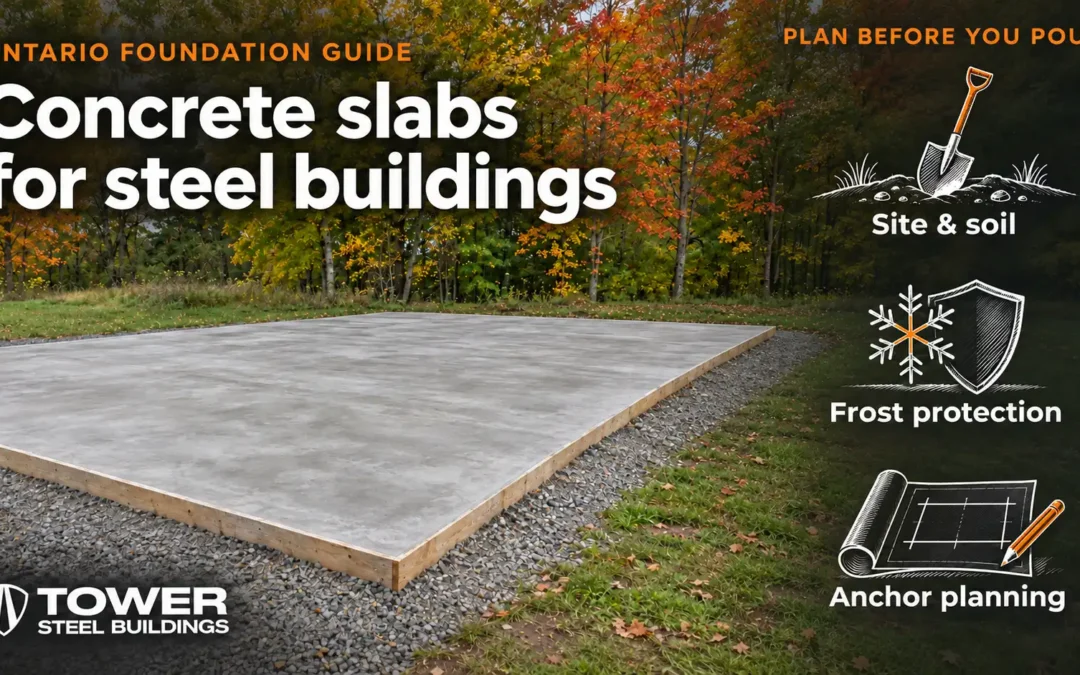
A concrete slab is cleaner, keeps moisture down and lets you do maintenance inside. A compacted gravel floor costs less but can let moisture rise into the building. If you choose a slab, make it thick enough for the weight of your RV. See our guide to concrete slabs for steel buildings.
Winter storage, moisture and power
- Condensation. An unheated steel building can still collect condensation on cold days. A condensation control liner or insulation on the roof helps protect your RV from drips. See steel building insulation in Ontario.
- Ventilation. Good airflow keeps humidity down and reduces the risk of mould inside the RV.
- Power. Outlets for battery maintainers, a dehumidifier and lighting are worth planning before the slab is poured.
- Heating. If you want to work on the RV in winter, plan for insulation and heating from the start.
Adding living space or a workshop
Many owners combine RV storage with a workshop or even living quarters. A taller building can include a mezzanine for storage, and a lean-to adds covered space for a boat, trailer or firewood. If you are considering a building with an apartment, read our guide to steel shop houses in Ontario.
Permits and zoning
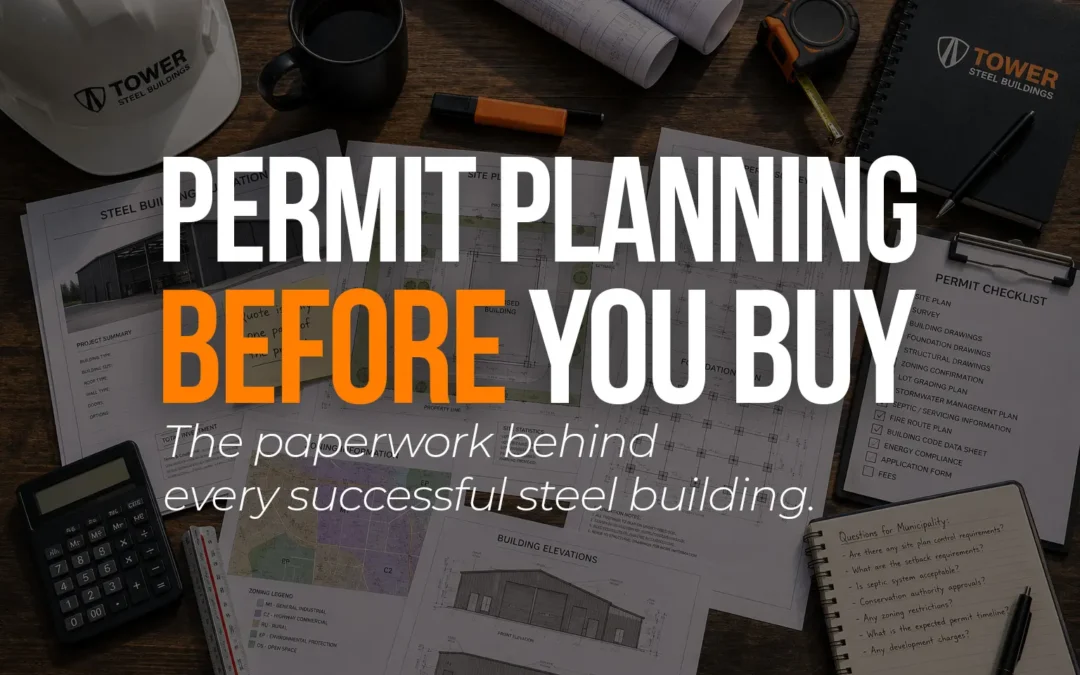
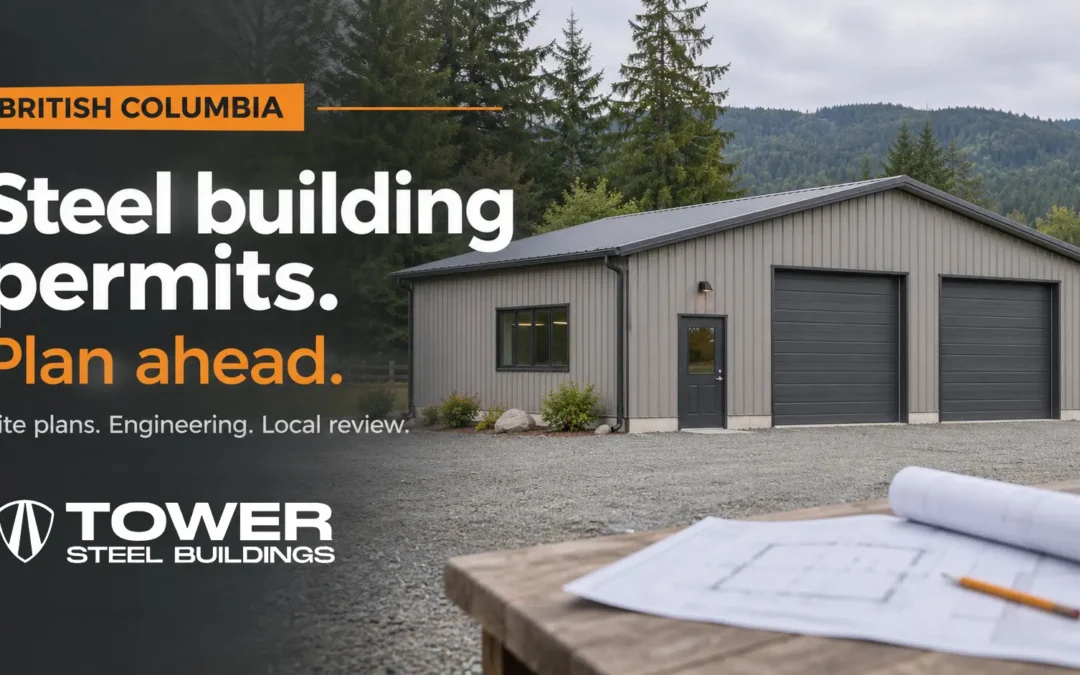
An RV storage building needs a building permit. Many municipalities limit the height and size of accessory buildings on residential lots, so a 16 ft wall height may not be allowed in some zones. Rural and agricultural zones are usually more flexible. Check your zoning by-law before you choose a size. Our guide to steel building zoning in Ontario explains what to ask.
If you are planning to rent storage space to others, that is a commercial use with different zoning and building requirements. See our self-storage steel building planning guide.
What affects the cost of an RV storage building
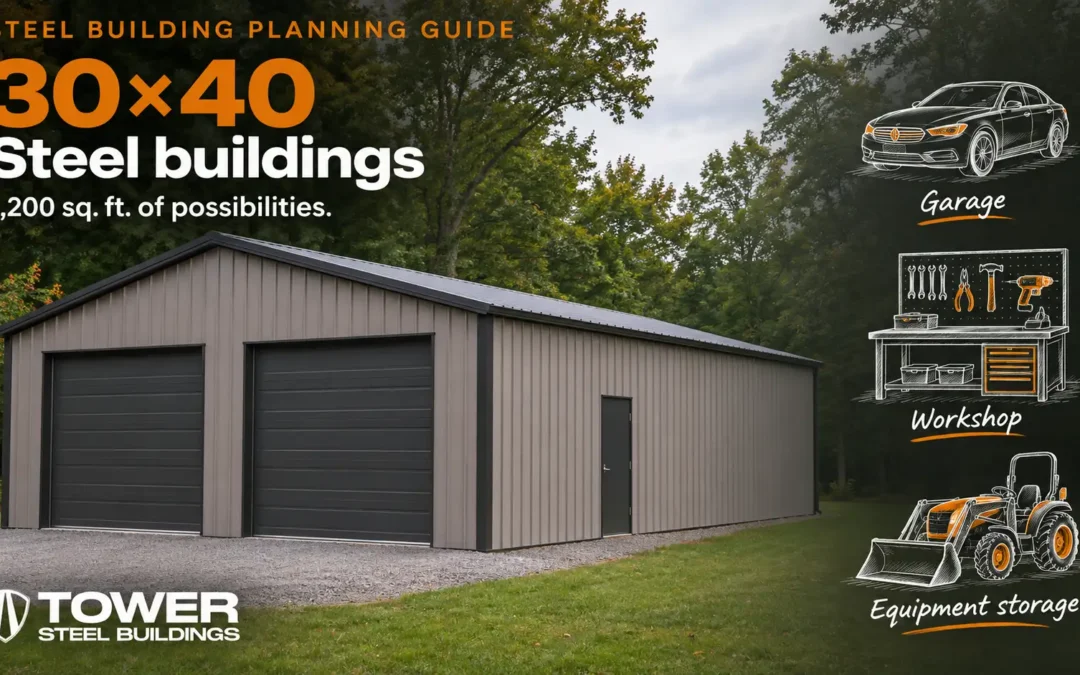
Every building is engineered for its site, so the price depends on your choices and location. The main factors are the size and wall height, the size of the overhead door, your local snow and wind loads, insulation and heating, and the foundation, erection and electrical work. Taller walls and large doors add more than most owners expect, so measure carefully and choose only the height you need. Our 30×40 steel building guide shows how height and doors change the design.
Frequently Asked Questions
How tall should an RV storage building be?
Many owners choose 16 ft walls with a 14 ft tall door. Measure your tallest unit, including the air conditioner and antennas, and allow at least a foot of clearance above it at the door.
What size building do I need for a 35 ft RV?
A building at least 40 ft long gives room for a 35 ft RV plus space to walk around it. A 30×40 or 30×50 building also leaves room for a vehicle, boat or workshop.
Does an RV storage building need a concrete floor?
Not always. A slab is cleaner and keeps moisture down, while gravel costs less. If you plan to work on the RV inside, a slab is the better choice.
Do I need a permit for an RV garage?
Yes. Check the height and size limits for accessory buildings in your zone, as tall RV buildings are not allowed on every property.
Planning an RV or Boat Storage Building?
Tower Steel Buildings supplies engineered truck garages and storage buildings for RVs, boats and trailers across Ontario and Canada. Share the size of your RV or boat, the door you need and your postal code, and we will prepare a quote engineered for your site.