

In New Brunswick, the first permit question is not only “Do I need a building permit?” It is “Who reviews this property, and what planning path applies before the steel package and foundation drawings move forward?”
Important: Tower Steel Buildings helps coordinate permit-ready steel building system documentation. Final approvals remain with the municipality, Regional Service Commission, authority having jurisdiction, building department, and applicable reviewers.
Get a Free Steel Building Quote
Your information will only be used to prepare and follow up on your quote.
On This Page
Use this page as a New Brunswick permit-path checklist before ordering steel or finalizing foundation drawings.
Use it before the project moves too far
It helps buyers understand the approval path before ordering steel, finalizing foundation drawings, setting anchor bolts, or scheduling construction.
The goal is simple: confirm the review path, site inputs, building use, and steel building documentation before the project becomes expensive to correct.
A steel quote is only useful when the assumptions are clear. If the building use, review authority, foundation reactions, or site conditions change later, the price and drawings may need to change too.
Information to prepare
- Property location or PID
- Municipality, rural district, or Regional Service Commission area, if known
- Intended building use
- Approximate width, length, and height
- Door sizes and locations
- Heated, unheated, insulated, or cold storage use
- Foundation status
- Site access, driveway, drainage, septic, well, or servicing concerns
- Residential, farm, commercial, industrial, or public-use project type
That matters because land-use planning, development approvals, building permit review, inspections, and outside agency requirements can be handled differently depending on the project location.
For steel buildings, the permit path should be confirmed before the package is treated as final. A warehouse, farm building, truck garage, workshop, mining building, cold storage facility, cannabis building, aircraft hangar, or container roof can each trigger different review questions.
What the reviewer may need to understand
- Building use, occupancy, and site access
- Driveway location, drainage, servicing, septic, or well locations
- Fire access, snow and wind assumptions, and exposure conditions
- Foundation reactions, anchor bolts, and foundation design inputs
- CSA A660 steel building system documentation where applicable
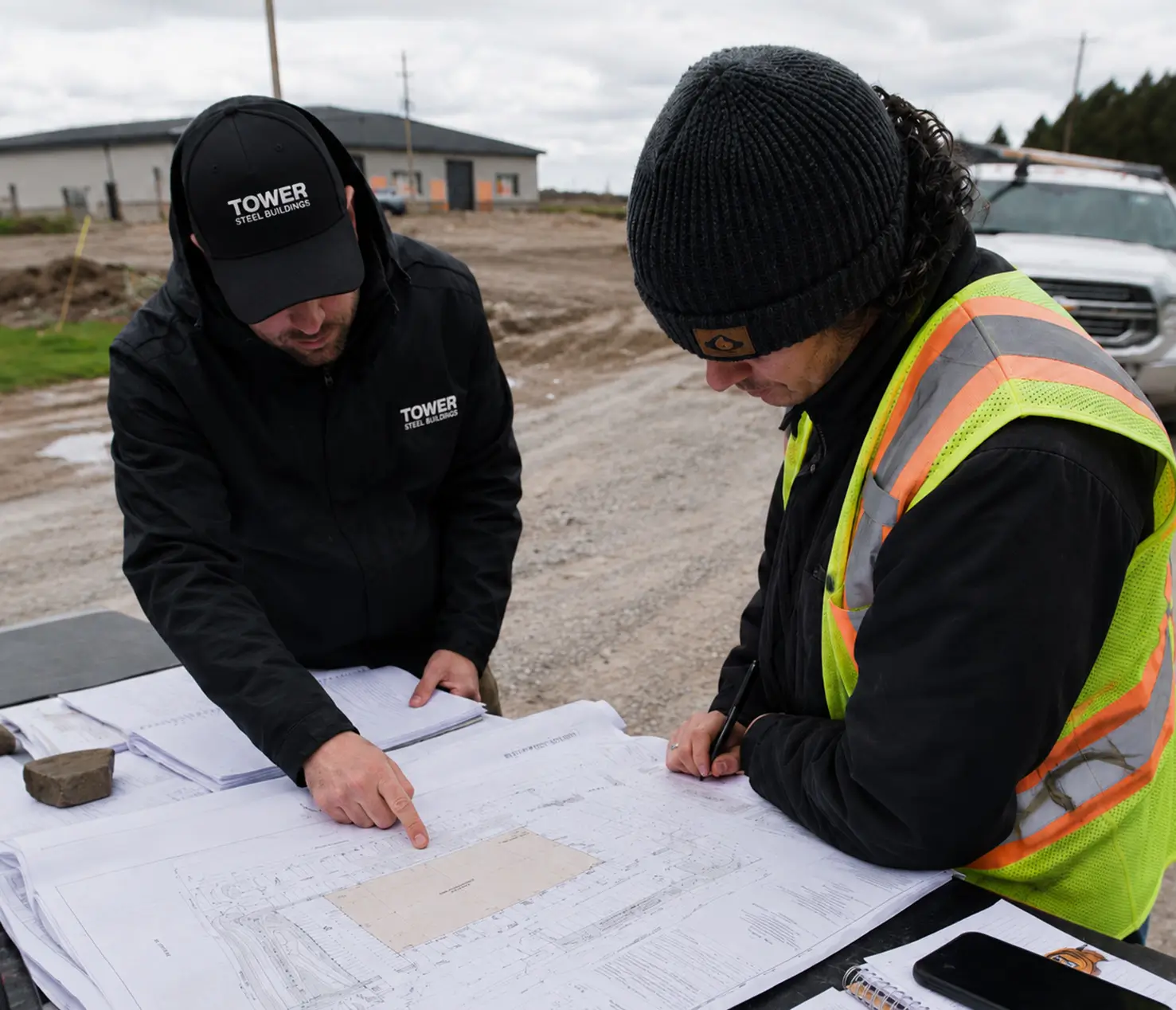
The purpose of this page is not to replace the municipality, Regional Service Commission, development officer, building inspector, or authority having jurisdiction. It is to help buyers understand what must be coordinated before submission so the project does not move into engineering, fabrication, foundation work, or construction scheduling with the wrong permit assumptions.
The first wrong assumption can control the whole project.
If the buyer assumes the wrong reviewer, the wrong development path, or the wrong site requirements, the file can stall before anyone seriously reviews the steel frame. Good permit-readiness starts with the property review path, not the building quote.
NBC 2020 + NECB 2020
Local Departments
Regional Service Commissions
RSCs can provide planning, development, and building inspection services depending on the community.
Development Officers
Land use, zoning, rural plans, access, setbacks, and development approval can come before building review.
Steel System Data
Foundation reactions, anchor bolts, CSA A660 documentation, and site conditions need early coordination.
Is the property inside a municipality?
Is the property in a rural district?
If yes, a Regional Service Commission, rural plan, development officer, or outside agency may be involved.
Does the use trigger extra review?
Commercial, agricultural, industrial, mining, cannabis, cold storage, truck garage, and public-use buildings may need deeper documentation.
Are site services resolved?
Driveway access, septic, well, drainage, fire access, watercourse, wetland, or utility issues can delay the building even when the steel package is ready.
Do not treat a steel quote as a permit approval.
A pre-engineered steel building can still be delayed if the site plan, use, reviewer, development permit, foundation design, or supporting documents are not aligned with the actual New Brunswick approval path.
| Property Situation | Likely Review Path | Why It Changes the Steel Building File |
|---|---|---|
| City or incorporated municipality | Local planning/building department | Local zoning, permit intake, fees, inspections, servicing, and fire/access requirements may apply. |
| Rural district | Regional Service Commission / development officer | Rural plans, site access, septic, wells, drainage, and agency approvals may need to be resolved early. |
| Commercial or industrial site | Building inspector, planning authority, servicing/fire/access reviewers | Occupancy, access, loading, fire approach, parking, drainage, and utilities can change the required documents. |
| Farm or rural business site | RSC or local planning authority | Use classification, building placement, driveway access, ventilation, drainage, and service connections can affect approval. |
| Approval Layer | What It Checks | Why Steel Building Buyers Should Care |
|---|---|---|
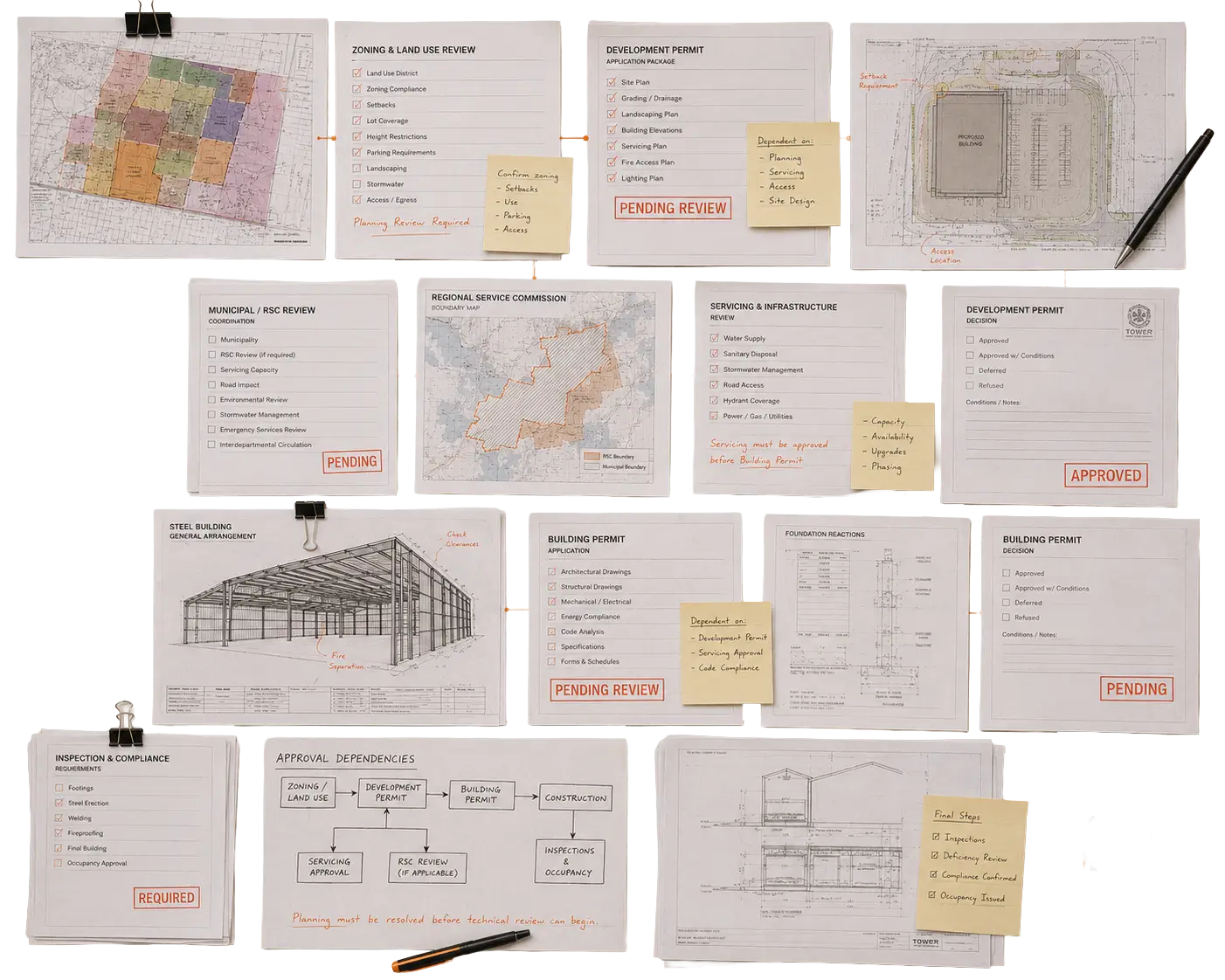
| Zoning / Land Use | Use, setbacks, height, lot coverage, access, parking, rural plan rules | If the use or location is not allowed, engineered drawings will not fix it. |
| Development Permit / Planning Review | Site layout, land use, driveway access, servicing, drainage, variances | Controls whether the project can proceed before technical building review. |
| Building Permit | Code compliance, structural drawings, foundation drawings, fire/life safety, energy where applicable | This is where incomplete steel data, missing reactions, and unclear use create review comments. |
| Related Approvals | Septic, well, driveway, environmental, fire, utility, right-of-way where applicable | A steel building can be delayed by site approvals outside the building department. |
| Inspections / Closeout | Construction inspections, field review, final inspection, occupancy where applicable | Missing documents or unresolved construction changes can delay use of the building. |
Confirm property location and reviewer
Confirm zoning, land use, and rural plan requirements
Check permitted use, setbacks, height, lot coverage, driveway access, parking, servicing, and any development approval path before engineering moves too far.
Define building use and site constraints
Clarify whether the project is farm, warehouse, workshop, truck garage, commercial, industrial, mining, cannabis, cold storage, or another use with added review requirements.
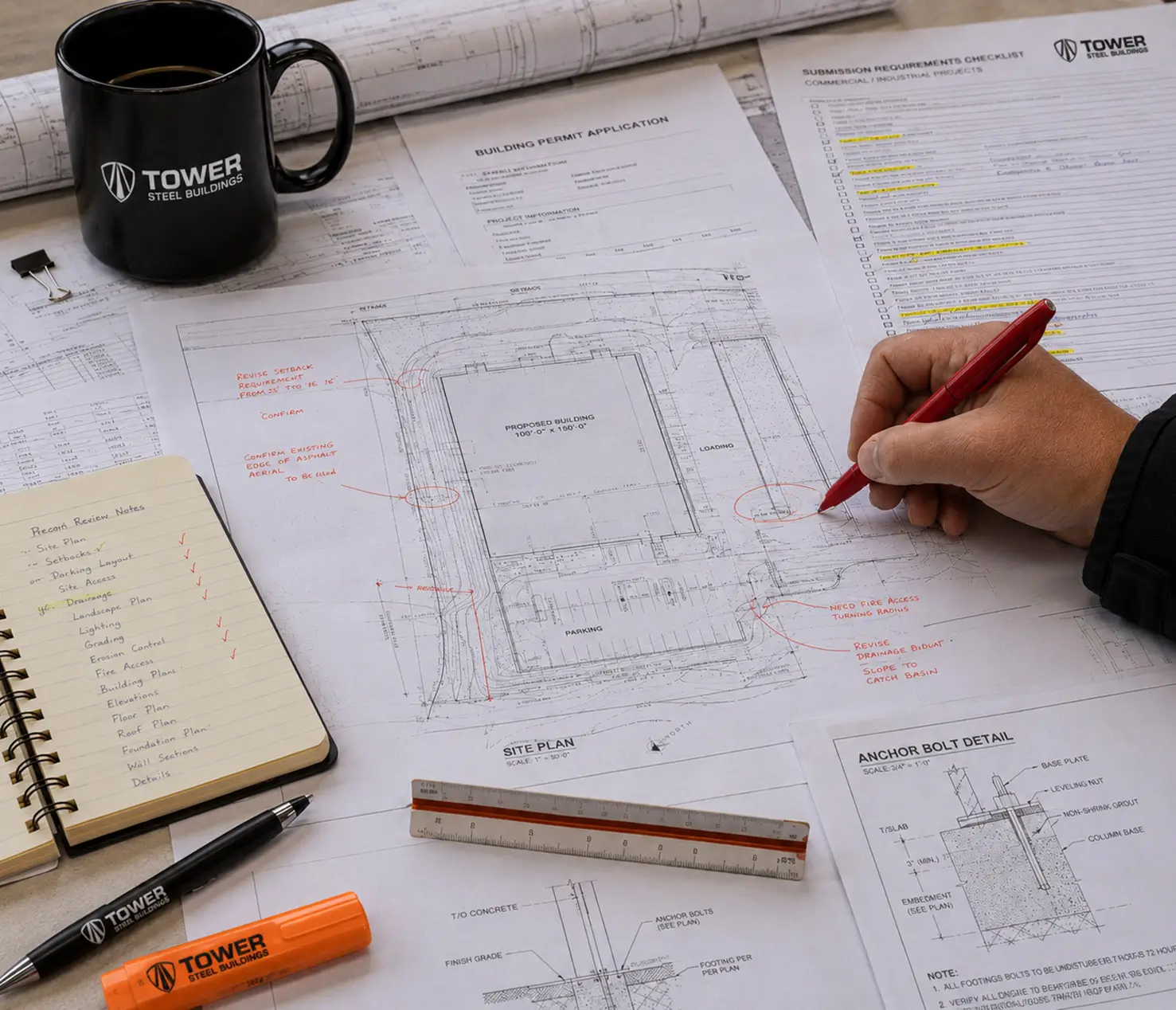
Prepare site plan and supporting inputs
Show building location, access, drainage, utilities, wells, septic, watercourses, wetlands, existing structures, and relevant site features.
Coordinate steel drawings, reactions, and foundations
Align frame layout, design criteria, foundation reactions, anchor bolts, frost protection, slab/footings, and soil assumptions before submission.
Submit, respond, build, and close out properly
Submit the permit package, answer review comments, build only after required approvals, and complete inspections or closeout steps required by the reviewer.
The wrong review path starts delays
New Brunswick projects can involve a municipality, Regional Service Commission, rural district process, development officer, or building department. If the wrong route is assumed, the file can be incomplete before engineering review begins.
The first step is confirming who controls the property review before the building package is treated as final.
Rural site conditions change design
Snow loads, wind exposure, frost, drainage, wells, septic, access roads, ditches, watercourses, and soil assumptions can affect frame design, foundation reactions, anchor bolts, and cladding strategy.
A rural site should not be treated as a generic empty lot.
Incomplete steel data creates rework
Missing foundation reactions, unclear occupancy, incomplete site plans, late door changes, weak drainage information, or generic steel documents can lead to resubmission, foundation changes, and contractor confusion.
The cheapest early shortcut often becomes the most expensive correction.
Wrong authority path
The buyer assumes the municipality reviews the file when the property actually involves an RSC, rural district process, development officer, or outside agency.
Development approval not confirmed
Land use, setbacks, rural plan rules, site access, or servicing requirements are discovered after the steel package has already been shaped.
Weak site plan
The plan does not clearly show the building footprint, access, wells, septic, drainage, utilities, existing structures, watercourses, wetlands, or property constraints.
Foundation data missing
Foundation drawings are started without final reactions, uplift, shear, anchor bolt layout, frost protection assumptions, or soil/site information.
Building use too vague
The reviewer cannot tell whether the project is farm storage, commercial, industrial, workshop, truck garage, warehouse, mining, cannabis, cold storage, or public use.
CSA A660 misunderstood
Steel building system documentation supports review confidence, but it does not replace local approval, site-specific engineering, foundation design, or a complete permit package.
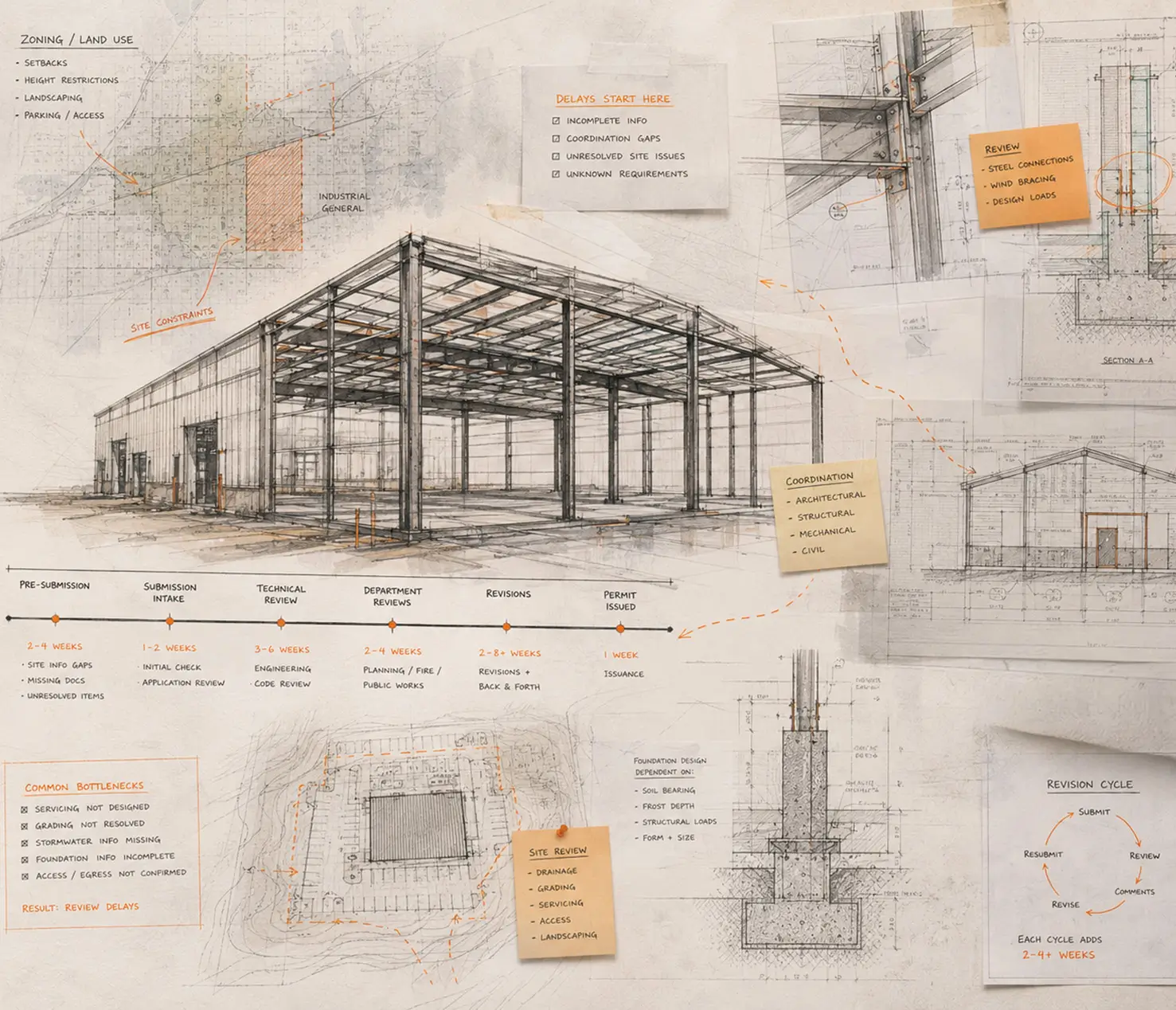
Timeline problems usually start before submission.
Missing site information, unclear use, weak drawings, unconfirmed drainage, outside agency requirements, or foundation assumptions can create review comments before the project ever reaches construction.
A warehouse, contractor shop, fleet garage, manufacturing facility, cannabis building, cold storage building, or retail-support building may all follow different review paths depending on use, occupant load, site layout, and local authority requirements.
Commercial review can affect the building package
- Occupancy classification and use description
- Exit, washroom, accessibility, and fire/life safety requirements where applicable
- Mechanical ventilation, energy, drainage, and servicing questions where applicable
- Loading, access, parking, truck movement, and inspection coordination
Rural land does not mean permit-free.
The review may simply move from a municipal counter to a Regional Service Commission, development officer, building inspector, or outside agency. Confirm the path before ordering steel or finalizing foundation drawings.
A pre-engineered steel building is not automatically permit-approved.
A kit can still be delayed if the site plan, land use, development approval, foundation reactions, anchor bolts, drainage, access, or CSA A660-related documentation does not match local review requirements.
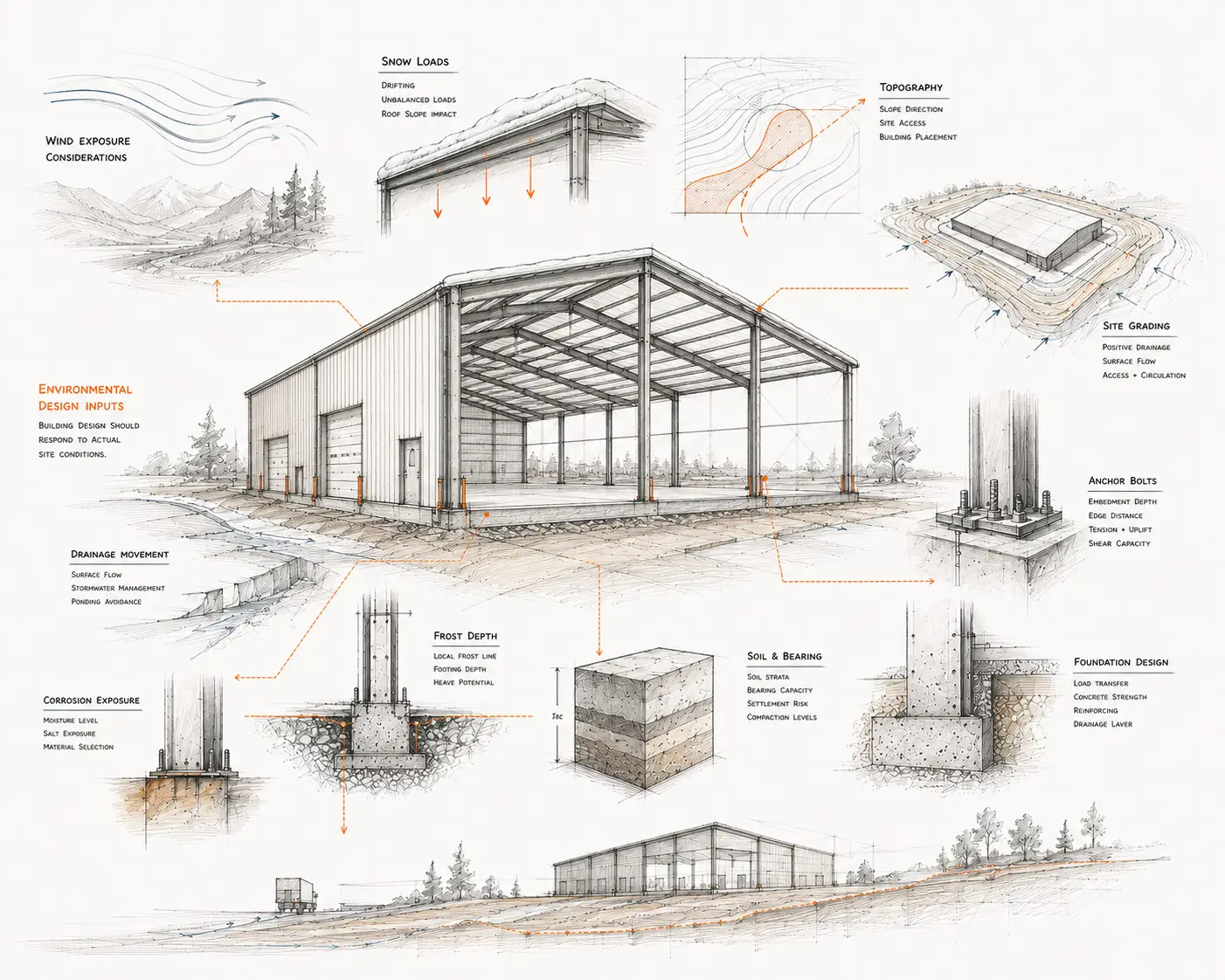
Site conditions are design inputs.
Snow, wind, frost, drainage, soil, corrosion exposure, access, and servicing should be reviewed before the building package and foundation assumptions are treated as final.
| Document / Input | Why It Matters |
|---|---|
| PID and civic address | Identifies the property and helps confirm the correct review path. |
| Site plan | Shows location, setbacks, access, roads, structures, drainage, wetlands, watercourses, utilities, and site features. |
| Building drawings | Communicates building size, elevations, sections, use, openings, doors, and code-related details. |
| Steel building drawings | Shows frame layout, bracing, cladding, openings, design criteria, and structural system data. |
| Foundation reactions | Allows the foundation designer to coordinate column loads, uplift, shear, footings, and anchor bolts. |
| Foundation drawings | Coordinates slab, footings, frost protection, anchor bolts, soil assumptions, and drainage. |
| CSA A660 documentation | Supports steel building system review and manufacturer conformance where applicable. |
| Drainage / grading information | Addresses runoff, erosion, water movement, and impact on adjacent properties. |
| Servicing and access details | May include driveway, fire access, septic, well, utilities, truck movement, or right-of-way information. |
| Outside agency approvals | May apply for access, environmental, watercourse, wetland, fire, utility, or other site-specific issues. |
Property location
Reviewer and planning path
Development and site review
Steel and foundation coordination
Permit submission and review
| Area / Review Path | Likely Permit Concern | Buyer Action |
|---|---|---|
| Fredericton / Capital Region | building permit intake, rural district review nearby, development approvals, site plans | Confirm the exact local government, Capital Region Service Commission, rural district, or building department review path for the property before preparing final drawings. |
| Moncton / Dieppe / Southeast Region | Municipal permit intake in Moncton or Dieppe; Plan360 / Southeast Regional Service Commission review for many surrounding communities and rural areas | Confirm the exact property jurisdiction before assuming whether the file goes through Moncton, Dieppe, Plan360, Southeast RSC, or another local authority. |
| Saint John / Fundy Region | building/development permits, servicing, access, site plan, change of use | Confirm if both development and building permit steps apply. |
| Miramichi / Greater Miramichi area | local building/development review, use classification, servicing, access | Confirm permit intake and inspection process before ordering steel. |
| Bathurst / Northern NB | winter conditions, frost, access, industrial/commercial use, local review | Confirm snow/frost assumptions and site servicing before foundation design. |
| Edmundston / Northwest NB | local planning, access, winter conditions, industrial or agricultural use, servicing | Confirm local review path and site information before finalizing the steel package. |
| Rural New Brunswick | RSC review, rural plan rules, septic, wells, drainage, access, outside agency approvals | Resolve site services and approval path before finalizing steel and foundation drawings. |
Clear-span frames
Large open interiors concentrate loads through fewer frame lines and require proper reaction and foundation coordination.
Foundation reactions
Column loads, uplift, shear, frost protection, slab edges, footings, and anchor bolts must be coordinated before concrete planning.
Snow and wind exposure
New Brunswick projects may face heavy snow, drifting, exposed rural sites, coastal wind, and uplift conditions.
Rural drainage and servicing
Access, septic, wells, ditches, drainage, truck movement, and fire access can affect permit readiness.
Use and occupancy
Farm, warehouse, workshop, commercial, industrial, mining, cannabis, cold storage, and public-use buildings can trigger different review requirements.
CSA A660 documentation
CSA A660 supports quality and permit-review confidence for steel building systems, but it does not replace local approval or foundation design.
Garages
Setbacks, driveway access, slab design, openings, storage use, and heating plans should be defined early.
Workshops
Equipment, ventilation, occupancy, fire separation, services, and slab loads can change the permit package.
Truck Garages
Large doors, drainage, floor loading, vehicle movement, ventilation, fire access, and servicing can affect review.
Commercial Buildings
Parking, accessibility, fire/life safety, energy, occupancy, and site planning usually add approval layers.
Warehouses
Clear span, storage height, loading, truck access, fire protection, and drainage shape review.
Farm Buildings
Agricultural use, zoning, ventilation, moisture, livestock/equipment storage, and rural servicing must be clear.
Aircraft Hangars
Large openings, door loads, wind exposure, clearances, foundations, and operational movement must be integrated.
Mining Buildings
Heavy equipment, industrial use, fire access, ventilation, structural loads, and site access can increase complexity.
Cannabis Buildings
Security, ventilation, moisture control, energy, mechanical systems, and occupancy details require early planning.
Cold Storage
Thermal envelope, condensation, slab details, door strategy, energy, and moisture control affect review.
Container Roofs
Support conditions, anchorage, uplift, site use, foundations, and code treatment must be confirmed before ordering.
Custom Buildings
Custom spans, unusual openings, mezzanines, cranes, mixed uses, and site constraints need stronger documentation.
What Tower Steel Buildings Can Help Coordinate
- Steel building system scope, use, and size
- Snow, wind, exposure, and opening coordination
- Foundation reactions and anchor bolt coordination
- CSA A660 steel building system documentation planning
- Permit-readiness questions before submission
- Drawing package alignment with buyer, contractor, and foundation designer
What Remains With the Municipality, RSC, or AHJ
- Final zoning and development decisions
- Building permit approval
- Permit fees and timelines
- Inspection requirements
- Outside agency approvals
- Occupancy or final approval where applicable
New Brunswick Building Code
GNB building code framework and local department responsibility.
Planning and RSC Guidance
GNB guidance on local government and Regional Service Commission planning and development services.
NB Regulation 2025-19
Official regulation updating adopted code references to 2020 and coming into force May 1, 2025.
CSA A660 Certification
CWB explanation of CSA A660 for steel building systems and permit-review support.
Steel Buildings New Brunswick
CSA A660 Steel Buildings
Agricultural Steel Buildings
Truck Garages
Steel Building Cost in Canada
Steel Building Permits Ontario
Commercial Steel Buildings
Cold Storage Steel Buildings
Steel Building Foundation Drawings
Steel Building Permits Nova Scotia
Steel Warehouses
Container Roof Systems
1. What is a steel building permit in New Brunswick?
A steel building permit is local or regional approval to construct a steel building based on submitted drawings, site information, building use, code requirements, and local review conditions.
Depending on the property, the review may involve a municipality, Regional Service Commission, development officer, building department, local planning authority, or authority having jurisdiction.
2. Do steel buildings need permits in New Brunswick?
New permanent steel buildings in New Brunswick commonly require local or regional review before construction.
Many projects may require development approval, building permit review, or both depending on location, use, size, servicing, foundations, drainage, access, and site conditions.
3. Who reviews steel building permits in New Brunswick?
The reviewer may be a local municipality, Regional Service Commission, development officer, local planning authority, building department, or authority having jurisdiction.
The correct review path depends on the property location and local service arrangement. A project inside a municipality may not follow the same process as a rural district property.
4. What building code applies to steel buildings in New Brunswick?
New Brunswick’s current building code guidance identifies the National Building Code of Canada 2020 and the National Energy Code for Buildings 2020 as adopted code references, with both adopted at energy efficiency tier two. The exact energy-code path depends on the building type, occupancy, scope, and whether the project is subject to NECB or other applicable energy provisions.
Local building departments remain responsible for issuing permits and conducting inspections. Steel building buyers should also confirm local planning, zoning, development approval, site servicing, drainage, foundation, and outside-agency requirements where applicable.
5. Should zoning and the site plan be checked before ordering a steel building?
Yes. Zoning, land use, setbacks, driveway access, drainage, servicing, rural plan requirements, and site constraints should be checked before the steel package is treated as final.
These items can affect building placement, foundation planning, access design, drainage requirements, and permit submission documents.
6. What is the difference between a development permit and a building permit?
Development approval checks land use, building placement, setbacks, access, drainage, servicing, parking, rural plan rules, and whether the proposed use is allowed on the property.
A building permit checks technical construction documents, code compliance, structural design, foundations, fire/life safety, energy requirements where applicable, and related building requirements.
7. How long does a steel building permit take in New Brunswick?
There is no single fixed timeline. Timing depends on the reviewing authority, application completeness, development approval, zoning, site plan quality, servicing, drainage, foundation drawings, occupancy complexity, and outside-agency review where applicable.
A simple storage building with a complete file may move differently than a commercial warehouse, truck garage, cold storage facility, cannabis building, or industrial steel building.
8. Do rural New Brunswick properties need permits?
Rural land does not automatically remove permit requirements.
Rural projects may be reviewed by a Regional Service Commission, development officer, building inspector, local planning authority, or other authority depending on local plans, use, access, servicing, drainage, septic, wells, watercourses, wetlands, and site conditions. New Brunswick states that RSCs provide local land-use planning, development services, and building inspection services to all rural districts and some local governments.
9. What documents are needed for a steel building permit?
Common documents may include a site plan, property identification, building drawings, steel building drawings, foundation drawings, foundation reactions, anchor bolt information, drainage details, servicing details, and outside approvals where applicable.
A serious steel building file usually needs more than a sales drawing or standard building sketch.
10. Do agricultural steel buildings need permits in New Brunswick?
Agricultural steel buildings may still require development and building review.
Farm use can affect zoning, rural plan compliance, driveway access, ventilation, servicing, drainage, moisture control, equipment clearance, foundation design, and structural documentation requirements.
11. Do I need engineered foundation drawings for a steel building in New Brunswick?
For serious permanent steel buildings, foundation drawings are commonly needed so footings, slab, frost protection, anchor bolts, and steel column reactions are coordinated correctly with the building system and site conditions.
Foundation design should match the actual steel building reactions, not a generic slab assumption.
12. Can I order a steel building before permit approval?
Ordering steel before the review path, development approval, building use, foundation reactions, and site conditions are clear can create redesign and resubmission risk.
Ordering early may be done at the buyer’s risk, but the steel package should be coordinated with the actual property, approval path, foundation design, and intended use before the project moves too far.
13. Can I pour concrete before a steel building permit is approved?
Do not pour concrete unless the required permit, staged approval, or written direction for that stage has been issued by the reviewing authority, and the foundation design, anchor bolt layout, and permit conditions are clear.
Pouring too early can create expensive correction work if the final reactions, frost assumptions, anchor bolt layout, soil conditions, or approved drawings change before erection.
14. Why do generic steel kits get questioned during permit review?
Generic steel kit information may not show site-specific loads, building use, foundation reactions, anchor bolts, openings, bracing, drainage, fire access, or local review requirements.
Reviewers often need project-specific drawings and documentation, not only a sales layout or standard building sketch.
15. Why do steel building projects get redesigned after purchase?
Redesign can happen when land use, building use, opening locations, snow or wind assumptions, foundation reactions, anchor bolts, drainage, access, or site conditions were not confirmed before the steel package was purchased or finalized.
Common triggers include larger doors, changed occupancy, missing foundation data, different exposure conditions, site plan comments, or added municipal requirements.
16. Why do steel building costs increase after permit review starts?
Costs can increase when review comments require revised drawings, foundation changes, drainage updates, added site information, outside approvals, fire or accessibility changes, energy details, or re-coordination between the buyer, steel supplier, foundation designer, and contractor.
Most steel building cost overruns start when the building, foundation, site, use, and permit package are not aligned early.
17. How do coastal wind, snow, frost, and corrosion affect steel buildings?
Snow, drifting, wind exposure, frost depth, moisture, drainage, and corrosion risk can affect frame design, cladding strategy, foundation design, anchor bolts, coatings where applicable, fasteners, ventilation, and long-term maintenance planning.
These conditions should be treated as design inputs, not afterthoughts.
18. Can a steel building be used for commercial occupancy?
Yes, but the property must allow the proposed commercial use, and the building must be reviewed for the intended occupancy.
A steel building used as a warehouse, contractor shop, fleet garage, manufacturing facility, commercial garage, cannabis building, cold storage building, or retail-support building may follow a different review path than a private storage building or farm-use structure.
Before ordering steel, confirm zoning, land use, site access, parking, servicing, occupant load assumptions, and whether the project needs development approval before building permit review.
19. What commercial code issues affect steel building permits?
Commercial steel buildings commonly require coordination for the technical construction side of the project.
This may include occupancy classification, barrier-free accessibility, fire separations, exits, emergency lighting, washrooms, mechanical ventilation, energy compliance, fire protection, structural loading, inspections, and trade permits where applicable.
These items can affect the building layout, door locations, wall assemblies, foundation planning, mechanical design, drawings, inspections, and approval path.
20. Does CSA A660 replace a steel building permit?
No. CSA A660 supports steel building system documentation and manufacturer conformance, but it does not replace local approval, site-specific engineering, foundation design, or building permit review.
A municipality, Regional Service Commission, building department, or authority having jurisdiction may still require site plans, foundation drawings, steel reactions, anchor bolt information, drainage details, energy information, trade permits where applicable, and inspections. CSA A660 was developed to help enforcement officials review steel building system permit submissions, but it is not a permit approval by itself.
21. Can Tower Steel Buildings help with steel building permit-readiness?
Tower Steel Buildings can help coordinate permit-ready steel building system documentation and key design inputs connected to the building package.
This may include steel building scope, building use, size, design criteria, foundation reactions, anchor bolt information, CSA A660 steel building system documentation, and permit-readiness questions before submission.
Final approval, permit acceptance, inspections, timelines, and local requirements remain with the municipality, Regional Service Commission, local planning authority, building department, or authority having jurisdiction.
- Municipality, RSC, or rural district review path checked early
- Development and building permit sequence reviewed before final drawings
- Site access, drainage, servicing, septic, wells, and rural constraints reviewed
- Foundation reactions, anchor bolts, snow, wind, and site conditions coordinated