Foundation drawings are where a steel building becomes buildable
Foundation drawings in Nova Scotia are not just a concrete detail. For a steel building, they are the link between the engineered steel frame, the ground conditions, the anchor bolts, the site plan, and the building permit review.
A buyer may ask:
Do I need foundation drawings for my steel building?
The better question is:
Can the foundation safely support the exact steel building being supplied for the actual Nova Scotia site?
That difference matters.
Most steel building foundation problems do not start because the concrete contractor did poor work. They start earlier, when the foundation is designed before the final steel reactions are confirmed, soil conditions are assumed, anchor bolts are not coordinated, drainage is ignored, or the site plan does not match the structural drawings.
A steel building can have strong frames, good cladding, proper engineering, and a clean permit application, but if the foundation drawings are wrong, the project can still fail in review or stop during erection.
Nova Scotia’s Building Code Regulations adopted the 2020 National Building Code, 2020 National Energy Code for Buildings, 2020 National Plumbing Code, and 1995 National Farm Building Code, as amended by Nova Scotia, as part of the Nova Scotia Building Code framework effective April 1, 2025, with later staged amendments scheduled after the initial adoption period.
For serious steel building buyers, the practical lesson is simple:
A foundation drawing is not complete because it shows concrete. It is complete when it supports the exact building, on the exact site, with the correct reactions, anchor bolts, soil assumptions, frost considerations, drainage strategy, and construction sequence.
Quick Answer
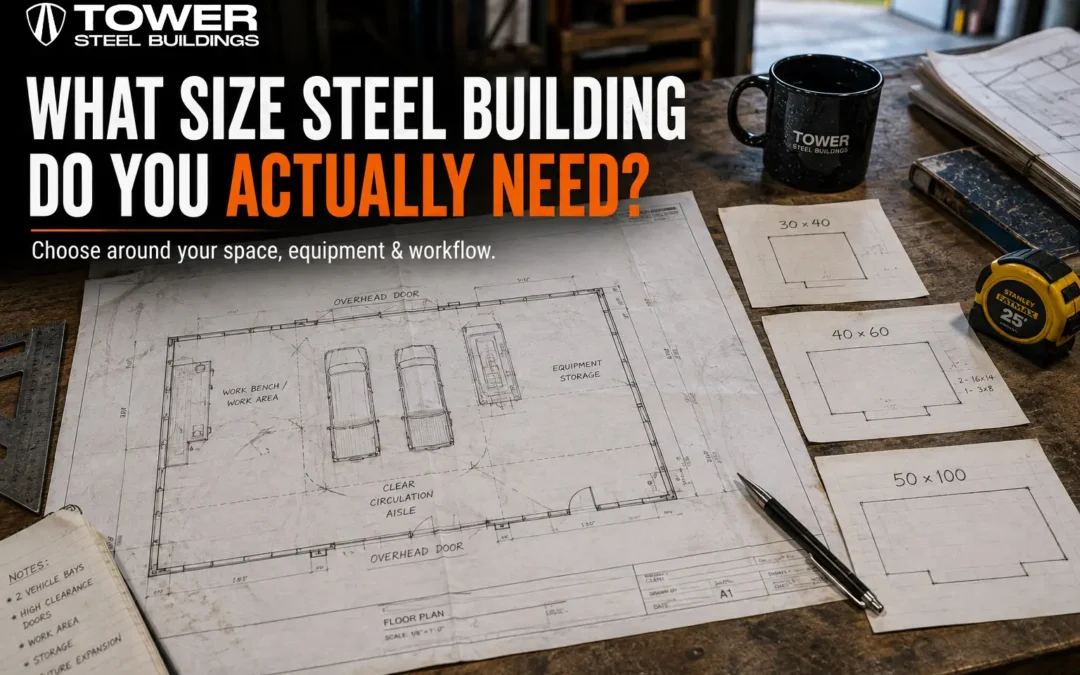
Foundation drawings for a steel building in Nova Scotia usually show the footing layout, slab details, foundation walls or piers, reinforcement, concrete specifications, anchor bolt placement, column grid, bearing assumptions, frost protection, drainage considerations, and structural connection between the steel frame and the ground.
For steel buildings, foundation drawings must match the steel building drawings, final steel reactions, anchor bolt layout, site plan, soil assumptions, grading, drainage, and building use. A generic foundation detail is not enough for serious commercial, agricultural, industrial, truck garage, warehouse, workshop, or large-span steel building projects.
Foundation Drawings Nova Scotia: Simple Definition
Foundation drawings in Nova Scotia are technical construction drawings. For many serious steel building projects, they are engineered drawings that show how a proposed building will be supported by footings, piers, slabs, walls, reinforcement, concrete, anchor bolts, and soil-bearing conditions.
For steel buildings, foundation drawings must prove that the foundation can support the steel frame reactions and connect correctly to the anchor bolt layout, base plates, site conditions, frost requirements, drainage strategy, and approved permit drawings.
What This Guide Covers
This guide explains what serious steel building buyers in Nova Scotia need to understand about foundation drawings.
In this guide, you will understand:
- what foundation drawings are
- why steel buildings need coordinated foundation design
- what foundation drawings usually include
- why steel reactions matter
- why anchor bolt layouts are critical
- when geotechnical information may be needed
- how frost, drainage, grading, and coastal exposure affect foundation design
- how foundation drawings connect to the building permit package
- why supplier drawings alone are not enough
- what happens when foundation drawings are not coordinated before concrete is poured
This page is written for buyers planning steel buildings in Nova Scotia, including farm buildings, garages, workshops, warehouses, truck garages, commercial buildings, industrial facilities, storage buildings, marine-related buildings, and custom steel building projects.
Buyer Warning
The cheapest foundation plan is often the one that leaves out the risk.
If the drawings do not confirm steel reactions, anchor bolt layout, soil assumptions, frost conditions, drainage, grading, and site-specific loads, the project is not protected. It is exposed.
A weak foundation drawing can still look clean on paper.
The real test comes later, when concrete is poured, anchor bolts are checked, steel arrives, and the columns have to land exactly where the drawings said they would.
Once concrete is poured, many mistakes are no longer design problems.
They become construction problems.
Foundation Drawing Snapshot
The exact foundation drawing package depends on the municipality, building use, site conditions, and engineering scope. For steel buildings in Nova Scotia, a serious foundation package often includes the following items.
| Foundation Item | What It Shows | Why It Matters |
| Foundation layout | Footings, piers, foundation walls, slab areas, and column locations | Shows how the building is supported |
| Column grid | Location of steel columns and structural lines | Must match the steel frame layout |
| Footing details | Size, depth, reinforcement, and bearing assumptions | Transfers loads into the soil |
| Pier or pedestal details | Concrete supports under steel columns | Common for rigid frame steel buildings |
| Slab details | Thickness, reinforcement, control joints, edge conditions, and load areas | Important for equipment, vehicles, storage, and daily use |
| Anchor bolt layout | Bolt size, spacing, projection, and locations | Allows the steel frame to connect to the foundation |
| Steel reactions | Loads transferred from steel frame to concrete | Required for proper foundation design |
| Reinforcement schedule | Rebar size, spacing, placement, and lap details | Controls strength and cracking |
| Frost protection | Depth or design strategy for frost conditions | Reduces frost movement risk |
| Soil assumptions | Bearing pressure or geotechnical basis | Prevents foundation design guesswork |
| Drainage notes | Water management near foundation and slab | Protects long-term performance |
| Construction notes | Concrete strength, tolerances, sequence, and inspection items | Guides contractors and inspectors |
A foundation drawing package is not strong because it is detailed. It is strong because the details match the real building.
Why Foundation Drawings Matter More for Steel Buildings
Steel buildings behave differently from many light wood buildings.
Rigid frame steel buildings transfer concentrated forces through columns into the foundation. Those forces can include vertical loads, lateral loads, uplift, shear, and moment reactions depending on the frame design, openings, bracing, height, span, wind exposure, snow loading, and building use.
That means the foundation is not just supporting weight.
It is resisting the forces created by the steel building system.
For Nova Scotia steel buildings, the foundation can be affected by:
- snow load
- wind exposure
- coastal exposure
- building height
- clear span
- large overhead doors
- bracing locations
- column spacing
- equipment loads
- slab use
- truck traffic
- drainage
- frost conditions
- soil conditions
- site slope
A foundation designed without final steel reactions creates a site-specific steel building engineering risk.
A foundation built before anchor bolt coordination is a bigger risk.
A foundation poured before permit approval is one of the most expensive risks in the project.
Foundation Drawings Are Not the Same as Supplier Drawings
Steel supplier drawings and foundation drawings are connected, but they are not the same thing.
Steel supplier drawings usually describe the building system. They may show frames, purlins, girts, bracing, cladding, framed openings, base plates, and anchor bolt requirements.
Foundation drawings show how the site-specific foundation supports that steel system.
A supplier package may be accurate for the steel building, but still incomplete for the permit and construction process if it does not coordinate with:
- soil conditions
- foundation design
- site grading
- drainage
- frost protection
- slab loading
- municipal submission requirements
- anchor bolt installation
- concrete sequence
- inspections
Most supplier packages are not wrong.
They are incomplete until they are coordinated with the actual site and foundation design.
That is where many buyers misunderstand the process.
What Foundation Drawings Usually Include
Foundation drawings for a steel building in Nova Scotia may include:
- foundation plan
- footing layout
- pier or pedestal layout
- slab-on-grade details
- grade beam details where required
- foundation wall details where required
- reinforcement details
- anchor bolt layout
- concrete specifications
- column grid
- base plate coordination
- bearing assumptions
- geotechnical notes where applicable
- frost protection details
- drainage notes
- control joint layout
- construction sequence notes
- inspection notes
- professional seal where required
County of Kings building permit guidance states that a full set of construction drawings should include a foundation plan complete with columns, beams, and floor joists, along with floor plans, cross-sections, and a site plan showing the proposed location and setbacks.
For steel buildings, the key is not only that a foundation plan exists.
The foundation plan must match the steel building.
The Real Problem Is Usually Coordination Failure
Foundation problems usually begin when each party does their own part but no one owns the full coordination.
The steel supplier designs the building.
The foundation designer designs the concrete.
The site contractor prepares the ground.
The concrete crew sets forms and anchor bolts.
The municipality reviews the permit package.
The owner assumes everyone is aligned.
That assumption is where projects break.
A coordinated foundation package must connect:
- site plan
- steel building drawings
- final reactions
- foundation drawings
- anchor bolt layout
- geotechnical assumptions
- drainage strategy
- permit drawings
- construction sequence
If one person is not responsible for full coordination, the foundation package can fail even when every individual party has done their own work.
Steel Reactions: The Starting Point for Foundation Design
Steel reactions are the forces transferred from the steel frame into the foundation.
They may include:
- vertical reactions
- lateral reactions
- uplift forces
- shear forces
- moment reactions
- column base reactions
- loading combinations
These reactions tell the foundation designer what the concrete must resist.
Without final reactions, the foundation designer is working with assumptions.
That is dangerous for steel buildings because reactions can change when:
- building width changes
- eave height changes
- roof slope changes
- snow load changes
- wind exposure changes
- overhead door sizes change
- bracing locations change
- mezzanines are added
- equipment loads are introduced
- building use changes
A small change in the steel building can create a larger change in foundation demand.
This is why foundation drawings should not be finalized before the steel building reactions are confirmed.
Anchor Bolt Layout: The Field-Critical Drawing
Anchor bolt layout is one of the most important drawings in a steel building project.
Anchor bolts connect the steel columns to the concrete foundation. If the anchor bolts are wrong, the steel frame may not fit.
The anchor bolt layout should confirm:
- bolt diameter
- bolt spacing
- bolt projection
- bolt embedment
- column grid
- base plate hole locations
- edge distances
- templates where required
- installation tolerances
- orientation of base plates
- relationship to footings, piers, or grade beams
Anchor bolt errors can cause:
- delayed erection
- crane standby
- idle crews
- field drilling
- concrete repair
- modified base plates
- engineering re-review
- inspection delays
- project shutdown
This is not a small mistake.
It is one of the fastest ways to turn a controlled steel building project into a field problem.
The anchor bolt layout must be coordinated before concrete placement.
Soil Conditions and Geotechnical Information
Not every steel building requires a geotechnical report, but soil conditions that impact steel building foundation design always matter.
Nova Scotia sites can vary widely. A steel building may be located on coastal land, rural fill, sloped ground, wet soil, compacted gravel, clay, frost-sensitive soil, or a site with unknown bearing capacity.
Soil conditions affect:
- footing size
- bearing pressure
- settlement risk
- slab performance
- frost movement
- drainage
- compaction requirements
- foundation type
- excavation depth
- groundwater management
A geotechnical report may be required or strongly recommended for larger, heavier, commercial, industrial, agricultural, coastal, sloped, filled, wet, or soil-sensitive sites.
Nova Scotia’s Schedule A field-review documents include a geotechnical design requirements commitment certificate, showing that geotechnical design can become a formal professional discipline within field review requirements when applicable.
If soil is assumed, the foundation is based on risk.
Unknown soil does not make the risk disappear.
It pushes the risk into construction.
Frost, Drainage, and Water Control
Foundation drawings in Nova Scotia must account for site conditions, including frost and water movement.
Water is one of the biggest enemies of foundation performance.
Poor grading or drainage can lead to:
- frost movement
- slab cracking
- erosion
- settlement
- water ponding
- moisture problems
- foundation durability issues
- access problems
- inspection concerns
Nova Scotia’s climate makes drainage important because sites may experience heavy rainfall, coastal exposure, wet ground, sloped terrain, and rural drainage conditions.
Foundation drawings should coordinate with grading and drainage information.
The foundation cannot be treated as a concrete island.
It sits inside a site water system.
If the site sends water toward the building, the foundation will eventually have to deal with it.
Foundation Type: Slab, Footings, Piers, Grade Beams, or Walls
Steel buildings in Nova Scotia may use different foundation strategies depending on building size, use, soil, loads, and site conditions.
Common foundation approaches may include:
- slab-on-grade
- thickened slab edge
- isolated footings
- concrete piers or pedestals
- grade beams
- frost walls
- foundation walls
- deep foundations in special conditions
The right foundation depends on the project.
A small storage building may not need the same foundation strategy as a large commercial truck garage, warehouse, industrial building, agricultural building, or marine service building.
The foundation type should be selected by the responsible designer based on the steel reactions, soil conditions, building use, drainage, frost exposure, and municipal requirements, not chosen only because it appears cheaper at the quote stage.
A foundation decision should consider:
- steel reactions
- column spacing
- slab use
- equipment loads
- vehicles
- overhead doors
- frost exposure
- drainage
- soil bearing capacity
- settlement risk
- building classification
- construction sequence
The wrong foundation type may still look acceptable on paper until the steel frame, site conditions, or slab use exposes the problem.
Slab Design Is Not Just Floor Thickness
Many buyers focus on the building frame and forget the slab.
That is a mistake.
The slab may need to support:
- vehicles
- forklifts
- trucks
- stored materials
- farm equipment
- repair equipment
- pallet racking
- machinery
- moisture exposure
- freeze-thaw conditions
- point loads
- traffic lanes
A basic slab detail may not be enough for a working shop, warehouse, truck garage, farm equipment building, or industrial facility.
Slab design should consider:
- thickness
- reinforcement
- joint layout
- subbase preparation
- vapour barrier requirements where applicable
- drainage
- door thresholds
- apron conditions
- equipment loads
- long-term use
A slab that is under-designed for the actual building use can become a long-term maintenance problem.
The permit package should describe the real use, not just the shell.
Large Doors Change Foundation and Frame Behaviour
Large overhead doors are common in steel buildings.
They are also structural interruptions.
A truck garage, farm equipment building, warehouse, aircraft-related building, or commercial shop may include large doors that affect frame behaviour, bracing, wind loads, wall stiffness, cladding support, and foundation reactions.
Large door openings can influence:
- column reactions
- frame design
- local reinforcement
- jamb framing
- bracing layout
- slab edges
- apron design
- frost exposure at openings
- drainage at entrances
- door threshold details
If large doors are added late, foundation drawings may need revision.
A door opening is not only an architectural change.
In steel buildings, it can become a structural and foundation issue.
Site Plan and Foundation Drawings Must Match
The foundation drawings must match the site plan.
This sounds obvious, but it is one of the most common coordination failures.
The site plan confirms where the building sits on the property. The foundation drawings show where the structure bears on the ground. The steel drawings show the frame layout. These must describe the same project.
Mismatch can happen when:
- building dimensions change
- building location shifts
- setbacks are adjusted
- overhead doors move
- finished floor elevation changes
- site grading changes
- drainage requirements change
- foundation layout is based on an old drawing
- steel reactions are updated after foundation design
If the site plan and foundation drawings disagree, the municipality may request clarification.
If the mismatch is discovered after construction starts, the project may need field correction.
Municipal Review: What Officials Need to See
Municipalities do not review foundation drawings as isolated concrete details.
They review them as part of the building permit package.
The municipality needs enough information to understand:
- what is being built
- where it is being built
- how the building is supported
- whether the design matches the submitted drawings
- whether professional involvement is required
- whether site conditions have been addressed
- whether inspections can verify the work
HRM’s permit guidance states that supporting documents are required as part of permit applications, and that commercial building permits require designs and documents created and signed by qualified professionals. HRM also notes that related permits may include water, right-of-way, and grade alteration permits, and that additional documents, including geotechnical documents, may be required at inspection stages.
CBRM’s permit guidance states that a site plan must be submitted with a completed application for all new construction, addition, or place/locate projects.
These municipal examples show the same principle: foundation drawings do not stand alone. They must connect to the site, the application, and the supporting documents.
Professional Engineering and Field Review
Foundation drawings for serious steel buildings often require professional design involvement.
This can depend on building size, use, complexity, structural loads, soil conditions, municipal expectations, and whether the project falls within professional design or field-review requirements.
Professional involvement may apply to:
- structural design
- foundation design
- geotechnical design
- building design
- mechanical systems
- electrical systems
- plumbing systems
- fire suppression systems
- energy requirements
- field review
Nova Scotia’s Building Code Regulations require letters of undertaking and applicable commitment certificates in specific professional design and field-review situations. Buyers should confirm with the municipality which Schedule A forms apply to the project before submission.
For steel building foundations, the practical point is simple:
A stamped foundation drawing is not enough if it is not coordinated with the steel package.
Professional responsibility should be clear before submission.
Foundation Drawings and Building Permit Documents
Foundation drawings usually connect with several other permit documents.
These may include:
- building permit application
- development permit confirmation
- site plan
- construction drawings
- structural steel drawings
- steel reactions
- anchor bolt layout
- geotechnical report where required
- grading or drainage plan where required
- energy documents where applicable
- fire and life safety information where applicable
- professional letters of undertaking where required
The foundation drawing should not contradict any of these.
A building permit package can be large and still be weak if the documents do not match.
More paperwork does not solve coordination.
Only correct coordination solves coordination.
What Happens When Foundation Drawings Are Wrong
Foundation mistakes become expensive because they are often discovered late.
Common failure patterns include:
- concrete poured before final steel reactions are issued
- anchor bolts placed from an outdated template
- foundation designed for the wrong building size
- site plan updated but foundation drawings not revised
- slab designed for storage but used for heavy equipment
- overhead doors added after foundation design
- soil conditions assumed incorrectly
- drainage ignored around slab edges
- field dimensions not matching approved drawings
- inspections delayed because construction does not match the permit package
These are not minor issues.
They can lead to redesign, resubmission, field repair, concrete cutting, re-drilling, base plate changes, anchor bolt repair, crane standby, idle crews, and delayed occupancy.
By the time a foundation mistake is discovered in the field, it is already expensive.
Construction Sequence Matters
Foundation drawings must support the construction sequence.
A steel building project usually follows a chain:
- Confirm building use and site conditions
- Confirm development permit path
- Confirm steel building design
- Issue final steel reactions
- Design foundation
- Coordinate anchor bolt layout
- Submit permit package
- Receive approval
- Excavate, form, reinforce, and pour
- Inspect foundation and anchor bolts
- Erect steel
When this sequence is changed, risk increases.
The highest-risk shortcuts are:
- foundation design before final reactions
- concrete work before permit approval
- anchor bolt placement before final template
- steel fabrication before review comments are resolved
- slab design before building use is confirmed
- site grading after foundation layout is fixed
A shortcut is only useful if it does not create rework.
In steel building foundations, many shortcuts create rework.
Regional Foundation Considerations Across Nova Scotia
Foundation design varies across Nova Scotia because site conditions, climate exposure, building use, and municipal requirements vary.
Halifax Regional Municipality and urban centres
HRM projects may involve more formal permit intake, site plan information, grading requirements, servicing, right-of-way coordination, water service coordination, commercial use review, and professional documentation.
Cape Breton and industrial areas
Cape Breton projects may include industrial, marine, storage, commercial, agricultural, and equipment-related buildings. Foundation coordination may be affected by building area, site access, soils, coastal exposure, and local inspection requirements.
Annapolis Valley and agricultural regions
Kings County, Annapolis County, and nearby agricultural regions may involve farm storage, processing buildings, equipment buildings, large doors, rural access, drainage, septic, and heavy equipment loads.
Northern, inland, and rural Nova Scotia municipalities
Rural and inland projects may seem simple but can involve development permits, access issues, drainage, wet ground, fill, limited services, and longer inspection logistics.
Rural does not automatically mean foundation design is simple.
Coastal and site-sensitive locations
Coastal, shoreline, sloped, wet, flood-prone, or drainage-sensitive sites can make foundation design more important because moisture, corrosion exposure, erosion, groundwater, and poor drainage can affect long-term performance.
Nova Scotia’s coastal and rainfall conditions can turn foundation drawings into one of the most important permit documents.
Real Foundation Failure Scenario: The Steel Was Ready, but the Concrete Was Wrong
A buyer plans a steel workshop in rural Nova Scotia.
The supplier provides steel building drawings. The buyer wants to move quickly before winter. A concrete contractor prepares for slab and pier work. The foundation drawings are started before the final steel reactions arrive. The anchor bolt layout is based on an earlier version of the frame.
Then the building design changes.
The overhead doors become larger. The frame reactions change. The anchor bolt layout is updated. The site plan is revised to adjust setbacks and access.
But the foundation work has already started.
Now the project faces:
- revised foundation drawings
- new anchor bolt layout
- field layout conflict
- possible concrete repair
- delayed steel erection
- re-review by the engineer
- inspection delays
- contractor rescheduling
The steel building was not the problem.
The foundation sequence was the problem.
Foundation Drawing Readiness Checklist
Before foundation drawings are finalized for a steel building in Nova Scotia, confirm:
- building use is fully defined
- site location is confirmed
- development permit path is known
- site plan matches the proposed building
- steel building drawings are current
- final steel reactions are available
- column grid is confirmed
- anchor bolt layout is coordinated
- base plates match anchor bolts
- soil assumptions are documented
- geotechnical report is included where required
- frost strategy is clear
- slab use is understood
- drainage and grading are addressed
- large doors and openings are finalized
- trade penetrations or sleeves are coordinated where applicable
- professional letters are included where required
- concrete work is not scheduled ahead of approval
If these are not complete, the foundation drawings are not ready.
They may be drawings, but they are not a reliable construction basis.
How to Prepare Strong Foundation Drawings
A strong foundation package starts before concrete is discussed.
Before design:
- define the real building use
- confirm site conditions
- confirm development permit requirements
- identify soil risks
- review drainage and grading
- confirm building size, height, and openings
- confirm whether the building will be heated, occupied, commercial, industrial, or agricultural
Before foundation design:
- finalize steel frame layout
- confirm final reactions
- confirm column grid
- confirm base plates
- confirm anchor bolt layout
- confirm slab use
- confirm equipment or vehicle loads
- confirm geotechnical requirements
Before construction:
- verify permit approval
- use current approved drawings
- check anchor bolt templates
- confirm inspections
- coordinate concrete contractor, steel supplier, and engineer
- do not pour based on outdated drawings
The goal is not to draw concrete quickly.
The goal is to design a foundation that matches the steel building and the site.
Related Nova Scotia Permit Resources
For a complete Nova Scotia permit cluster, buyers should also review these related topics:
- Steel Building Permit Guide Nova Scotia
- Documents Required for Steel Building Permit Nova Scotia
- Steel Building Permit Timeline Nova Scotia
- Steel Building Permit Cost Nova Scotia
- Common Steel Building Permit Rejections Nova Scotia
- Development Permit vs Building Permit Nova Scotia
- How to Apply for a Steel Building Permit in Nova Scotia
These resources should connect the full approval path, including development approval, document readiness, timeline planning, cost risk, rejection causes, foundation coordination, and final permit requirements.
Permit-Ready Foundation Support in Nova Scotia
Most foundation problems are not caused by concrete alone. They are caused by unclear scope, late steel reactions, weak coordination, soil assumptions, anchor bolt conflicts, drainage gaps, site-plan mismatch, and construction decisions made before approval is clear.
Tower Steel Buildings helps Nova Scotia buyers prepare steel building projects with the right technical information before foundation work begins, including structural coordination, final steel reactions, anchor bolt coordination, foundation drawing alignment, supplier documentation, quote-to-permit planning, and project-specific steel building quotes.
That includes structural coordination, final steel reactions, anchor bolt coordination, foundation drawing alignment, supplier documentation, and quote-to-permit planning.
For serious buyers, the goal is not simply to get a foundation drawn.
The goal is to prepare a coordinated foundation package that reduces avoidable review cycles, prevents field conflicts, protects the erection schedule, and supports the building for long-term use.
The earlier these risks are identified, the easier they are to control.
Final Perspective
Foundation drawings for steel buildings in Nova Scotia are not just concrete drawings.
They are the point where engineering meets the ground.
They prove that the steel frame can transfer loads into the foundation. They prove that the anchor bolts can connect the building to the concrete. They prove that the foundation responds to soil, frost, drainage, site layout, and building use.
A steel building foundation is not complete when a footing is drawn.
It is complete when the foundation supports the exact building, on the exact site, under the actual conditions, with the correct reactions and anchor bolts.
The real standard is not drawing volume.
It is coordination.
A foundation drawing package is not ready when it looks finished.
It is ready when it can be permitted, inspected, poured, and used to erect the steel building without avoidable field conflict.
Reviewed by Engineering Team
This content has been reviewed by the Tower Steel Buildings Engineering Team.
It reflects real Nova Scotia steel building foundation drawing requirements, including structural reactions, foundation coordination, anchor bolt layouts, site plan alignment, geotechnical assumptions, frost considerations, grading and drainage, slab use, professional design involvement, municipal review expectations, and field-cost risk.
The guidance is based on real project conditions where foundation problems appear: unclear building use, final reactions issued late, uncoordinated structural and foundation drawings, anchor bolt conflicts, soil assumptions, weak drainage planning, slab under-design, site plan mismatch, premature concrete work, and steel erection attempted against incorrect foundation conditions.
This content is intended to help serious buyers understand foundation drawing risk before committing to engineering, fabrication, excavation, concrete placement, delivery, crane scheduling, or steel erection.
1. Are foundation drawings required for a steel building in Nova Scotia?
Often, yes, especially for permit-required engineered steel buildings, commercial buildings, industrial buildings, truck garages, large agricultural buildings, warehouses, heated workshops, large-span structures, and buildings with significant column loads.
Exact requirements depend on the municipality, building use, size, soil conditions, foundation type, and professional design requirements.
The safest approach is to confirm foundation drawing requirements before pricing, permit submission, fabrication, or concrete work.
2. What should foundation drawings include?
Foundation drawings usually include footing layout, slab details, pier or pedestal details, foundation walls where applicable, reinforcement, concrete specifications, anchor bolt layout, column grid, frost protection, soil assumptions, drainage notes, and construction details.
For steel buildings, they must also match the final steel reactions and anchor bolt layout.
A drawing that does not match the steel frame is not ready for construction.
3. Can I use a generic foundation drawing for a steel building?
A generic foundation drawing is risky for serious steel building projects.
Steel buildings transfer concentrated loads through columns, and those loads depend on span, height, snow, wind, openings, bracing, and building use.
A generic drawing may not match the actual reactions, soil conditions, anchor bolts, frost requirements, or site drainage.
4. What are steel reactions and why do they matter?
Steel reactions are the loads transferred from the steel building frame into the foundation.
They tell the foundation designer what the concrete must support and resist.
Without final reactions, the foundation is based on assumptions. If those assumptions are wrong, the foundation may need redesign or field correction.
5. Why is anchor bolt layout so important?
Anchor bolts connect the steel columns to the foundation.
If the anchor bolt layout does not match the base plates, the steel frame may not fit during erection.
That can cause crane standby, idle crews, concrete repair, base plate changes, engineering re-review, and delayed inspections.
Anchor bolt coordination should happen before concrete placement.
6. Do I need a geotechnical report before foundation design?
Not always, but it may be required or strongly recommended for larger, heavier, commercial, industrial, agricultural, coastal, sloped, filled, wet, or soil-sensitive sites.
A geotechnical report helps confirm bearing capacity, settlement risk, groundwater, frost behaviour, unsuitable fill, compaction requirements, and foundation recommendations.
If soil is assumed, foundation design carries risk.
7. Can foundation drawings be completed before the steel building is finalized?
They can be started, but they should not be finalized for construction until the steel frame layout, reactions, base plates, and anchor bolt layout are confirmed.
If the steel design changes after the foundation is finalized, the foundation may need revision.
The foundation must follow the steel building, not an early assumption.
8. Do slab details matter for steel building permits?
Yes. Slab details matter because many steel buildings support vehicles, equipment, storage, forklifts, trucks, repair work, or machinery.
A slab for light storage is not the same as a slab for a truck garage, commercial shop, warehouse, or agricultural equipment building.
The slab should reflect the actual use of the building.
9. How do drainage and grading affect foundation drawings?
Drainage and grading affect how water moves around the building.
Poor drainage can cause ponding, frost movement, erosion, slab problems, moisture issues, and foundation durability concerns.
Foundation drawings should coordinate with site grading and drainage information where required.
10. Can I pour the foundation before the building permit is approved?
Doing so is risky.
If permit review changes the building layout, foundation requirements, reactions, anchor bolt layout, or site location, the concrete may not match the approved design.
Once concrete is poured, the problem is no longer a paper revision. It becomes field rework.
11. Who should coordinate the foundation drawings?
The foundation drawings should be coordinated between the steel building supplier, structural engineer, foundation designer, site designer, geotechnical consultant where applicable, and the owner or project lead.
Someone must own the coordination.
If no one checks that the site plan, steel drawings, reactions, anchor bolts, and foundation drawings all match, the risk moves into construction.
12. What causes foundation-related permit delays?
Common causes include missing steel reactions, foundation drawings based on outdated frame layouts, anchor bolt mismatch, unclear soil assumptions, missing geotechnical information, weak drainage planning, slab design not matching building use, and site plan conflicts.
The issue is rarely one missing sheet.
The issue is usually that the foundation documents do not match the full steel building system.