
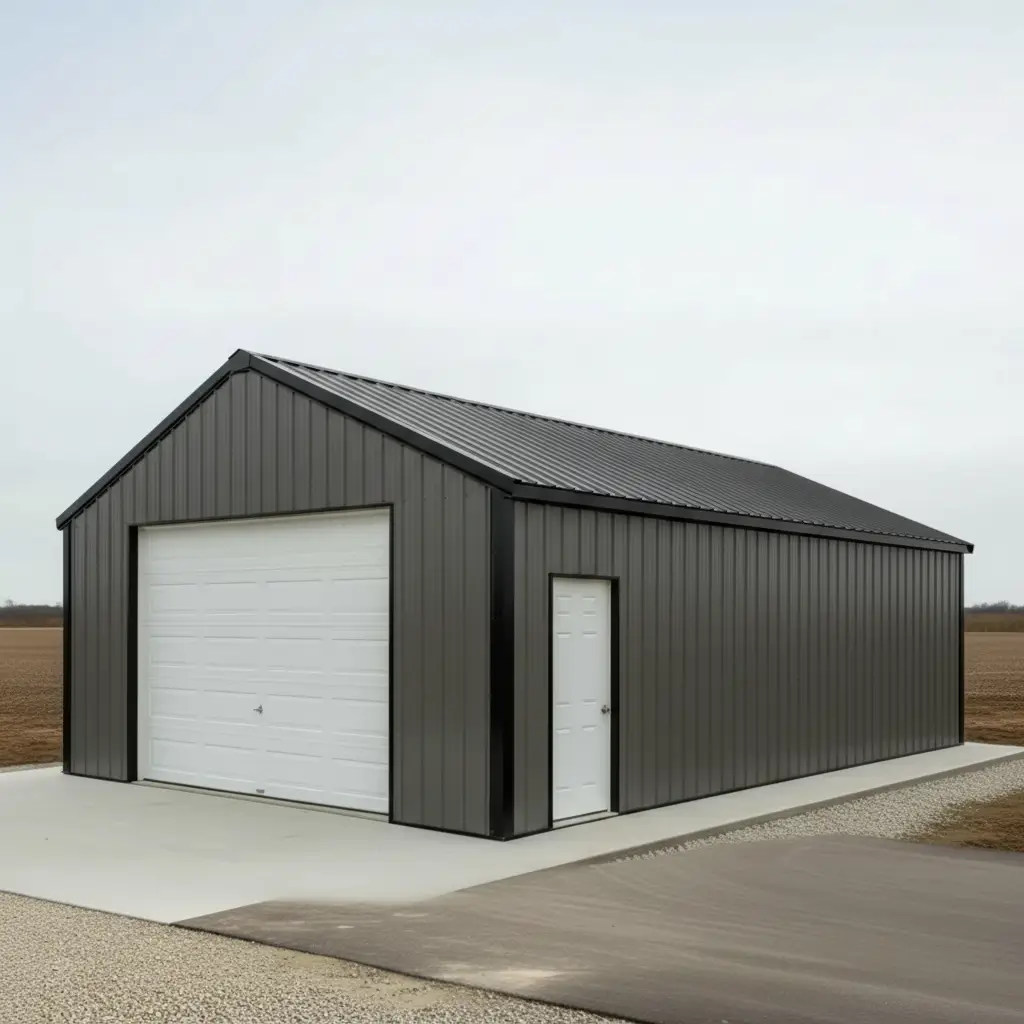
Images shown are for illustration purposes only.
The final building may differ based on colour choice, door locations, selected upgrades, and local building requirements.
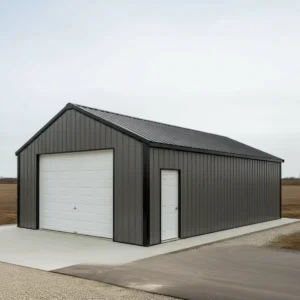
30×40×14 Steel Garage Shop for Tools and Light Equipment
The 30×40×14 Steel Garage Shop is a prefabricated structural steel building kit supplied as packaged materials for enclosed vehicle parking, tool storage, and light equipment use. This clear-span rigid-frame structure provides increased interior height for vertical storage and workspace planning. The kit includes structural framing, steel panels, hardware, and printed structural documentation for permitting reference where required. Shipped as physical building materials by freight. No installation or construction services included.
Starting from: $20/sq.ft.
Designed for property owners and operators who need enclosed vehicle parking combined with elevated interior clearance for tool storage, equipment handling, and functional workspace use within a compact accessory building footprint.
This size balances moderate building width with increased wall height to support taller equipment, vertical storage, and improved interior working volume while remaining practical for residential and light commercial sites.
Key performance characteristics
- Clear span interior width for unobstructed parking and workspace layout
- Increased wall height for vertical storage and equipment clearance
- Compact structural footprint suitable for constrained properties
- Functional separation between parking, work, and storage zones
- Taller enclosure volume for flexible interior configuration
Size-specific advantage
Compared with a 30×40×12 structure, the 14-foot wall height increases vertical usable space for equipment handling, storage stacking, and elevated workspace requirements without increasing building footprint.
Compared with a 30×50 structure, this size maintains a more compact site envelope while still providing meaningful vertical clearance for tools and light equipment.
Product Classification
Prefabricated structural steel building kit
Pre-Engineered Metal Building (PEMB) system
Detached accessory garage or light equipment structure
Physical packaged building materials shipped by freight
Product Overview
The 30×40×14 configuration provides enclosed parking and workspace capacity within a compact footprint while offering increased vertical clearance for tools, storage systems, and light equipment handling. This format is commonly selected when standard wall heights do not provide sufficient interior working volume, but larger footprint buildings are not practical due to property size or zoning limitations.
The building supports interior planning that separates vehicle parking from storage and work functions while maintaining clear movement pathways throughout the structure.
This configuration is frequently used where taller equipment storage, overhead workspace clearance, or improved vertical organization is required within a moderate-scale accessory building.
Technical Specifications
Building Width: 30 ft
Building Length: 40 ft
Wall Height at Eave: 14 ft
Interior Area: 1,200 sq ft
Clear Interior Height at Eave: approximately 14 ft before interior installations
Peak Height: varies by roof geometry
Roof Type: gable configuration
Structural System: rigid-frame portal system (PEMB)
Primary Frame Type: moment-resisting rigid frame
Interior Span: clear span primary structural frame
Structural Geometry
Primary rigid frames form a portal system that develops moment resistance at column-rafter connections.
Frame geometry allows column-free interior space across the full building width.
Roof loads and lateral loads are transferred through rafters into columns and then into foundation bearing zones.
Materials and Certifications
Profiled structural steel panel system
Protective coated exterior cladding
Mechanical fastener panel attachment
Manufactured in accordance with CSA A660 requirements where applicable
Fabrication performed under CWB W47.1 certification where applicable
Structural Load Design Basis
Structural design criteria depend on:
- installation location
- snow load zone
- wind exposure classification
- terrain conditions
- importance category
- elevation and local environment
Documentation references general Canadian snow and wind load considerations commonly associated with this product type.
Final structural configuration is determined at time of order based on confirmed project location and applicable requirements.
Design Envelope Clarification
Structural configuration, member sizing, and connection design vary based on project-specific conditions. Final parameters are documented in the structural drawings supplied with the building kit.
Nominal vs Actual Dimensions
Nominal building dimensions represent the exterior structural footprint.
Actual finished exterior dimensions and interior usable space vary depending on framing depth, panel profile, trim systems, and foundation interface.
Final as-built dimensions are confirmed in structural drawings supplied with the kit.
Primary Use-Case Engineering
Typical operational layout supports:
- front vehicle parking zone
- rear tool storage or workbench zone
- sidewall storage systems
- interior circulation pathways
Example dimensional use scenario:
A compact tractor or utility vehicle can be positioned in the front portion of the structure while maintaining substantial rear clearance for shelving, workbench placement, or material storage depending on door placement.
Size-Specific Performance Advantage
The 14-foot wall height increases vertical storage potential and overhead working clearance without expanding building width or length. This allows improved equipment handling and interior organization compared with lower wall configurations.
Product Hierarchy Positioning
Within 30-foot width garage progression:
30×30 supports compact storage
30×40 supports parking plus workspace separation
30×50 supports extended workflow depth
30×60 supports multi-equipment operations
Interior Planning Model
Typical spatial organization may include:
front vehicle access zone
rear work or storage zone
sidewall shelving areas
central circulation path
Interior layout is determined by equipment size, door placement, and storage depth requirements.
Interior Clearance Planning
Usable vertical clearance is reduced by roof purlin depth, lighting systems, and any installed insulation or liner assemblies.
Door track systems and mechanical installations also influence effective clear height.
Height-Driven Structural Implications
Increasing wall height increases structural lever arm and can increase column base reactions and lateral load effects. Taller wall surfaces also increase wind pressure area depending on site exposure and terrain. Structural configuration accounts for these effects within the design parameters established at time of order.
Door Opening Geometry and Track Planning
Door opening height is influenced by structural framing around the opening, header depth, track configuration, and interior obstructions. Buyers should verify required entry clearance for vehicles or equipment before finalizing door systems.
Vertical Storage Load Considerations
Tall walls enable increased storage height, but storage loads must be planned carefully. Wall-mounted and floor-anchored storage systems can introduce concentrated loads and overturning forces. Storage anchoring and slab capacity must be determined separately based on intended use.
Structural Engineering Explanation
Roof and lateral loads transfer through rigid frame members into columns.
Column reactions are transmitted through base plates and anchor bolts into reinforced foundation bearing zones designed to resist axial, shear, and overturning forces.
Lateral Stability System
Building stability is achieved through portal frame action, roof diaphragm behavior, and structural bracing elements configured within the system.
Slab and Floor Load Planning
Concrete slab design is not included with the building kit.
Foundation and floor systems must be designed separately to support equipment loads, vehicle loads, and concentrated structural reactions.
Building Code Alignment
Permitting requirements, foundation approval, and structural documentation review are subject to the authority having jurisdiction.
Interior use classification is determined by local zoning and occupancy regulations.
Site Planning and Installation Requirements
Foundation preparation
Delivery vehicle access
Erection staging space
Equipment for assembly
Zoning and placement compliance
Delivered Package Definition
Shipment includes prefabricated structural steel members, secondary framing components, steel panel systems, hardware, and printed structural documentation.
This product consists of tangible structural building materials only.
Freight Delivery
Components are shipped by freight as bundled steel materials.
Unloading and staging are arranged by the buyer.
Assembly Complexity
Contractor assembly required.
Structural erection sequencing, temporary bracing, and installation safety procedures are the responsibility of the installation contractor.
Environmental and Climate Performance
Steel enclosure provides protection from precipitation, wind exposure, and seasonal weather.
Condensation control and ventilation planning depend on climate conditions and interior usage.
Operational Limitations
Not designed for crane loading
Not designed for multi-storey structural loading
Not designed for structural expansion
Use-Case Decision Matrix
Choose this size if:
- increased vertical storage is required
- taller equipment must be enclosed
- parking and workspace must coexist
- property width limits larger footprints
Consider larger buildings if:
- multiple large vehicles are stored
- extended workflow depth is required
- higher door openings are necessary
Project Planning Checklist
Confirm zoning compliance
Prepare foundation design
Verify door dimensions
Confirm equipment clearance
Plan delivery access
Product Comparison Table
30×30 compact storage footprint
30×40 parking and workspace separation
30×50 extended workflow sequencing
Structural Responsibility and Scope Notice
This product consists of prefabricated structural building materials only.
No installation, construction, or engineering services are included.
Building performance depends on proper foundation design, anchoring, erection, and compliance with supplied structural documentation.
Ownership transfers upon shipment.
Canadian Performance Context
Steel enclosure construction provides protection from snow accumulation, wind exposure, and seasonal Canadian weather conditions.
What Is Included
Structural framing components
Steel wall and roof panels
Hardware and fasteners
Printed structural documentation
What Is Not Included
Foundation construction
Installation labor
Doors
Electrical systems
Insulation systems
Related Products
-
30X40X10 Steel Garage Kit – Clear-Span Metal Garage
Starting from: $20/sq.ft. -
30X50X10 Steel Garage Kit – Prefab Metal Garage for Tools
Starting from: $20/sq.ft. -
36X50X10 Steel Garage Kit – Heavy-Duty Metal Garage
Starting from: $20/sq.ft. -
40X60X10 Steel Garage Kit – Large Clear-Span Metal Garage
Starting from: $20/sq.ft.