Ontario’s construction industry continues to evolve toward faster, smarter, and more cost-efficient solutions. Among these innovations, pre-engineered steel buildings (PEBs) have become a top choice for homeowners, farmers, and commercial builders who value strength, customization, and speed.
But what exactly is a pre-engineered steel building, and why are so many Ontarians choosing them over traditional structures? This guide explains the concept, components, and key benefits of PEB systems, along with insights from Tower Steel Buildings, a leading Ontario-based manufacturer known for precision and reliability.
A pre-engineered steel building is not a generic structure. It is a fully engineered system where structural loads, foundation design, site conditions, and building use must be coordinated before fabrication begins.
Understanding Pre-Engineered Steel Buildings
A pre-engineered steel building is a complete structural system designed, fabricated, and prepared at the factory before being shipped to the construction site for assembly. Each component-from columns to roof panels-is engineered in advance to fit together perfectly, reducing waste and on-site labour.
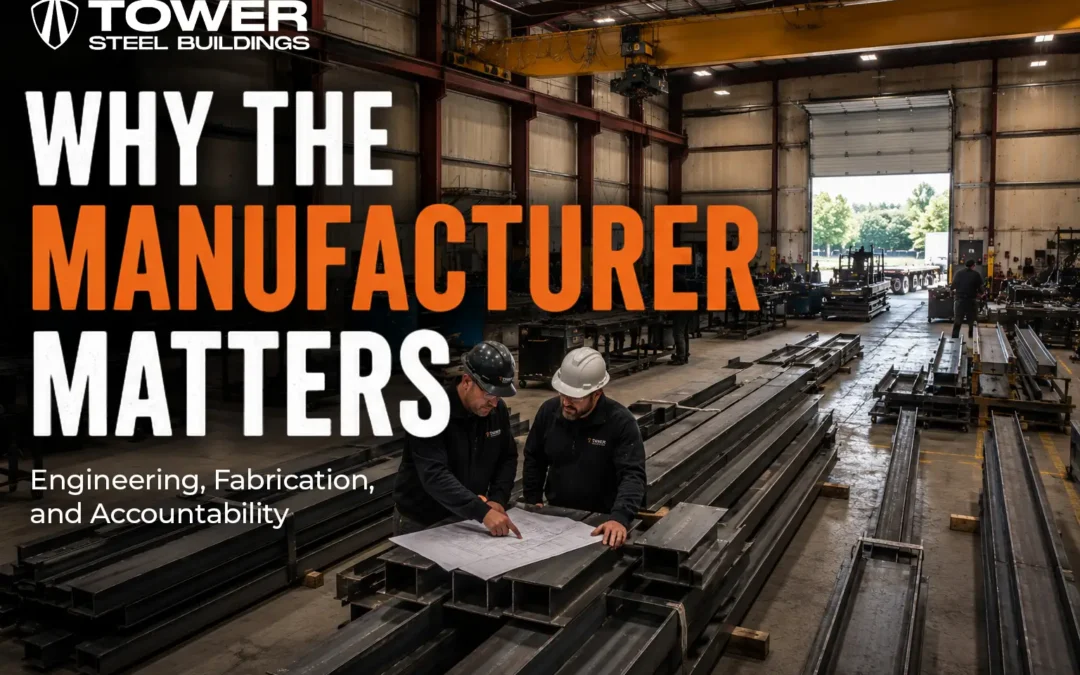
Unlike traditional construction, where most fabrication happens on-site, pre-engineered systems rely on detailed computer-aided design (CAD) and manufacturing technology. Every beam, frame, and connection is precision-cut, drilled, and welded in controlled factory conditions.
Key Components of a PEB System
A typical pre-engineered steel building in Ontario includes several major structural and architectural components:
Primary Framing
The main structural system, consisting of rigid frames made from tapered steel columns and rafters. These elements carry the building’s loads and define its shape.
These structural loads must transfer correctly into the ground through foundation design, which determines long-term stability.
Secondary Framing
Members such as purlins, girts, and eave struts connect to the primary frame and support roof and wall panels. They also distribute loads evenly across the structure.
Roof and Wall Panels
Steel panels, often made from high-strength coated steel, form the building envelope. They protect the structure while contributing to its aesthetic and thermal performance.
Bracing and Fasteners
Cables, rods, and bolted connections maintain stability and resist lateral forces like wind and snow loads-crucial for Ontario’s weather conditions.
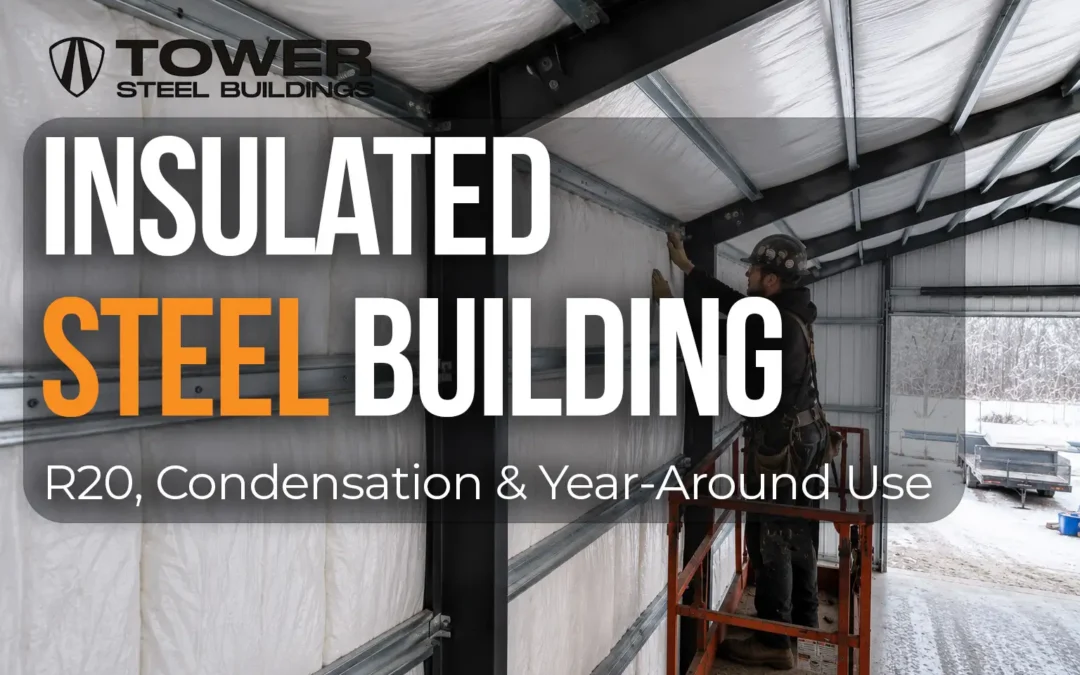
Insulation and Vapor Barriers
These control temperature and condensation, making the building energy-efficient and comfortable year-round.
Doors, Windows, and Accessories
Custom options such as roll-up doors, skylights, and canopies complete the structure, adapting it to specific applications like garages, workshops, or commercial units.
How Pre-Engineered Steel Buildings Differ from Conventional Construction
Traditional buildings often rely on wood or masonry materials, with structural components cut and assembled on-site. This method can be slower, more labour-intensive, and prone to inconsistencies.
In contrast, PEBs are engineered as a complete system. Every load, span, and connection is calculated in advance by structural engineers, resulting in a structure that’s not only faster to build but also optimized for cost and performance.
Advantages Over Conventional Methods
- Faster Construction: Factory-fabricated components are delivered ready for assembly, reducing project timelines by 30–50%.
- Cost Control: Minimal material waste and predictable labour hours help builders stay within budget.
- Precision Fit: Computer-aided design ensures perfect alignment and structural accuracy.
- Adaptability: Future expansions are easy-simply add new bays or extend existing frames.
- Durability: Steel resists rot, termites, and warping, unlike wood framing.
When a Pre-Engineered Building Is Not the Right Solution
Pre-engineered systems are efficient, but they are not suitable for every project.
They become high-risk when:
- site conditions are complex or poorly understood
- heavy equipment loads are introduced after design
- irregular layouts require structural flexibility
- foundation requirements are not confirmed early
- approvals depend on site-specific conditions
In these situations, treating a pre-engineered building as a “standard product” often leads to redesign, delays, and cost escalation.
The system works when it is engineered properly. It fails when it is assumed to be universal.
Why Ontario Builders Prefer PEB Systems
Ontario’s unique mix of weather conditions-heavy snowfall, strong winds, and temperature fluctuations-makes pre-engineered steel systems particularly well-suited for local construction.
Before construction begins, projects must meet approval requirements outlined in the steel building permit checklist.
Tower Steel Buildings designs every structure to meet or exceed the Ontario Building Code, factoring in regional snow and wind loads to ensure safety and longevity.
Efficiency
Because all structural calculations and manufacturing happen under one roof, projects move from design to completion in weeks instead of months.
Quality Assurance
Factory fabrication allows consistent quality checks, preventing on-site measurement errors and rework.
However, construction success still depends on site readiness, and common risks are outlined in site preparation mistakes in steel building construction.
Sustainability
Steel is 100% recyclable, and modern coatings improve longevity, making PEBs an environmentally responsible choice for Ontario’s green-minded builders.
Common Uses for Pre-Engineered Steel Buildings in Ontario
PEB systems are highly versatile and serve many sectors across Ontario. Some of the most popular uses include:
Commercial Buildings
Retail spaces, showrooms, and office structures use PEBs for their open layouts and modern appearance.
Warehouses and Distribution Centres
Steel systems offer clear spans without interior columns, allowing maximum storage capacity and flexibility.
Many of these rely on long-span steel structure engineering, where structural behaviour becomes more complex as spans increase.
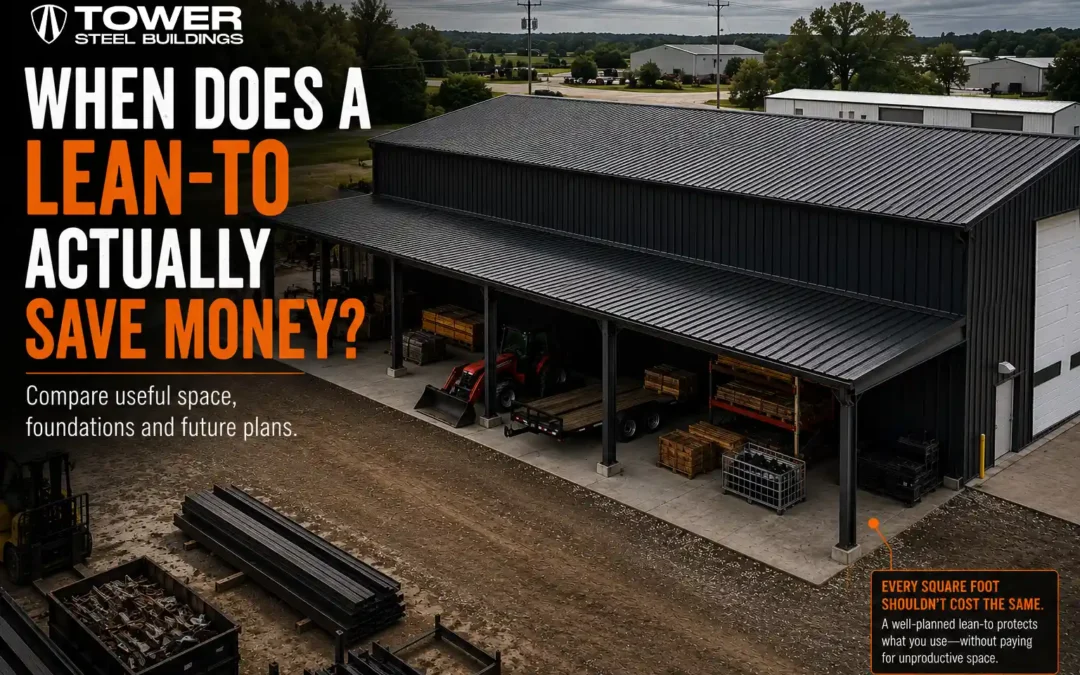
Agricultural Buildings
Farmers choose steel for barns, machinery storage, and livestock shelters due to its resistance to pests, fire, and moisture.
Workshops and Garages
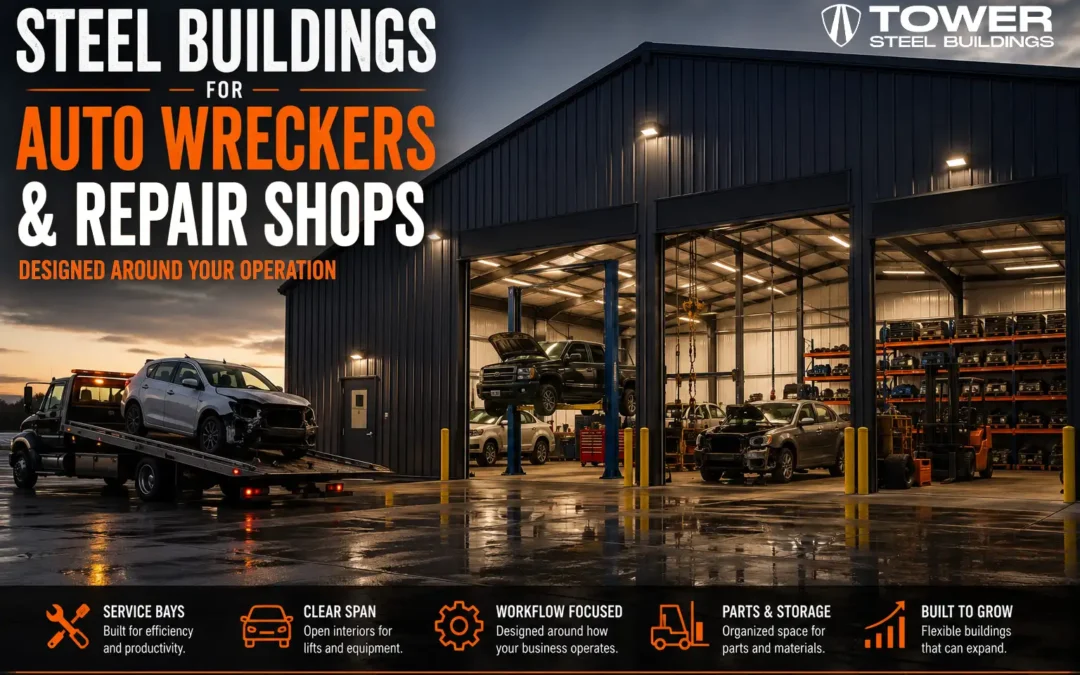
Homeowners and small businesses use compact PEBs for personal garages, auto repair shops, and fabrication units.
Community and Recreational Facilities
Sports complexes and community halls benefit from steel’s strength and long clear spans for open interior spaces.
Customization and Design Flexibility
One of the greatest strengths of pre-engineered steel buildings is customization. Despite being factory-produced, every project is uniquely tailored to the client’s design requirements.
Customization must be supported by site-specific steel building engineering to align the structure with soil conditions, loads, and regulatory constraints.
Tower Steel Buildings offers extensive customization options, including:
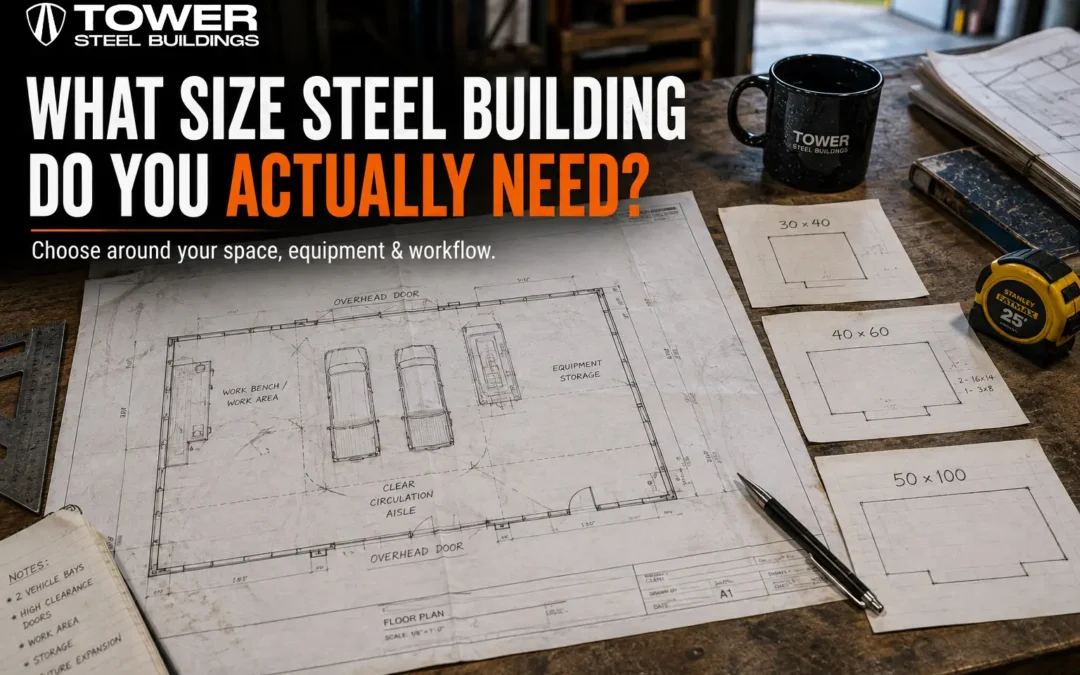
- Choice of building dimensions and layouts
- Insulation and ventilation systems for energy efficiency
- Colour and panel style options for roofs and walls
- Integrated mezzanines or partition walls
- Specialized foundations or anchor bolt layouts
This flexibility ensures that each building is functional, aesthetically appealing, and aligned with local regulations.
How Pre-Engineering Reduces Costs
Cost savings are one of the strongest reasons Ontario builders switch to pre-engineered systems.
Actual pricing depends on size, foundation, and site conditions, which are detailed in steel building cost per sq ft.
Key cost efficiencies include:
- Reduced Construction Time: Faster assembly means lower labour costs and earlier project completion.
- Material Optimization: Engineering software calculates the exact quantity of steel required-no excess, no waste.
- Lower Maintenance: Steel structures resist corrosion and require minimal upkeep compared to wood or masonry.
- Energy Efficiency: When paired with insulation and vapor barriers, steel buildings maintain stable interior temperatures, lowering heating and cooling expenses.
Over the lifespan of a building, these savings can reach 20–30% compared to traditional methods.
Where Pre-Engineered Steel Buildings Fail in Real Projects
Pre-engineered steel buildings do not fail because of fabrication. They fail when the system is not aligned with the site, loads, and actual building use.
The most common failures include:
- foundation design not matching structural reactions
- soil conditions assumed instead of verified
- snow and wind loads simplified for pricing
- building use changing after engineering is complete
- insulation and ventilation not designed for real operating conditions
These problems do not appear at delivery. They appear during:
- permit review
- foundation construction
- steel erection
- early building operation
Once fabrication is complete, correcting these issues becomes expensive and often requires redesign or structural modification.
A pre-engineered system is only as reliable as the engineering that connects it to the site and its intended use.
Tower Steel Buildings – Ontario’s PEB Experts
With decades of experience in steel design, engineering, and fabrication, Tower Steel Buildings delivers complete pre-engineered systems across Ontario.
Each project is handled in-house-from structural design and foundation planning to manufacturing and erection-ensuring consistency, accountability, and precision.
What Sets Tower Steel Apart
- In-house engineering team focused on Ontario’s structural codes.
- Factory-controlled manufacturing for accuracy and quality.
- Competitive pricing through efficient design and material sourcing.
- Transparent quoting process with detailed inclusions and timelines.
- Support for everything from small garages to large commercial complexes.
Clients across Ontario trust Tower Steel for projects that are built to last, delivered on time, and supported by responsive customer service.
Why PEBs Are the Future of Ontario Construction
Ontario’s construction landscape is shifting toward efficiency and sustainability. As land and labour costs rise, pre-engineered steel systems provide a practical alternative that delivers both affordability and quality.
Their adaptability, strength, and environmental benefits make them ideal for modern building demands-from rural farms to urban commercial hubs.
For anyone considering a new project in Ontario, pre-engineered steel buildings represent the future: precise, fast, and built for generations.
Reviewed by Engineering Team
This content has been reviewed by the Tower Steel Buildings Engineering Team.
It reflects real pre-engineered steel building design, fabrication, and construction practices across Ontario, including:
- structural design requirements under the Ontario Building Code
- load calculations for snow, wind, and building use specific to Ontario conditions
- coordination between primary framing, secondary members, and foundation systems
- integration of insulation, moisture control, and building envelope performance
- alignment between factory-fabricated components and on-site construction conditions
This guidance is based on actual project execution, not simplified descriptions of pre-engineered systems.
It includes how PEB systems behave during:
- permit review
- foundation construction
- steel erection
- early operational use
and where breakdowns occur when engineering, site conditions, and building use are not properly aligned.
A pre-engineered steel building is not a prefabricated product. It is a coordinated structural system that must match real site and load conditions to perform correctly.
1. What does “pre-engineered” actually mean in a steel building?
It means the entire structural system is designed before fabrication begins.
This includes loads, spans, connections, and material sizing.
The risk appears when this is misunderstood as “pre-made” or standard.
When site conditions or building use change after engineering, the system no longer matches reality.
That leads to redesign, delays, and structural adjustments that were avoidable at the start.
2. Why do pre-engineered steel buildings fail in real projects?
They fail when they are treated as universal solutions.
Most failures occur when:
- soil conditions are assumed
- loads are simplified for pricing
- building use changes after design
The issue is not fabrication. It is misalignment between engineering and actual conditions.
Problems typically appear during foundation work or steel erection, not during delivery.
3. How important is foundation coordination in a PEB system?
It is critical.
The steel structure depends on exact load transfer into the foundation.
This becomes a problem when foundation design is handled separately or based on assumptions.
Misalignment between anchor bolts and column base plates can stop erection entirely.
Correction at that stage is expensive and time-sensitive.
4. Can a pre-engineered steel building be modified after fabrication?
Only to a limited extent.
These systems are designed as complete load-bearing frameworks.
This becomes a problem when openings, loads, or layout changes are introduced after fabrication.
Even small changes can affect structural behaviour, requiring re-engineering.
5. Why are clear-span buildings more complex than they appear?
Because they remove interior support.
All loads must be carried by the primary frame.
This becomes a problem when large spans are selected without considering structural demand, deflection, and cost.
The result is heavier framing, higher material cost, and more complex engineering.
6. How does Ontario climate affect PEB design?
Ontario introduces significant environmental loading.
Snow accumulation, wind exposure, and freeze-thaw cycles all affect structural demand and building performance.
This becomes a problem when designs are simplified or based on non-local assumptions.
The result is underperforming structures or redesign during permit review.
7. Why is insulation not just an add-on in steel buildings?
Because it affects performance, not just comfort.
Insulation controls:
- condensation
- temperature stability
- energy efficiency
This becomes a problem when it is added after structural design.
The issue is that building envelope performance must be integrated, not layered on later.
8. When do most PEB issues show up in a project?
Not during fabrication.
They appear during:
- permit review
- foundation alignment
- steel erection
- early building use
This happens because assumptions made during design are tested in real conditions.
At that point, changes are no longer simple.
9. Why do pre-engineered buildings sometimes require redesign?
Because the original inputs were incomplete.
This includes:
- site conditions
- building use
- loading requirements
When these change or are clarified later, the system must be recalculated.
That leads to delays, cost increases, and re-coordination.
10. What is the biggest misconception about pre-engineered steel buildings?
That they are standard products.
They are not.
Each system is engineered for a specific:
- site
- load condition
- building use
Treating them as interchangeable leads to mismatched expectations and project risk.
11. How do you know if a PEB design is properly engineered?
You look for alignment, not just documentation.
That includes:
- load calculations tied to location
- foundation design tied to soil
- coordinated drawings across disciplines
If any of these are missing or unclear, the design is incomplete.
12. What is the most reliable way to ensure a PEB performs long-term?
Define everything before fabrication.
That includes:
- site conditions
- structural loads
- building use
- foundation system
- envelope requirements
Pre-engineered systems perform extremely well when inputs are correct.
They fail when assumptions replace verified data.