
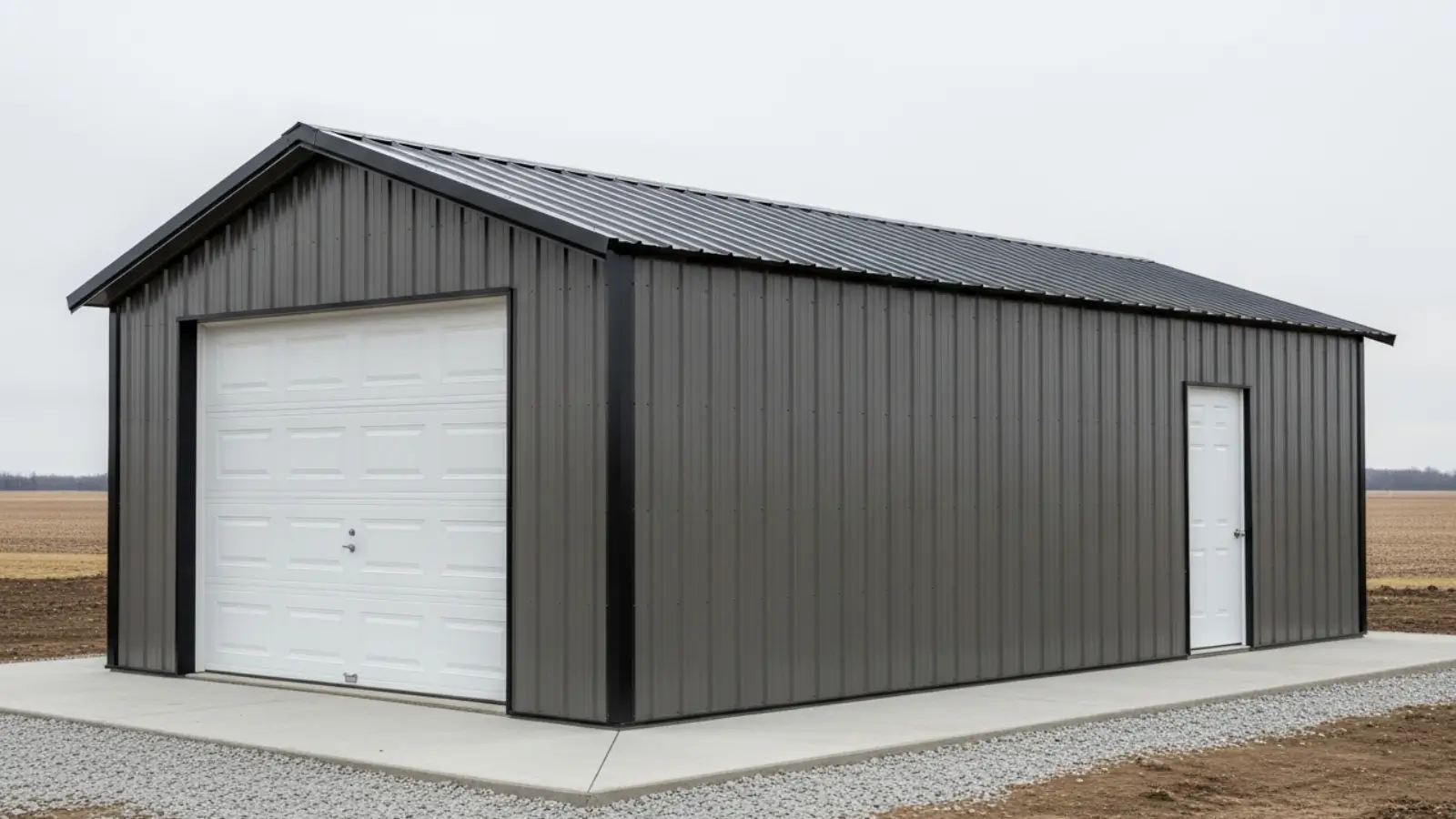
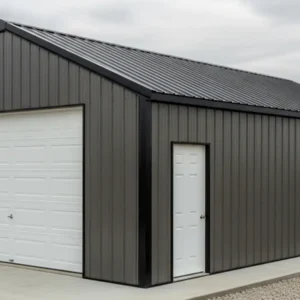
Images shown are for illustration purposes only.
The final building may differ based on colour choice, door locations, selected upgrades, and local building requirements.
24X30X10 Steel Garage Kit – Prefab Metal Garage
The 24×30×10 Steel Garage Kit is a prefabricated residential steel building designed to provide enclosed vehicle parking with extended interior depth for storage, workspace, or equipment placement. The clear-span rigid-frame structure maintains unobstructed interior floor area while allowing functional separation between parking and secondary use zones. Supplied as a packaged steel building kit including structural framing, metal panels, hardware, and printed structural documentation for permitting reference where required.
Starting from: $18/sq.ft.
Product Classification
Prefabricated residential steel building kit
Detached accessory garage structure
Physical packaged building materials shipped by freight
Technical Specifications (Quick Reference)
Building Width: 24 ft
Building Length: 30 ft
Wall Height: 10 ft
Interior Area: 720 sq ft
Clear Interior Height at Eave: approx 10 ft
Peak Interior Height: varies by roof pitch (gable configuration)
Roof Pitch: project-specific configuration
Structural System: Rigid-frame portal system
Interior Span: Column-free
Panel System: Profiled steel cladding
Panel Profile Type: Ribbed structural cladding
Connection Method: Bolted structural assembly
Field Assembly: Mechanical fastener installation
Intended Use Category: Enclosed residential garage structure
Structural Design Basis
Final structural configuration is prepared based on confirmed installation location, environmental loading considerations, and applicable building code requirements.
Product Overview
The 24×30 format is commonly selected when homeowners require enclosed vehicle parking combined with extended interior depth for storage, equipment, or workspace functions. The building width supports comfortable single-vehicle maneuvering or flexible interior organization, while the 30-foot depth enables separation between parking and secondary use areas.
This configuration is frequently specified where compact square garage layouts do not provide sufficient storage depth, but wider multi-vehicle structures exceed site coverage or zoning limits.
The column-free structural system maintains uninterrupted interior clearance across the full span, supporting organized residential storage and adaptable interior planning.
This prefab metal garage building is commonly used as a detached residential garage, backyard storage enclosure, or multi-purpose accessory structure on Canadian properties requiring parking plus extended interior depth.
Structural System Classification
Pre-Engineered Metal Building (PEMB)
Rigid-frame portal structural system
Column-free interior span
Rigid frame geometry transfers roof loads through structural columns directly to foundation bearing points. Span-to-height proportions are configured to provide enclosed volume efficiency suitable for residential accessory building applications.
The structural system is commonly used for detached garages and residential storage enclosures.
Structural Components & Materials
Primary structural framing fabricated from structural steel members with prefabricated connection plates for bolted field assembly.
Exterior cladding formed from profiled steel panels attached to secondary framing members using mechanical fastener systems.
Steel panel systems incorporate protective coating finishes suitable for exterior building envelope applications.
Primary rigid frames are spaced according to structural design requirements determined at time of order to align with applicable building code criteria.
Structural loads are transferred through rigid frame columns to foundation bearing points. Foundation design must support vertical and lateral loads accordingly.
Rigid frame column reactions create concentrated loads at foundation bearing locations. Foundation design must account for base plate load transfer.
Foundation design, slab specifications, and interior load considerations are determined separately by the project team based on intended operational requirements.
Structural Load Determination Process
Structural loads are determined based on confirmed installation location, applicable building code requirements, and environmental loading considerations.
Documentation references general Canadian snow and wind load considerations commonly associated with this product type.
Final structural configuration is prepared at time of order based on project location and governing building regulations.
Building Code Alignment
Final structural configuration is prepared to align with applicable provincial and municipal building code requirements based on confirmed installation location.
Use classification, permitting requirements, and foundation design are determined by the authority having jurisdiction.
Size-Specific Performance Advantage
The 24-foot building width provides comfortable single-vehicle maneuvering clearance while supporting flexible interior layout options.
The extended 30-foot building depth allows functional zoning between parking and secondary use areas such as storage, workbench space, or equipment placement.
Increasing building depth rather than width allows interior capacity expansion while maintaining moderate structural footprint and manageable site coverage.
This size is commonly selected when homeowners need parking plus workspace or storage but cannot construct wider multi-bay garages due to lot width or setback limits.
The rigid-frame structural layout maintains column-free interior space for adaptable planning.
Interior Functional Zoning
The 30-foot building depth allows separation between parking and secondary interior uses.
Typical layout arrangements include:
- front parking with rear storage zone
- side storage wall with central vehicle lane
- rear workbench or hobby area
- equipment staging behind parked vehicle
Interior zoning depends on vehicle length and storage depth requirements.
Typical Storage Depth Range
When a standard passenger vehicle is parked, remaining rear storage depth commonly ranges between 8–12 feet depending on vehicle length and door placement.
This depth supports shelving, equipment storage, or workspace functions.
Interior Usable Space Planning
Interior usable dimensions vary depending on wall system thickness, structural framing depth, and door configuration.
Actual usable interior width and length are reduced by wall assemblies and structural members.
Mirror clearance, door opening size, and interior storage placement influence maneuvering comfort.
Interior usable space may vary depending on door configuration, framing placement, and foundation layout.
Building Dimension Classification
Nominal building dimensions describe exterior structural footprint.
Actual finished exterior dimensions and interior clearances vary depending on panel profile, framing depth, trim systems, and foundation interface.
Interior usable width and length are typically reduced by wall system thickness and structural framing depth.
Final as-built dimensions are confirmed in structural drawings supplied with the building kit.
Authority Planning Insight
This size is commonly specified when homeowners need enclosed parking plus storage or workspace but cannot construct wider multi-vehicle garages due to lot width limitations.
Extended-depth garage layouts are frequently used where municipal accessory building bylaws restrict building width but permit increased building length.
Rigid-frame buildings of this size are typically not designed for structural extension. Future expansion generally requires construction of an additional structure.
Vehicle entry and turning clearance must be evaluated based on driveway approach angle and door placement.
Within residential garage sizing progression:
16×20 → compact single-vehicle enclosure
20×24 → balanced parking + storage
24×24 → side-by-side vehicle readiness
24×30 → parking plus extended workspace or storage
Delivered Package Description
Building components are delivered in packaged steel sections prepared for offloading and staged assembly at the installation site.
Delivered materials typically include:
- prefabricated primary structural members
- secondary framing components
- profiled steel panel systems
- hardware and fastening systems
- labeled assembly components
- printed structural documentation
Components are packaged for freight shipment.
Assembly Complexity
Typical residential accessory structure installation.
Moderate assembly complexity.
Assembly is typically performed by the owner’s selected contractor or installation team.
Typical project planning includes site preparation, foundation installation, delivery scheduling, and on-site assembly by the project team.
Lifecycle & Durability Context
Service life depends on installation quality, environmental exposure, and maintenance practices.
Steel enclosure systems of this scale are commonly used for long-term residential storage infrastructure rather than temporary accessory structures.
Manufacturing & Fabrication Standards
Structural steel components are fabricated using standardized manufacturing processes for prefabricated building systems.
Components are produced for mechanical assembly using prefabricated connection geometry and labeled structural members.
Protective exterior coating systems are applied to cladding components to support exterior building envelope function.
Condensation & Ventilation Planning
Condensation control depends on site climate conditions, interior usage patterns, and ventilation design.
Ventilation strategies, insulation systems, and moisture management solutions are determined separately based on project requirements.
Proper condensation management planning is recommended for enclosed steel structures in Canadian climates.
Structural Safety & Anchoring Considerations
Building performance depends on proper foundation design, anchoring, erection procedures, and compliance with supplied structural documentation.
Installation must follow accepted construction practices and applicable building regulations.
Foundation design must support concentrated structural loads and anchoring forces.
What’s Included
Structural steel framing components
Steel wall and roof panels
Hardware and fastening systems
Printed structural documentation
What’s Not Included
Foundation construction
Installation labor
Overhead doors
Windows
Insulation systems
Electrical work
Interior finishing
Typical Optional Components (Not Included)
Overhead sectional garage doors
Walk-in service doors
Insulation systems
Ventilation systems
Interior liner panels
Window systems
Electrical integration
Optional components are selected separately based on project requirements.
Freight Delivery Explanation
Building components are shipped by freight as packaged steel materials.
Shipment consists of multiple bundled steel components.
Total shipment weight varies by configuration but typically falls within the range of approximately 2,500 to 6,000 lbs.
Exact shipment details are confirmed prior to dispatch.
Unloading equipment and staging space must be arranged by the buyer.
Delivery scheduling is coordinated prior to shipment.
Site Planning Considerations
Foundation design
Setback requirements
Driveway alignment
Delivery vehicle access
Assembly staging area
Municipal permitting requirements
Application Classification
Typical use classification: Detached residential accessory building used for vehicle storage and property storage.
Use category and occupancy classification are determined by the authority having jurisdiction.
Structural Responsibility Statement
Building performance depends on proper foundation design, anchoring, erection procedures, and compliance with supplied structural documentation.
Installation must be performed in accordance with applicable building regulations and accepted construction practices.
Product Scope Notice
This product is a physical prefabricated steel building kit shipped by freight.
No installation, construction, engineering consulting, or labor services are sold or provided.
Ownership of all physical components transfers to the buyer upon shipment.
This listing is for packaged building materials only and does not represent a constructed structure.
Canadian Performance Context
Structural documentation references general Canadian snow and wind load considerations commonly associated with this product type.
Steel enclosure construction provides enclosed protection from snow accumulation, wind exposure, and seasonal weather conditions typical across Canadian residential environments.
Decision Summary
Choose this size if you need:
- enclosed vehicle parking plus workspace or storage
- extended interior depth without increasing building width
- flexible interior zoning
- moderate residential footprint
Consider larger sizes if:
- side-by-side vehicle parking is required
- full workshop conversion is planned
- large equipment or trailers must be stored
Only logged in customers who have purchased this product may leave a review.
Related Products
-
24X24X10 Steel Garage Kit – Two-Car Prefab Metal Garage
Starting from: $18/sq.ft. -
24X30X10 Steel Garage Kit – Prefab Metal Garage
Starting from: $18/sq.ft. -
16X20X10 Steel Garage Kit – Prefab Metal Garage for Vehicles
Starting from: $18/sq.ft. -
20X24X10 Steel Garage Kit – Prefab Metal Garage for Parking
Starting from: $18/sq.ft.
Reviews