Steel buildings have become the backbone of modern agricultural infrastructure across Canada. Many modern farm steel buildings are designed to accommodate equipment storage, livestock housing, and maintenance areas within the same structural system. From equipment storage and livestock housing to grain handling and workshop facilities, properly engineered steel structures offer durability, space efficiency, and long-term cost control that traditional wood buildings struggle to match.
But not all steel buildings are created equal.
Many farm owners move forward with steel based on price alone, only to encounter issues with condensation, corrosion, under-designed foundations, permit delays, or buildings that no longer fit their operational needs within a few years.
Before committing to a steel agricultural building, there are several critical questions every farmer should ask. These questions protect not only your budget, but the long-term performance of the building and the productivity of your operation.
What Is This Building Expected to Do Over the Next 20 to 40 Years?
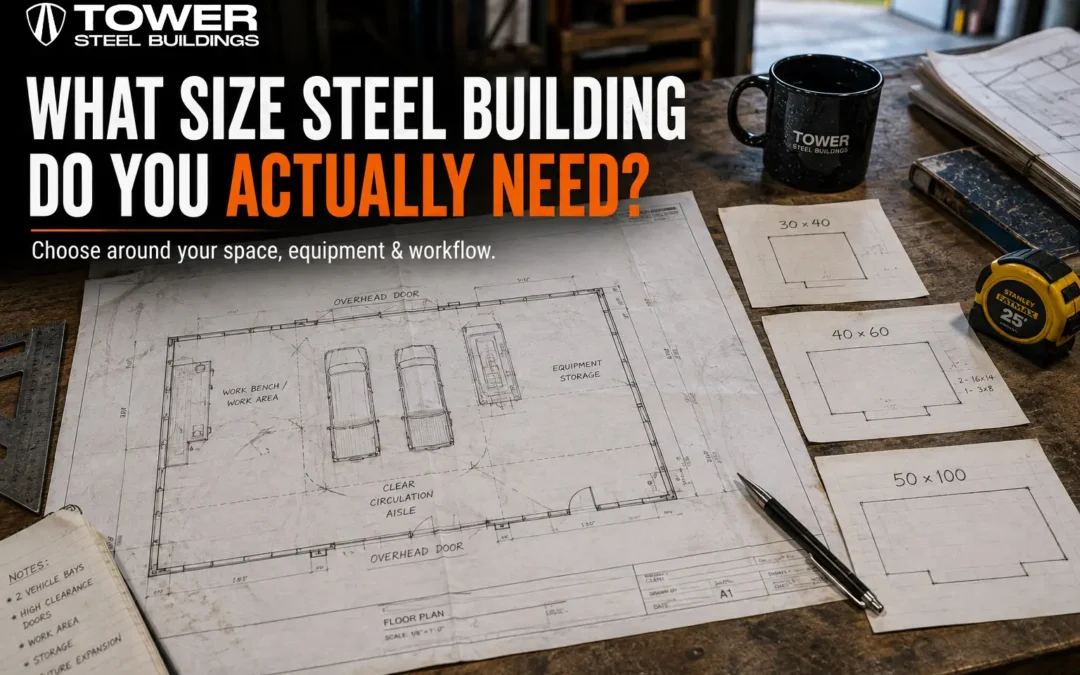
The first mistake many farmers make is designing for today’s equipment and workflows rather than tomorrow’s.
Steel buildings often last decades. During that time:
- Equipment gets larger and heavier
- Storage requirements grow
- Operations shift
- New technologies are introduced
A building sized only for current needs can become obsolete far sooner than expected.
Before finalizing dimensions, consider:
- Future machinery upgrades
- Additional storage capacity
- Potential livestock expansion
- New maintenance or processing areas
Designing slightly larger upfront usually costs far less than modifying or replacing a building later.
Is the Building Fully Engineered for Canadian Agricultural Conditions?
Some steel structures are sold as lightly engineered or partially designed systems. These situations often lead to problems similar to those seen in under-engineered farm steel buildings where structural capacity and environmental exposure were underestimated. While they may look similar on paper, performance is dramatically different.
For agricultural use in Canada, proper engineering should account for:
- Regional snow and wind loads
- Soil conditions and frost depth
- Livestock moisture and corrosion exposure
- Equipment loads on slabs and foundations
- Long-term structural movement
A building that meets minimum standards for light storage may not perform safely under heavy equipment, drifting snow, or livestock environments.
Always confirm that the building is fully engineered for permanent agricultural use, not adapted from generic storage kits.
Who Designs the Foundation and How Is It Coordinated With the Steel?
Foundations are one of the most common failure points in agricultural steel buildings.
Many long-term structural problems originate from poorly coordinated steel building foundation design where slab thickness, reinforcement, and soil conditions were not properly engineered.
Problems often arise when:
- Steel suppliers provide reactions but no coordinated foundation design
- Concrete contractors guess slab thickness and reinforcement
- Soil conditions are assumed rather than tested
- Frost movement is underestimated
Steel buildings transfer loads differently than wood structures. Without proper coordination between the structural steel design and foundation design, cracks, settlement, and alignment issues can develop.
Ask clearly:
- Are foundation drawings engineered specifically for this building?
- Are soil conditions accounted for?
- Are equipment loads included in slab design?
Correct foundations protect the entire investment.
How Will Condensation Be Controlled?
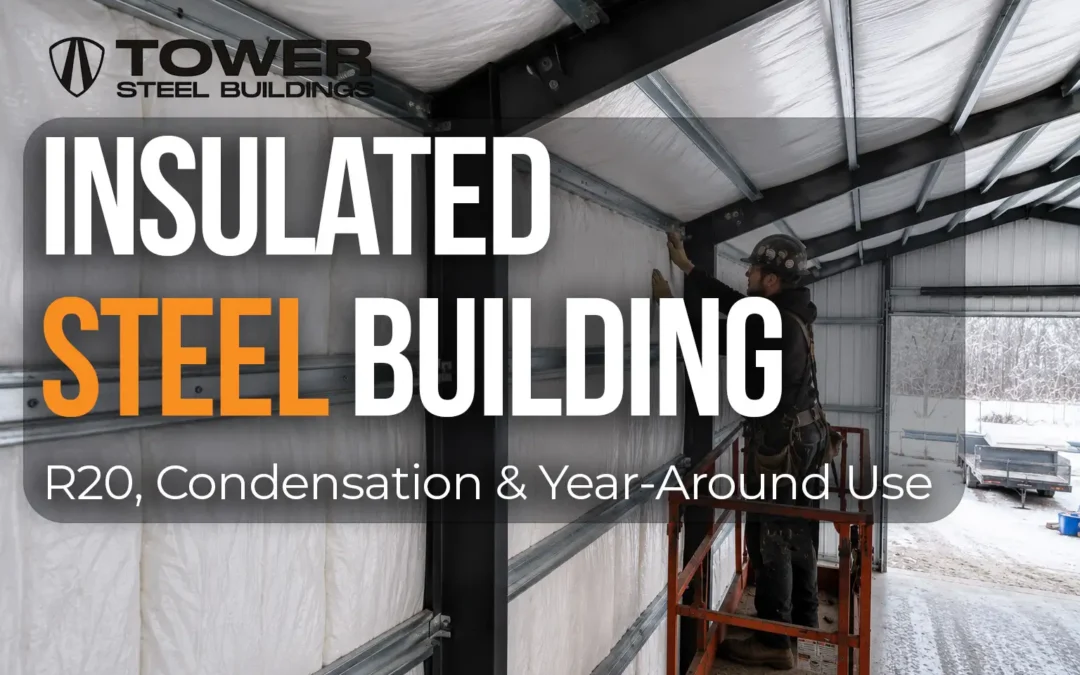
Condensation is one of the most expensive long-term problems in farm steel buildings. Moisture accumulation inside agricultural buildings is a major cause of deterioration discussed in condensation failures in agricultural steel buildings.
Warm, moisture-laden air from livestock, stored equipment, and temperature swings frequently contacts cold steel surfaces. When those surfaces fall below dew point temperature, moisture forms rapidly.
Without proper control, condensation can:
- Saturate insulation
- Corrode steel components
- Drip onto equipment and feed
- Promote mould growth
- Shorten building lifespan
Effective moisture control requires a combination of:
- Proper insulation systems
- Vapour barriers
- Ventilation design
- Thermal break strategies
If condensation planning is not discussed early, it will almost certainly become an issue later.
What Corrosion Protection Is Included?
Agricultural environments are harsher than most commercial settings. Organizations such as the Canadian Agricultural Safety Association provide resources that help improve safety and risk management in farm operations.
Factors such as:
- Manure vapours
- Fertilizer storage
- High humidity
- Ammonia exposure
- Seasonal moisture
can aggressively attack unprotected steel.
Ask about:
- Coating systems on cladding and framing
- Galvanization where appropriate
- Ventilation strategies
- Drainage control
Investing in corrosion protection upfront dramatically reduces maintenance costs over time.
Is the Building Designed for Equipment Weight and Movement?
Modern farm machinery places significant loads on both structure and foundations. Machinery modernization trends and equipment investment across Canadian farms are tracked by Agriculture and Agri-Food Canada.
Consider:
- Loaded grain wagons
- Combines and headers
- Tractors with attachments
- Heavy service vehicles
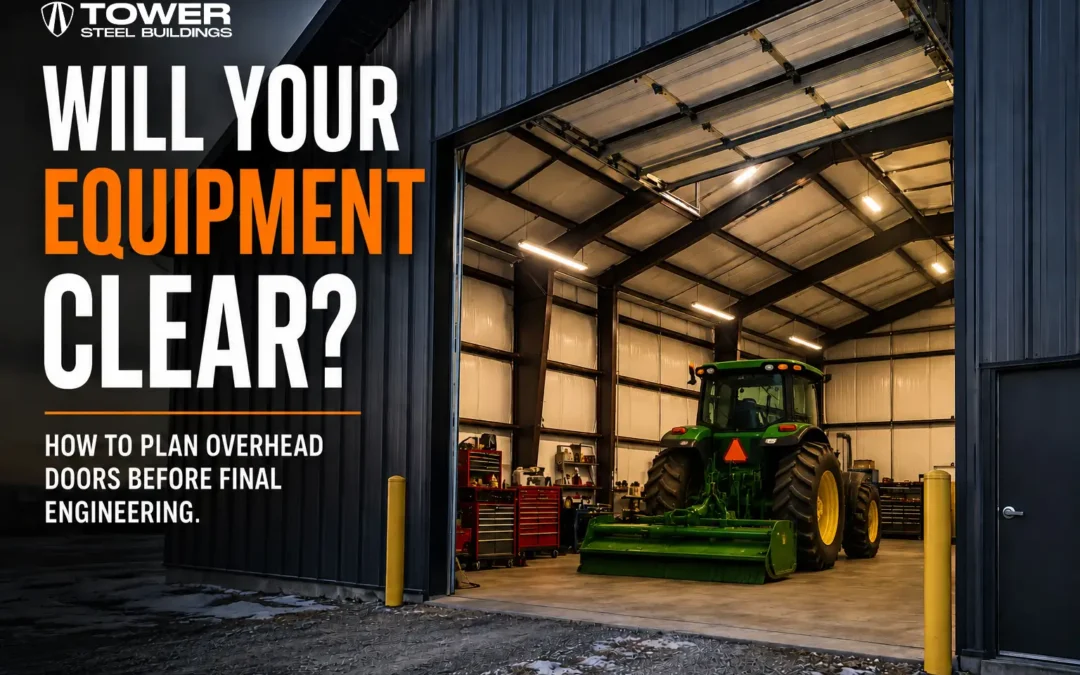
Floor slabs, door openings, and structural clearances must be engineered accordingly.
Questions to raise include:
- Are axle loads included in slab design?
- Are door heights sufficient for future equipment?
- Is turning clearance adequate inside the building?
Under-designed slabs crack early and are expensive to repair.
How Will Ventilation Be Handled for the Intended Use?
Ventilation requirements vary significantly between:
- Livestock housing
- Equipment storage
- Grain handling
- Workshops
Poor ventilation leads to:
- Moisture accumulation
- Odours
- Corrosion
- Health issues for animals and workers
Proper airflow design should match building use, climate, and internal moisture generation.
It is not simply about adding roof vents after construction.
Does the Design Allow for Expansion Later?
Many farm operations grow faster than anticipated.
Steel buildings are well suited for future expansion if planned correctly.
This may include:
- End-wall extensions
- Additional bays
- Door relocations
- Structural allowances for added loads
If expansion is not considered during initial engineering, modifications later can become complicated and costly.
Are Permits and Local Agricultural Code Requirements Fully Understood?
Agricultural buildings in Canada often fall under different building code categories depending on use. These classifications are defined in the National Building Code of Canada which establishes structural and safety standards for Canadian construction.
Understanding these requirements is important because agricultural steel building code considerations can influence engineering, fire separation, and permit approvals.
Factors such as:
- Livestock housing
- Storage of flammable materials
- Mixed-use operations
- Proximity to other structures
can influence:
- Fire separation requirements
- Structural load classifications
- Inspection processes
A building that seems exempt at first glance may still require engineered compliance.
Understanding these requirements early avoids redesigns and approval delays.
Who Is Responsible for Coordination Between Trades?
Many problems occur when responsibilities are unclear between:
- Steel supplier
- Engineer
- Concrete contractor
- Erection crew
- Electrical and mechanical trades
Construction errors frequently occur when project teams are not aligned, an issue examined in coordinating trades during steel building construction.
For example:
Foundations poured before anchor bolt locations are finalized can force expensive rework.
Roof penetrations not coordinated with steel framing may require cutting structural members later.
Clear coordination roles prevent costly mistakes.
What Will This Building Cost to Maintain Over Its Lifetime?
Initial price is only one part of total cost.
Long-term expenses often include:
- Corrosion repairs
- Insulation replacement
- Foundation cracking
- Door realignment
- Moisture damage
Well-designed steel buildings typically have:
- Lower maintenance
- Longer service life
- Better resale value
Poorly designed ones often become recurring cost centres. Most long-term repair costs in agricultural steel buildings trace back to early design shortcuts rather than material failure.
Is the Supplier Experienced With Agricultural Applications?
Agricultural buildings have unique demands that differ from commercial warehouses or light industrial structures.
Experience matters when dealing with:
- Moisture loads
- Equipment movement
- Livestock environments
- Expansion planning
- Seasonal construction timing
Suppliers who routinely design agricultural steel buildings are far better equipped to anticipate challenges and prevent costly errors.
Final Thoughts
Steel buildings are one of the best long-term investments a farm operation can make when they are properly engineered, coordinated, and designed for real agricultural use.
The right questions early in the process prevent:
- Structural issues
- Moisture problems
- Unexpected costs
- Operational inefficiencies
Before signing a contract or finalizing a layout, take time to understand how the building will perform not just this year, but decades into the future.
In agricultural construction, the strongest buildings are not the ones built cheapest, but the ones built with foresight, coordination, and real-world farm conditions in mind.
Reviewed by the Tower Steel Buildings Engineering Team
This article has been reviewed by the Tower Steel Buildings Engineering Team to ensure accuracy in agricultural structural design, moisture control, foundation coordination, and long-term performance considerations for steel farm buildings across Canadian climates.
1. How long do agricultural steel buildings typically last in Canada?
Properly engineered steel farm buildings commonly last 30 to 50 years or more when designed for Canadian snow loads, moisture exposure, and corrosion protection. Lifespan depends heavily on foundation design, condensation control, ventilation, and protective coatings rather than steel thickness alone.
2. Do steel farm buildings require engineered foundations?
Yes. Steel buildings transfer loads differently than wood structures and require foundations designed specifically for steel reactions, soil conditions, frost depth, and equipment loads. Using generic slabs or uncoordinated concrete designs is one of the leading causes of cracking, settlement, and long-term structural issues.
3. How do farmers prevent condensation in steel agricultural buildings?
Condensation control requires a combination of proper insulation systems, vapour barriers, ventilation design, and thermal breaks. Relying on ventilation alone is rarely sufficient in Canadian climates where steel surfaces frequently drop below dew point temperature during winter months.
4. Are steel buildings suitable for livestock housing?
Steel buildings work very well for livestock facilities when properly designed for moisture management, corrosion resistance, ventilation, and animal density. Without these considerations, ammonia vapours and humidity can significantly shorten building lifespan.
5. Can agricultural steel buildings be expanded in the future?
Yes, if expansion is considered during initial engineering. Many steel farm buildings are designed with removable end walls or structural allowances that enable future bay additions. Planning for expansion upfront is far less costly than retrofitting later.
6. Do agricultural steel buildings require building permits in Canada?
In many cases, yes. Permit requirements depend on use classification, size, location, and local municipal regulations. Even buildings considered “farm structures” often require engineered drawings and inspections, particularly for permanent or large-scale facilities.
7. What is the biggest mistake farmers make when buying steel buildings?
The most common mistake is focusing on initial price rather than long-term performance. Buildings that lack proper engineering, foundation coordination, moisture control, and corrosion protection often cost far more over time through repairs, downtime, and early replacement.
8. How do steel buildings compare to wood structures for farm use?
Steel buildings offer superior durability, fire resistance, clear-span space, and lower long-term maintenance when properly engineered. Wood structures may have lower upfront cost but often experience faster degradation in high-moisture agricultural environments.
9. Should soil testing be done before building a steel farm structure?
Yes. Soil conditions directly impact foundation design, load capacity, drainage, and frost movement. Geotechnical input helps prevent settlement, cracking, and structural alignment issues that are expensive to correct later.
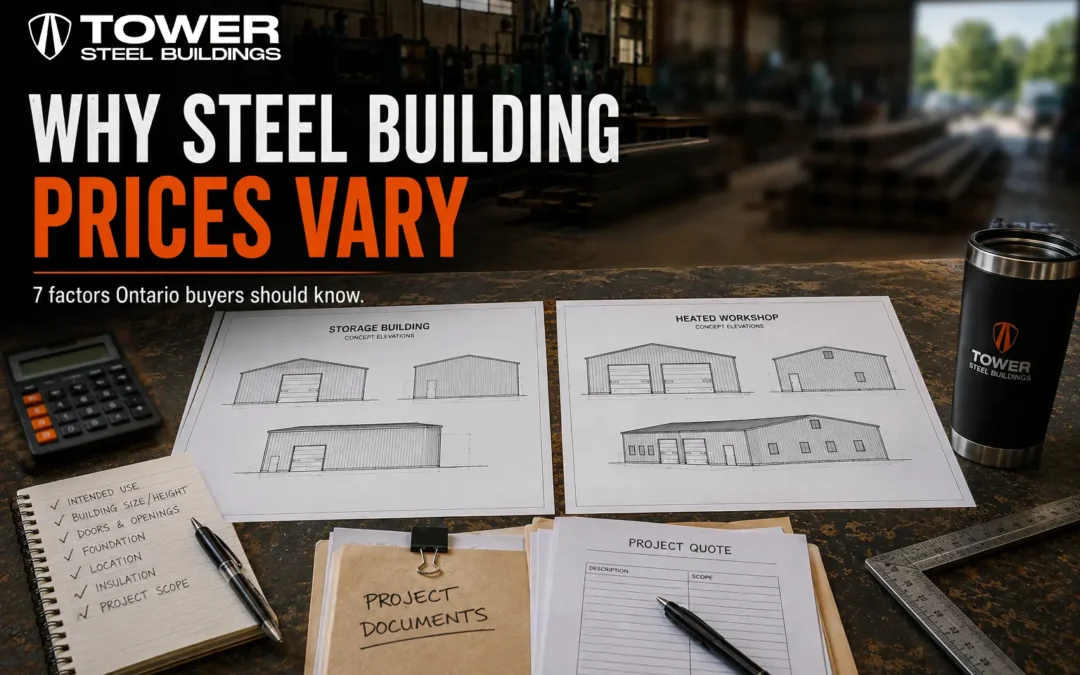
10. What factors influence the total cost of an agricultural steel building?
Total cost depends on building size, engineering scope, foundation requirements, insulation systems, ventilation design, corrosion protection, site conditions, access for construction, and long-term performance features. Cheaper initial quotes often exclude critical elements that become added costs later.