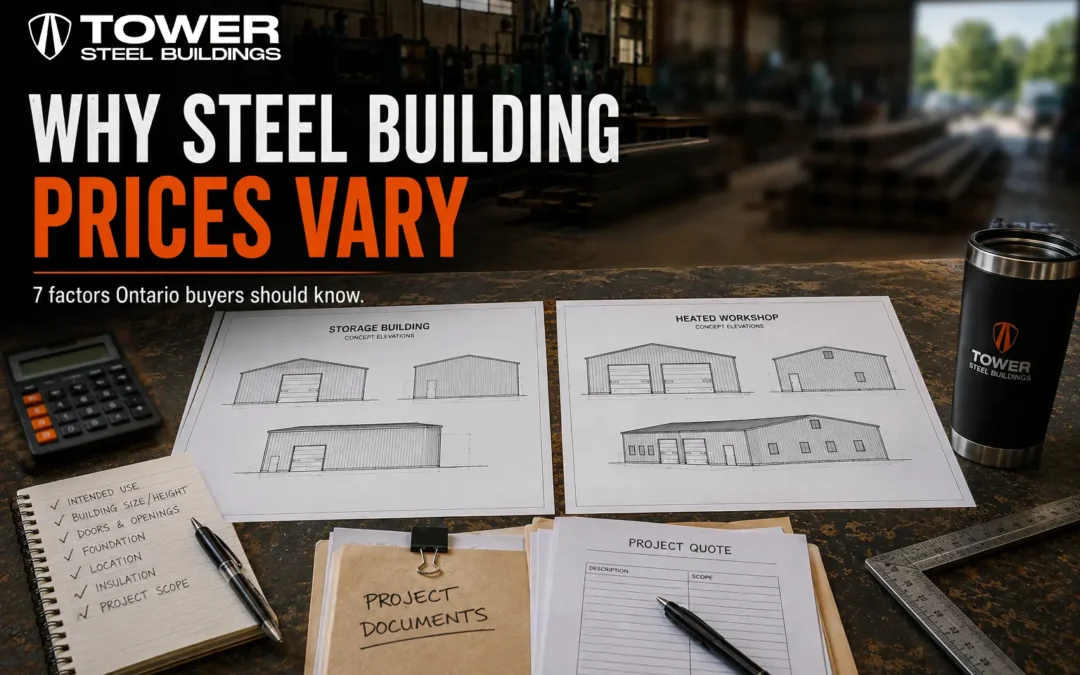
Material volatility is one of the least understood cost drivers in steel building projects. Buyers often compare quotes assuming price differences come from profit margins, supplier preference, or negotiation tactics. In practice, many of these differences are clarified in why steel building quotes vary, particularly when material escalation is involved.
In reality, material pricing dynamics frequently account for a significant portion of the variation between steel building quotes, especially in Canada’s construction environment. This pricing behaviour is closely related to the factors explained in steel building pricing, where timing, material exposure, and procurement strategy directly affect quoted cost.
Understanding how steel prices fluctuate, why those changes occur, and how they affect quoting accuracy is essential for anyone planning a permanent steel building. This applies equally to commercial developers, agricultural operators, manufacturers, fleet owners, and private property owners.
This article explains how material volatility affects steel building pricing in Canada, which components are most exposed to price movement, and how informed buyers reduce risk without rushing design or procurement decisions.
Why Steel Prices Are Not Static in Canada
Steel is not priced like finished consumer goods. Steel pricing trends in Canada are influenced by data published by Statistics Canada, particularly in manufacturing and commodity indexes. It is a globally traded industrial commodity influenced by multiple forces that extend far beyond local supply chains.
In Canada, steel pricing is affected by:
- Global demand from infrastructure, energy, and manufacturing sectors
- Raw material availability, including iron ore and scrap steel
- Energy costs such as electricity and natural gas used in steel production
- Transportation and logistics capacity
- Currency exchange rates between the Canadian dollar and US dollar
- Trade policies, tariffs, and import controls
- Production capacity and utilization at North American mills
These factors change continuously. As a result, steel pricing moves in cycles rather than following predictable annual increases. These cycles reflect broader trends tracked by the World Steel Association, which monitors global steel supply and demand. Periods of relative stability can be followed by rapid adjustments triggered by supply disruptions, demand surges, or policy changes.
For steel building projects, this means pricing is inherently time sensitive.
Which Steel Building Components Are Most Affected by Volatility
Not every part of a steel building is equally exposed to material price changes. Understanding where volatility matters most helps buyers interpret quotes accurately and avoid false comparisons.
Primary Structural Steel
Primary frames, columns, and rafters represent the largest steel volume in most buildings. The tonnage and configuration of these members are determined during steel building design and engineering, where material efficiency directly affects price sensitivity. These members are highly sensitive to base steel price movement.
Even modest mill price changes within a 60 to 90 day window can translate into significant cost differences when applied across total tonnage, particularly in long-span or heavy-load structures.
Secondary Framing and Bracing
Purlins, girts, and bracing systems are also affected, though typically to a lesser extent per unit. However, in larger buildings, cumulative impact can be meaningful.
Roof and Wall Panels
Steel roof and wall panels are influenced not only by base steel prices but also by coating costs, paint systems, and manufacturing throughput. Volatility in these areas can affect enclosure pricing independently of structural steel.
Fasteners, Accessories, and Trim
While smaller in total value, fasteners and accessories often track steel price trends and can be affected by supply chain disruptions, particularly during periods of high construction demand.
Why Quotes Issued Weeks Apart Can Look Very Different
One of the most common sources of confusion for buyers is receiving quotes that vary widely despite similar building sizes and layouts.
Several timing-related factors explain this:
- One quote may be based on current mill pricing, while another reflects earlier pricing assumptions
- One supplier may lock pricing immediately, while another delays procurement until drawings are finalized
- One quote may include escalation allowances, while another excludes them
- One project may fall into a multi-month permitting cycle before fabrication begins
In Canadian steel building projects, lead times between initial quoting and material procurement often span several months. This timing risk is explored further in steel building lead times and total project cost, where pricing exposure increases as schedules extend. During that period, material pricing can change multiple times.
Quotes issued without clearly defined price validity periods are especially vulnerable to later adjustments.
How Volatility Interacts With Permitting and Engineering Timelines
Steel building pricing is closely tied to project sequencing.
Most steel buildings are not fabricated immediately after a contract is signed. Engineering, permitting, and municipal review must be completed first. In many jurisdictions, this process alone can extend several months.
During this time:
- Steel prices may rise or fall
- Coating availability may change
- Transportation costs may fluctuate
If material pricing is not secured until after drawings are approved, the final building cost may differ from the initial estimate. This is not a pricing tactic. It is a timing reality.
Extended permitting timelines increase exposure to volatility, particularly for projects that require zoning variances, environmental reviews, or specialized approvals.
The Role of Price Validity Periods in Steel Quotes
Reputable steel building quotes clearly define how long pricing remains valid. Typical validity periods range from 15 to 45 days, depending on market conditions.
Shorter validity periods are not a sign of aggressive sales tactics. They reflect the supplier’s ability to secure pricing with manufacturers and mills.
Quotes without defined validity periods often appear more attractive initially but carry greater risk of post-signing adjustments.
Buyers should always ask:
- How long is this price valid
- What happens if material prices change before fabrication
- Which components are subject to escalation
Clarity at this stage prevents disputes later.
How Material Volatility Affects Financing and Project Carrying Costs
Material volatility does not only affect construction cost. It can also influence financing and administrative timelines.
Extended lead times or price revisions may affect:
- Lender draw schedules
- Appraisal timing and valuation certainty
- Insurance binder approvals
- Cash flow planning for staged construction
When pricing shifts after initial approvals, projects may require revalidation by lenders or insurers, introducing additional administrative delay and carrying cost.
Cost certainty is often as important as cost itself, particularly for commercial and institutional buyers.
Why Locking Pricing Too Early Can Also Be Risky
While volatility encourages buyers to seek early price locks, locking pricing prematurely can introduce other risks.
Incomplete designs, undefined foundation assumptions, or unresolved site conditions can lead to change orders that outweigh any savings from early material procurement. These issues frequently stem from late revisions discussed in design changes and steel building pricing, where volatility compounds redesign cost.
Effective pricing strategies balance timing with design completeness.
Well-managed projects secure pricing only after:
- Structural design is finalized
- Load assumptions are confirmed
- Foundation coordination is complete
- Scope is clearly defined
This reduces exposure to both material volatility and scope-driven cost escalation. This includes early coordination of steel building foundation design, which prevents material rework and pricing resets later.
How Experienced Buyers Reduce Exposure to Volatility
Experienced steel building buyers focus less on chasing the lowest initial quote and more on managing risk.
Effective strategies include:
- Confirming price validity periods in writing
- Understanding which components are fixed and which are variable
- Aligning design completion with procurement timing
- Allowing realistic schedules for permitting and approvals
- Avoiding last-minute design changes after pricing is secured
These practices do not eliminate volatility, but they significantly reduce its impact.
The Difference Between Budget Pricing and Contract Pricing
Another source of confusion arises when buyers compare budget estimates to fully contracted pricing.
Budget pricing is often based on assumed material costs and conceptual designs. It is useful for early feasibility but should not be treated as a final commitment.
Contract pricing reflects:
- Finalized engineering
- Confirmed material quantities
- Defined delivery schedules
- Known fabrication timelines
Comparing these two pricing stages without context leads to misunderstanding.
Why the Lowest Initial Price Is Not Always the Lowest Final Cost
Material volatility amplifies the gap between initial estimates and final project cost when scope, timing, or assumptions are unclear.
Projects that appear inexpensive upfront often experience:
- Escalation during permitting
- Redesign after material availability changes
- Delays waiting for revised pricing
- Administrative costs tied to re-approvals
The lowest initial price rarely represents the lowest total project cost when volatility is involved. Many of these downstream impacts are outlined in hidden costs after signing a steel building contract, where material escalation is a recurring factor.
The Value of Transparency in Steel Building Pricing
Transparent steel building pricing does not eliminate volatility. It makes it visible and manageable.
Clear quotes explain:
- What is included
- What assumptions are being made
- What conditions may trigger adjustments
- How long pricing remains valid
This level of clarity supports better decision-making and reduces disputes.
Final Perspective
Material volatility is not a flaw in steel construction. It is a characteristic of global industrial materials.
Projects that acknowledge this reality and plan accordingly experience fewer surprises, smoother approvals, and greater cost control.
Steel building pricing is most accurate when design, timing, and procurement are aligned. In that environment, volatility becomes a manageable variable rather than an unexpected disruption.
Understanding how material volatility affects steel building pricing allows buyers to evaluate quotes intelligently and move forward with confidence rather than urgency.
Reviewed by the Tower Steel Buildings Engineering Team
This article has been reviewed by the Tower Steel Buildings engineering team to ensure technical accuracy, alignment with Canadian construction practices, and consistency with real-world steel building procurement, engineering, and fabrication processes across Canada.
1. Why do steel building prices change even after I receive a quote?
Steel building quotes are often time sensitive because raw material prices fluctuate based on market conditions. If pricing is not locked or if fabrication is scheduled weeks or months later, material costs may change before procurement begins.
2. Which parts of a steel building are most affected by material volatility?
Primary structural steel, including frames, columns, and rafters, is typically the most affected due to its volume and direct exposure to mill pricing. Roof and wall panels, coatings, and secondary framing can also be impacted depending on supply conditions.
3. How long are steel building prices usually valid in Canada?
Price validity periods commonly range from 15 to 45 days, depending on market stability. Buyers should always confirm validity in writing and understand what happens if pricing expires before fabrication starts.
4. Can material volatility affect financing or insurance approvals?
Yes. Price changes can impact lender draw schedules, project budgets, and insurance binders. Cost adjustments during permitting or fabrication can introduce administrative delays and additional carrying costs.
5. Is it better to lock steel pricing as early as possible?
Not always. Locking pricing before engineering, foundation coordination, and scope definition are complete can lead to change orders that outweigh any savings. Pricing is most effective when design and procurement are aligned.
6. Why do two similar steel building quotes differ by a large amount?
Differences often stem from timing, procurement strategy, price validity assumptions, and whether escalation allowances are included. Quotes issued weeks apart may reflect different market conditions even for similar buildings.
7. Does material volatility mean steel buildings are unpredictable?
No. While material prices fluctuate, experienced suppliers manage this risk through transparent pricing, defined validity periods, and coordinated procurement. Volatility becomes manageable when expectations are clearly set upfront.
8. How can buyers reduce the impact of material volatility on their project?
Buyers can reduce risk by confirming price validity, finalizing designs before procurement, allowing realistic permitting timelines, and avoiding late-stage design changes after pricing is secured.