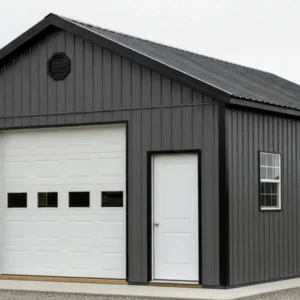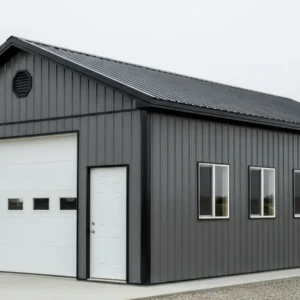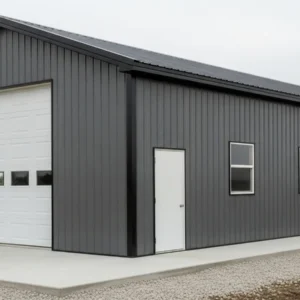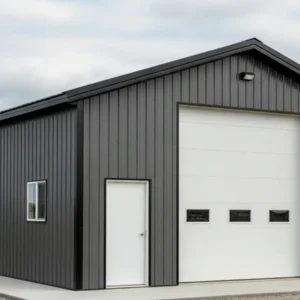
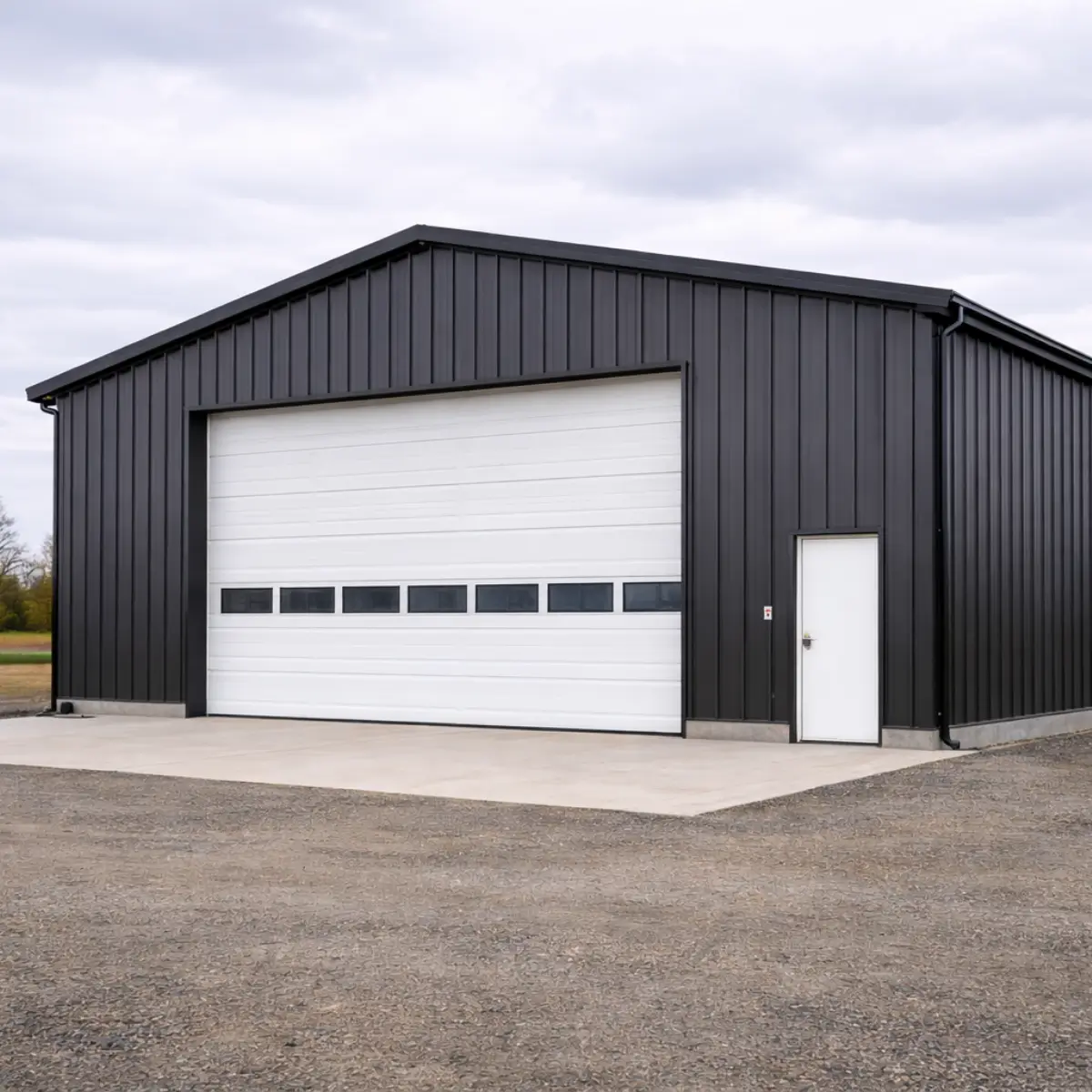
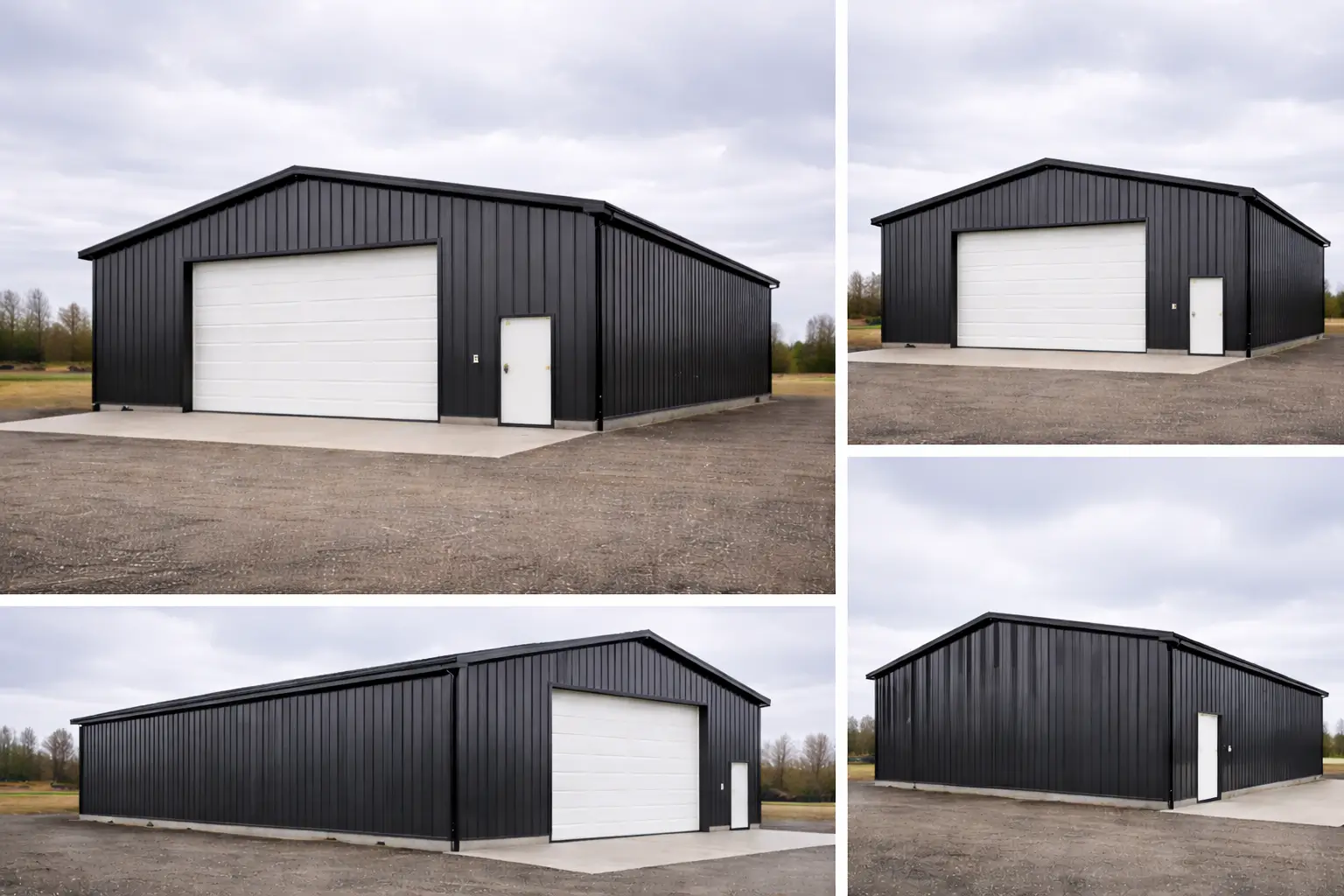
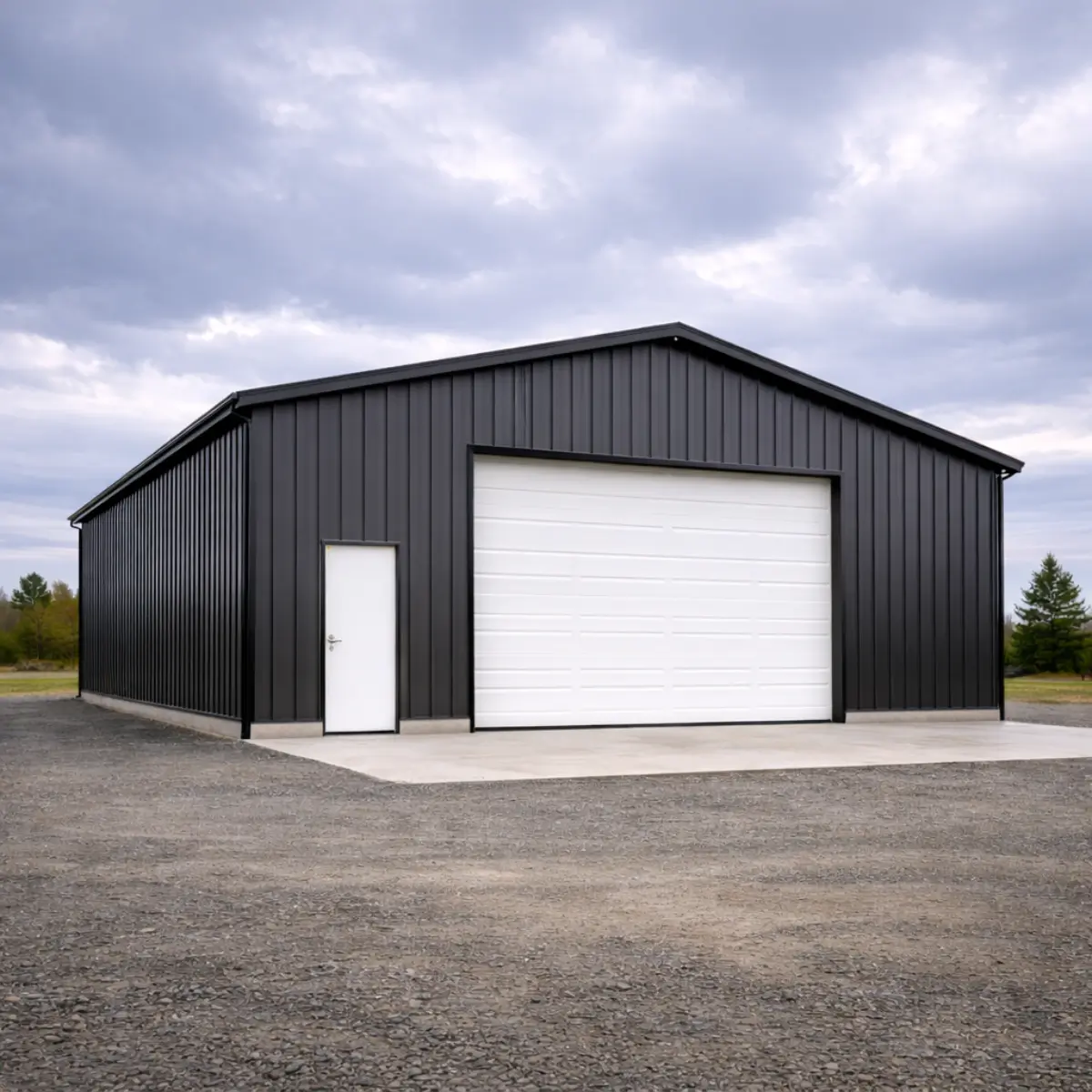
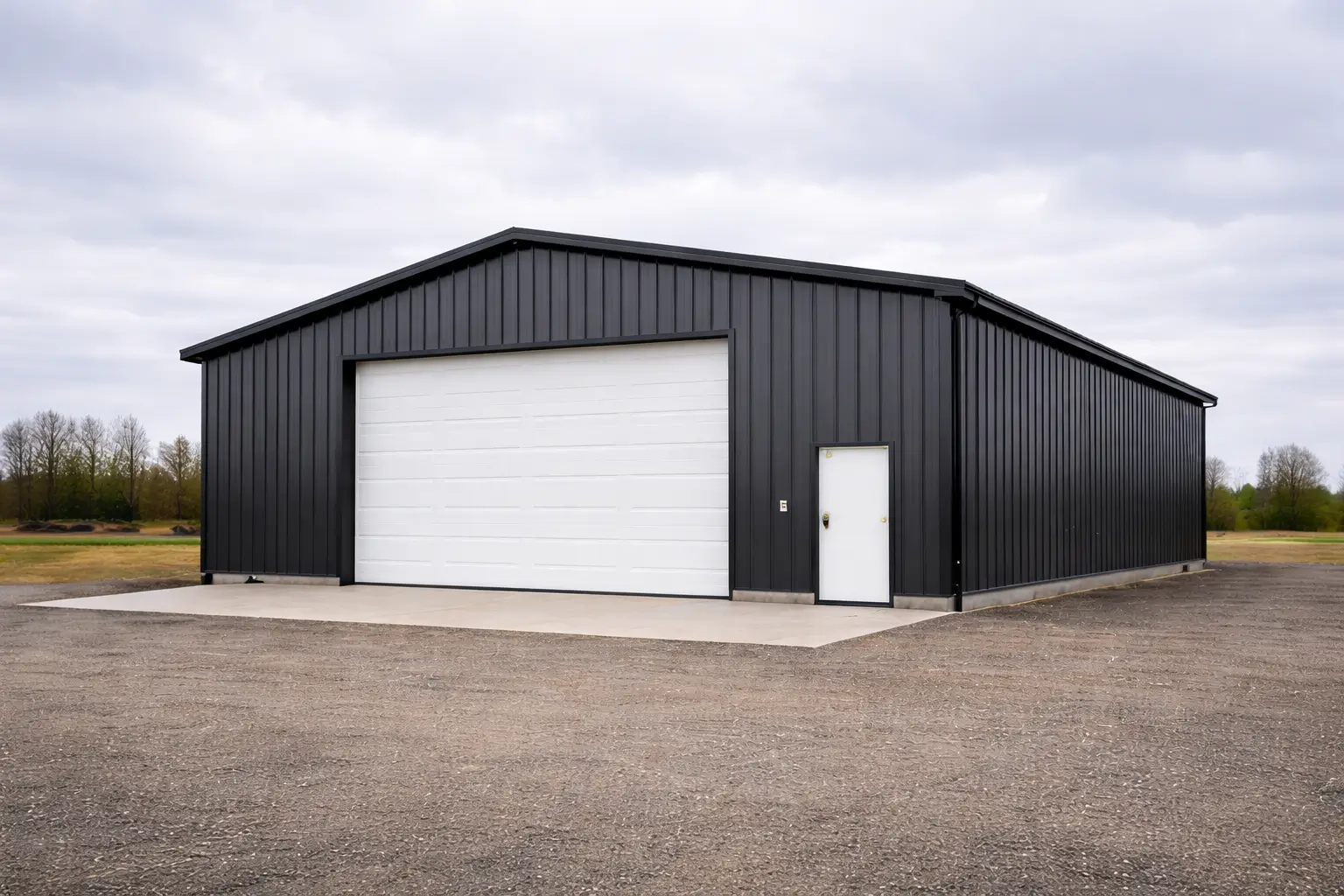
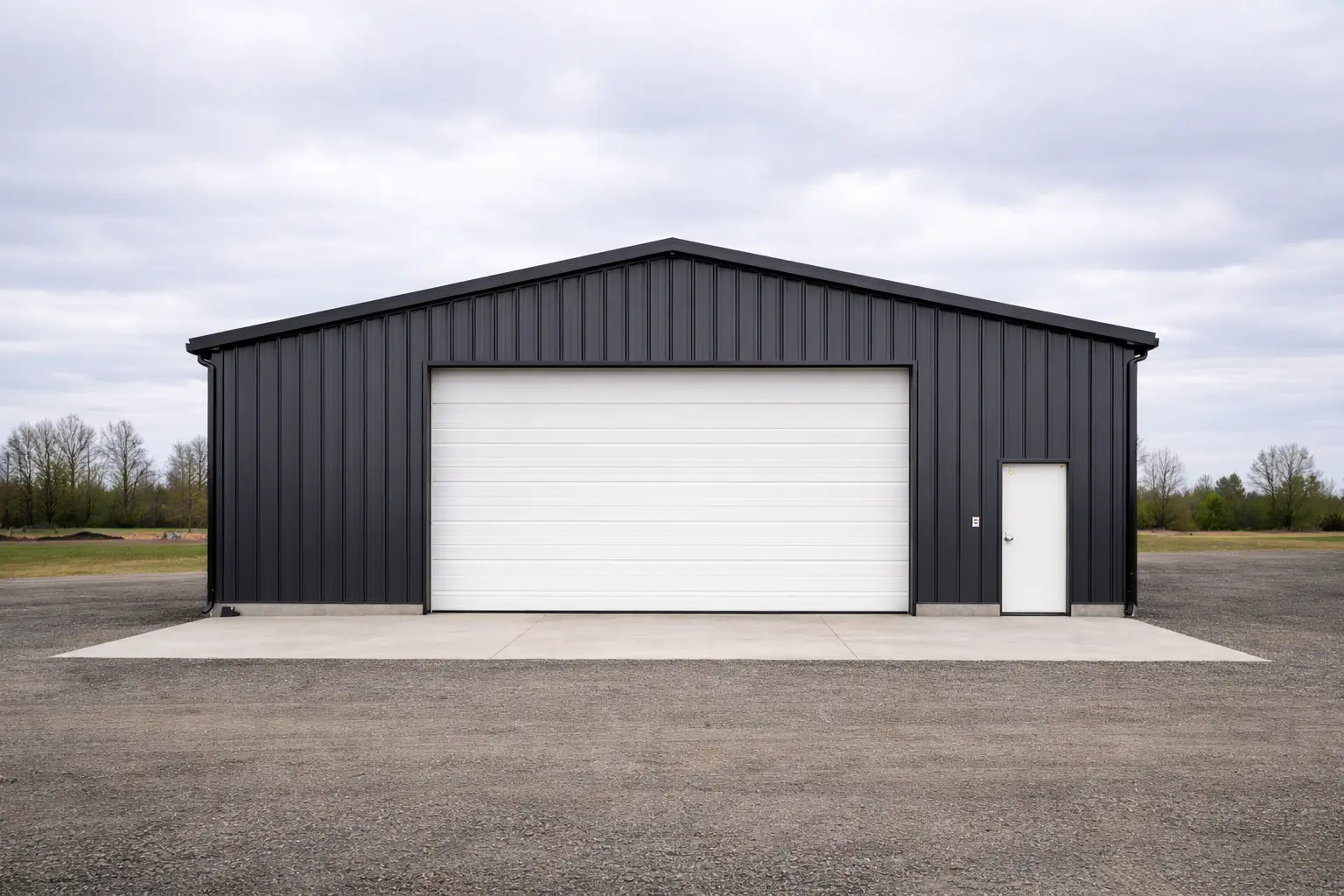
Images shown are for illustration purposes only.
The final building may differ based on colour choice, door locations, selected upgrades, and local building requirements.
30×50×16 High-Clearance Contractor Shop
The 30×50×16 High-Clearance Contractor Shop is a clear-span prefabricated steel building kit optimized for Canadian contractor operations where vertical clearance and service vehicle access are critical. Designed for structured trade workflows within a controlled 30 ft service footprint, this rigid-frame system is supplied as bundled structural materials shipped by freight within Canada. The package includes primary frames, secondary framing members, steel roof and wall panels, fastening hardware, and structural documentation prepared for permitting reference where required. No installation or construction services are included.
Designed for trade contractors who require additional interior height within a controlled 30 ft clear-span service footprint.
The 16 ft eave height expands vertical operating envelope for taller service vehicles, suspended utilities, and elevated storage while maintaining efficient 50 ft workflow depth.
This configuration delivers height-driven capability without increasing structural span, preserving site efficiency while improving overhead flexibility.
Operational Scale Classification
This configuration is classified within the 30 ft width contractor workshop category.
It is commonly selected for:
Electrical contractors
Mechanical trades
Plumbing contractors
Equipment servicing businesses
Construction fleet operators
Unlike wider commercial service buildings, the 30 ft span prioritizes controlled contractor-scale maneuvering rather than multi-vehicle throughput.
The 30 ft width allows installation on constrained commercial or rural lots where wider commercial structures may exceed site limitations.
Height Progression Context – 30×50 Series
Within the 30×50 footprint:
30×50×14 → moderate service clearance with lower heating volume
30×50×16 → expanded vertical envelope for overhead systems and taller vehicles
Increasing wall height from 14 ft to 16 ft enhances clearance capability without altering footprint or workflow depth.
Primary Contractor Workflow Model
Typical interior layout may include:
Front vehicle intake zone
Central service and repair area
Sidewall tool and materials storage
Rear staging and equipment preparation area
For example, a contractor service truck approximately 20–22 ft in length can be positioned within the forward service area while maintaining rear clearance for tool benches and material staging depending on door placement and interior configuration.
The additional wall height allows overhead storage racks or suspended air and electrical systems to be installed without interfering with vehicle servicing.
Technical Specifications
Building Width: 30 ft
Building Length: 50 ft
Wall Height at Eave: 16 ft
Interior Area: 1,500 sq ft
Clear Span: 30 ft rigid structural frame
Structural System: Clear-span rigid-frame PEMB configuration
Roof Type: Gable
Peak Height: Varies based on roof pitch
Interior Volume Capacity
Approximate enclosed volume: 24,000 cubic feet before interior installations.
Increasing wall height from 14 ft to 16 ft increases enclosed air volume by approximately 14 percent, influencing heating demand and vertical storage planning.
The 16 ft configuration balances improved vertical clearance with manageable heating volume compared to taller high-clearance or industrial structures.
Structural Behaviour and Load Path
Vertical gravity loads and lateral wind forces transfer through rigid structural rafters into frame columns and then through base plate connections into foundation bearing zones.
Foundation reactions include axial compression forces, lateral shear forces, and overturning moment effects generated by wind and roof loading.
Compared with 14 ft wall configurations, increased height results in higher tributary wind area and increased overturning demand, influencing column sizing and anchor tension requirements during engineering configuration.
Increased wall height also affects column slenderness ratios and connection demand, which are addressed during structural design.
Rigid frame base reactions produce concentrated bearing pressures at column locations that must be transferred through anchor bolts into reinforced foundation systems sized for project-specific load intensity.
Structural Configuration Variability
Final structural member sizes, frame spacing, and connection detailing are determined after confirmation of installation location, exposure classification, door openings, and applicable Canadian building code requirements.
Frame spacing and interval configuration are optimized during engineering design to balance structural efficiency and loading demands across the 50 ft building length.
Height-Driven Functional Impact
The 16 ft eave height provides improved clearance for:
Service vehicles with ladder racks
Roof-mounted contractor equipment
Ceiling-mounted lighting systems
Compressed air distribution
Cable trays and suspended utilities
Typical light-duty two-post vehicle lifts require approximately 11–13 ft of working clearance, depending on lift model and vehicle height. A 16 ft wall height provides additional overhead space for lift structure, lighting, and safe service movement, subject to roof framing depth and track configuration.
Maximum practical door opening height will always be less than nominal wall height due to header depth, door track geometry, roof slope, and structural framing clearance. Door sizing must be coordinated with structural drawings before procurement.
Expanded vertical envelope supports future operational upgrades without increasing building footprint.
Interior Clearance Planning
Usable vertical clearance is reduced by:
Roof purlin depth
Lighting systems
Insulation assemblies
Interior liner panels
Vertical storage systems and overhead installations must account for these reductions during planning.
Foundation and Slab Planning
Concrete foundation and slab systems are not included.
Contractor operations may introduce equipment anchorage, tool storage loads, and vehicle wheel loads requiring slab reinforcement designed for intended use.
Foundation systems must resist axial compression, lateral shear, and overturning reactions generated by structural loading.
Municipal Planning Considerations – Canada
Contractor workshop buildings may require:
Zoning compliance review
Setback verification
Height compliance assessment
Driveway and access confirmation
In many municipalities, building height thresholds may influence planning review requirements.
Use classification and permitting are determined by the authority having jurisdiction in Canada.
Environmental and Canadian Performance Context
Structural documentation is prepared to reflect applicable Canadian building code loading requirements for snow, wind, and exposure classification based on confirmed installation location.
Applicable snow and wind loading varies by province and exposure classification, which are confirmed during engineering configuration.
Steel enclosure systems provide protection against precipitation, wind exposure, and seasonal temperature variation typical across Canadian climates.
Interior heating demand is influenced by enclosed air volume, insulation strategy, and door cycling frequency during contractor operations.
In taller contractor workshops, air circulation planning may be required to control thermal stratification.
Operational Suitability Matrix
Choose this size if:
You require additional overhead clearance beyond 14 ft
You install suspended utilities or air systems
You operate service vehicles with roof equipment
You want expanded vertical storage potential
Consider a taller configuration if:
Large vehicle lifts with significant overhead clearance are required
Future industrial conversion is anticipated
Consider a longer configuration if:
Repair sequencing must be separated
Multiple staging positions are required
Delivered Package Contents
Primary rigid-frame structural members
Secondary framing components
Steel roof and wall panels
Mechanical fastening systems
Structural documentation package
Supplied as bundled structural materials.
Freight Delivery
This product consists of prefabricated steel building materials shipped by freight within Canada. Unloading and site staging are arranged by the buyer. No constructed structure is included.
Assembly Requirements
Erection is performed by the buyer’s selected contractor.
Temporary bracing, structural alignment, bolt torque verification, and installation sequencing must follow supplied structural documentation.
What Is Included
Structural steel framing
Roof and wall panels
Fastening systems
Structural documentation
What Is Not Included
Concrete foundation
Installation labour
Overhead doors
Electrical systems
Insulation systems
Interior finishing
Buyer Input Requirements
Installation location
Door size and clearance requirements
Vehicle height and service equipment details
Intended operational loads
Future expansion considerations
Scope and Responsibility
This product consists of prefabricated structural building materials only. No site-specific engineering services are included beyond the supplied structural documentation package. Building performance depends on proper foundation design, anchorage, erection procedures, and compliance with supplied drawings. Ownership transfers at shipment.