Steel vs Wood Construction in Ontario – Cost and Durability Comparison
Ontario’s construction industry is evolving fast. Whether you’re building a new garage, workshop, or commercial space, one of the first choices you’ll face is the material.
For decades, wood was the default, but steel has taken centre stage as homeowners and businesses look for strength, sustainability, and value.
This article takes a closer look at steel vs wood construction in Ontario – comparing cost, maintenance, environmental impact, and long-term performance.
By the end, you’ll understand why Tower Steel Buildings has become one of Ontario’s most trusted names for durable and affordable steel structures.
A Changing Landscape in Ontario Construction
Ontario’s building trends have shifted dramatically over the past decade.
Rising lumber costs, stricter building codes, and unpredictable weather have forced builders and homeowners to rethink traditional framing methods.
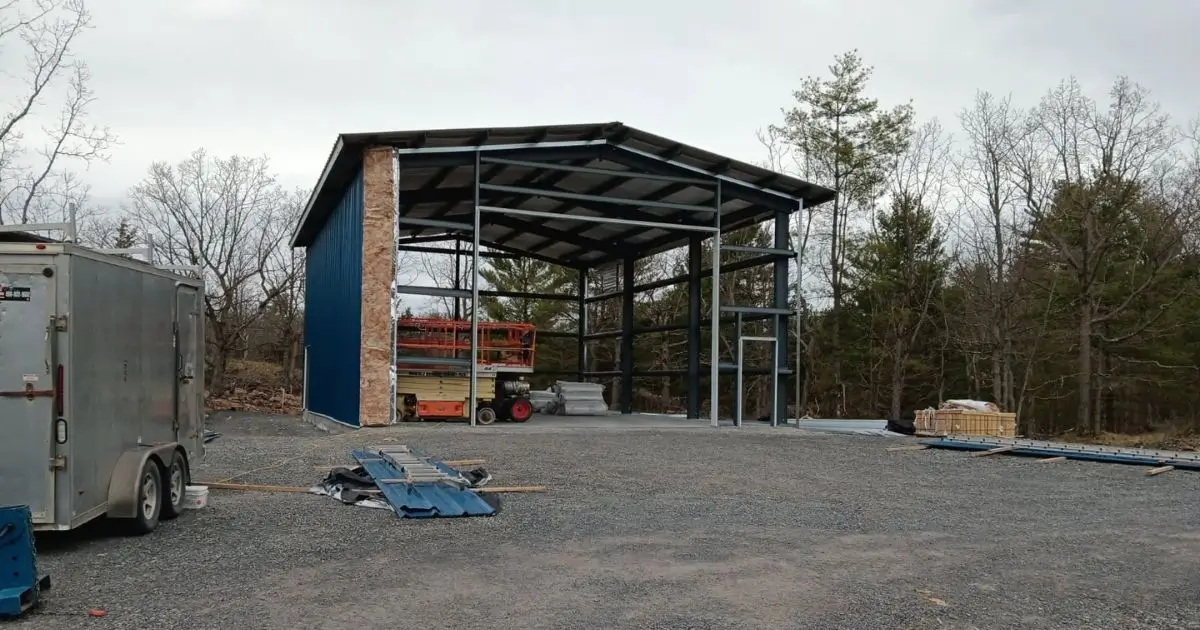
Steel buildings now dominate many sectors – from residential garages and farm storage to commercial warehouses and municipal facilities.
While wood framing still has its place in small-scale projects, the advantages of steel are too significant to ignore when it comes to long-term durability, safety, and value.
Understanding the Basics – How Steel and Wood Construction Differ
The difference between steel and wood buildings starts with how they’re engineered and assembled.
- Wood Construction
Uses dimensional lumber and trusses built on-site. It’s labour-intensive and subject to variations in moisture and material quality. - Steel Construction
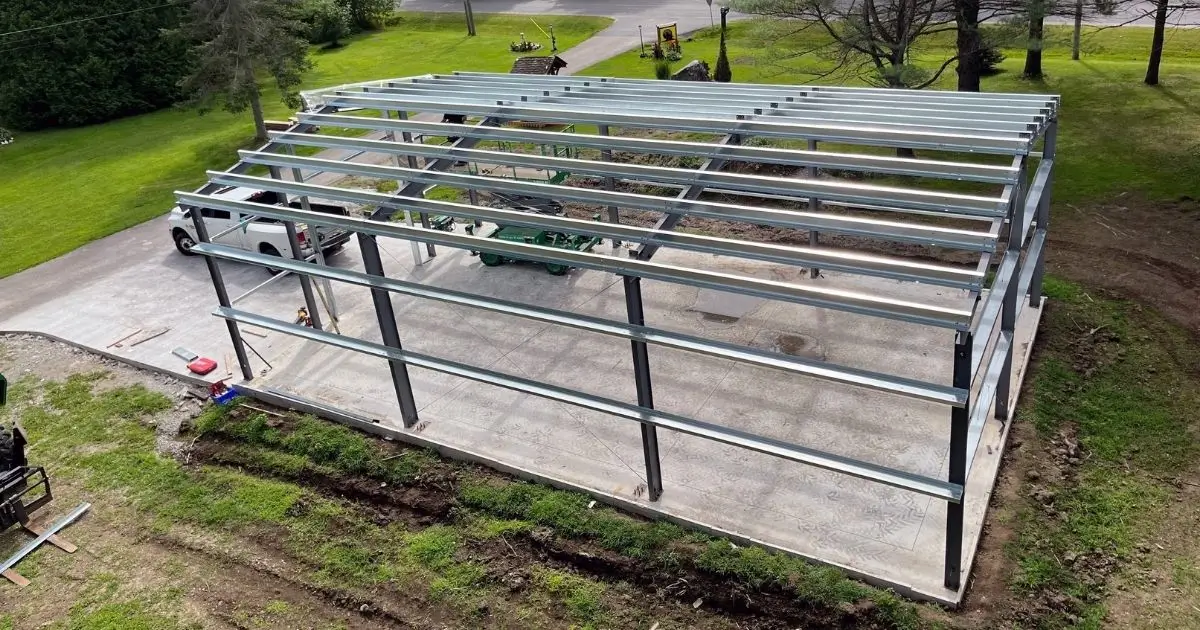
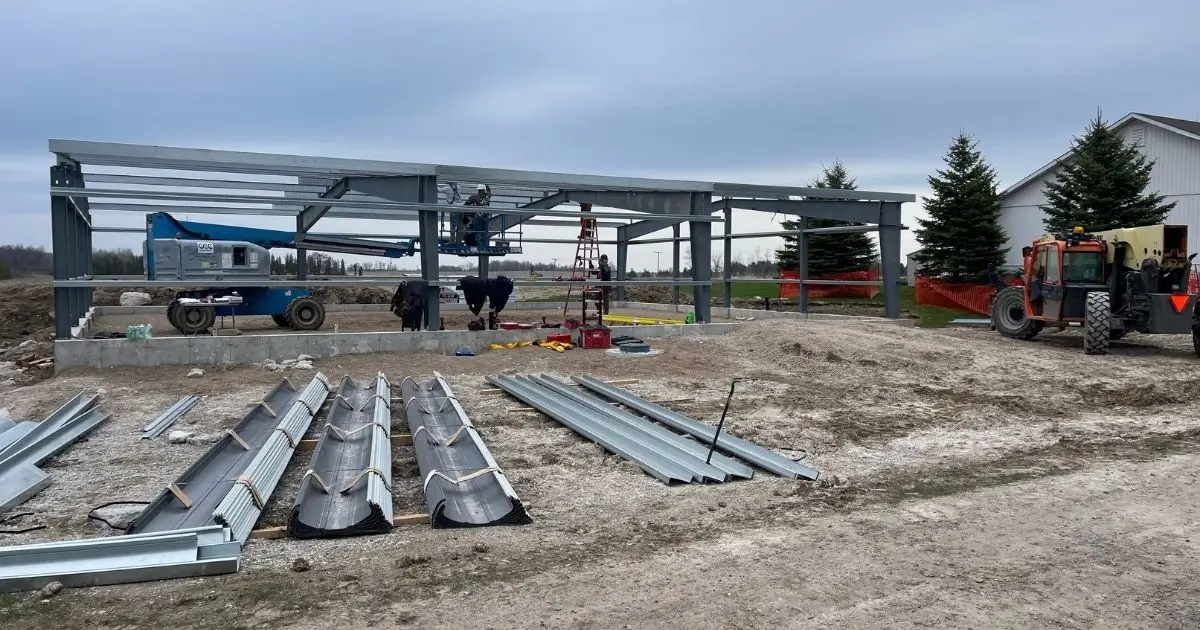
Uses precision-engineered metal framing and components fabricated in controlled environments. Each piece arrives pre-cut, pre-drilled, and ready to assemble.
This off-site manufacturing gives steel a major advantage – consistent quality, minimal waste, and fast installation.
Cost Comparison – What Ontario Buyers Should Know
When evaluating steel vs wood construction cost in Ontario, it’s important to look beyond the initial price tag.
While wood can seem cheaper upfront, long-term costs often tell a different story.
| Category | Steel Building (CAD) | Wood Building (CAD) |
| Initial Material Cost | $25–$55 per sq.ft. | $40–$80 per sq.ft. |
| Construction Time | 6–10 weeks | 12–20 weeks |
| Maintenance (30 yrs) | Minimal | Moderate to high |
| Insurance Premiums | Lower (fire resistant) | Higher (flammable) |
| Average Lifespan | 50+ years | 25–40 years |
Steel may cost slightly more per square foot in smaller projects, but the savings in labour, maintenance, and insurance quickly outweigh the difference.
In most Ontario markets, steel structures cost 15–35 percent less to own and maintain over a 30-year period.
Durability – How Steel Outlasts Wood in Ontario’s Climate
Ontario’s four-season climate puts every building material to the test.
Snow loads, humidity, and rapid temperature swings can quickly degrade wooden structures.
Steel buildings, on the other hand, are engineered for these conditions:
- No rot, warping, or shrinking
- Resistant to mold, termites, and pests
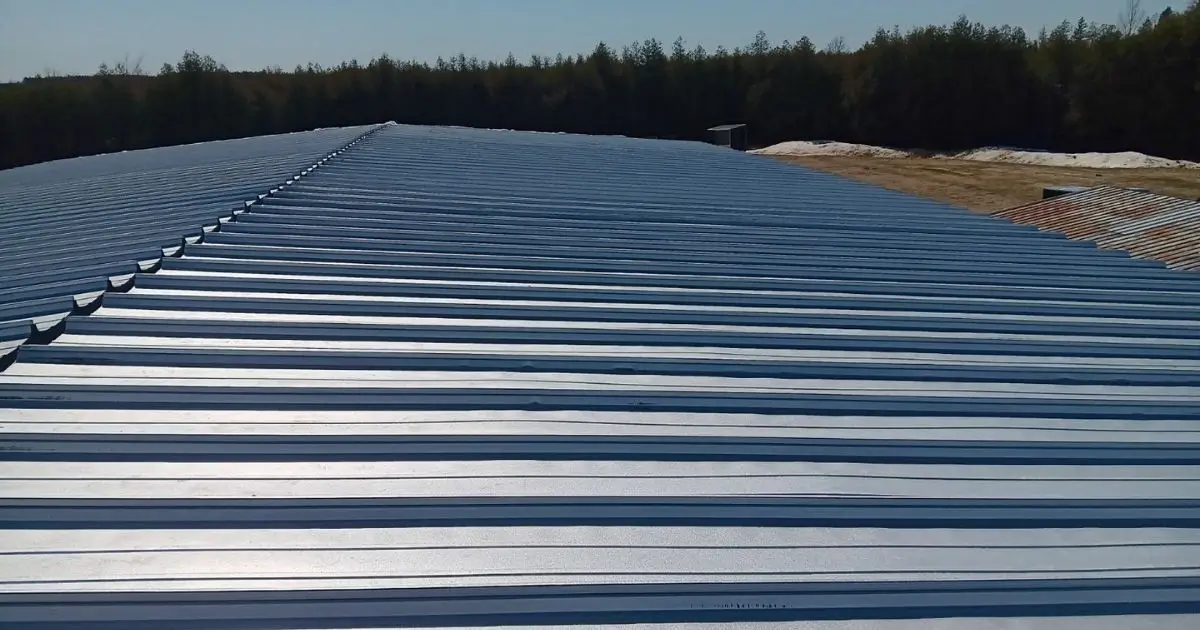
- Galvanized coatings prevent rust and corrosion
- Maintains structural integrity through freeze-thaw cycles
Wood buildings can absorb moisture, leading to warping and cracking over time. Once water penetrates framing or sheathing, repairs can become costly and recurring.
By contrast, Tower Steel Buildings use galvanized, high-tensile framing built to Ontario Building Code standards. Each design is rated for region-specific snow and wind loads, ensuring year-round reliability.
Maintenance and Lifecycle Costs
Maintenance is where the true cost of ownership becomes clear.
Wood Structures:
- Require painting or sealing every few years
- Vulnerable to pests and rot
- Roof trusses often need reinforcement after heavy winters
Steel Structures:
- Need minimal upkeep
- Protective coatings last decades
- No repainting or pest treatment required
Over the life of a building, maintenance on wood can exceed 25 percent of its initial cost.
A steel structure typically requires little more than an occasional wash or minor panel replacement every few decades.
Fire Resistance and Insurance Savings
Ontario’s insurance providers often charge lower premiums for steel buildings because they are non-combustible.
Wood structures can ignite easily, leading to higher risk and cost.
Steel’s fire resistance offers:
- Lower insurance rates
- Enhanced safety for attached homes or businesses
- Compliance with strict municipal fire-separation rules
For workshops, vehicle storage, and commercial buildings, the difference in insurance premiums can add up to thousands of dollars in savings over time.
Environmental Impact and Sustainability
Sustainability matters more than ever.
Steel is one of the most recycled materials in the world, and nearly all modern steel used in construction contains a high percentage of recycled content.
Steel’s environmental benefits:
- Fully recyclable at the end of its life
- Reduced waste during fabrication
- Compatible with solar panels and energy-efficient designs
Wood is renewable, but harvesting, treatment chemicals, and eventual decay reduce its environmental benefits.
Additionally, frequent replacements and repairs over decades generate far more waste than a single long-lasting steel structure.
For eco-conscious Ontario homeowners and businesses, steel aligns better with green construction goals and lower lifetime emissions.
Strength-to-Weight Ratio and Engineering Precision
Steel’s strength-to-weight ratio is far superior to wood.
This allows for large, open-span interiors without interior support columns – ideal for workshops, warehouses, and garages.
Engineers at Tower Steel Buildings design each frame digitally using computer-aided software that accounts for:
- Snow load distribution
- Wind uplift resistance
- Load transfer to foundations
- Fire and thermal expansion
This level of precision ensures every piece fits perfectly during installation, reducing material waste and error.
Wood framing, by contrast, is measured and cut on-site, making it prone to variation and misalignment.
Speed of Construction
Time is a major factor in any project’s success.
Steel construction outpaces wood in every stage because the fabrication process happens simultaneously with site preparation.
Typical Ontario timeline:
- Foundation preparation: 2–3 weeks
- Fabrication (off-site): 4–6 weeks
- On-site assembly: 1–2 weeks
Wood construction can stretch well beyond that, especially during the rainy season when delays are common.
Faster builds mean earlier occupancy, lower financing costs, and quicker returns for commercial clients.
Design Versatility
Many people associate steel with plain industrial buildings, but modern steel design systems allow for stylish, residential-friendly appearances.
You can choose from:
- Decorative wall panels and trims
- Architectural glass and skylights
- Various roof pitches and overhangs
- Colour-matched finishes to complement homes or businesses
Steel provides flexibility without compromising strength.
With Tower Steel Buildings’ custom design service, clients can visualize their projects before fabrication, ensuring both aesthetic appeal and structural precision.
Moisture, Mold, and Pest Resistance
Ontario’s humidity and wet seasons make wood buildings susceptible to mold and pest damage.
Even pressure-treated lumber degrades over time when exposed to moisture cycles.
Steel structures are immune to these biological threats.
No termites, no carpenter ants, no mildew.
By eliminating organic material, steel buildings stay cleaner and healthier – a major advantage for homeowners who want low-maintenance spaces.
Energy Efficiency and Comfort
Modern steel buildings in Ontario incorporate high-R insulation and vapour barriers to create efficient thermal envelopes.
Insulated metal panels (IMPs) and fibreglass systems regulate temperature year-round.
Benefits include:
- Reduced heating and cooling costs
- Better moisture control
- Long-term energy savings
Wood buildings can perform well initially, but insulation effectiveness declines over time as framing shifts or settles.
Steel’s precision fit ensures consistent insulation performance over decades.
Long-Term Value and Resale Advantage
Buyers are becoming more educated about building materials.
A steel structure often commands a higher resale value because it signals durability and lower ongoing costs.
Commercial lenders and insurers also view steel as a safer investment, meaning easier financing and better insurance rates for owners.
For homeowners, a well-maintained steel garage or shop adds practical space and resale appeal to any property.
When Wood Still Makes Sense
While steel leads in most categories, wood can still be a good fit for certain projects:
- Decorative or heritage structures
- Small sheds or cabins
- Homes where aesthetics outweigh industrial performance
Wood remains easier for DIY modifications and offers a warm, natural look.
However, for larger or more demanding builds, steel’s structural and economic benefits are clear.
Why Tower Steel Buildings Leads in Ontario
For over 25 years, Tower Steel Buildings has delivered engineered steel systems across Ontario, including Toronto, Ottawa, London, and Northern Ontario.
The company’s success lies in its ability to combine engineering accuracy with practical design.
What makes Tower Steel different:
- In-house design and engineering teams
- OBC-compliant, stamped drawings for permits
- Factory fabrication and local delivery
- Professional installation crews
- Lifetime structural warranties
Every building is tailored to site conditions, ensuring strength, compliance, and long-term value.
Conclusion
The debate between steel vs wood construction in Ontario ultimately comes down to priorities.
If you want a quick, affordable build for a short-term project, wood can work.
But if you’re looking for longevity, minimal maintenance, and a structure built to handle Ontario’s extreme conditions, steel is the clear winner.
With the expertise of Tower Steel Buildings, you don’t have to compromise between strength, appearance, or budget.
Their team provides fully engineered, customizable steel structures that outperform traditional wood framing in every measurable way.
Reviewed by the Tower Steel Buildings Engineering Team
This article was reviewed by the Tower Steel Buildings engineering team, who have decades of experience designing and fabricating Ontario-compliant steel structures.
Their engineers ensure that every project meets the highest standards of safety, efficiency, and durability.
1. Is steel construction more expensive than wood in Ontario?
Not overall. While material costs can be higher, steel saves significantly on labour, maintenance, and insurance over time.
2. How long does a steel building last in Ontario?
A properly maintained steel building can last 50 years or more, compared to 25–40 years for typical wood structures.
3. Can steel buildings be insulated like wood?
Yes. Modern insulated metal panels and fibreglass systems create high-performance thermal barriers for year-round comfort.
4. Are steel buildings harder to customize?
No. Tower Steel Buildings offers complete design flexibility, including rooflines, colours, and architectural finishes.
5. What makes steel more durable in Ontario’s weather?
Steel resists moisture, pests, and structural shifting caused by freeze-thaw cycles. It maintains its integrity far longer than wood in cold, wet environments.