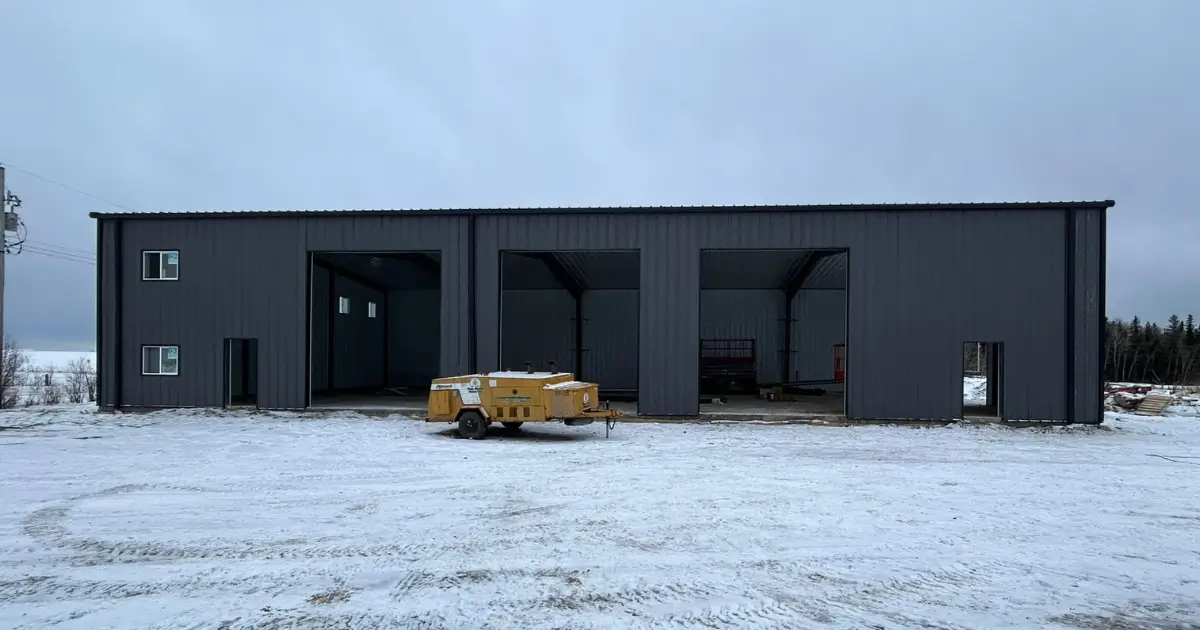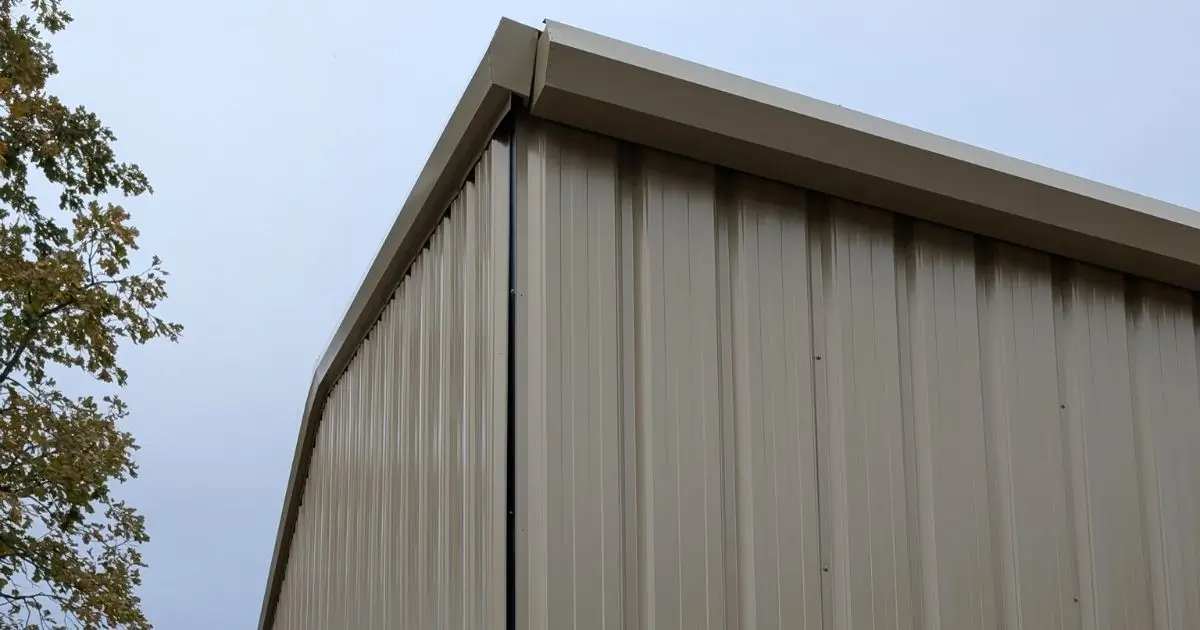
In Canada’s logistics and distribution sector, facilities are no longer simple storage buildings. They are high-throughput operational hubs where efficiency, predictability, and durability directly affect profitability. Steel buildings have become the preferred structural system for these facilities because they align well with the spatial, operational, and lifecycle demands of modern logistics operations.
This article explains how steel buildings support distribution and logistics centres in Canada, what design considerations matter most, and where early planning decisions have the greatest long-term impact.
Who This Article Is For
This article is intended for owners, developers, and operators planning permanent distribution or logistics facilities in Canada where throughput efficiency, long-term durability, and predictable operating costs matter. It may not apply to short-term storage buildings or lightly engineered enclosures with limited operational demands.
Why Steel Buildings Are Well Suited to Logistics Operations
Logistics facilities operate on movement, not storage. The building must support continuous flow of goods, vehicles, and people without becoming a bottleneck. Steel construction is particularly effective in this context because it enables large, unobstructed spaces, predictable structural behaviour, and efficient integration of material handling systems.
Unlike facilities designed primarily for static loads, logistics buildings must accommodate dynamic activity such as forklift traffic, pallet racking, conveyor systems, and frequent dock operations. Steel buildings allow these systems to be planned, installed, and modified with fewer structural constraints over time.
Clear-Span Space and Operational Flexibility
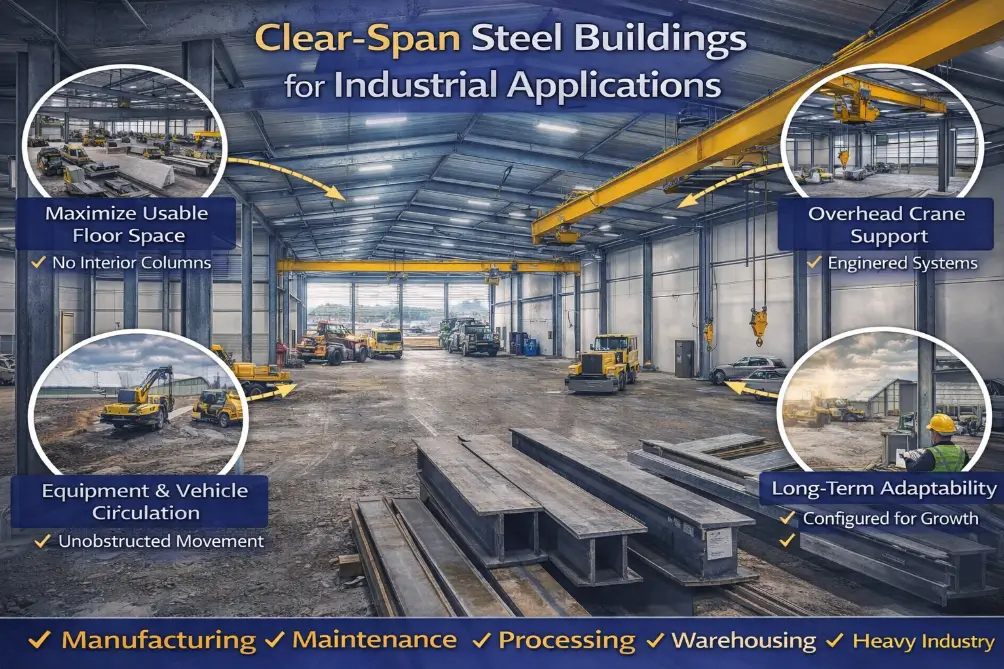
One of the most significant advantages of steel buildings for distribution centres is the ability to achieve wide clear spans. Interior columns reduce layout flexibility, interfere with racking systems, and complicate traffic flow. Clear-span steel frames shift structural loads to perimeter elements, leaving the interior open and adaptable.
This design approach is widely used in modern logistics facilities, as explained in clear-span steel buildings for industrial applications.
This flexibility allows operators to reconfigure racking layouts, add automation, or change traffic patterns without structural modification. Over the life of a logistics facility, this adaptability often becomes more valuable than initial construction cost savings.
Dock Design and Vehicle Interface Considerations
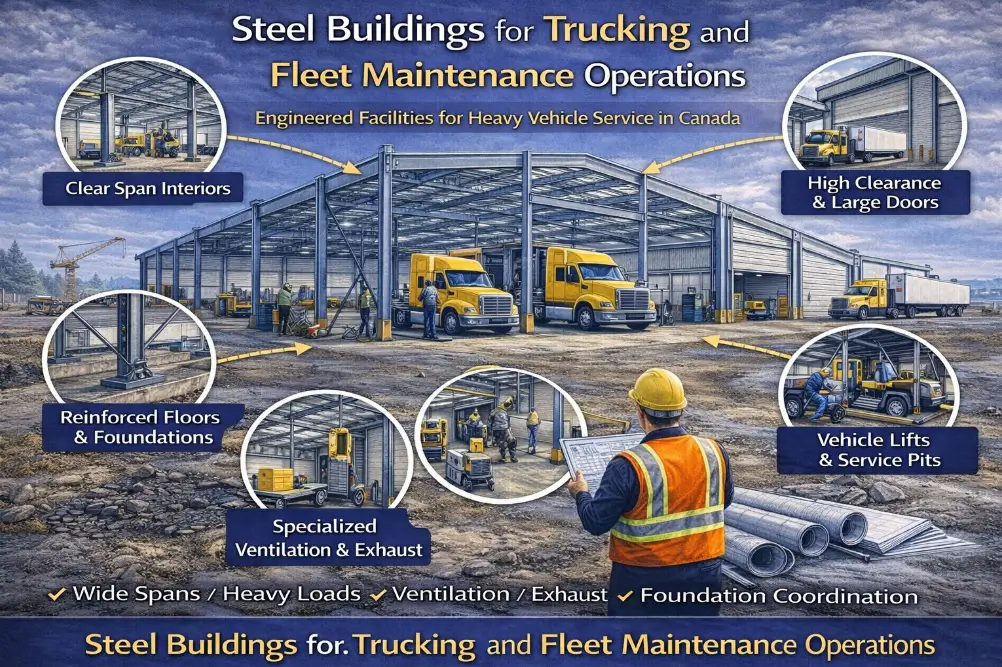
Dock areas are among the most heavily used zones in a logistics facility. Structural design must account for repetitive impact loads, roof overhang coordination, door spacing, and canopy integration.
Steel framing allows precise alignment of dock doors, levelers, and protective elements. When coordinated early, steel buildings can support future dock expansion or reconfiguration without major structural disruption.
For example, misaligned dock door spacing can restrict trailer positioning, slow loading cycles, and increase wear on doors and levelers, all of which affect daily throughput and maintenance costs.
In Canadian climates, dock areas also require careful attention to snow accumulation, drainage, and thermal performance. Poorly designed interfaces often lead to ice buildup, premature wear, and operational downtime.
Floor Slabs, Loads, and Equipment Coordination
While the steel structure defines the building envelope, the floor slab often governs operational performance. Logistics facilities place concentrated loads on slabs through racking legs, forklifts, pallet jacks, and automated systems.
Early coordination between structural steel design and slab design is critical. Steel reactions influence foundation design, while slab flatness and load capacity influence racking height and aisle width. Treating these systems independently often results in costly redesign or operational compromise.
Many of these conflicts can be avoided through proper steel building foundation design coordinated directly with structural loads and floor performance requirements.
Vertical Clearance and Racking Efficiency
Vertical space is a key cost driver in logistics facilities. Steel buildings can be engineered to accommodate higher eave heights and roof geometries that maximize usable vertical clearance.
However, clearance planning must consider more than nominal building height. Roof slope, structural depth, lighting, sprinkler systems, and mechanical services all reduce usable space if not coordinated properly. Steel building design allows these elements to be integrated into a predictable clearance envelope when addressed early.
Structural Loads Beyond Storage
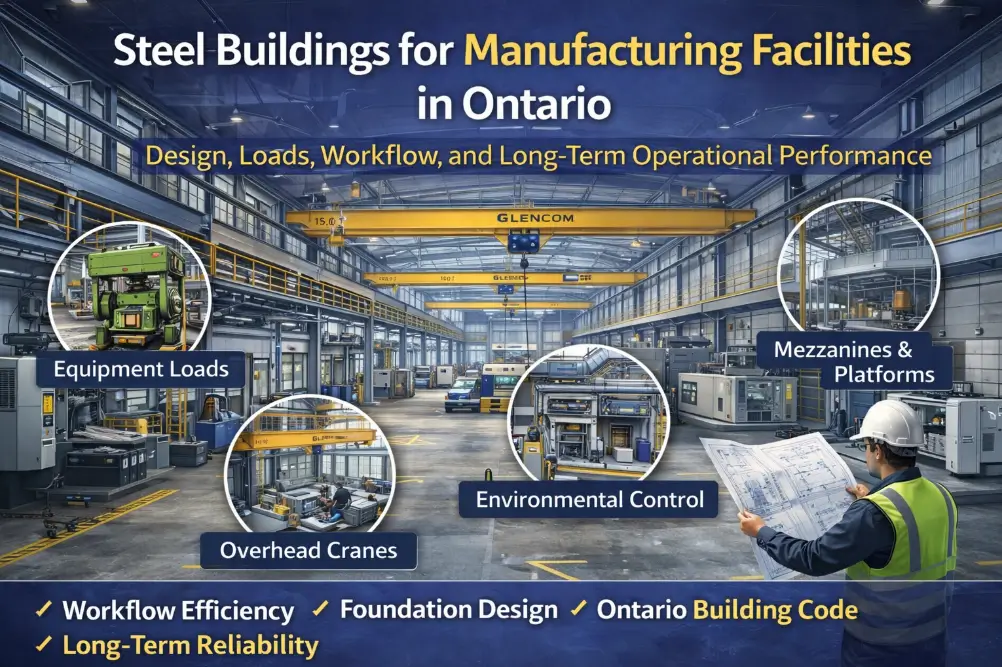
Distribution centres experience more than static storage loads. Roofs must accommodate snow, wind, and mechanical systems. Frames must tolerate vibration and dynamic loading from equipment. Walls often support conveyors, mezzanines, or future expansion.
Steel structures respond well to these demands because loads are carried through defined paths that can be analyzed, adjusted, and verified. This predictability supports long-term operational reliability and simplifies future upgrades.
Climate and Environmental Exposure in Canada
Canadian distribution facilities operate across a wide range of environmental conditions. Snow loads, wind exposure, freeze-thaw cycles, and temperature variation all affect building performance. Engineers rely on Canadian snow load and climate data used for structural design to size roof systems and control drift accumulation in large industrial buildings.
Steel buildings can be engineered with climate-specific assumptions rather than generic averages. These climate assumptions are based on the National Building Code of Canada structural load requirements, which govern snow, wind, and environmental design across the country.
This is especially important when applying steel building snow load zones across Canada to roof design and drift control in large logistics facilities. This reduces the likelihood of envelope failures, condensation issues, and structural distress over time. In logistics operations, even minor building issues can disrupt schedules and damage inventory.
Energy Performance and Operating Costs
Distribution centres often operate long hours and cover large floor areas. Energy performance therefore has a significant impact on operating costs.
Steel buildings support efficient insulation systems, controlled air leakage, and predictable thermal performance when properly detailed. While steel itself does not insulate, it allows insulation assemblies to be designed and protected in a consistent manner. Over decades of operation, this consistency contributes to lower energy variability and easier maintenance planning.
Fire Protection and Risk Management
Logistics facilities often store high volumes of combustible goods. Fire risk management is therefore a central design concern.
Steel structures perform predictably under fire conditions when paired with appropriate protection systems. Open layouts improve sprinkler coverage and emergency access. Many insurers view steel buildings favourably due to their non-combustible nature and consistent structural behaviour.
Fire protection coordination must be integrated early, particularly where roof structure, lighting, and material handling systems intersect.
Expansion and Long-Term Growth Planning
Distribution operations rarely remain static. Growth in volume, changes in inventory type, or new delivery models often require building expansion.
Steel buildings can be designed with future expansion in mind through end-wall framing strategies, foundation allowances, and connection detailing. Planning for expansion during initial design is far less costly than retrofitting a building that was never intended to grow.
Construction Sequencing and Schedule Predictability
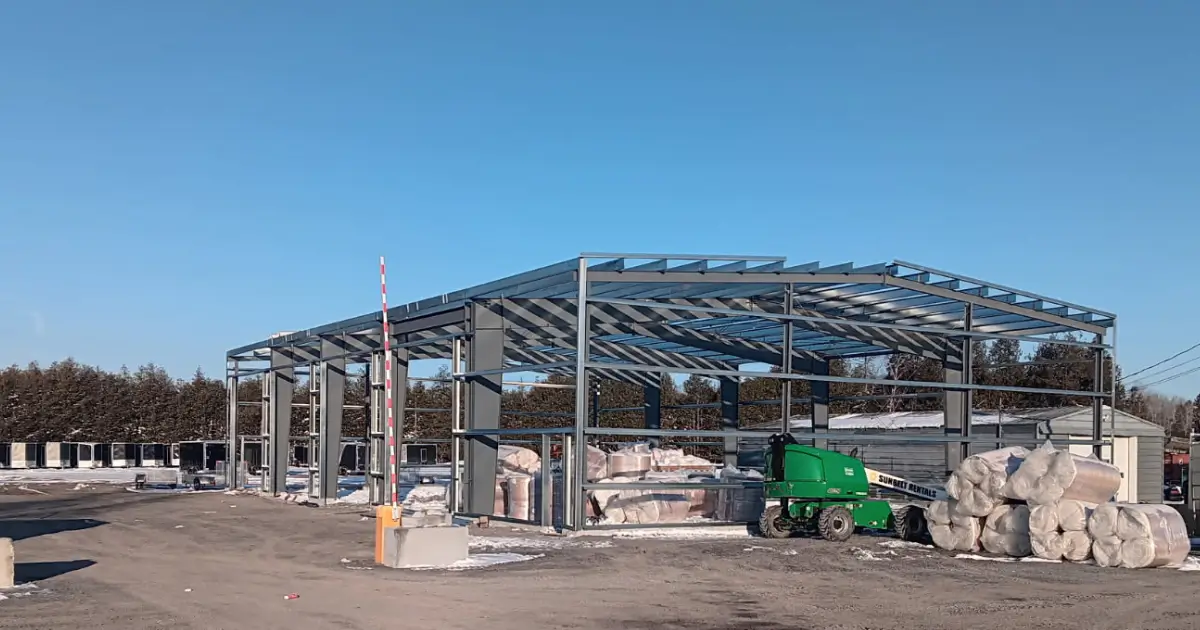
Logistics projects often operate on tight schedules tied to lease agreements, seasonal demand, or supply chain commitments. Steel construction offers schedule predictability because fabrication and site work can proceed in parallel.
However, erection speed depends heavily on site readiness, foundation completion, and access planning. This relationship between preparation and progress is explored further in steel building erection timelines and delays.
Most schedule delays occur before steel arrives on site, long before erection crews are involved. Many logistics projects experience setbacks due to overlooked grading, drainage, and access planning, as outlined in steel building site preparation. Understanding this distinction helps owners manage expectations and reduce risk.
Maintenance and Lifecycle Performance
Over decades of operation, maintenance costs often exceed initial construction cost. Steel buildings that are properly engineered, coated, and detailed tend to experience predictable maintenance patterns rather than unexpected failures.
Durability issues such as corrosion, envelope leakage, or structural fatigue rarely result from steel itself. They typically arise from inadequate detailing, exposure misclassification, or deferred maintenance planning.
In logistics operations, predictable maintenance is often more valuable than minimal upfront cost.
Ownership Perspective vs Short-Term Cost
For owner-operators, long-term reliability and adaptability are critical. For developers, leasing performance and asset value are often the priority. Steel buildings support both perspectives by offering durability, flexibility, and predictable performance.
The lowest initial price rarely aligns with the lowest long-term cost. Facilities designed for durability and adaptability consistently outperform short-term builds, delivering measurable long-term cost savings of steel buildings. Buildings designed for logistics realities tend to outperform those designed solely to meet minimum requirements.
Summary
Steel buildings align well with the operational, structural, and lifecycle demands of distribution and logistics centres in Canada. Many modern distribution hubs are delivered as commercial steel buildings for logistics and warehouse operations designed around throughput efficiency and expansion flexibility.
Their ability to provide clear-span space, predictable performance, and long-term adaptability makes them a practical choice for facilities where efficiency and reliability matter.
When designed with coordination between structure, foundation, floor systems, and operational equipment, steel buildings become infrastructure that supports logistics operations rather than constraining them. When designed properly, steel logistics buildings function as operational infrastructure, not just enclosed space.
Reviewed by the Tower Steel Buildings Engineering Team
This article has been reviewed by the Tower Steel Buildings engineering team to ensure technical accuracy, alignment with Canadian building codes, and relevance to real-world logistics and distribution projects across Canada. The review reflects practical field experience in designing, coordinating, and delivering steel buildings for high-throughput operational environments.
1. What makes steel buildings suitable for distribution and logistics centres in Canada?
Steel buildings support wide clear spans, high vertical clearance, and predictable structural performance. These characteristics allow efficient racking layouts, smooth vehicle circulation, and adaptability as logistics operations evolve, while meeting Canadian code and climate requirements.
2. How early should dock design be coordinated in a steel logistics building?
Dock design should be coordinated during early structural planning. Door spacing, canopy loads, roof geometry, and vehicle clearances affect both structure and operations. Late changes often lead to rework, reduced efficiency, or inspection delays.
3. Do steel buildings reduce long-term operating costs for logistics facilities?
When properly designed, steel buildings offer predictable maintenance patterns, durable structural performance, and efficient integration of insulation and building systems. Over time, this predictability helps control operating costs and reduces unplanned disruptions.
4. How do Canadian climate conditions affect logistics building design?
Snow loads, wind exposure, freeze-thaw cycles, and temperature variation influence roof design, drainage, insulation, and envelope detailing. Steel buildings can be engineered using site-specific climate data, reducing the risk of performance issues over the building’s lifecycle.
5. Can steel distribution centres be expanded in the future?
Yes. Steel buildings can be designed with future expansion in mind through end-wall framing, foundation allowances, and connection detailing. Planning for expansion during initial design is far more cost-effective than retrofitting later.
6. Where do most schedule delays occur in logistics building projects?
Most delays occur before steel erection begins. Incomplete foundations, unresolved access issues, permit delays, or uncoordinated site preparation often affect schedules more than steel fabrication or erection itself.