Steel building erection is often described as the fastest phase of a construction project. Compared to traditional construction, steel structures can go up quickly once everything is ready. However, the assumption that steel buildings are fast by default is one of the most common reasons projects fall behind schedule.
In Canada, steel building erection timelines are shaped as much by permitting, inspections, site conditions, and seasonal realities as by construction speed itself. These realities are addressed directly in professional steel building erection services, where sequencing, access planning, and site readiness are coordinated in advance.
When delays occur, they are rarely caused by the steel or the erection crews. They almost always trace back to decisions made weeks or months earlier.
This article explains how steel building erection timelines actually work in Canada, what realistically controls schedule outcomes, and what consistently slows projects down once steel arrives on site.
Who This Article Is For
This article is intended for building owners, developers, farmers, and project managers planning permanent steel buildings in Canada where schedule certainty, inspections, and coordination matter.
It may not apply to temporary storage structures or lightly engineered enclosures where full permitting and long-term performance are not required.
Understanding the True Steel Building Erection Timeline
For most permanent steel buildings in Canada, erection is only one phase within a longer construction sequence. A typical project includes:
- Site preparation and grading
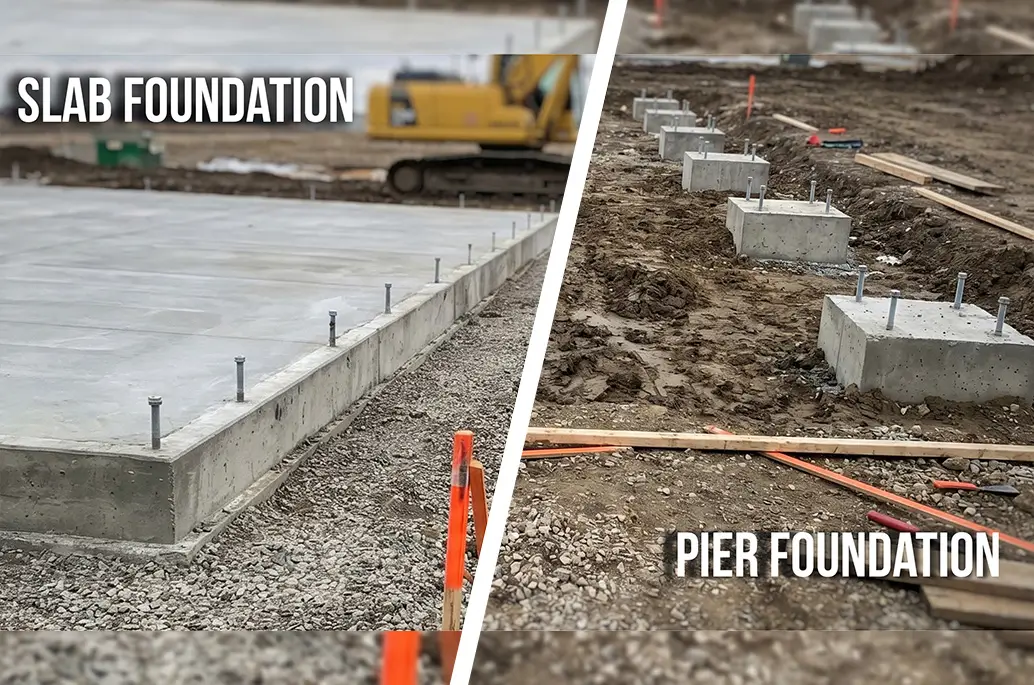
- Foundation design, excavation, and concrete work
- Curing and inspection of foundations
- Delivery and staging of steel components
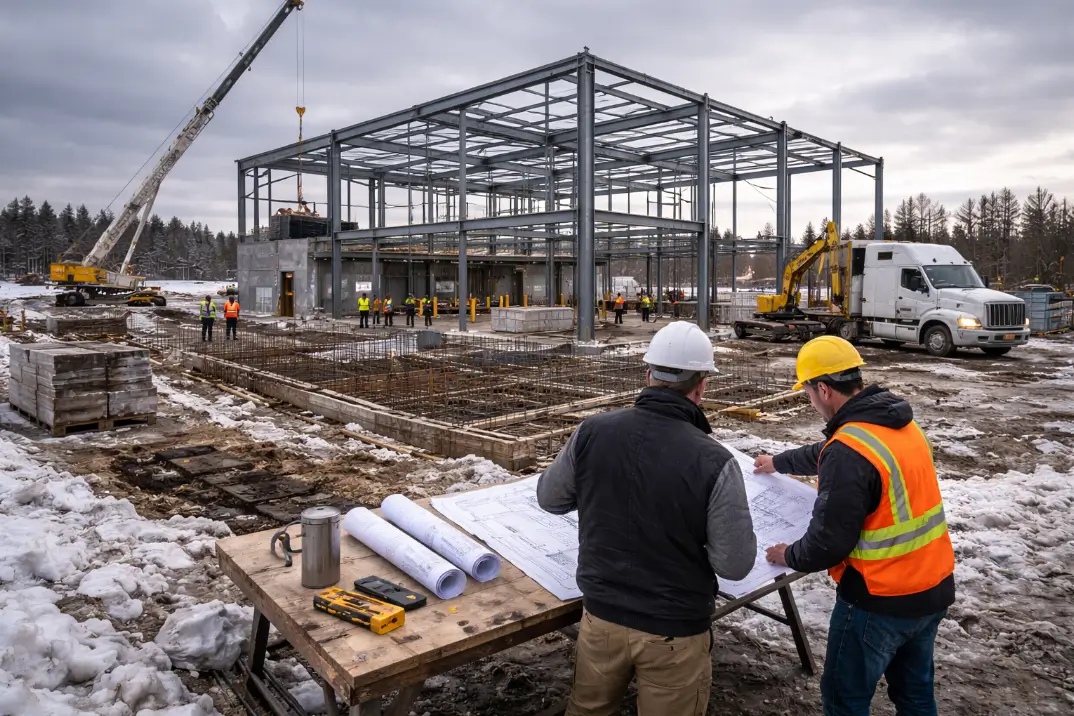
- Structural steel erection
- Building envelope installation
- Final inspections and closeout
The erection phase itself often represents a small portion of the total project duration. In many cases, the steel frame is erected in days or weeks, while months are spent preparing the site and foundations.
When projects fall behind schedule, it is rarely because erection took too long. It is because something was not ready when erection was supposed to begin.
What a Realistic Steel Erection Schedule Looks Like
Once foundations are complete, inspected, and released for construction, steel erection follows a predictable sequence:
- Site mobilization and crane setup
- Placement of primary frames and columns
- Installation of secondary framing and bracing
- Alignment, plumbing, and structural verification
- Temporary stabilization and safety checks
When site conditions, foundations, and drawings are correct, this phase progresses efficiently. When problems appear, erection pauses immediately until they are resolved.
The Most Common Factors That Slow Steel Building Erection
Foundation Issues That Stop Work Immediately
Steel erection depends on precise load transfer.
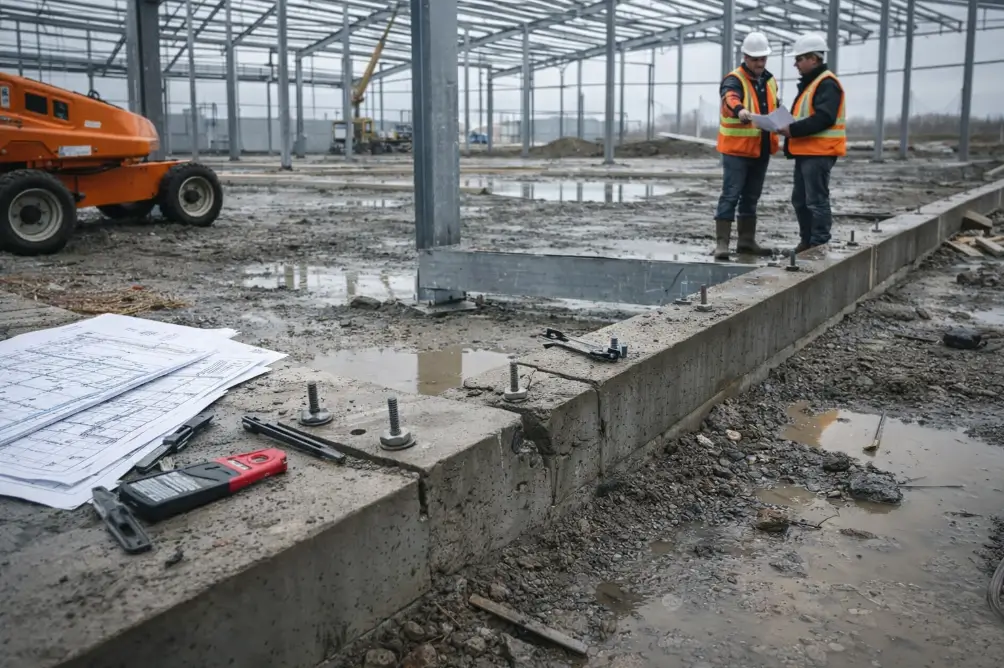
Even small foundation issues can stop erection entirely. Many of these problems originate during steel building foundation design, where elevation control, anchor placement, and load transfer must be engineered precisely.
Common problems include:
- Anchor bolts placed outside allowable tolerance
- Foundation elevations that vary beyond design limits
- Incomplete curing or missing inspection approvals
- Slabs poured without confirming column base conditions
Steel does not tolerate field improvisation. When foundations are incorrect, erection halts until engineering review and corrective work are completed.
Site Access and Crane Planning Gaps
Crane access must be planned long before steel arrives. Proper steel building site preparation ensures ground stability, access routes, and staging areas are ready for erection equipment.
Delays occur when:
- Crane routes are not compacted or stabilized
- Soil conditions cannot support crane loads
- Overhead utilities restrict crane movement
- Laydown areas are undersized or poorly located
Crane setup is not flexible once materials are on site. If access is inadequate, erection stops.
Incomplete or Unapproved Structural Documents
Erection cannot proceed without fully approved drawings.
Delays occur when:
- Permit revisions are still under municipal review
- Engineering changes were not issued before delivery
- Foundation and steel drawings are misaligned
- Crews are working from preliminary documents
In Canada, erection cannot legally proceed if structural documents are incomplete or inconsistent with approved permits. These requirements align with permitting and inspection standards established under Canada’s national building framework administered by the National Research Council of Canada.
Weather and Seasonal Exposure
Steel erection can proceed in many conditions, but site readiness often cannot.
Common weather-related delays include:
- Soft or frozen ground preventing crane access
- Snow covering anchor bolt locations
- Standing water around foundations
- Wind conditions exceeding safe lifting limits
Seasonal planning matters. Projects that underestimate weather exposure often experience stop-start erection rather than continuous progress.
Temporary Bracing and Stability Requirements
Steel structures must remain stable at every stage of erection. These requirements are explained in detail in temporary bracing requirements during steel building erection, where erection-phase structural behaviour is addressed.
Delays occur when:
- Temporary bracing requirements are underestimated
- Erection sequencing lacks engineering input
- Wind exposure requires additional stabilization
These measures are not optional. Safety regulations and engineering requirements control when erection can continue. Provincial construction safety enforcement is guided by standards coordinated through Canadian Centre for Occupational Health and Safety.
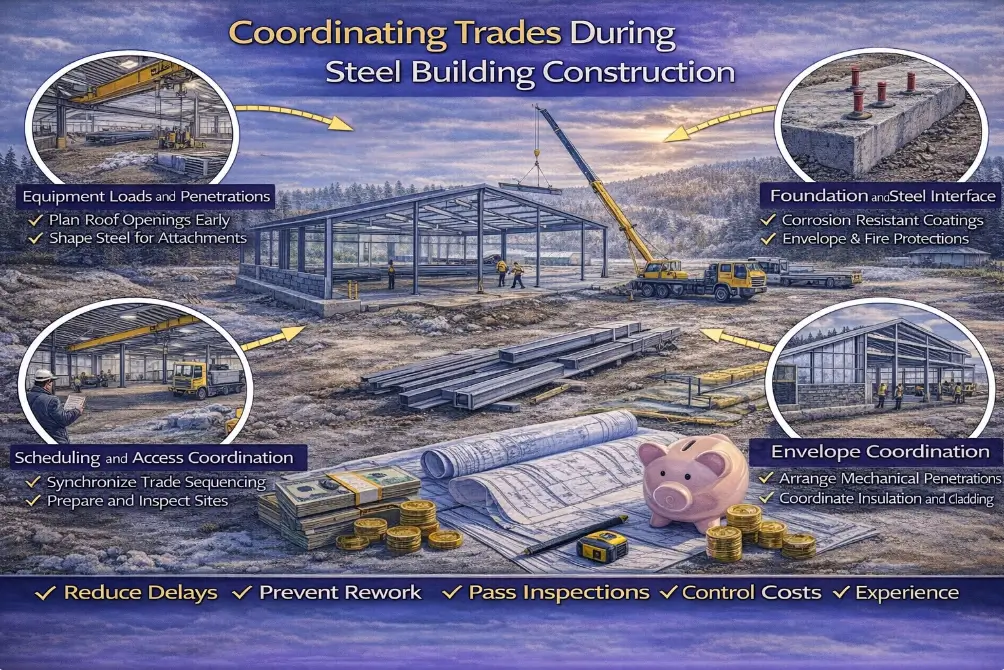
Coordination Breakdowns Between Trades
Steel erection depends on coordination.
Delays occur when:
- Foundation contractors are unavailable for corrections
- Surveyors are not scheduled for alignment checks
- Inspectors are unavailable at critical stages
- Envelope trades interfere with erection sequencing
Projects without a clear coordination plan often experience idle time even when crews and materials are ready.
What Rarely Causes Steel Erection Delays
It is equally important to understand what does not usually slow projects down.
- Steel fabrication timelines are predictable when managed properly
- Erection crews are rarely the bottleneck
- Steel structures are designed to assemble efficiently
Blaming steel or crews often distracts from the real causes, which are almost always planning and readiness issues.
The Cost Impact of Erection Delays
Erection delays affect more than schedule.
They often trigger:
- Extended crane rental costs
- Additional mobilization charges
- Labour standby time
- Re-inspection and re-booking fees
- Financing and insurance schedule impacts
Even short delays can compound quickly when multiple resources are tied to fixed erection windows. These schedule overruns often escalate into the issues described in hidden costs after signing a steel building contract.
How Well-Planned Projects Avoid Erection Delays
Projects that erect on schedule typically share the same characteristics:
- Foundation design coordinated early with steel engineering
- Crane access planned and verified before delivery
- Drawings fully approved and issued for construction
- Seasonal conditions planned realistically
- Clear responsibility for inspections and coordination
These projects do not rely on speed. They rely on preparation.
Steel Building Erection Timelines in Practice
Key realities buyers should understand:
- Erection speed is predictable when prerequisites are complete
- Foundations, access, and approvals control schedules
- Most delays originate before steel arrives on site
- Preparation matters more than promises
Early coordination outlined in planning a steel building project is one of the most effective ways to eliminate schedule risk.
Why Erection Speed Is a Planning Outcome
Steel buildings can be erected quickly, but speed is not a guarantee. It is the result of dozens of upstream decisions made correctly.
Projects that treat erection as a standalone event experience the most frustration. Projects that treat it as the final step in a coordinated process usually proceed smoothly.
Most steel building delays are revealed during erection, not caused by it.
A Practical Takeaway for Owners and Developers
If erection timelines matter to your project, the most important work happens long before steel arrives on site.
Asking the right questions early about foundations, access, sequencing, and coordination will do more to protect your schedule than any promise of fast erection.
Most delays are preventable. They are rarely accidental.
Steel building erection is efficient when preparation is done properly. When projects slow down, it is almost never because steel takes too long to go up. It is because something else was not ready when it needed to be.
Reviewed by the Tower Steel Buildings Engineering Team
This article has been reviewed by the Tower Steel Buildings Engineering Team to ensure technical accuracy, alignment with Canadian construction practices, and consistency with real-world steel building erection conditions across Canada. The review reflects practical field experience with permanent steel buildings, permitting requirements, and erection sequencing in Canadian climates.
1. How long does steel building erection usually take in Canada?
For most permanent steel buildings, the structural steel erection phase itself typically takes days to a few weeks once foundations, access, and approvals are complete. The total project timeline is usually governed more by site preparation, foundations, inspections, and coordination than by the erection work alone.
2. What is the most common reason steel building erection gets delayed?
The most common causes are foundation issues, incomplete inspections, poor crane access, and site conditions that are not ready when steel arrives. Erection crews are rarely the source of delays when prerequisites are properly handled.
3. Can steel erection begin before foundations are fully cured and inspected?
No. In Canada, steel erection cannot legally proceed until foundations have reached required strength, passed inspection, and are released for construction. Attempting to erect steel early typically leads to immediate stoppage and rework.
4. How does weather affect steel building erection timelines?
Weather affects erection indirectly by impacting site access, ground conditions, and crane safety. Soft soils, standing water, snow cover, or high winds can delay erection even when steel and crews are ready.
5. Who is responsible for coordinating crane access and site readiness?
Site readiness is typically the responsibility of the owner or general contractor, often in coordination with the foundation contractor and erection team. Crane access planning should be confirmed before steel delivery to avoid costly delays.
6. Do steel building delays usually come from fabrication problems?
Rarely. When projects are properly planned, steel fabrication timelines are predictable. Most erection delays originate from site, foundation, documentation, or coordination issues rather than steel manufacturing.
7. Can erection delays increase overall project cost?
Yes. Delays often lead to extended crane rentals, labour standby charges, re-inspection fees, and administrative impacts that can significantly increase total project cost even when the delay itself seems minor.
8. How can owners reduce the risk of erection delays?
The most effective approach is early coordination. This includes aligning foundation design with steel engineering, confirming crane access, completing inspections before delivery, and planning realistically for seasonal conditions. Preparation has a greater impact on erection timelines than construction speed alone.