Why Soil Conditions Matter Before Any Steel Building Is Designed
When buyers plan a steel building project, most attention goes to the structure above ground. Frame spacing, snow loads, wind resistance, and clear spans usually dominate early discussions. Far fewer buyers focus on the ground beneath the building until a problem appears.
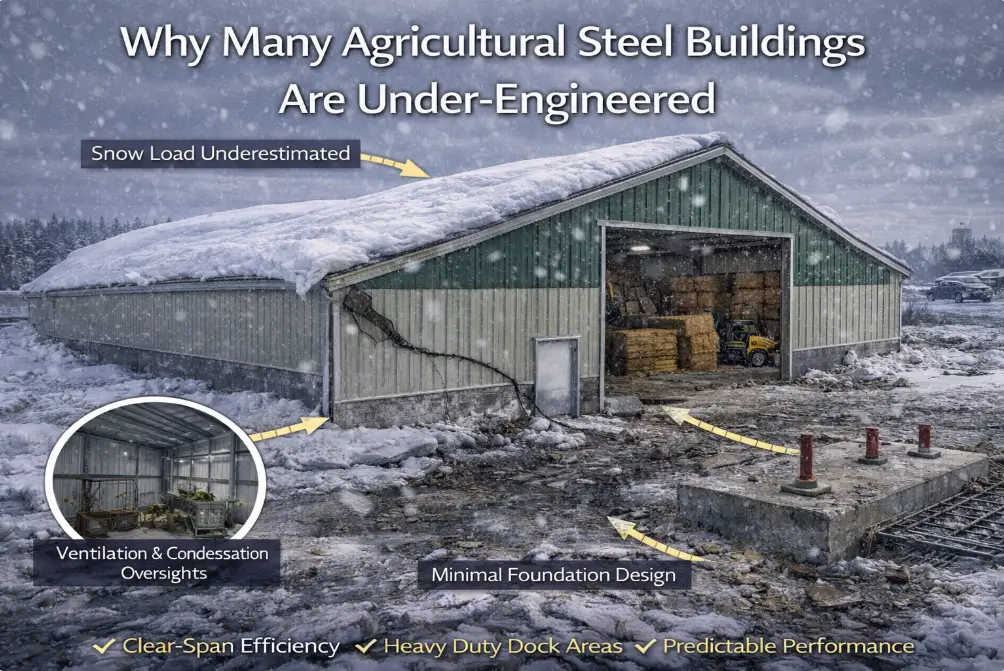
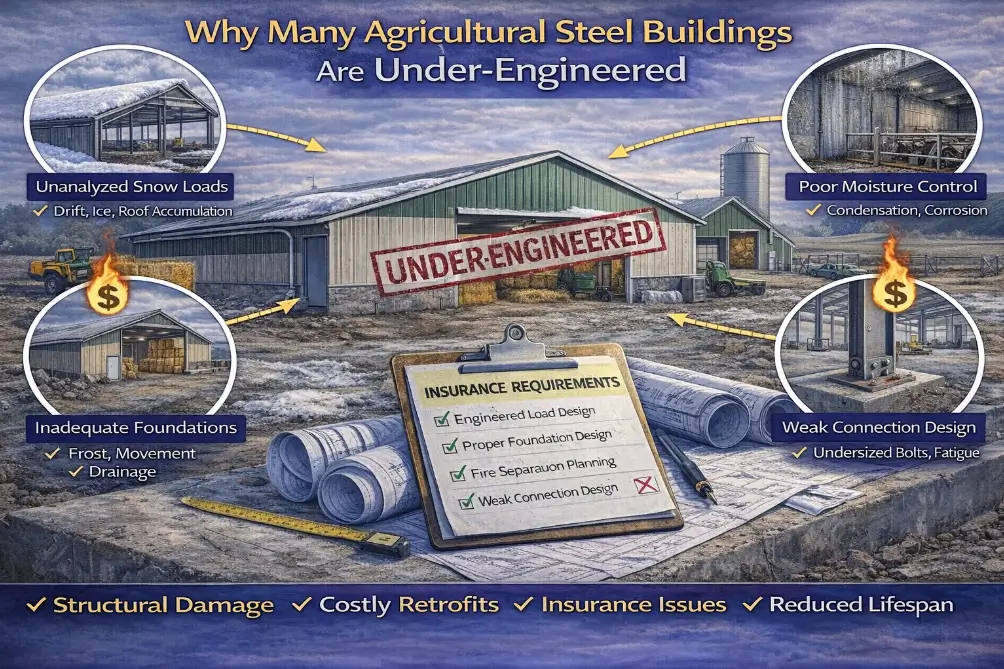
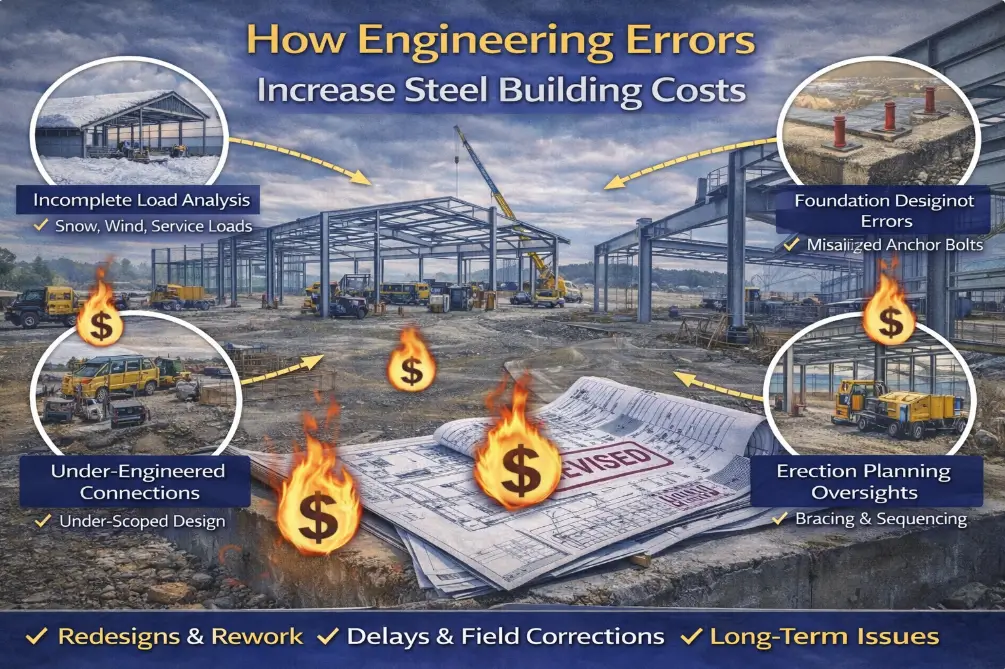
In reality, soil conditions are one of the most critical factors influencing steel building foundation design in Canada. Poor soil assessment can lead to settlement, cracking, water intrusion, misalignment of steel frames, and long-term structural performance issues that no steel system can correct after construction.
Steel buildings are precise by nature. That precision makes them highly dependent on a properly engineered foundation that matches site-specific soil behavior. Understanding how soil reacts to load, moisture, and temperature is essential before foundation type, footing depth, or slab thickness is finalized.
This guide explains how soil conditions across Canada affect steel building foundation design and why early evaluation protects both structural integrity and long-term investment value.
How Soil Conditions Affect Steel Building Foundation Design in Canada
Every steel building transfers loads into the foundation, and every foundation transfers those loads into the soil. If the soil cannot safely support or distribute those loads, the entire system becomes vulnerable.
In steel building foundation design in Canada, soil behavior directly influences:
- Foundation type selection
- Footing size and depth
- Reinforcement requirements
- Frost protection strategies
- Drainage and moisture control
Unlike wood construction, steel buildings rely on tight tolerances. Even small foundation movements can affect door operation, panel alignment, and structural performance. This makes soil evaluation especially important for pre-engineered steel buildings in Canada, where components are manufactured to exact specifications.
Common Soil Types Encountered Across Canada
Canada’s geography produces a wide range of soil conditions. Each soil type behaves differently under structural load and environmental exposure.
Clay Soils
Clay soils are common in many regions, including Southern Ontario, parts of Quebec, and sections of the Prairies.
Characteristics:
- High moisture retention
- Expansion when wet
- Shrinkage when dry
Impact on steel building foundation design:
- Increased risk of seasonal movement
- Greater potential for cracking
- Often requires deeper footings or enhanced frost protection
- May require soil stabilization or engineered fill
Clay soils are one of the most challenging conditions for steel building foundations because movement can be slow, cumulative, and difficult to detect early.
Sandy Soils
Sandy soils are frequently found near lakes, rivers, and coastal regions.
Characteristics:
- Good drainage
- Low cohesion
- Can shift if poorly compacted
Impact on steel building foundation design:
- Requires verified compaction
- May need wider footings to distribute loads
- Drainage must be controlled to prevent erosion
Sandy soils can perform well when properly prepared, but shortcuts during site preparation often lead to settlement issues later.
Silty Soils
Silty soils are commonly found in floodplains and transitional zones.
Characteristics:
- Moderate drainage
- Susceptible to frost heave
- Loses strength when saturated
Impact on steel building foundation design:
- Requires careful moisture management
- Often paired with granular base layers
- Frost depth becomes a critical design factor
Silt-related foundation problems often appear after the first winter cycle.
Granular and Gravel Soils
Granular soils are generally considered ideal for structural support.
Characteristics:
- Excellent drainage
- High bearing capacity
- Minimal seasonal movement
Impact on steel building foundation design:
- Shallower footings may be acceptable
- Reduced frost-related risk
- Compaction verification still required
Even favorable soil conditions must be confirmed through testing. Assumptions without verification remain a risk.
Expansive Soils and Steel Building Foundation Risks
Some soils expand significantly when moisture levels increase. This expansion creates upward pressure on foundations.
For steel buildings, expansive soils can cause:
- Uneven slab movement
- Anchor bolt misalignment
- Stress at structural connections
- Long-term distortion of frames and panels
Foundation design strategies may include:
- Deeper foundations below active soil zones
- Moisture barriers and drainage control
- Structural slabs designed to bridge movement
- Soil replacement or stabilization
Ignoring expansive soil behavior is one of the most costly mistakes in steel building foundation design in Canada.
Organic Soils and Uncontrolled Fill Materials
Organic soils contain decomposing matter and are unsuitable for structural support.
Examples include:
- Peat
- Topsoil
- Poorly compacted fill
Impact on foundation design:
- Organic soils must be removed
- Replacement fill must be engineered and compacted
- Load-bearing capacity cannot be relied upon
Steel buildings should never be supported on organic soils. Removal and replacement are essential.
Frost Heave and Seasonal Soil Movement in Canadian Climates
Canada’s climate introduces frost depth as a major factor in foundation design.
When moisture within soil freezes, it expands. This expansion can lift foundations unevenly, especially in fine-grained soils.
Steel building foundation design in Canada must account for:
- Local frost depth requirements
- Soil moisture content
- Drainage conditions
- Insulation or frost protection systems
Foundations must extend below frost depth or use engineered frost mitigation strategies to maintain long-term stability.
Soil Bearing Capacity and Load Distribution
Soil bearing capacity determines how much load the soil can safely support without failure or excessive settlement.
Steel buildings often concentrate loads at:
- Column bases
- Frame lines
- Crane or equipment zones
Low bearing capacity soils may require:
- Larger footings
- Pier systems
- Grade beams
- Structural slabs
Assuming uniform soil conditions across a site is a common error. Variations in soil properties can significantly affect steel building foundation design.
The Role of Geotechnical Investigation in Foundation Design
A geotechnical investigation provides data on soil composition, strength, moisture behavior, and frost susceptibility. Geotechnical findings also support accurate coordination with steel building foundation drawings and reduce revisions during permit review.
For steel building foundation design in Canada, geotechnical data allows engineers to:
- Select appropriate foundation systems
- Determine footing sizes and depths
- Specify compaction requirements
- Address drainage and groundwater conditions
While not mandatory for every project, geotechnical investigations are strongly recommended for commercial, industrial, agricultural, and large-span steel buildings.
How Soil Conditions Influence Foundation Type Selection
Different soil conditions lead to different foundation solutions.
Common foundation types include:
- Slab-on-grade
- Perimeter frost walls
- Pier and grade beam systems
- Structural slabs
Soil behavior determines:
- Which foundation type is appropriate
- How reinforcement is designed
- How loads are transferred over time
There is no universal foundation solution suitable for all soil conditions in Canada.
Drainage and Groundwater Considerations
High groundwater levels can reduce soil strength and increase pressure on foundations.
Foundation design must address:
- Subsurface drainage
- Moisture control beneath slabs
- Long-term water management strategies
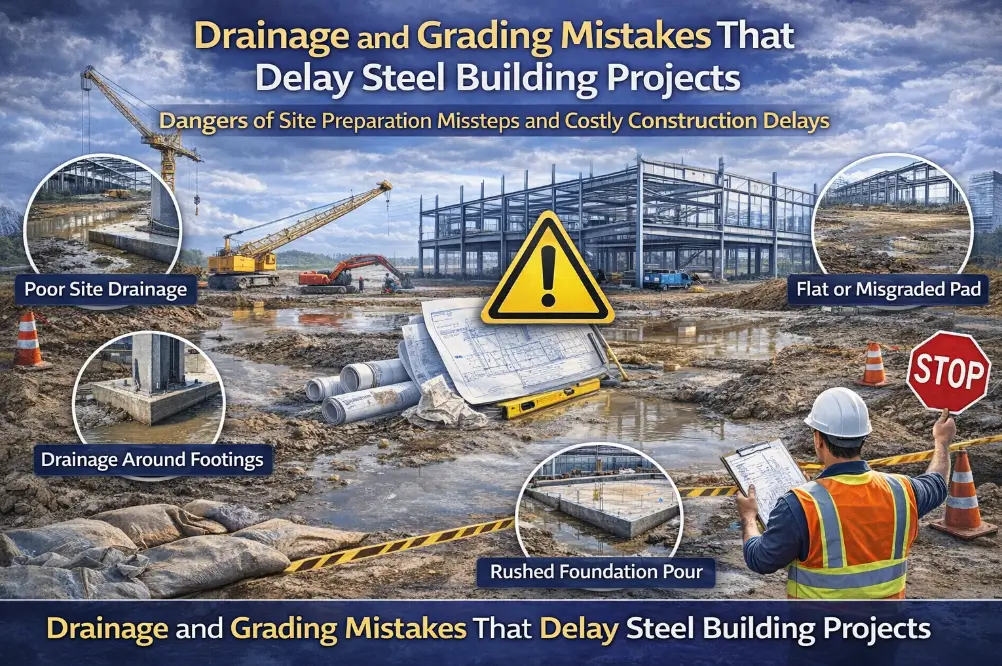
Poor drainage is a leading cause of foundation deterioration in steel buildings.
Why Soil Conditions Are Often Overlooked by Buyers
Many buyers assume:
- Concrete compensates for poor soil
- Steel strength offsets foundation issues
- Soil conditions are uniform across a site
These assumptions are costly. Foundation problems often emerge years after construction, when repairs are disruptive and expensive.
Understanding soil behavior early protects both the steel structure and the project budget.
How This Topic Connects to Steel Building Standards and Certification
Soil conditions and foundation design directly support certified steel building systems.
They play a critical role in:
- CSA A660-certified steel building compliance
- Structural alignment with manufactured steel components
- Long-term performance expectations for pre-engineered steel buildings in Canada
Foundation accuracy is essential for maintaining tolerances required by certified manufacturing and engineering standards.
How This Page Fits Into a Complete Steel Building Design Strategy
Soil evaluation is not a standalone step. It supports every other stage of a steel building project.
This topic directly connects with:
- CSA A660 certification requirements
- Commercial and industrial steel building design
- Agricultural steel building foundations
- Regional building code enforcement across Canada
When foundation design aligns with certified steel systems, overall project risk is reduced and long-term performance improves.
Final Perspective for Canadian Steel Building Buyers
Steel buildings are engineered systems. Foundations are part of that system, not an afterthought.
Soil conditions influence how foundations behave over time. Proper evaluation, design, and preparation protect the investment made in the steel structure above.
Ignoring soil behavior does not reduce cost. It shifts risk into the future.
Understanding soil conditions before foundation design puts buyers in control.
Reviewed by the Tower Steel Buildings Engineering Team
This article has been reviewed by the Tower Steel Buildings Engineering Team, drawing on decades of combined experience in structural steel design, foundation coordination, and steel building projects across Canada.
Our engineering review ensures that the information presented reflects real-world site conditions, Canadian climate challenges, and accepted engineering practices related to steel building foundation design in Canada. The guidance aligns with CSA standards, provincial building codes, and long-term structural performance expectations for pre-engineered steel buildings.
1. How do soil conditions affect steel building foundation design in Canada?
Soil conditions determine how loads are transferred from a steel building into the ground. Factors such as bearing capacity, moisture behavior, frost susceptibility, and seasonal movement directly influence footing size, depth, reinforcement, and foundation type. Poor soil assessment can lead to settlement, cracking, or misalignment over time.
2. Who is responsible for foundation design on a steel building project?
Foundation design is typically the responsibility of the project’s foundation engineer or structural engineer of record. The steel building manufacturer provides loading reactions and anchor requirements, but soil conditions and foundation performance must be evaluated and designed based on site-specific data.
3. Can soil issues void steel building warranties?
Yes, foundation problems caused by inadequate soil preparation or improper foundation design can impact structural performance and may void certain warranty protections. Steel buildings are manufactured to precise tolerances, and long-term performance depends on foundations being built to engineered specifications.
4. Is a geotechnical soil report always required for steel buildings?
A geotechnical report is not mandatory for every project, but it is strongly recommended for commercial, industrial, agricultural, and large-span steel buildings. Soil testing provides critical data that supports safe, durable foundation design and reduces long-term risk.
5. What soil types are most challenging for steel building foundations?
Clay soils, expansive soils, silty soils, and organic soils present the highest risk. These soil types are prone to movement, moisture sensitivity, and frost-related issues. Proper mitigation strategies such as deeper foundations, soil replacement, or engineered slabs are often required.
6. How does frost depth influence foundation design for steel buildings?
In Canada, foundations must be designed to account for frost depth to prevent frost heave. This usually means extending footings below frost depth or using engineered frost protection methods. Soil moisture and drainage play a major role in how frost affects foundation performance.
7. Can concrete thickness compensate for poor soil conditions?
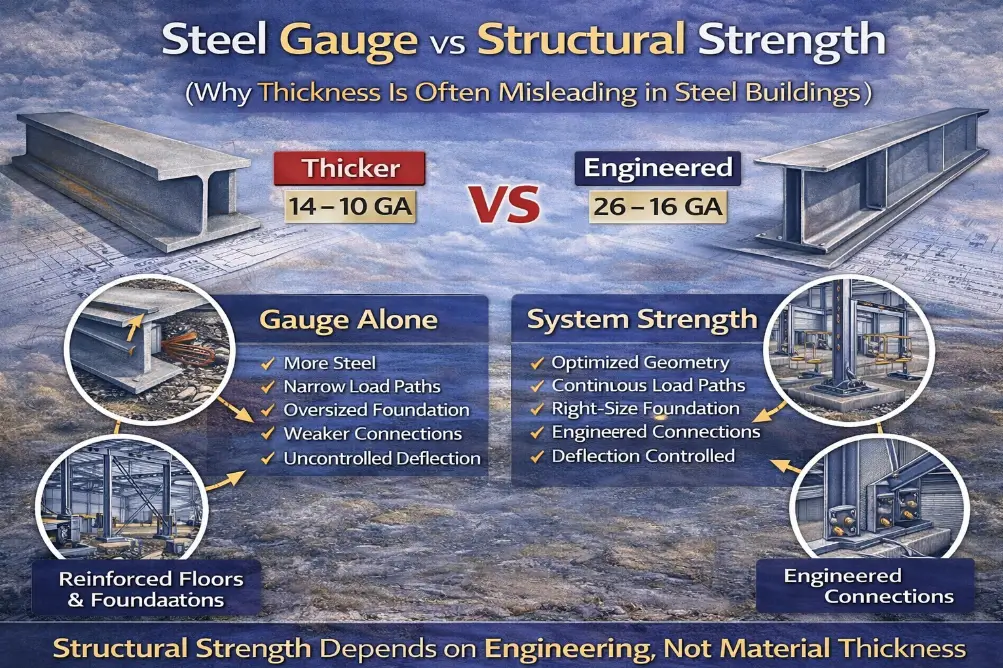
Concrete strength alone cannot compensate for unstable or unsuitable soil. Without proper soil preparation and load distribution, even thick concrete slabs can crack or shift. Soil behavior must be addressed first, then concrete design adjusted accordingly.
8. How does soil condition planning support CSA A660 steel building systems?
CSA A660-certified steel buildings rely on accurate foundation alignment and load transfer. Proper soil evaluation ensures foundations perform as intended, maintaining tolerances required by certified steel manufacturing and supporting long-term structural performance.