

Mezzanines and Interior Load Design in Steel Buildings
Interior mezzanines are one of the most powerful ways to increase usable space within a steel building without expanding the footprint. In warehouses, manufacturing facilities, commercial spaces, and agricultural operations, mezzanines allow owners to separate...
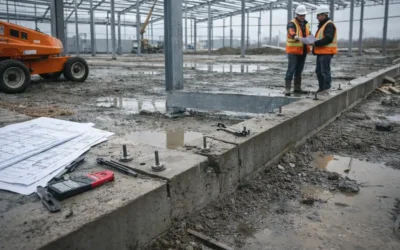
Common On-Site Mistakes That Increase Steel Building Costs
Steel buildings are often selected for their predictability, speed of construction, and long-term durability. When projects stay within scope and follow proper sequencing, cost control is one of steel construction’s biggest advantages. However, many cost overruns in...
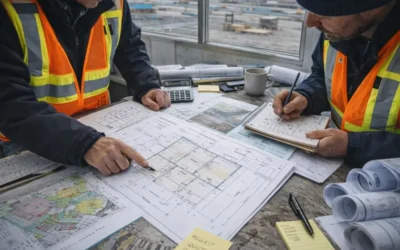
What to Prepare Before Requesting a Steel Building Quote
Requesting a steel building quote is often treated as a simple first step. In reality, the quality of information provided at this stage directly affects pricing accuracy, timeline certainty, and the overall success of the project. Across Canada, many steel building...
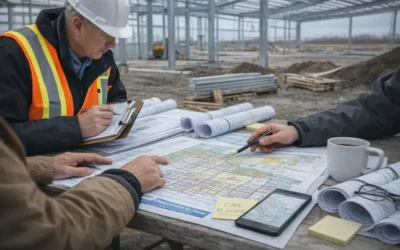
Steel Building Zoning Variations Across Ontario Municipalities
Planning a steel building project in Ontario is not only an engineering exercise. It is also a zoning and land-use challenge that varies significantly from one municipality to another. While the Ontario Building Code establishes province-wide technical standards for...
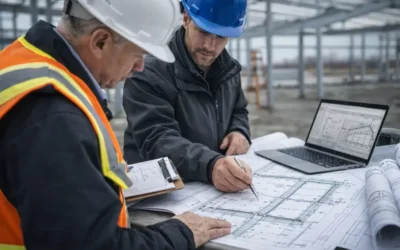
Engineering Review Checklist Before Finalizing a Steel Building Design
Finalizing a steel building design is not a paperwork milestone. It is the point where assumptions become commitments and where design decisions begin to affect cost, schedule, permitting, and long-term performance. In Canada, steel building projects often move...
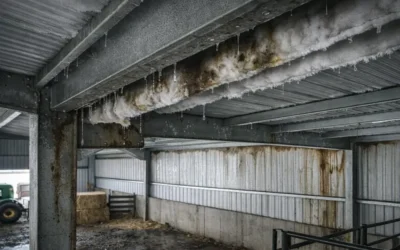
Condensation Failures in Agricultural Steel Buildings
Condensation is one of the most common and least understood causes of early damage in agricultural steel buildings. Many farm owners assume moisture issues are cosmetic or seasonal, only to discover years later that corrosion, insulation breakdown, structural...

Why Farm Steel Buildings Fail Early
Steel has become the preferred structural system for agricultural buildings across Canada because of its strength, fire resistance, and long service life. When properly engineered and constructed, steel farm buildings routinely perform for decades with predictable...

Loading Dock Design in Steel Warehouse Buildings
Loading docks are one of the most operationally critical and most underestimated components of a steel warehouse building. While they occupy a relatively small portion of the footprint, dock design directly affects throughput, safety, labour efficiency, equipment...
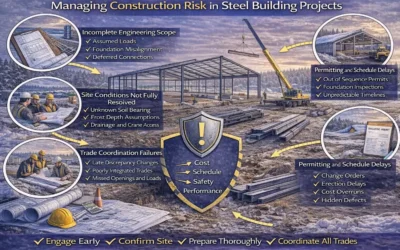
Managing Construction Risk in Steel Building Projects
Construction risk is not an abstract concept in steel building projects. It is a measurable, predictable set of conditions that influence cost, schedule, safety, and long-term performance. In Canada, where steel buildings must contend with climate extremes, regulatory...
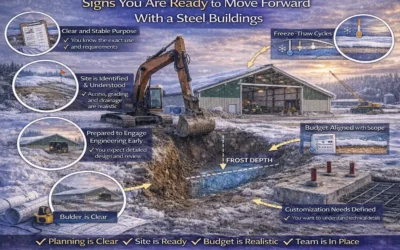
Signs You Are Ready to Move Forward With a Steel Building
Deciding to move forward with a steel building is rarely a sudden decision. For most owners, developers, and operators, it is the result of a series of practical signals coming together over time. These signals often relate to planning readiness, operational clarity,...

Frost Depth and Climate Interaction in Steel Buildings
Frost depth is one of the most misunderstood factors in steel building design, yet it plays a critical role in long-term performance across Canada. Unlike visible loads such as snow or wind, frost action occurs below grade, often out of sight, until it causes...

Structural Redundancy and Safety in Steel Building Design
Structural safety in steel buildings is not defined by strength alone. In Canada, where buildings are expected to perform reliably under snow, wind, temperature variation, and long service lives, safety depends just as much on redundancy as it does on capacity....