Steel buildings are often selected for their predictability, speed of construction, and long-term durability. When projects stay within scope and follow proper sequencing, cost control is one of steel construction’s biggest advantages.
However, many cost overruns in steel building projects do not originate in engineering or fabrication. They occur on site, often after steel has already arrived.
Small field errors, missed coordination steps, and rushed preparation frequently lead to rework, inspection delays, damaged materials, and schedule extensions that quickly compound into significant added expense. These execution failures are a primary contributor to construction risk in steel building projects.
Understanding the most common on-site mistakes helps owners, developers, and project managers prevent problems before they become costly.
Why On-Site Execution Matters So Much in Steel Construction
Steel buildings rely on precision. Installation tolerances and structural stability requirements are governed by the National Building Code of Canada structural construction provisions.
Unlike traditional construction systems that can sometimes absorb minor field adjustments, steel structures depend on:
Structural design, connection behaviour, and load transfer requirements for steel systems in Canada are defined by CSA S16 structural steel design standard.
- Accurate foundation placement
- Proper load transfer
- Correct sequencing
- Tolerance control
When site conditions deviate from design assumptions, the structure often cannot be installed as planned without modification.
Most steel building cost increases arise from:
- Correcting foundation issues
- Adjusting framing alignment
- Reworking connections
- Addressing water, access, or safety problems
In many cases, these costs far exceed what proper preparation would have required.
Incomplete Site Preparation Before Steel Delivery
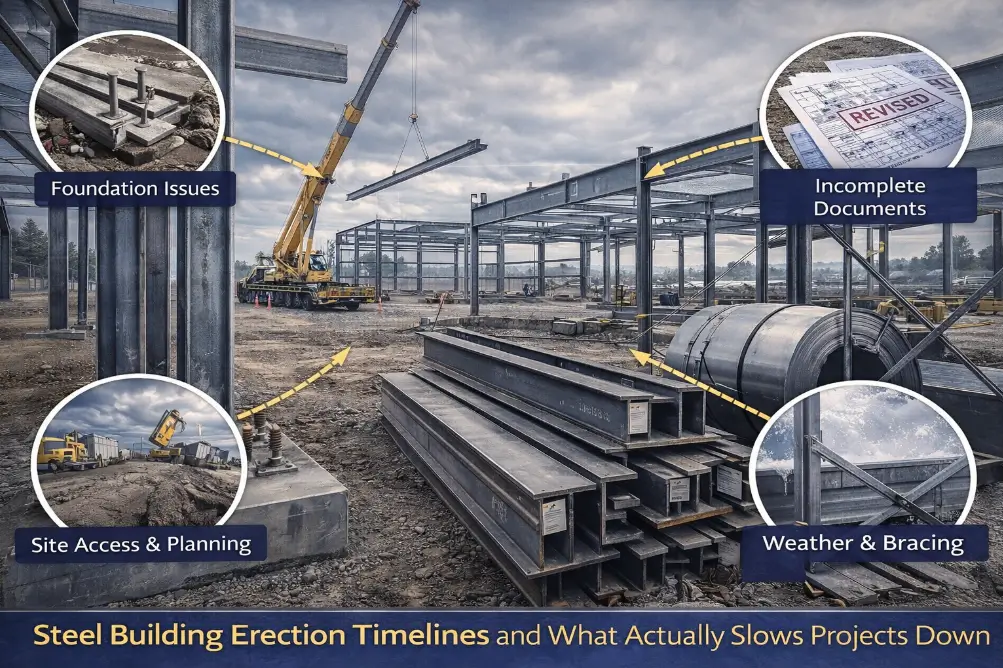
One of the most frequent causes of project delays and added expense is steel arriving before the site is fully ready. This is why steel building project readiness planning must be completed before delivery is scheduled.
Common preparation gaps include:
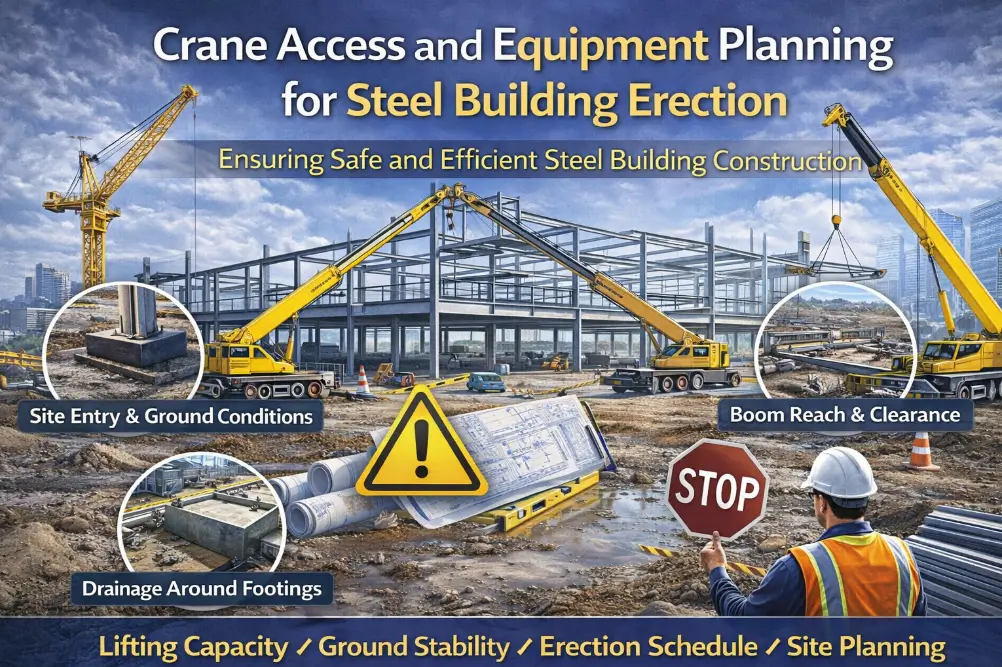
- Unfinished grading and drainage
- Soft or unstable crane access routes
- Unprotected foundation edges
- Standing water in erection zones
When erection crews cannot safely access the site or position equipment, work stops immediately.
This leads to:
- Idle labour costs
- Rescheduled cranes and equipment
- Extended rentals
- Remobilization charges
Even short delays can escalate quickly when multiple trades are affected.
Foundation Errors and Tolerance Issues
Steel buildings depend on foundations that match design dimensions closely. Proper coordination begins with engineered steel building foundation design.
Common foundation mistakes include:
- Anchor bolts placed incorrectly
- Elevations not matching design levels
- Pier spacing deviations
- Uneven slab surfaces
While small variations may seem minor, steel framing tolerances are typically tight.
Consequences often include:
- Field drilling or torch cutting
- Shimming and re-leveling
- Structural engineer review
- Delayed inspections
Each correction adds labour, engineering time, and schedule disruption.
In severe cases, sections of foundation may require demolition and re-pouring.
Poor Drainage Management During Construction
Water is one of the most underestimated cost drivers on steel building sites. Many of these problems originate from drainage and grading mistakes that delay steel building projects.
Typical drainage mistakes include:
- Flat grades that allow pooling
- Blocked runoff paths
- Temporary drainage removed too early
- Ignoring seasonal groundwater movement
When water accumulates:
- Foundations cannot be inspected
- Equipment cannot access the site
- Soil loses bearing capacity
- Slabs cure unevenly
This frequently results in:
- Failed inspections
- Erosion repairs
- Re-grading work
- Extended construction timelines
Water problems are rarely quick fixes once steel erection begins.
Rushing Erection Sequencing
Steel buildings are designed to be erected in a specific structural order.
Common sequencing mistakes include:
- Skipping temporary bracing
- Installing roof panels before frames are stabilized
- Removing supports too early
- Erecting without full bolt tightening sequences
These shortcuts often stem from schedule pressure.
Consequences include:
- Frame movement
- Misalignment of secondary members
- Connection stress
- Safety incidents
Correcting alignment after structure shifts is slow and expensive.
In some cases, partially installed steel must be removed and reinstalled.
Inadequate Coordination of Openings and Penetrations
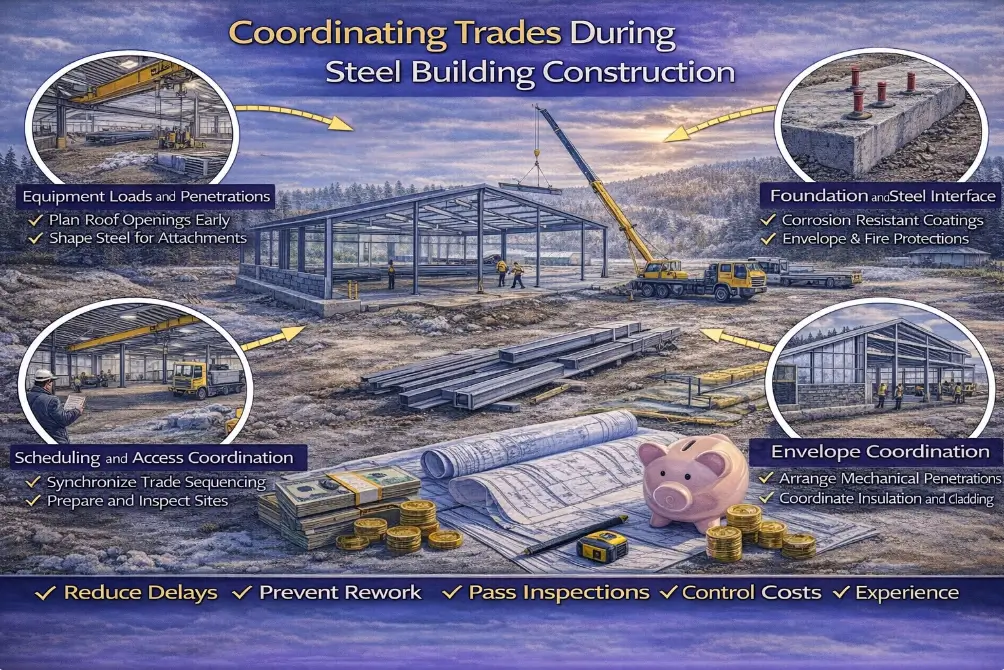
These conflicts are commonly addressed through coordinating trades in steel building construction.
Steel structures must accommodate:
- Mechanical ducts
- Electrical conduits
- Plumbing penetrations
- Process equipment supports
When these are not coordinated before erection:
- Framing may block required openings
- Roof penetrations may compromise structural members
- Cutting may violate engineering design
This typically leads to:
- Field modifications requiring engineer approval
- Reinforcement retrofits
- Inspection delays
- Warranty complications
Early coordination prevents these high-cost fixes.
Improper Material Handling and Storage
Steel components are engineered to tight specifications and protective coatings.
Common handling mistakes include:
- Storing steel directly on wet ground
- Dragging coated members across gravel
- Allowing prolonged exposure to standing water
- Stacking without separation
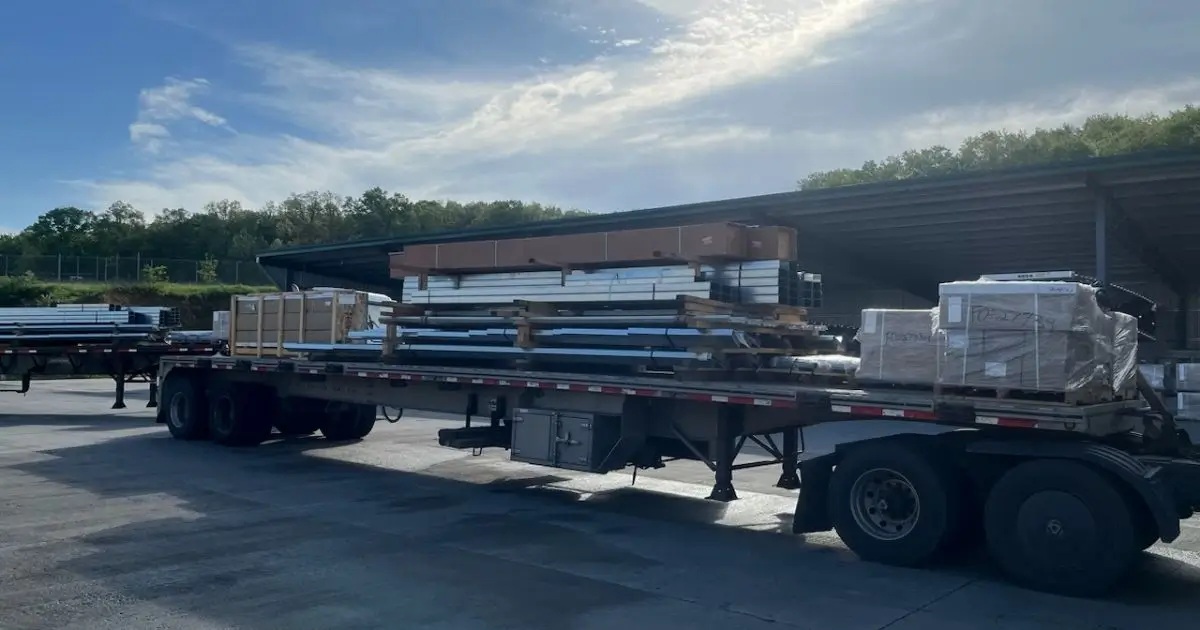
Damage often occurs before erection even begins.
Typical issues include:
- Coating scratches and corrosion
- Bent members
- Contaminated surfaces
This leads to:
- Repair coatings
- Replacement materials
- Delayed installation
Proper storage is inexpensive compared to material replacement.
Ignoring Temporary Bracing Requirements
Temporary bracing is not optional.
Construction stability, temporary support requirements, and worker protection practices are outlined in the Canadian Centre for Occupational Health and Safety construction safety guidelines.
Temporary stability planning is explained in temporary bracing requirements for steel building erection.
It stabilizes frames until the full structural system is complete.
Mistakes include:
- Installing fewer braces than required
- Using incorrect brace locations
- Removing braces prematurely
- Substituting unapproved materials
Without proper bracing:
- Frames can rack or twist
- Connections can loosen
- Structural geometry can shift
Correcting structural movement is labour intensive and costly.
In severe cases, it can compromise long-term building performance.
Proceeding Without Inspection Readiness
Many projects push forward before inspections are properly scheduled or site conditions are ready.
Common errors include:
- Covering connections before approval
- Pouring slabs before foundation sign-off
- Installing cladding before structural review
This often forces:
- Partial demolition
- Re-exposure of components
- Repeat inspections
Each failed or rescheduled inspection adds time and administrative costs.
Underestimating Weather Impacts
Canadian construction sites experience wide seasonal swings.
Mistakes often include:
- Pouring concrete during unsuitable temperatures
- Erecting steel in high winds without adjustment
- Ignoring freeze-thaw soil effects
- Failing to protect materials from snow and ice
Weather-related corrections frequently involve:
- Concrete repairs
- Realignment work
- Surface treatment fixes
Planning for seasonal conditions avoids these avoidable expenses.
Treating Minor Deviations as “Good Enough”
Small on-site deviations tend to accumulate.
Examples include:
- Slight misalignment accepted early
- Minor drainage shortcuts
- Temporary fixes made permanent
- Skipped torque checks
Over time, these minor issues often trigger:
- Connection failures
- Cladding problems
- Operational inefficiencies
- Maintenance escalation
Early correction is always cheaper than long-term repair.
The Cost Pattern Behind Most On-Site Mistakes
Almost every cost increase follows a similar pattern:
- Assumption replaces verification
- Shortcut replaces sequencing
- Delay replaces preparation
- Correction replaces efficiency
Steel construction rewards planning and discipline.
It penalizes improvisation.
Preventing Costly On-Site Errors
Many projects reduce field risk through professional steel building erection services.
Successful steel building projects consistently focus on:
- Complete site readiness before delivery
- Accurate foundation work
- Strict erection sequencing
- Early trade coordination
- Proper inspections
- Weather-appropriate planning
These practices rarely increase initial budgets.
They dramatically reduce total project cost.
The Bigger Lesson
Most steel building cost overruns are not caused by steel.
They are caused by field execution.
Foundations that are accurate, sites that are ready, and erection that follows design sequencing produce fast, predictable, and economical projects.
Mistakes, even small ones, almost always cost more than doing it right the first time.
Reviewed by the Tower Steel Buildings Engineering Team
This article has been reviewed by the Tower Steel Buildings Engineering Team to ensure technical accuracy, alignment with Canadian construction practices, and real-world applicability across steel building projects.
1. How do on-site mistakes increase steel building project costs?
On-site mistakes trigger rework, schedule delays, additional inspections, and equipment remobilization. Even small errors such as misplaced anchor bolts or incomplete grading often lead to structural adjustments that cost significantly more than proper preparation would have.
2. What is the most common on-site issue that delays steel building erection?
Incomplete site readiness is the most frequent problem. Poor drainage, unstable crane access, unfinished foundations, and standing water routinely prevent erection crews from starting work, causing labour downtime and rescheduling costs.
3. Can foundation errors really affect steel building installation?
Yes. Steel structures rely on precise foundation dimensions and elevations. Misaligned anchor bolts, incorrect elevations, or uneven surfaces often require field modifications, engineering reviews, and in some cases foundation reconstruction, all of which add time and expense.
4. Why is temporary bracing so important during steel erection?
Temporary bracing stabilizes frames until the full structural system is complete. Without it, frames can shift, twist, or rack, leading to alignment problems, stressed connections, and costly structural corrections.
5. How does poor drainage impact steel building construction?
Poor drainage causes water accumulation that prevents inspections, weakens soil bearing capacity, and restricts equipment access. It often leads to grading rework, erosion repair, and schedule delays that significantly increase overall project cost.
6. Are field modifications to steel structures a major cost driver?
They are one of the biggest hidden cost sources. Cutting, reinforcing, or altering structural members requires engineering approval, labour, inspections, and sometimes material replacement. Most field modifications can be avoided with early coordination and accurate preparation.
7. How can weather mistakes increase steel building expenses?
Improper cold-weather concrete pours, unprotected materials, and erection during unsuitable conditions can lead to curing failures, corrosion, and alignment issues. These often require repairs that cost far more than proper seasonal planning.
8. Who is typically responsible for preventing on-site steel building mistakes?
Responsibility is shared among owners, project managers, engineers, and contractors. Most failures occur when site readiness, sequencing, and coordination responsibilities are not clearly assigned and verified before construction begins.
9. Can small on-site deviations really affect long-term building performance?
Yes. Minor alignment errors, drainage shortcuts, or skipped inspections often develop into cladding problems, structural stress points, and increased maintenance costs over time.
10. What is the most effective way to control steel building construction costs?
Thorough site preparation, accurate foundations, strict erection sequencing, early trade coordination, and inspection readiness consistently prevent the majority of costly field issues.