Insurance is often treated as something that happens after a farm building is constructed. In reality, insurance expectations influence how agricultural steel buildings should be designed, engineered, documented, and maintained from the very beginning.
Across Canada, insurers increasingly assess structural design quality, foundation performance, material durability, fire separation, and long-term risk exposure when issuing coverage for agricultural facilities. Buildings that lack proper engineering documentation or that rely solely on minimum exemptions frequently face higher premiums, limited coverage, or coverage exclusions.
For farm owners planning permanent steel buildings, understanding insurance requirements early can prevent delays, redesigns, and unexpected costs later in the project.
This article explains how insurance companies evaluate agricultural steel buildings in Canada, what documentation they expect, and how proper design reduces long-term risk and operating costs.
Why Insurance Matters More Than Many Farm Owners Expect
Modern agricultural operations often involve high-value equipment, livestock, stored crops, chemicals, and machinery under one roof. Insurers are no longer focused only on fire risk. They now assess total loss exposure, structural resilience, environmental damage potential, and business continuity.
Steel buildings are generally viewed favourably by insurers because of their non-combustible structure and durability. However, that advantage depends heavily on proper engineering, foundation design, and documentation.
Buildings that are poorly documented or minimally engineered are often treated as higher risk, even if steel framing is used. This contrast is often seen when comparing fully engineered systems with basic farm structures, as explained in agricultural steel buildings in Ontario.
Structural Engineering and Load Design Requirements
One of the first items insurers review is whether the building has been professionally engineered for site-specific loads.
This typically includes:
- Snow load design based on geographic location and roof configuration
- Wind load resistance based on exposure and terrain
- Structural framing calculations
- Connection and bracing systems
- Foundation design addressing frost depth and soil conditions
Stamped engineering drawings demonstrate that the building is designed to perform under real Canadian climate conditions rather than generic assumptions.
Many engineered steel buildings also follow national quality standards such as CSA A660 certification for steel buildings, which governs fabrication accuracy and structural performance in Canada.
Proper engineering becomes even more critical in high-snow regions, which is why understanding steel building snow load zones in Canada is essential when designing agricultural structures.
Buildings lacking this documentation may still be insurable, but often at higher premiums or with structural failure exclusions.
Foundation Design and Frost Protection
Foundation performance is a major insurance concern in Canadian agriculture. That is why professional steel building foundation design plays such a critical role in long-term structural reliability and insurance approval.
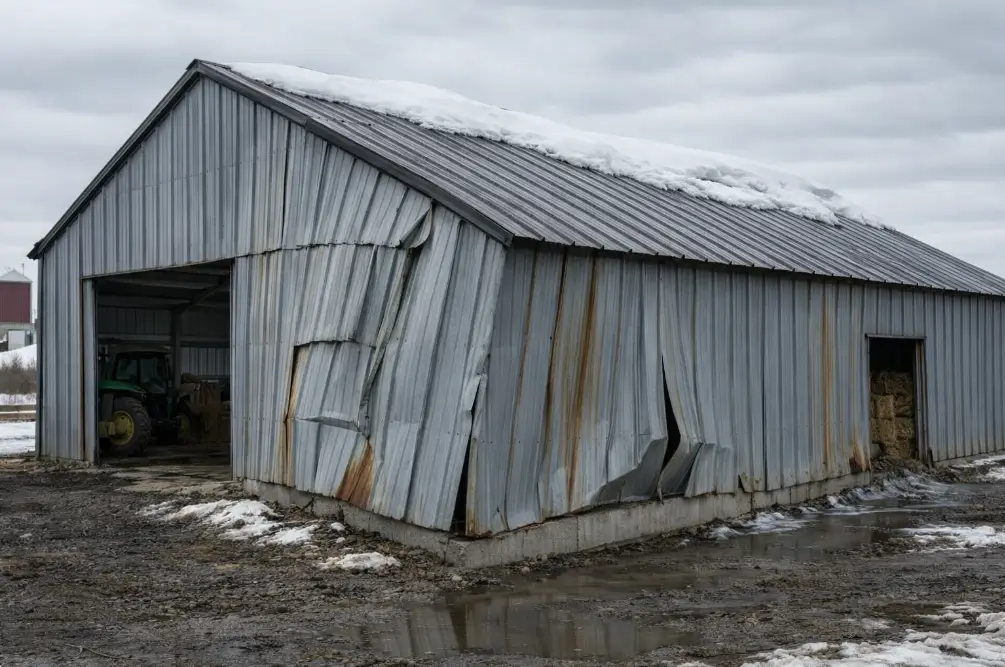
Frost heave, soil movement, and water accumulation can compromise building stability over time. Insurers frequently evaluate whether foundations were engineered to local frost depths and soil bearing conditions.
Common insurance issues arise when:
- Footings are too shallow for local freeze cycles
- Drainage is poorly designed
- Soil conditions were never evaluated
- Settlement causes structural distortion
Well-engineered foundations significantly reduce long-term risk and claims related to structural movement. Many long-term structural failures stem from poor soil behaviour, making soil conditions and steel building foundations in Canada a key consideration in agricultural construction.
Fire Risk, Separation, and Material Use
While steel framing itself is non-combustible, agricultural buildings often contain combustible materials such as hay, feed, fuel, chemicals, and machinery.
Insurers look at:
- Separation between storage areas and equipment
- Ventilation and heat management
- Interior wall materials
- Roof insulation types
- Distance between buildings
Steel buildings that incorporate proper fire separation planning and ventilation are often rated lower risk than wood structures with similar usage.
Building Use Classification Matters
Insurance coverage is heavily influenced by how the building is used.
Examples include:
- Livestock housing
- Grain storage
- Equipment storage
- Processing areas
- Workshops
- Chemical storage
Mixed-use buildings frequently require additional fire protection measures and documentation. A structure classified as simple storage may not receive the same coverage once processing or mechanical operations occur inside.
Clear documentation of building use helps avoid claim disputes later.
Importance of Construction Documentation
Insurers increasingly request documentation beyond basic permits. Much of this underwriting approach is informed by national risk research published by the Insurance Bureau of Canada, which tracks construction performance and climate-related claims across the country.
This may include:
- Structural drawings
- Foundation plans
- Material specifications
- Load design criteria
- Engineering certificates
Proper documentation demonstrates that the building meets accepted construction standards and reduces uncertainty during underwriting.
Lack of records often results in conservative risk assumptions by insurers.
How Engineering Quality Affects Premiums and Coverage
While premiums vary by insurer, properly engineered steel buildings commonly receive:
- Lower structural risk ratings
- Broader coverage options
- Reduced exclusions
- More stable long-term premiums
Buildings constructed with minimal design oversight may face:
- Higher premiums
- Structural failure exclusions
- Limited coverage on foundations
- Greater inspection requirements
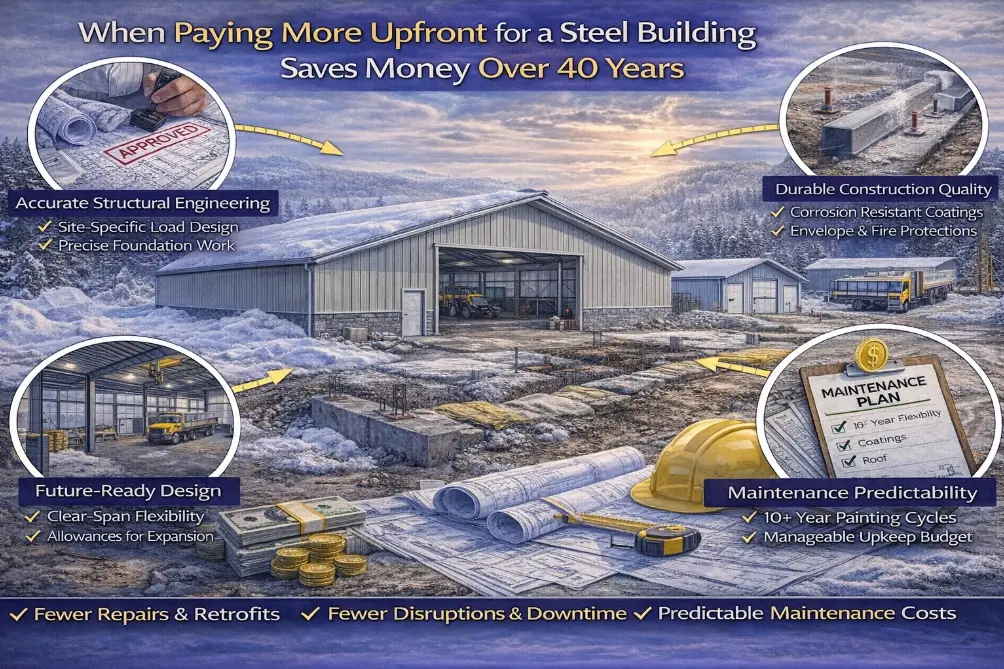
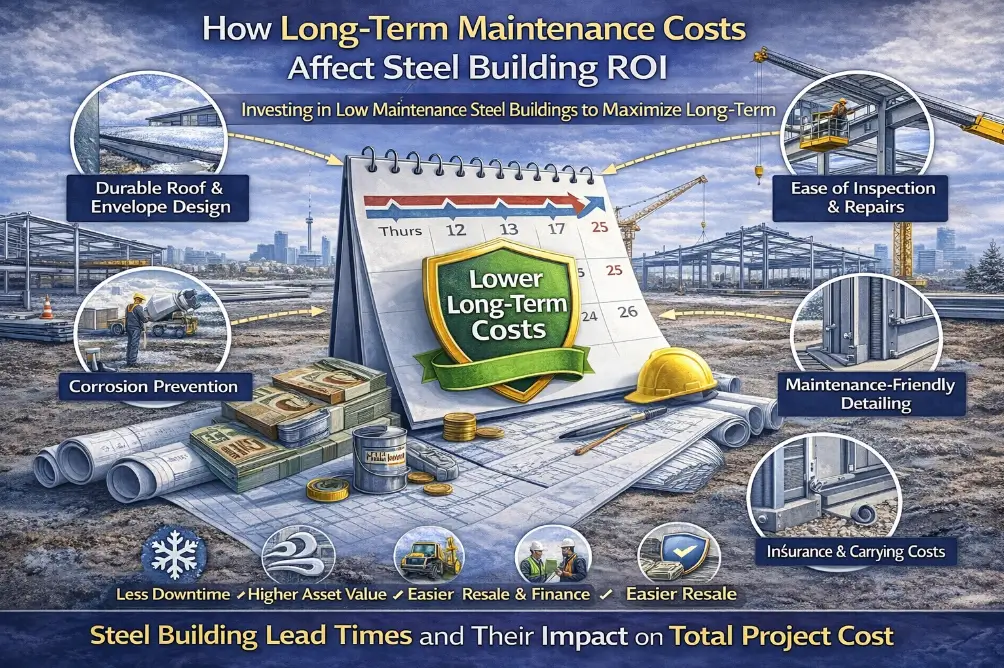
Over the lifespan of a farm building, these differences often exceed initial construction savings. This is why many owners evaluate projects using lifecycle performance metrics like long-term maintenance costs and steel building ROI rather than initial construction price alone.
Environmental and Weather Exposure Considerations
Canadian agriculture faces unique environmental risks such as:
- Heavy snow accumulation
- Freeze-thaw cycles
- High winds
- Seasonal flooding
- Condensation
Insurers review how steel buildings address:
- Roof slope and snow drift control
- Drainage around foundations
- Corrosion protection
- Moisture management
- Ventilation systems
Buildings designed specifically for regional climate conditions consistently perform better in insurance risk assessments.
Equipment and Contents Coverage Implications
The structure itself is only part of the insurance equation. Many agricultural steel buildings house high-value assets.
Proper building design influences:
- Equipment protection from moisture and corrosion
- Structural reliability during storms
- Fire containment
- Accessibility for emergency response
Well-designed steel buildings reduce the likelihood of total loss claims and downtime.
Why Minimal Code Compliance Is Often Not Enough
While agricultural exemptions may reduce certain building code requirements, insurers still evaluate risk based on real-world performance.
A building that technically meets minimum code thresholds may still be considered high risk if:
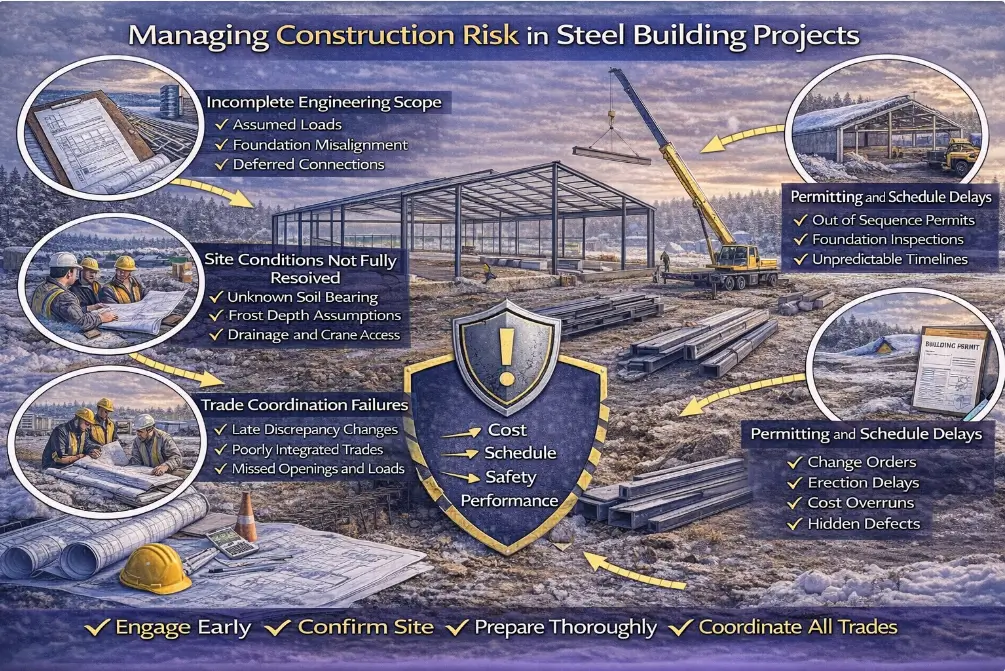
- Engineering scope is limited
- Foundations are not properly designed
- Documentation is incomplete
- Fire separation is inadequate
Insurance expectations often exceed minimum regulatory requirements.
Long-Term Cost Perspective
From an insurance standpoint, agricultural steel buildings should be viewed as long-term infrastructure.
Well-engineered structures typically deliver:
- Lower lifetime premiums
- Fewer claims
- Better asset protection
- Higher resale value
- Easier refinancing
Short-term construction savings frequently result in higher operating and insurance costs over decades of ownership.
Practical Steps for Farm Owners
Before finalizing an agricultural steel building project:
- Confirm full structural engineering is included
- Ensure foundations are designed for local conditions
- Document intended building use clearly
- Plan fire separation and ventilation
- Retain all engineering and construction records
Engaging insurers early in the design process can also help align expectations and prevent coverage issues.
Final Perspective
Insurance companies do not simply insure steel buildings. They insure risk.
In agricultural construction across Canada, that risk is shaped by engineering quality, foundation performance, climate adaptation, fire planning, and documentation.
These expectations align with the structural safety standards established under the National Building Code of Canada, which governs load design and construction requirements nationwide.
Steel buildings that are properly designed and engineered consistently outperform minimally built structures in safety, durability, and insurance stability.
Over the life of a farm operation, the most economical buildings are rarely those that cost the least upfront. They are the ones that perform predictably, protect assets, and minimize risk year after year.
Reviewed by the Tower Steel Buildings Engineering Team
This article has been reviewed by the Tower Steel Buildings Engineering Team to ensure technical accuracy in structural design, foundation performance, climate considerations, and insurance-related construction standards for agricultural steel buildings across Canada.
1. Do agricultural steel buildings require engineering for insurance in Canada?
Most insurers strongly prefer professionally engineered agricultural steel buildings, even when certain building code exemptions apply. Engineered drawings demonstrate that the structure is designed for snow loads, wind loads, foundations, and long-term performance, which directly affects risk ratings and coverage terms.
2. Can a steel farm building be insured without stamped engineering drawings?
Some insurers may provide limited coverage without engineering documentation, but premiums are often higher and structural failure exclusions are common. Full engineering typically results in broader coverage and fewer claim restrictions.
3. Does steel construction lower insurance costs compared to wood buildings?
In many cases, yes. Steel framing is non-combustible and more resistant to weather damage, which can reduce fire and structural risk. However, foundation design, ventilation, building use, and documentation still play major roles in determining premiums.
4. How does foundation design affect insurance approval?
Foundations engineered for frost depth, soil conditions, drainage, and load transfer significantly reduce long-term structural movement. Poor foundation design is one of the most common reasons insurers apply coverage exclusions or higher risk classifications.
5. Do insurers care about how agricultural steel buildings are used?
Yes. Insurance risk changes based on whether the building is used for livestock housing, grain storage, machinery storage, processing, or chemical storage. Mixed-use facilities often require additional fire protection planning and documentation.
6. Are agricultural building code exemptions accepted by insurance companies?
Not always. While certain agricultural structures may qualify for relaxed regulatory requirements, insurers still evaluate actual structural risk. Many expect full engineering even when code exemptions technically apply.
7. What documents should farm owners keep for insurance purposes?
Owners should retain structural drawings, foundation plans, material specifications, engineering certificates, and permits. These records help during underwriting, renewals, and claim investigations.
8. Does proper engineering improve long-term insurance stability?
Yes. Buildings designed with accurate loads, foundations, and climate considerations typically experience fewer claims, smoother renewals, and more predictable premiums over decades of ownership.
9. Should insurers be consulted before building construction begins?
It is often beneficial. Early insurer input can clarify engineering expectations, fire separation requirements, and documentation needs, reducing the risk of coverage issues once the building is complete.