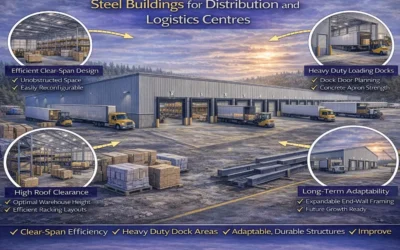
In Canada’s logistics and distribution sector, facilities are no longer simple storage buildings. They are high-throughput operational hubs where efficiency, predictability, and durability directly affect profitability. Steel buildings have become the preferred...
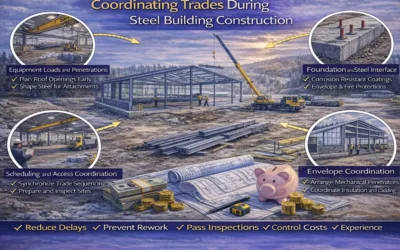
Coordinating Trades During Steel Building Construction
Steel building construction is often viewed as a linear process: design, fabricate, erect, and finish. In practice, successful projects depend far more on how well multiple trades are coordinated than on how quickly any single phase moves. Poor coordination is one of...
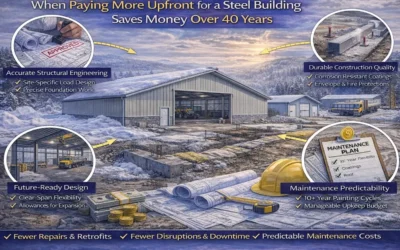
When Paying More Upfront for a Steel Building Saves Money Over 40 Years
In steel construction, the initial purchase price is often the most visible number and the least meaningful one. While upfront cost matters, it represents only a fraction of what a building will actually cost over its working life. For owners planning permanent steel...
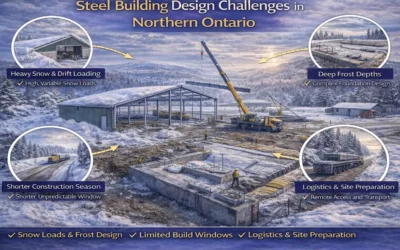
Steel Building Design Challenges in Northern Ontario
Designing steel buildings in Northern Ontario is not simply a colder version of building elsewhere in the province. The region presents a distinct set of structural, logistical, and regulatory challenges that must be addressed early in the design process. Projects...
Why Many Agricultural Steel Buildings Are Under-Engineered
Agricultural steel buildings are often viewed as simpler structures compared to commercial or industrial facilities. Because of this perception, many farm buildings across Canada are designed with reduced engineering oversight, minimal load analysis, or assumptions...
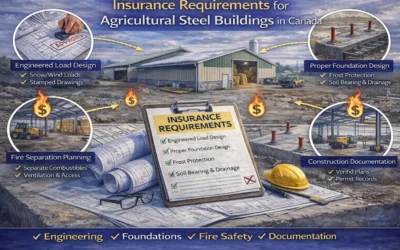
Insurance Requirements for Agricultural Steel Buildings
Insurance is often treated as something that happens after a farm building is constructed. In reality, insurance expectations influence how agricultural steel buildings should be designed, engineered, documented, and maintained from the very beginning. Across Canada,...
How Engineering Errors Increase Steel Building Costs
Steel buildings are often selected because of their predictability. When properly engineered, they offer clear pricing, defined schedules, and long-term performance certainty. When engineering is incomplete, incorrect, or poorly coordinated, that predictability...
Clear-Span Steel Buildings for Industrial Applications
Clear span steel buildings have become a foundational structural solution for industrial facilities across Canada. From manufacturing plants and logistics hubs to heavy equipment service and processing operations, clear-span design allows owners to maximize usable...
Agricultural Steel Building Code Differences in Ontario
Agricultural steel buildings in Ontario are governed by a different regulatory framework than commercial or industrial structures. While many farm buildings appear similar in size and construction to warehouses or workshops, the building code treatment, permitting...
Steel Building Erection Timelines and What Actually Slows Projects Down
Steel building erection is often described as the fastest phase of a construction project. Compared to traditional construction, steel structures can go up quickly once everything is ready. However, the assumption that steel buildings are fast by default is one of the...
How Material Volatility Affects Steel Building Pricing
Material volatility is one of the least understood cost drivers in steel building projects. Buyers often compare quotes assuming price differences come from profit margins, supplier preference, or negotiation tactics. In practice, many of these differences are...
Wind Load Design Near Lake Ontario and Open Terrain
Wind is one of the most underestimated forces affecting steel buildings in Southern Ontario and other lake-influenced regions across Canada. Projects located near Lake Ontario or in open, exposed terrain experience wind behaviour that is fundamentally different from...