Modern farming relies on equipment that represents significant capital investment. Agricultural equipment modernization trends are regularly analyzed by Agriculture and Agri-Food Canada which tracks technology adoption and machinery investment across the country. Tractors, combines, planters, sprayers, loaders, and specialty implements are not only expensive to purchase, but increasingly complex to maintain and repair. As machinery values rise, so does the importance of proper storage.
Steel buildings have become the preferred solution for farm equipment storage across Canada because they provide durability, space efficiency, weather resistance, and long-term cost control that traditional wood structures often struggle to match. Purpose-built farm steel buildings are commonly designed with clear-span interiors and high-clearance access to accommodate modern agricultural machinery.
However, simply placing equipment under a roof is not enough. Effective equipment storage requires thoughtful design around access, clearances, structural loading, moisture control, and future expansion. These design considerations are part of the broader engineering process described in steel building design and engineering principles. When these factors are addressed correctly, a steel storage building becomes a long-term asset that protects machinery, improves workflow, and reduces maintenance costs.
This article explains why steel buildings are ideally suited for farm equipment storage and how proper design decisions influence performance, safety, and operational efficiency over decades of use.
Why Equipment Storage Demands More Than Basic Shelter
Farm equipment is exposed to some of the harshest environmental conditions in Canada. Farm safety organizations such as the Canadian Agricultural Safety Association also highlight the importance of proper equipment storage and facility design. Snow accumulation, freezing temperatures, wind-driven rain, spring meltwater, dust, fertilizers, and chemicals all contribute to corrosion, material fatigue, and mechanical degradation.
Leaving equipment outdoors or in undersized sheds leads to:
- Premature rust and component failure
- Hydraulic seal damage from cold exposure
- Electrical system deterioration
- Higher maintenance and repair costs
- Reduced resale value
For large combines and sprayers, repeated freeze-thaw exposure alone can shorten hydraulic and electronic component life by years.
A properly designed steel storage building creates a controlled environment that limits these exposures while providing the space and access required for modern machinery.
Structural Strength for Large, Heavy Equipment
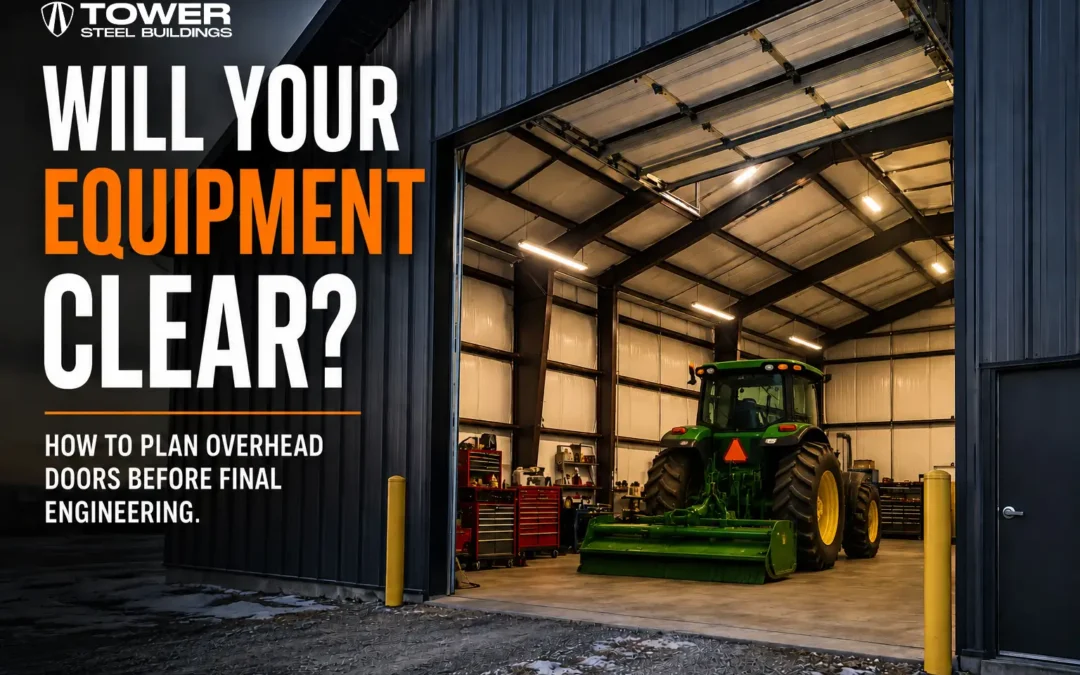
One of the primary advantages of steel buildings for farm storage is their ability to span wide areas without interior columns. Clear-span designs allow tractors, combines, and trailers to be parked, maneuvered, and serviced without obstruction.
Structural steel frames are engineered to support:
- Heavy roof snow loads common in Canadian climates
- Wind pressures in open rural terrain
- Large door openings without compromising building integrity
- Future additions or interior layout changes
These structural requirements are typically evaluated according to agricultural steel building code considerations in Canada.
This strength allows farmers to store tall equipment such as combines with headers, high-clearance sprayers, and grain trailers safely and efficiently.
Unlike lightly framed sheds, steel buildings maintain consistent load paths and resist racking, settlement sensitivity, and long-term deformation.
Canadian structural loading standards originate from the National Building Code of Canada which defines minimum snow, wind, and structural safety requirements.
Door Configuration and Access Planning
Equipment storage buildings succeed or fail based on access design.
Poorly sized doors force awkward maneuvering, increase collision risk, and slow daily operations. Proper steel building design incorporates:
- Oversized overhead or sliding doors for tall machinery
- Multiple access points for drive-through traffic flow
- End-wall or side-wall loading patterns depending on yard layout
- Clear height allowances for raised implements
Wide door spacing reduces congestion during busy seasons and minimizes risk of structural damage from repeated impacts.
Steel framing allows for large uninterrupted openings while maintaining strength through engineered portal frames and reinforced header systems.
Interior Layout and Equipment Organization
Effective storage is not simply about fitting machines inside. It is about organizing space for efficient use throughout the farming season.
Well-designed steel equipment buildings often include:
- Zoned parking areas for frequently used machinery
- Dedicated bays for seasonal equipment
- Space for attachment storage such as headers and implements
- Service and inspection clearances around key equipment
Clear-span steel structures allow layouts to change as equipment inventories evolve, supporting long-term operational flexibility.
Moisture Control and Condensation Management
Moisture is one of the most damaging factors for stored farm equipment.
Steel surfaces naturally cool quickly in cold weather, which can lead to condensation when warm, moisture-laden air contacts steel surfaces below dew point temperature. Without proper design, moisture accumulates on framing, roof panels, and equipment surfaces.
Effective moisture management strategies include:
- Proper insulation systems with vapour control layers
- Ventilation for air movement and humidity reduction
- Drip-stop or anti-condensation roof treatments
- Drainage planning around foundations
Many farms address these issues through properly engineered steel building insulation systems designed to control condensation and interior humidity.
Controlling condensation prevents corrosion, protects electrical components, and preserves equipment finishes over time.
Foundation Design for Heavy Loads and Traffic
Equipment storage buildings experience repeated heavy axle loads and point pressures from large machinery.
Foundations must be designed to handle:
- Concentrated wheel loads from combines and tractors
- Dynamic movement during turning and braking
- Frost depth conditions across Canadian regions
- Long-term settlement resistance
Engineered concrete slabs with appropriate thickness, reinforcement, and sub-base preparation are critical for durability.
Failure to account for equipment loads often results in cracking, rutting, and uneven surfaces that become costly to repair.
Proper slab engineering is critical in agricultural construction, particularly where steel building foundation design must account for concentrated equipment loads.
Weather Protection and Durability
Steel buildings excel at resisting the elements that challenge farm structures most.
Key advantages include:
- Non-combustible structural framing
- Resistance to rot, pests, and mold
- High wind and snow load performance
- Long-life exterior cladding systems
Protective coatings and modern steel finishes further enhance corrosion resistance, particularly in environments exposed to fertilizers, manure vapours, and road salts.
Over decades, steel buildings typically maintain structural integrity far better than untreated wood systems.
Fire Safety and Risk Reduction
While steel itself does not burn, farm equipment storage often involves fuels, lubricants, batteries, and electrical systems.
Proper building design should consider:
- Separation from livestock housing and workshops
- Fire-rated wall assemblies where required
- Adequate spacing between fuel storage areas
- Clear emergency access
Fire separation planning reduces total loss risk and improves insurance acceptance, particularly for mixed-use agricultural facilities.
Scalability and Future Expansion
Farming operations evolve over time. Equipment sizes increase, fleet counts grow, and new technologies emerge.
Steel buildings are ideal for staged growth because:
- Additional bays can often be added at end walls
- Roof and frame systems can be engineered for future loads
- Interior layouts remain flexible
- Door openings can be expanded or relocated
Planning for expansion during initial design reduces long-term construction costs and operational disruption.
Energy Efficiency for Year-Round Use
Many equipment buildings double as winter storage and service spaces.
Proper insulation allows:
- Reduced condensation in cold months
- Warmer working conditions for repairs
- Lower heating costs when equipment servicing is required
Modern insulated steel building systems can achieve excellent thermal performance while maintaining structural efficiency.
Long-Term Cost Benefits
While steel buildings may represent a higher upfront investment than simple sheds, lifecycle costs strongly favour steel for equipment storage.
Key long-term savings include:
- Reduced maintenance and repair of structures
- Lower equipment corrosion and replacement costs
- Fewer moisture-related failures
- Higher property value and resale appeal
- Longer structural lifespan
Over decades of ownership, steel storage buildings typically deliver significantly lower total cost of ownership. Lifecycle financial performance is explored further in long-term maintenance costs and steel building ROI.
When Steel Storage Buildings Make the Most Sense
Steel equipment storage is particularly valuable for:
- Large machinery fleets
- High-value precision farming equipment
- Operations with year-round equipment use
- Farms planning future expansion
- Owners focused on long-term asset protection
In these scenarios, steel buildings become infrastructure investments rather than simple shelters.
Designing Storage Buildings Around Real Farm Operations
The most successful equipment storage buildings are not standard kits. They are designed around how machinery is actually used.
This includes:
- Traffic patterns during peak seasons
- Equipment dimensions and growth projections
- Service and maintenance needs
- Environmental exposure risks
- Expansion planning
Organizations such as Tower Steel Buildings approach agricultural storage by integrating structural engineering, foundation coordination, moisture control, and long-term operational requirements into each design.
This ensures buildings perform reliably under real farm conditions, not just on paper.
Final Perspective
Farm equipment represents one of the largest investments on modern agricultural operations. Protecting that investment requires more than basic shelter.
Steel buildings provide the structural strength, space efficiency, moisture control, and durability necessary to support today’s machinery demands while adapting to future growth.
When properly designed, steel equipment storage buildings reduce operating costs, extend machinery life, improve workflow efficiency, and add lasting value to farm properties.
In agricultural construction, equipment storage is core farm infrastructure, not auxiliary space.. It is a core component of operational success.
Reviewed by the Tower Steel Buildings Engineering Team
This article has been reviewed by the Tower Steel Buildings Engineering Team to ensure technical accuracy, compliance with Canadian agricultural construction practices, and alignment with long-term structural performance standards for steel equipment storage buildings.
1. What is the best type of building for farm equipment storage in Canada?
Steel buildings are widely considered the best option for farm equipment storage in Canada due to their strength, clear-span space, weather resistance, and long-term durability. Properly engineered steel structures handle heavy snow loads, large machinery clearances, and moisture control far better than traditional wood sheds.
2. How large should a steel building be for storing tractors and combines?
The ideal size depends on equipment height, turning radius, attachment storage, and future fleet growth. Many operations benefit from clear-span widths and high eave heights that allow combines with headers and large implements to move freely without structural obstructions.
3. Do steel storage buildings need insulation?
Insulation is strongly recommended when equipment is stored through Canadian winters. Insulated systems help control condensation, reduce corrosion, and provide workable interior temperatures for maintenance. Vapor control layers and ventilation are equally important for moisture management.
4. How thick should the concrete floor be for heavy farm equipment?
Concrete slab thickness and reinforcement should be engineered based on equipment weight, axle loads, and soil conditions. Heavier machinery often requires thicker slabs with proper sub-base preparation to prevent cracking and settlement over time.
5. Are steel buildings resistant to corrosion in agricultural environments?
Yes, when properly designed with protective coatings, ventilation, and moisture control. Modern steel cladding systems are highly resistant to corrosion, even in environments exposed to fertilizers, livestock vapours, and seasonal moisture.
6. Can steel equipment storage buildings be expanded later?
Steel buildings are well suited for future expansion. End-wall extensions and additional bays can often be added with minimal disruption when planned during initial engineering, making them ideal for growing farming operations.
7. Do steel buildings increase farm property value?
Well-designed steel storage buildings typically increase property value due to their durability, low maintenance, and suitability for modern agricultural operations. Buyers often view them as long-term infrastructure assets rather than temporary structures.
8. How long do steel equipment storage buildings last?
With proper engineering, coatings, and maintenance, steel agricultural buildings commonly perform for several decades. Many exceed 40 years of service life while maintaining structural integrity and functionality.