Steel buildings across Canada are used for warehouses, manufacturing facilities, agricultural operations, commercial spaces, and long-term asset development. Yet one of the most misunderstood decisions in a steel building project is not the size, insulation, or layout.
It is the construction delivery model.
Most projects fall into one of two approaches:
- Turnkey steel building construction
- Partial or segmented construction
Both can work. Both can fail. The difference lies in project complexity, risk tolerance, coordination, and long-term cost exposure.
Understanding how these models function in real projects helps owners avoid delays, cost overruns, inspection issues, and scope gaps that quietly destroy budgets.
Project coordination failures are examined in detail in steel building construction risk factors in Canada.
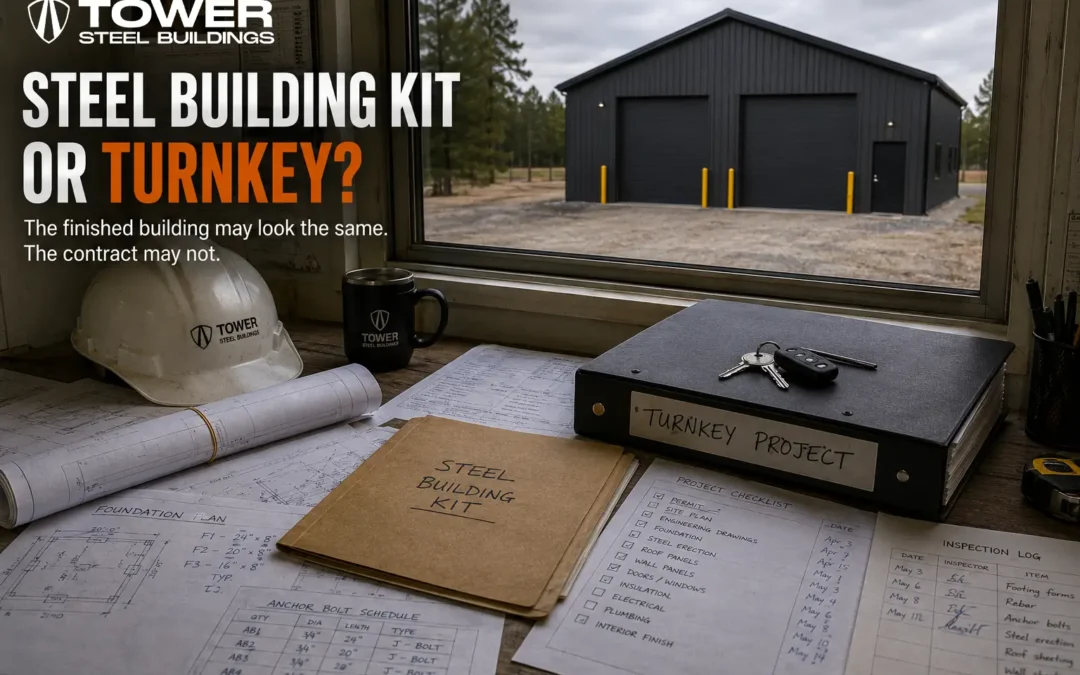
What Is Turnkey Steel Building Construction?
Turnkey construction means a single entity manages the complete project from early planning through final completion.
This typically includes:
- Engineering and structural design
- Permitting coordination
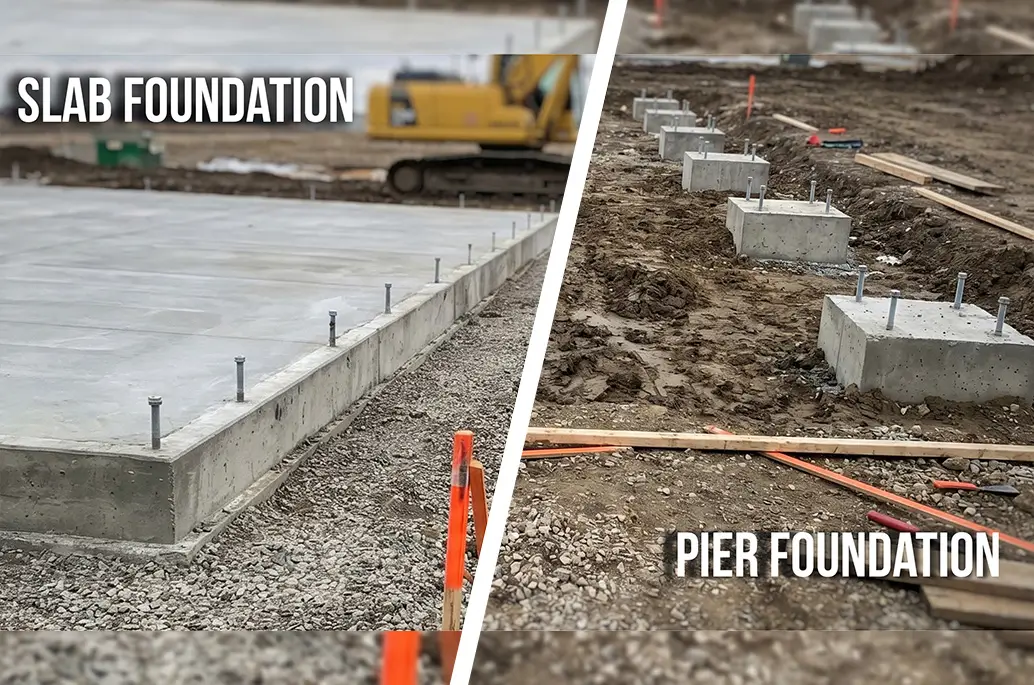
- Foundation design and construction
- Steel fabrication
- Delivery and erection
- Building envelope installation
- Final coordination of structural elements
The owner deals with one accountable project team rather than multiple independent trades and consultants.
In a turnkey model, responsibility for coordination, sequencing, and performance sits with the provider rather than being distributed across several parties.
What Is Partial Steel Building Construction?
Partial construction breaks the project into separate scopes handled by different contractors or consultants.
Common owner-managed arrangements include:
- Steel building supplier provides materials only
- Independent engineer designs foundations
- Separate contractor pours concrete
- Independent erection crew installs steel
- Envelope and finishes handled by others
In this approach, the owner or general contractor becomes the coordinator.
Each party performs its scope but does not control the overall system.
Partial construction is often chosen to reduce upfront cost or to maintain direct control over trades.
Why Both Models Exist in Canadian Steel Construction
Neither approach is inherently wrong.
Projects succeed under both models every year across Canada.
The key difference is how risk, coordination, and accountability are distributed.
Turnkey models centralize risk and coordination.
Partial models distribute them.
Understanding where complexity arises determines which model fits a given project.
Where Turnkey Construction Performs Best
Turnkey steel building construction tends to perform best when:
- Buildings are permanent assets
- Permitting requirements are complex
- Structural loads are heavy or variable
- Coordination between foundation and steel is critical
- Schedules matter for operations or financing
- Projects involve future expansion planning
Common examples include:
Manufacturing facilities
Distribution centres
Cold storage buildings
Large agricultural operations
Fleet maintenance buildings
Commercial developments
In these projects, small misalignments between trades create large downstream cost.
Turnkey delivery reduces these gaps.
Where Partial Construction Can Work Well
Partial construction can work effectively when:
- Buildings are simple in layout
- Loads are light and predictable
- Permitting is minimal
- Owners have strong construction management experience
- Schedules are flexible
- Budget control outweighs time risk
Typical examples include:
Basic storage buildings
Small workshops
Simple agricultural sheds
Seasonal or temporary structures
When systems are simple, coordination risk is lower.
The Hidden Coordination Layer Most Owners Underestimate
The largest difference between turnkey and partial construction is not who pours concrete or erects steel.
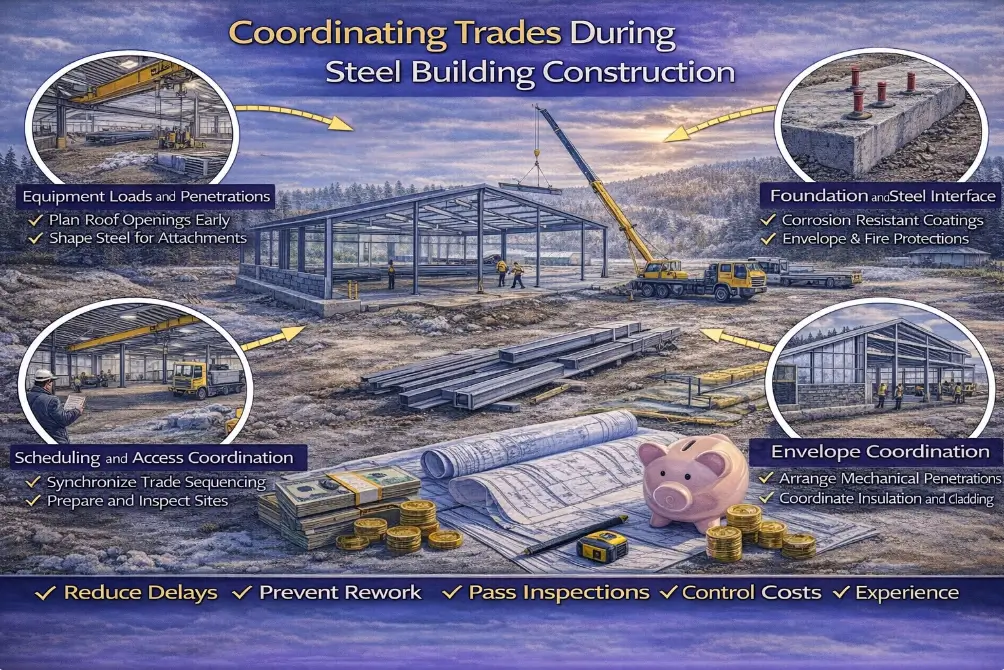
It is who manages the interfaces. Trade coordination complexity is discussed in coordinating trades in steel building construction projects.
Key coordination points include:
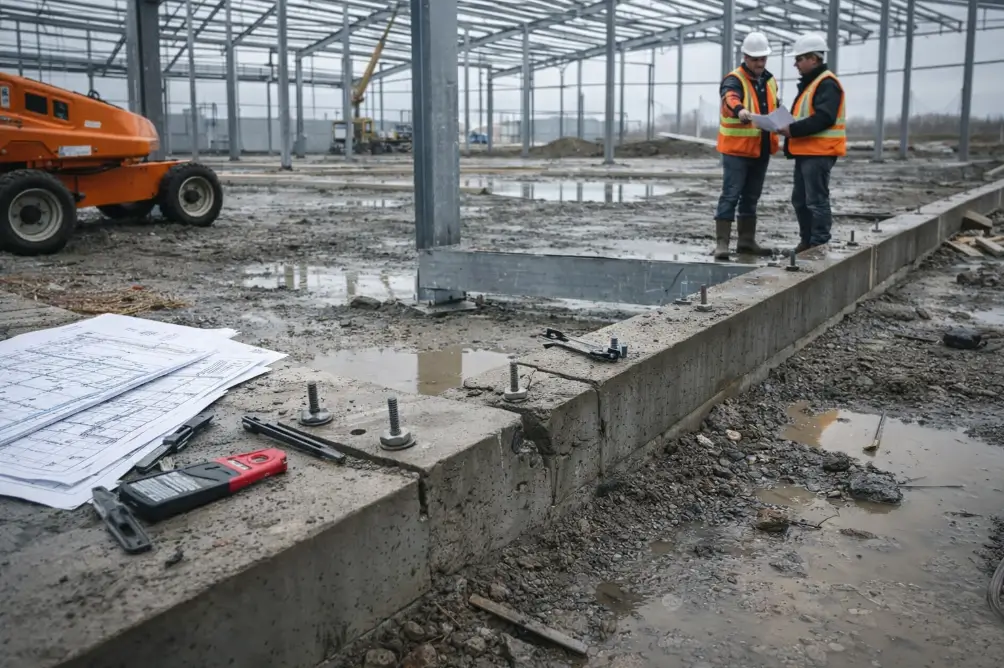
- Steel reactions into foundations
- Anchor bolt placement tolerances
- Slab elevations and drainage
- Crane access planning
- Envelope sequencing
- Penetrations and openings
- Equipment load integration
- Inspection timing
Foundation interface alignment is further explained in steel building foundation coordination and design considerations.
In turnkey delivery, these interfaces are engineered and scheduled as one system.
In partial delivery, they often fall between scopes.
This is where many projects quietly lose time and money.
How Partial Projects Commonly Run Into Trouble
Partial construction issues rarely appear immediately.
They usually surface during inspections or erection.
Common scenarios include:
Foundation poured before steel reactions finalized
Anchor bolts misaligned requiring field fixes
Slab elevations interfering with door openings
Penetrations missing for mechanical systems
Steel delivered before site access is prepared
Envelope installation delayed due to coordination gaps
Each issue seems minor alone.
Together, they compound into delays, rework, and added cost.
No single contractor is fully responsible.
The owner absorbs the impact.
Cost Comparison: Upfront vs Total Project Cost
Partial construction often looks cheaper initially. Post-contract surprises are analyzed in hidden costs after signing a steel building contract.
Fewer bundled services
Lower quoted material pricing
Direct trade negotiation
Turnkey projects typically include:
Engineering coordination
Project management
Integrated scheduling
Risk control
The difference appears as higher upfront pricing.
However, many partial projects end up costing more overall due to:
Change orders
Rework
Delays
Inspection failures
Scheduling conflicts
Turnkey pricing reflects known scope and controlled risk.
Partial pricing reflects segmented scope with variable outcomes.
Schedule Control and Project Predictability
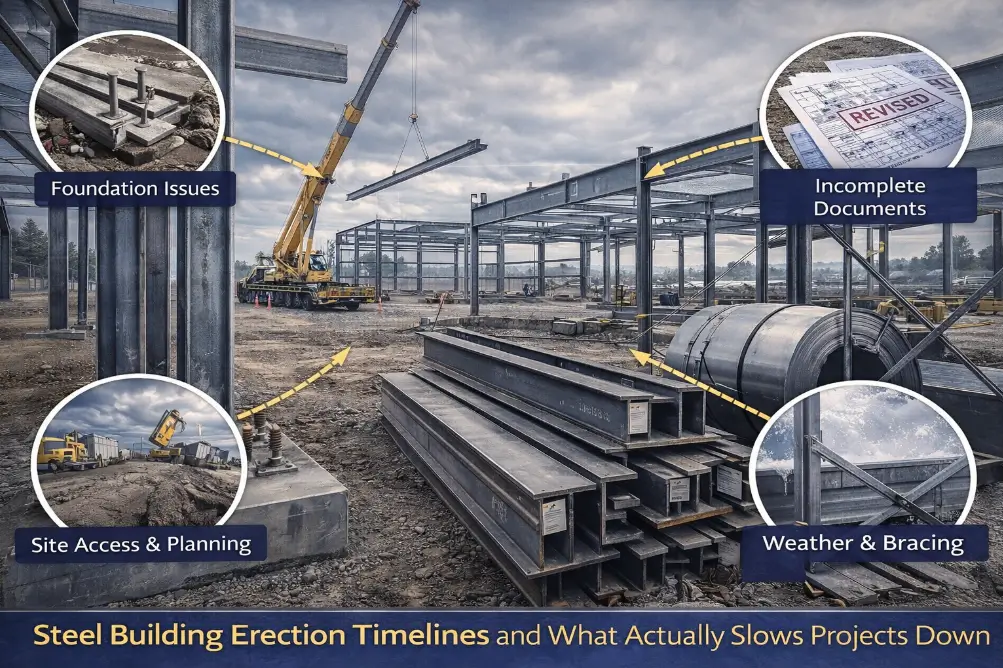
In steel construction, most delays originate before erection begins. Erection planning variables are outlined in steel building erection timelines and common delays.
Typical causes include:
Foundation readiness
Permit approvals
Engineering revisions
Access preparation
Coordination gaps
Turnkey teams plan these elements together. Construction-phase stability requirements are detailed in temporary bracing requirements during steel building erection.
Partial projects often sequence them independently.
The result is unpredictable schedules.
Owners who require operational certainty generally benefit from turnkey coordination.
Risk Allocation: Who Carries the Consequences?
Standardized Canadian construction contract principles are published by the Canadian Construction Documents Committee (CCDC).
Turnkey construction centralizes responsibility.
If foundations and steel do not align, one team resolves it.
Partial construction disperses responsibility.
Each party defends its scope.
The owner manages resolution.
This difference matters most when problems arise.
Projects rarely fail because everything went right.
They fail when issues appear and responsibility is unclear.
Engineering Integration Is the Real Divider
Canadian steel building system certification standards are governed under CSA A660 certification requirements. Proper integration begins with a structured steel building engineering review checklist before final design. The strongest advantage of turnkey construction is integrated engineering.
Foundation design is coordinated with:
Steel reactions
Load paths
Erection sequencing
Future expansions
Equipment loads
In partial projects, these are often designed separately.
This is where long-term performance issues emerge.
Misaligned assumptions increase maintenance, settlement risk, and operational headaches.
Financing, Insurance, and Institutional Projects
Lenders and insurers increasingly favour turnkey or integrated delivery models for large steel buildings.
Reasons include:
Clear accountability
Documented engineering coordination
Reduced risk of claims
Predictable completion timelines
For commercial and industrial projects, this often translates into smoother approvals.
Choosing the Right Model for Your Project
Turnkey is usually the better choice when:
- The building is a long-term asset
- Downtime has high cost
- Structural loads are complex
- Permitting is strict
- Budget predictability matters
Partial can work when:
- Buildings are simple
- Risk tolerance is high
- Owners manage construction well
- Schedules are flexible
The right choice depends on complexity, not just price.
The Cost of Assumed Simplicity
Many steel building projects start as “simple.”
Then evolve into:
Heavier equipment
Expanded layouts
Future mezzanines
Additional storage loads
Operational upgrades
Projects that begin partial often become complex mid-stream.
Turnkey models adapt more easily because engineering and coordination are already integrated.
The Long-Term Ownership Perspective
Buildings are not just construction projects. Lifecycle economics are examined in steel building long-term cost savings and lifecycle performance.
They are operating assets.
Poor coordination often leads to:
Settlement repairs
Water intrusion
Structural retrofits
Operational inefficiencies
Maintenance escalation
Turnkey delivery focuses on system performance, not just completion.
Partial delivery focuses on individual scopes.
Long-term owners benefit from integrated thinking.
Which Approach Delivers Better Value?
There is no universal answer.
But patterns are clear.
Simple projects with experienced oversight can succeed under partial construction.
Complex permanent facilities consistently perform better under turnkey delivery.
The cheapest contract is rarely the lowest-cost building.
Final Perspective
Turnkey and partial steel building construction are not competing philosophies.
They are tools for different project realities.
Partial construction offers flexibility and lower initial cost.
Turnkey construction offers coordination, predictability, and risk control.
The more complex the building and the higher the operational stakes, the more value turnkey delivery provides.
Owners who understand these differences make better long-term decisions.
Reviewed by the Tower Steel Buildings Engineering Team
This article has been reviewed by the Tower Steel Buildings Engineering Team to ensure technical accuracy, alignment with Canadian building practices, and relevance to real-world steel construction projects across commercial, industrial, and agricultural applications.
Canadian structural and safety standards referenced in this article align with the National Building Code of Canada official publication.
1. What is the main difference between turnkey and partial steel building construction?
Turnkey construction places full project coordination under one team, covering engineering, foundations, steel fabrication, erection, and sequencing. Partial construction separates these scopes across different contractors, requiring the owner or general contractor to manage coordination between trades.
2. Is turnkey steel building construction more expensive?
Turnkey projects often carry higher upfront pricing because engineering coordination and risk management are included. However, many owners find total project cost is lower due to fewer delays, reduced change orders, and improved schedule predictability.
3. When does partial steel building construction make sense?
Partial construction can work well for smaller or simpler buildings where loads are light, permitting is straightforward, and the owner has strong construction management experience. It is commonly used for basic storage buildings or low-complexity agricultural structures.
4. Who is responsible for coordination problems in partial construction projects?
In partial projects, coordination gaps typically fall to the owner or general contractor. Each trade is responsible for its own scope, but no single party manages system integration unless it is contractually assigned.
5. Do turnkey projects reduce construction risk?
Yes. Turnkey delivery centralizes accountability for engineering alignment, foundation coordination, erection sequencing, and schedule management. This significantly reduces the risk of misalignment, rework, and inspection delays.
6. Are lenders and insurers more comfortable with turnkey steel building projects?
For larger commercial and industrial projects, many lenders and insurers prefer integrated or turnkey delivery because it provides clearer accountability, coordinated engineering, and more predictable completion timelines.
7. Can a project start as partial and later convert to turnkey?
In some cases, yes. However, converting mid-project often introduces redesign, schedule disruption, and added cost. Most successful turnkey projects are structured that way from early planning.
8. Which approach offers better long-term building performance?
Turnkey projects generally perform better long term because structural design, foundations, erection, and operational loads are engineered as one system. This reduces settlement risk, water issues, and maintenance escalation.
9. How should owners choose between turnkey and partial construction?
The decision should be based on project complexity, operational risk, schedule sensitivity, and long-term ownership goals, not just initial price. The more complex the building and its use, the greater the value of integrated turnkey delivery.