Warehouse design is not just about square footage. In steel warehouse buildings, the real performance of the space is determined by how well it supports racking systems, forklift movement, and material flow.
Many warehouse projects run into operational problems not because the steel structure failed, but because clearance requirements were misunderstood during design. Poor planning can lead to inefficient racking layouts, restricted forklift movement, damaged inventory, and costly retrofits.
This guide explains how steel warehouses in Canada should be designed to properly accommodate racking systems and forklift clearance, and why these considerations must be addressed before fabrication begins. This approach is especially important for steel warehouse buildings designed for long term industrial use, where storage density and material flow directly affect operating costs.
Why Racking and Forklift Clearance Must Be Planned Early
Racking systems and forklifts impose real dimensional and load requirements on a warehouse. These requirements directly influence:
- Column spacing
- Clear height
- Roof structure configuration
- Slab thickness and flatness
- Door placement and circulation paths
Once a steel warehouse is fabricated, correcting clearance problems becomes expensive or impossible. Designing around storage and handling equipment from the beginning protects both operational efficiency and long-term flexibility.
Effective clearance planning requires early coordination between the structural engineer, the racking supplier, and the warehouse operations team. When these parties are involved from the outset, conflicts between structure and storage are largely avoided.
Understanding Clear Height vs Usable Storage Height
Clear height is often misunderstood.
In steel warehouse design, clear height refers to the vertical distance from finished floor to the lowest structural obstruction. This may include:
- Bottom of roof purlins
- Bracing members
- Crane beams or joists
- Lighting and sprinkler systems
Usable storage height is always less than advertised clear height. Racking systems require safety clearance between the top of stored goods and overhead obstructions.
Designing steel warehouses in Canada requires careful coordination between structural design and racking layout to ensure the usable height supports planned storage density. This coordination starts during the steel building design phase, before structural members, roof systems, and column grids are finalized.
Column Spacing and Racking Layout Compatibility
Column spacing plays a major role in racking efficiency.
Poorly planned column grids can:
- Block racking aisles
- Reduce pallet positions
- Force irregular rack layouts
- Limit forklift turning space
Steel warehouses designed for pallet racking typically use wider column spacing to allow uninterrupted racking rows and standard aisle widths. However, wider spans affect roof structure sizing and cost.
High-density racking systems must also align with CSA-referenced structural and safety standards, which influence how rack loads are transferred into warehouse slabs and foundations.
The balance between column spacing, structural efficiency, and warehouse usability must be evaluated during the design phase, not after construction. In practice, this evaluation depends on proper steel building engineering coordination between layout planning and structural calculations.
Forklift Types and Clearance Requirements
Not all forklifts are the same. Clearance requirements vary based on forklift type, load size, and operating environment.
Common forklift categories include:
- Counterbalance forklifts
- Reach trucks
- Narrow aisle forklifts
- Very narrow aisle systems
Each has different requirements for:
- Aisle width
- Turning radius
- Lift height
- Overhead clearance
Steel warehouse design must account for the largest forklift and load combination expected. Designing to minimum clearances often leads to operational inefficiencies and safety risks.
Aisle Width and Material Flow
Aisle width directly affects warehouse throughput.
Narrow aisles increase storage density but demand precise forklift control and higher floor flatness. Wider aisles allow faster movement and greater flexibility but reduce storage capacity.
Good warehouse racking clearance planning balances storage density with safe, efficient forklift movement. In steel warehouse design in Canada, this balance is critical for long-term operational success.
Roof Structure Considerations for Racked Warehouses
Roof structure design has a direct impact on warehouse usability.
Key factors include:
- Purlin depth and spacing
- Roof slope
- Bracing placement
- Hanging loads for lighting or sprinklers
Inadequate coordination between roof design and racking height can result in lost storage space or forced reconfiguration of rack systems.
For pre-engineered steel warehouses, roof framing must be optimized to maximize clear height while meeting snow load requirements across Canadian regions. Snow load assumptions play a major role in roof member sizing and must reflect regional snow load conditions.
Slab Design and Floor Flatness Requirements
Racking and forklift performance depend heavily on floor quality.
Steel warehouse slabs must be designed for:
- Concentrated rack post loads
- Forklift wheel loads
- Point loading at turning zones
- Long-term settlement control
High-density racking systems often require specific flatness and levelness tolerances. Failing to meet these requirements can compromise rack stability and forklift safety.
Slab design should be coordinated with racking suppliers early, as slab corrections after construction are costly. This is why warehouse slabs should follow proven principles of steel building foundation design, not generic concrete specifications.
Door Placement and Vertical Clearance
Warehouse doors are frequent clearance failure points.
Design issues arise when:
- Door heights restrict forklift movement
- Door placement conflicts with racking rows
- Exterior grades reduce effective clearance
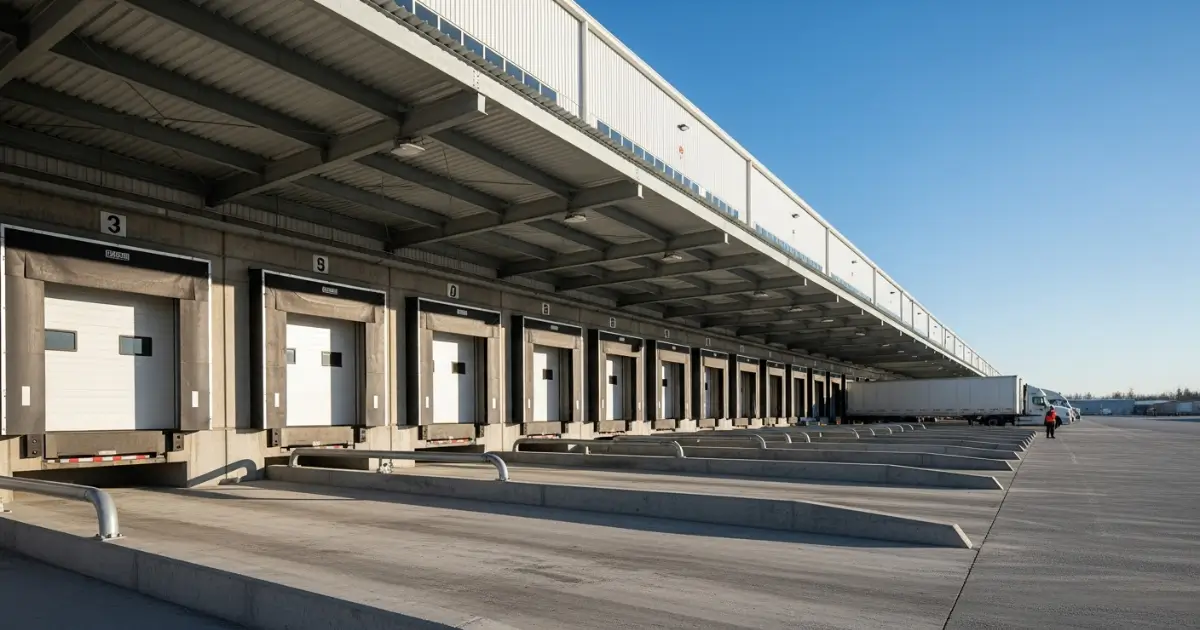
Steel warehouse doors must be sized and located to support full forklift operation without forcing unloading or re-handling outside the building.
Fire Protection and Clearance Impacts
Fire protection systems affect usable clearance.
Sprinkler heads, piping, and fire separations may require:
- Reduced rack height
- Increased clearance above stored goods
- Specific rack configurations
These requirements vary by occupancy classification and storage type. Steel warehouse design must integrate fire protection early to avoid post-construction limitations. Fire clearance, sprinkler placement, and rack height limits are closely reviewed during National Building Code compliance for warehouse facilities.
Future Expansion and Operational Flexibility
Warehouses rarely stay static.
Designing steel warehouses for future growth includes:
- Allowing for taller racking later
- Planning for different forklift types
- Preserving structural capacity for added loads
- Avoiding interior obstructions that limit reconfiguration
Future-ready design costs less than retrofitting after operations begin. This approach aligns with long-term planning steel warehouse buildings for growth, automation, and changing logistics demands.
Common Mistakes in Warehouse Clearance Planning
Some of the most common issues seen in steel warehouse projects include:
- Designing clear height without considering roof obstructions
- Using minimum aisle widths with no margin
- Ignoring future racking upgrades
- Underestimating slab requirements
- Treating forklift selection as an afterthought
These mistakes rarely appear on drawings but show up quickly during operation.
How Steel Warehouse Design Supports Long-Term Efficiency
Well-designed steel warehouses align structure, storage, and material handling into one system.
When racking and forklift clearance are planned correctly:
- Storage density improves
- Forklift damage decreases
- Inventory access becomes faster
- Safety risks are reduced
- Operational costs stabilize
The steel building becomes an asset, not a constraint. Owners evaluating racking layouts, clear heights, and forklift circulation should confirm these requirements before requesting pricing through a steel warehouse building quote review.
Final Perspective for Canadian Warehouse Owners and Developers
Steel warehouse buildings are long-term infrastructure investments. Their success depends not only on structural strength, but on how well they support daily operations.
Designing for racking and forklift clearance requires coordination between structural engineering, racking systems, and warehouse operations. Addressing these requirements early protects usability, safety, and return on investment.
Most warehouse problems do not come from lack of space. They come from lack of clearance planning.
Reviewed by the Tower Steel Buildings Engineering Team
This article has been reviewed by the Tower Steel Buildings Engineering Team to ensure technical accuracy and alignment with real-world warehouse design practices across Canada. The review reflects hands-on experience with steel warehouse structures, racking coordination, slab design, and clearance planning for logistics, distribution, and industrial facilities.
1. Who should be involved when planning racking and forklift clearance in a steel warehouse?
Effective clearance planning requires early coordination between the structural engineer, the racking supplier, and the warehouse operations team. Each party contributes critical information that affects column spacing, clear height, slab design, and aisle widths.
2. What is the difference between clear height and usable storage height?
Clear height refers to the distance from the finished floor to the lowest structural obstruction. Usable storage height is always less, as racking systems require safety clearance below roof members, sprinklers, lighting, and other overhead components.
3. Can racking systems be changed after a steel warehouse is built?
Racking systems can often be changed, but only within the limits of the original warehouse design. Column spacing, slab capacity, and clear height determine how much flexibility exists. Poor early planning can restrict future racking upgrades.
4. How does forklift type affect steel warehouse design?
Different forklifts require different aisle widths, turning radii, lift heights, and overhead clearance. Warehouse design should be based on the largest forklift and load combination expected, not minimum equipment specifications.
5. Does slab design affect racking performance?
Yes. Steel warehouse slabs must support concentrated rack post loads and forklift traffic. Floor flatness and levelness are critical for high-density racking systems. Inadequate slab design can lead to safety issues and operational inefficiencies.
6. How do fire protection systems impact racking clearance?
Sprinkler systems and fire codes often require minimum clearance above stored goods. These requirements can reduce usable storage height and influence racking layout. Fire protection must be coordinated with racking design during the planning stage.
7. Why do clearance issues often appear after construction?
Clearance issues usually arise when racking and forklift requirements are addressed after structural design is complete. Once a steel warehouse is fabricated, correcting clearance limitations becomes costly or impractical.
8. How does proper clearance planning protect long-term warehouse performance?
Well-planned clearance supports efficient material flow, reduces equipment damage, improves safety, and allows for future operational changes. Clearance planning ensures the steel warehouse functions as a long-term operational asset rather than a limitation.