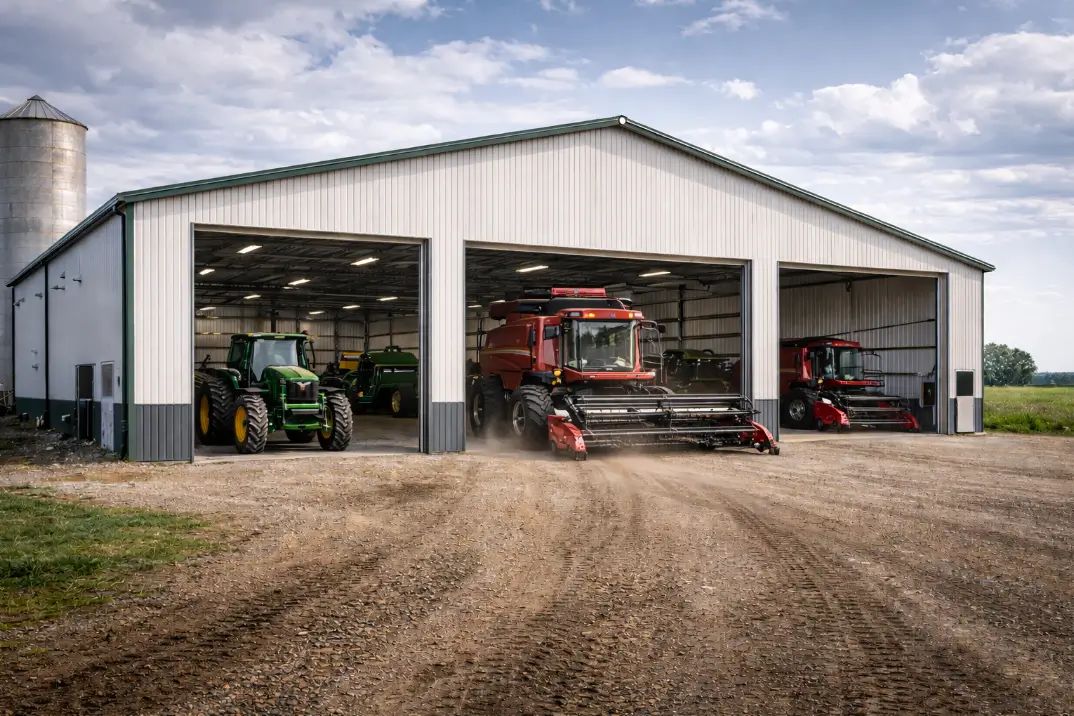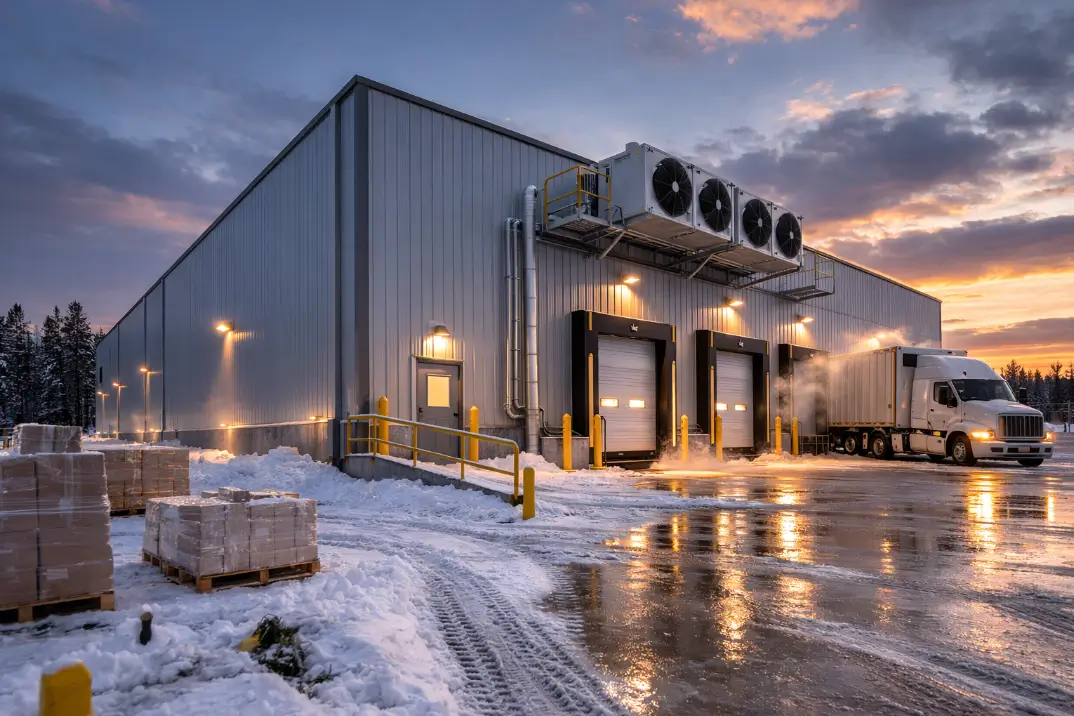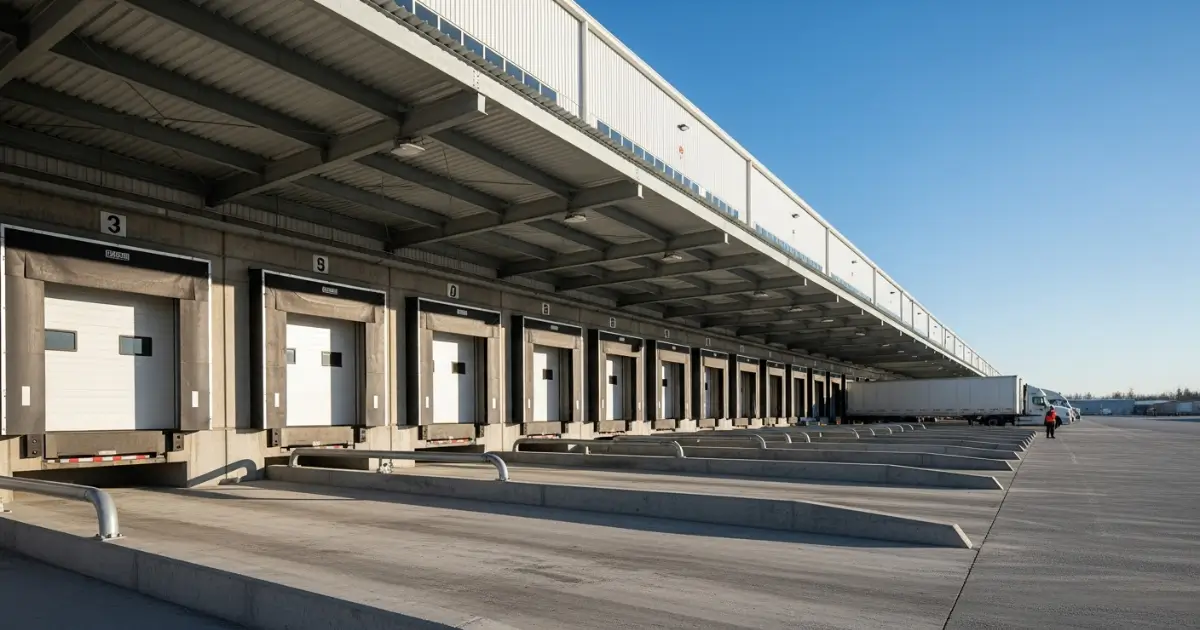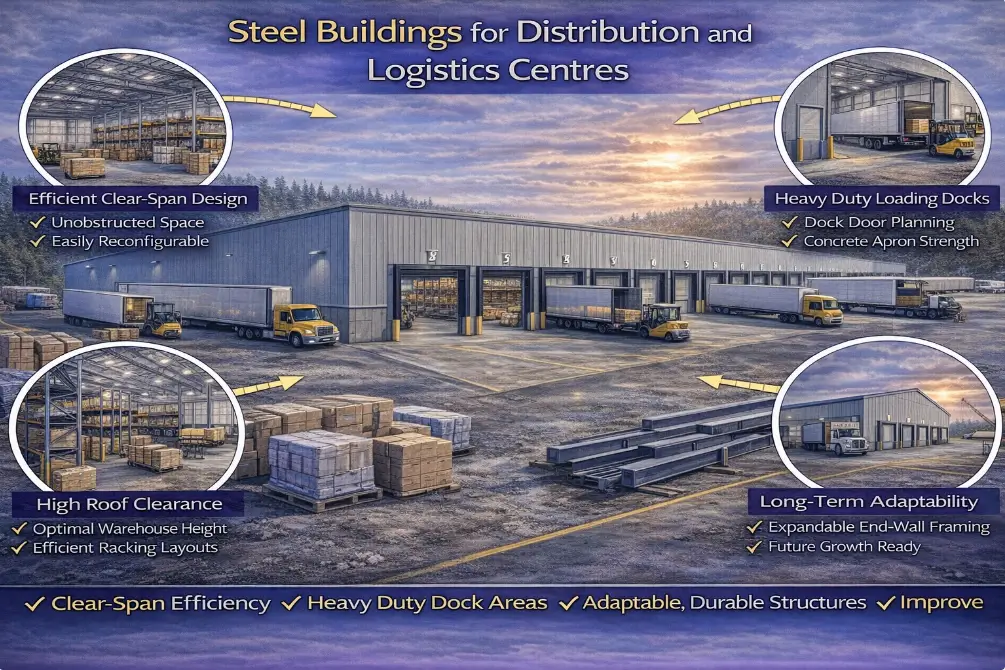
Trucking and fleet maintenance facilities place very different demands on a building than standard commercial or light industrial structures. These are high-use, heavy-load environments where vehicle size, traffic flow, maintenance workflow, and long-term durability directly affect operating efficiency and cost.
Steel buildings have become the preferred construction system for trucking terminals, fleet service yards, and maintenance shops across Canada because they offer the structural capacity, clear-span flexibility, and long-term resilience these operations require. These facilities share many design characteristics with purpose-built truck garages, including oversized door openings, reinforced slabs, and high-clearance interior layouts.
When designed correctly, a steel building becomes an operational asset that supports uptime, safety, and scalability rather than a constraint that limits growth.
This article explains how steel buildings are planned and designed for trucking and fleet maintenance operations, what makes these facilities structurally different from other buildings, and why early design coordination is critical for long-term performance.
Why Trucking and Fleet Facilities Have Unique Building Requirements
Fleet operations are fundamentally different from other industrial uses. Unlike warehouses or manufacturing plants where loads are mostly static, fleet buildings experience continuous movement, concentrated axle loads, and frequent door cycles.
Key operational realities include:
- Oversized vehicle dimensions and turning radii
- Repeated entry and exit of heavy trucks
- Concentrated loads from lifts, pits, and service equipment
- Exposure to moisture, salt, fuel, and chemicals
- High roof clearance requirements for vehicle access
- Long operating hours and year-round use
These factors influence not only the layout of the building but also its structural design, foundation coordination, and envelope performance. Steel buildings allow these variables to be addressed in a controlled, engineered manner.
Clear Spans and Interior Layout Flexibility
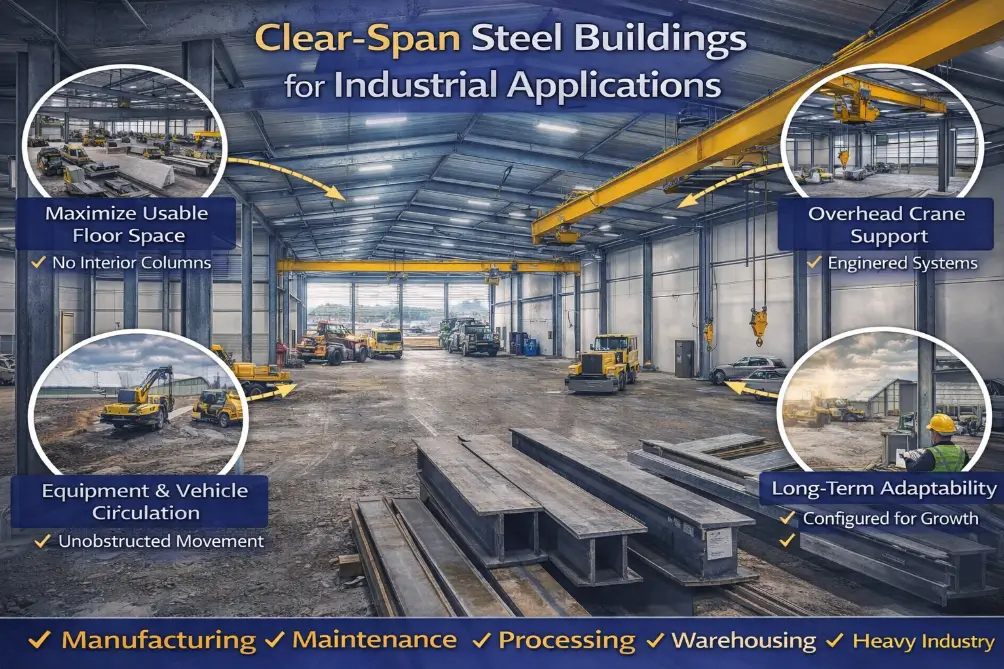
One of the primary advantages of steel buildings for fleet maintenance operations is the ability to achieve wide clear spans without interior columns.
Clear-span design supports:
- Uninterrupted vehicle movement
- Flexible bay configurations
- Safer maneuvering around lifts and service pits
- Easier future reconfiguration
In trucking facilities, interior columns often become collision hazards or workflow obstructions. Steel rigid-frame systems allow wide bays that accommodate multiple service lanes, alignment equipment, and overhead systems without structural interference.
This same structural flexibility is a defining advantage of modern commercial steel buildings designed for high-traffic operational environments.
This flexibility is particularly important for fleets that evolve over time, adding new vehicle types or changing maintenance processes.
Door Openings, Bay Spacing, and Structural Coordination
Truck maintenance buildings typically require large overhead doors that exceed standard commercial dimensions. Door width, height, and spacing have a direct impact on frame spacing and structural member sizing.
Common considerations include:
- Clear door heights for tractor trailers, box trucks, or buses
- Multiple door openings aligned with service lanes
- Wind loading on large door openings
- Structural reinforcement around door frames
In steel buildings, door locations are integrated into the structural design from the outset. This avoids costly retrofits or field modifications that often occur when door requirements are finalized too late in the process.
Foundation Coordination for Heavy Vehicle Loads
While the steel superstructure provides the building’s skeleton, the foundation system carries the operational load of fleet activity. Trucking facilities impose far greater demands on foundations than storage or light industrial uses.
Foundation coordination must account for:
- Concentrated wheel loads
- Lift reactions and service pit edges
- Slab thickness and reinforcement
- Joint placement and surface flatness
- Drainage and moisture control
Many long-term slab and foundation failures in fleet facilities stem from site conditions outlined in drainage and grading mistakes that delay steel building projects.
Steel building design must be coordinated with foundation engineering to ensure that loads are transferred correctly and that slab performance supports long-term use without cracking, settlement, or premature wear.
Proper coordination with steel building foundation design is especially critical in fleet facilities where axle loads and lift reactions are significantly higher than standard industrial uses.
Roof Height, Clearance, and Vertical Systems
Fleet maintenance operations require generous interior height to accommodate:
- Vehicle access
- Raised dump bodies or equipment
- Overhead cranes or hoists
- Exhaust extraction systems
- Lighting and sprinkler systems
Steel buildings allow precise control of eave height and roof slope, ensuring adequate clearance without unnecessary excess height that adds cost. Structural depth, bracing layout, and roof geometry are engineered together to balance clearance, strength, and efficiency.
Ventilation and Environmental Control
Truck maintenance environments generate heat, exhaust fumes, moisture, and airborne contaminants. Ventilation and exposure control in these environments should align with guidance from the Canadian Centre for Occupational Health and Safety, particularly for diesel exhaust and chemical exposure. Building design must support effective ventilation and environmental control to protect workers and equipment.
Steel buildings accommodate:
- Large exhaust fans and ductwork
- Roof or wall-mounted ventilation systems
- Open web framing for service routing
- Insulated wall and roof assemblies
Proper integration of these systems at the design stage prevents conflicts during erection and ensures that ventilation equipment does not compromise structural performance.
Durability in High-Exposure Environments
Fleet facilities are exposed to conditions that accelerate material wear, including:
- Road salt and moisture
- Oil, fuel, and chemical spills
- Frequent washing and cleaning
- Heavy traffic near walls and columns
Steel buildings are well suited to these environments because they offer predictable performance and compatibility with protective coatings, cladding systems, and corrosion-resistant finishes. When designed for the application, steel structures maintain alignment and integrity even under sustained abuse.
Expansion and Scalability for Growing Fleets
Many trucking operations grow incrementally, adding vehicles, routes, or service capabilities over time. Steel buildings support phased expansion more effectively than many other construction systems.
Expansion-friendly features include:
- End-wall expansion capability
- Modular framing systems
- Repeatable bay spacing
- Compatible cladding systems
Designing for future expansion during the initial project phase reduces disruption and cost when growth occurs.
Code Compliance and Regulatory Considerations
Fleet maintenance buildings must comply with multiple regulatory requirements, including:
- Provincial building codes
- Fire separation and occupancy classification
- Environmental regulations
- Accessibility and safety standards
Steel buildings are engineered to meet these requirements through documented calculations, stamped drawings, and coordinated design. Professional accountability for these designs is governed nationally through Engineers Canada, ensuring consistent engineering standards across jurisdictions. This reduces approval risk and helps ensure smoother permitting and inspection processes.
Construction Sequencing and Erection Planning
Trucking facilities often operate on tight schedules with limited tolerance for delays. Steel buildings support predictable construction sequencing, but erection planning must consider:
- Crane access and staging
- Temporary bracing requirements
- Weather exposure during construction
- Coordination with foundation readiness
Proper planning ensures that the building is erected safely, efficiently, and without disruption to adjacent operations.
Long-Term Operating Cost Considerations
Beyond initial construction, fleet owners must consider how the building performs over decades of use. Steel buildings offer advantages in:
- Structural stability
- Reduced maintenance of primary framing
- Predictable performance under load
- Compatibility with long-term upgrades
When lifecycle costs are considered, well-designed steel buildings consistently deliver strong return on investment for trucking and fleet maintenance operations. This aligns with findings discussed in long-term maintenance costs and steel building ROI, where durability and reduced intervention protect operating margins over decades.
Why Early Design Coordination Matters
Many problems in fleet facilities originate not from poor materials but from poor coordination. When structural design, foundation planning, door layouts, and operational workflow are developed together, the resulting building functions as intended.
Steel buildings provide the framework for this coordination, but success depends on early planning and realistic understanding of how the facility will be used day to day.
Many fleet operators begin this process through a structured steel building design phase that aligns operational workflow, structural loads, and future expansion needs.
Final Perspective
Steel buildings are not just shelters for trucking and fleet maintenance operations. When engineered and planned correctly, they become durable, adaptable infrastructure that supports operational efficiency, safety, and long-term growth.
Fleet facilities that succeed over decades are rarely the ones built to minimum requirements. They are the ones designed with a clear understanding of vehicle movement, maintenance workflow, and structural performance from the very beginning.
Reviewed by the Tower Steel Buildings Engineering Team
This article has been reviewed by the Tower Steel Buildings engineering team to ensure technical accuracy and real-world applicability for trucking terminals and fleet maintenance facilities across Canada. The review reflects practical experience with heavy-vehicle structures, foundation coordination, clearance planning, and long-term operational performance in demanding service environments.
1. Are steel buildings suitable for heavy trucking and fleet maintenance operations?
Yes. Steel buildings are particularly well suited for trucking and fleet maintenance facilities because they can be engineered for large clear spans, high roof clearances, oversized door openings, and heavy operational loads. When designed correctly, steel structures provide the durability and flexibility required for continuous vehicle movement and long-term use.
2. How wide can clear spans be in steel buildings for truck maintenance facilities?
Clear-span widths depend on structural design, roof geometry, and loading requirements. Steel rigid-frame systems commonly achieve wide spans that eliminate interior columns, allowing uninterrupted service lanes and safer vehicle circulation. Final span limits are determined during engineering based on site-specific loads and building configuration.
3. Do truck maintenance buildings require special foundation design?
Yes. Fleet facilities impose concentrated wheel loads, lift reactions, and frequent traffic that must be addressed in foundation design. Slab thickness, reinforcement, joint layout, and coordination with steel column loads are critical to long-term performance. Foundation design should always be coordinated with the steel building engineer.
4. How are large overhead doors handled structurally in steel buildings?
Large door openings are integrated into the steel frame design from the start. This includes reinforcing door frames, adjusting bay spacing, and accounting for wind loads and deflection. Proper coordination avoids field modifications and ensures doors operate reliably over time.
5. Can steel buildings be expanded as fleet operations grow?
Steel buildings are well suited for future expansion. Many designs allow for end-wall or side-wall extensions by planning bay spacing, framing continuity, and cladding compatibility during the initial design phase. This makes future growth more predictable and less disruptive.
6. How does steel perform in environments exposed to salt, moisture, and chemicals?
Steel buildings perform well in high-exposure environments when appropriate coatings, cladding systems, and detailing are specified. Maintenance facilities benefit from steel’s predictable structural behavior and compatibility with protective finishes designed for corrosive conditions.
7. Are steel buildings compliant with Canadian building codes for fleet facilities?
Yes. Steel buildings are engineered to meet applicable provincial building codes, fire requirements, and safety standards. Structural calculations, stamped drawings, and coordinated design support permitting and inspection for trucking and fleet maintenance facilities across Canada.
8. What is the biggest mistake owners make when planning fleet maintenance buildings?
The most common mistake is treating a fleet facility like a standard warehouse. Truck size, traffic flow, lift locations, door alignment, and foundation loads require early planning. Buildings that are designed without considering these factors often face operational inefficiencies and costly modifications later.