Building a steel structure in Ontario isn’t just about choosing the right design or materials. One of the most important steps happens before construction begins-understanding zoning and permit requirements.
Zoning mistakes can delay your project for months or even force costly redesigns. Whether you’re building a garage, warehouse, or commercial facility, proper planning ensures your investment moves forward smoothly and legally.
In this guide, we’ll break down how steel building zoning in Ontario works, common pitfalls to avoid, and expert insights from Tower Steel Buildings, a trusted Ontario manufacturer with over 25 years of experience in permit-ready steel design.
1. Why Zoning Matters for Steel Buildings
Every municipality in Ontario has its own zoning bylaws that regulate what can be built, where it can be located, and how large it can be.
Zoning rules protect neighbourhood character, manage growth, and ensure public safety-but for builders, they also determine:
- The type of structure you can build on a property
- The maximum height and lot coverage allowed
- The setback distances from property lines
- Whether your project is classified as residential, commercial, industrial, or agricultural
Failing to comply with local zoning bylaws can lead to permit rejection, fines, or even orders to remove or alter the structure.
2. Understanding Zoning Laws in Ontario
Ontario municipalities divide land into zones-such as Residential (R), Commercial (C), Industrial (M), Agricultural (A), and Rural (RU). Each zone has its own specific requirements for use, size, and placement.
For example:
- A Rural Residential (RR) lot may allow an accessory garage but not a commercial workshop.
- An Industrial (M1) zone may allow a steel warehouse but restrict outdoor storage or signage.
- An Agricultural (A) property might allow a steel barn but require a minimum distance from neighboring dwellings.
Before designing a steel building, you must confirm your property’s zoning classification with the local municipal Planning or Building Department.
3. Common Zoning Issues for Steel Buildings
Even a well-designed steel building can hit zoning roadblocks. Here are the most common issues Ontario builders face:
A. Setback Violations
Setbacks are the required distances between your structure and property boundaries.
If your steel building sits too close to a lot line, road, or neighbouring structure, your permit can be denied.
Typical setbacks include:
- Front yard: 6–9 metres
- Side yard: 1.2–3 metres
- Rear yard: 3–7.5 metres
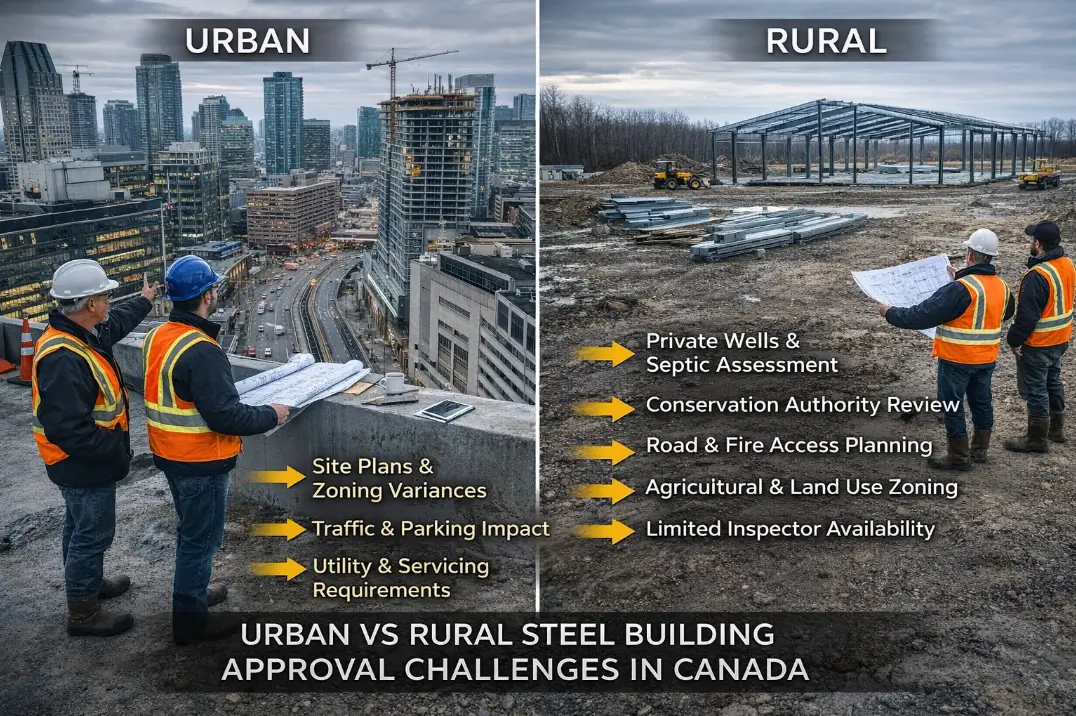
Each municipality defines its own standards. In rural areas, setbacks are often greater due to fire separation requirements.
B. Lot Coverage Limits
Municipalities often restrict how much of your property can be covered by buildings.
Exceeding lot coverage ratios (e.g., 30–40%) can trigger permit rejection.
C. Use Restrictions
You cannot operate a commercial workshop on residentially zoned land without special permission.
Even agricultural buildings may require proof of farm activity for approval.
D. Building Height and Design
Some areas restrict building height or roof pitch for visual consistency, particularly in residential zones.
E. Drainage and Grading
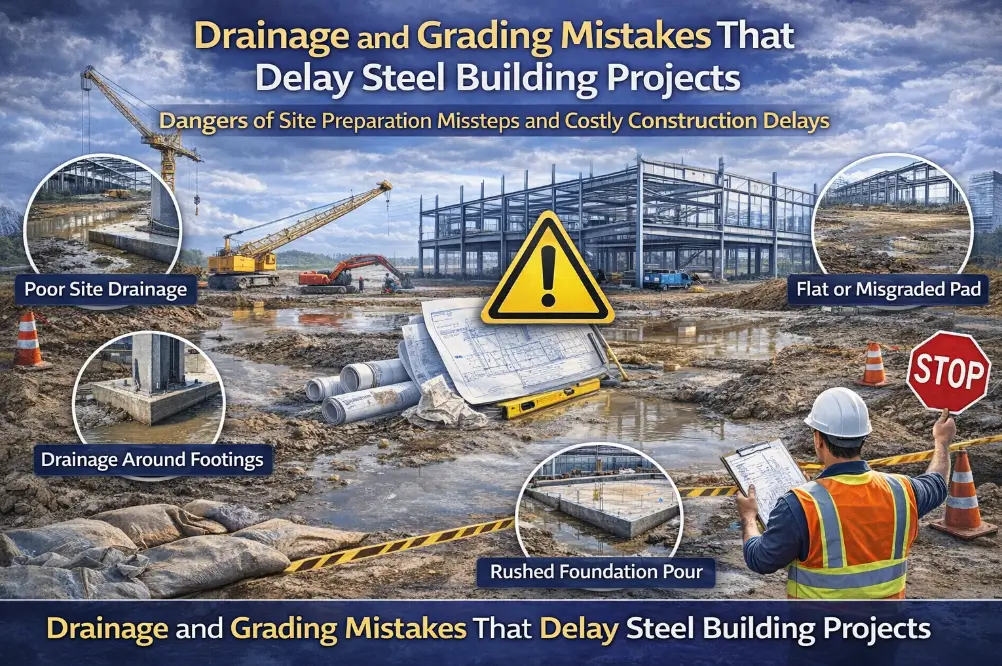
Improper grading plans can cause water runoff issues, leading to engineering review delays.
4. The Permit Process for Steel Buildings in Ontario
Understanding the permit process helps prevent wasted time and rework.
Here’s a simplified breakdown of how it works across most Ontario municipalities:
Step 1: Zoning Confirmation
Before you finalize your building design, confirm the zoning type of your property through the local planning office.
You can request a Zoning Compliance Letter for an official record.
Step 2: Design and Engineering
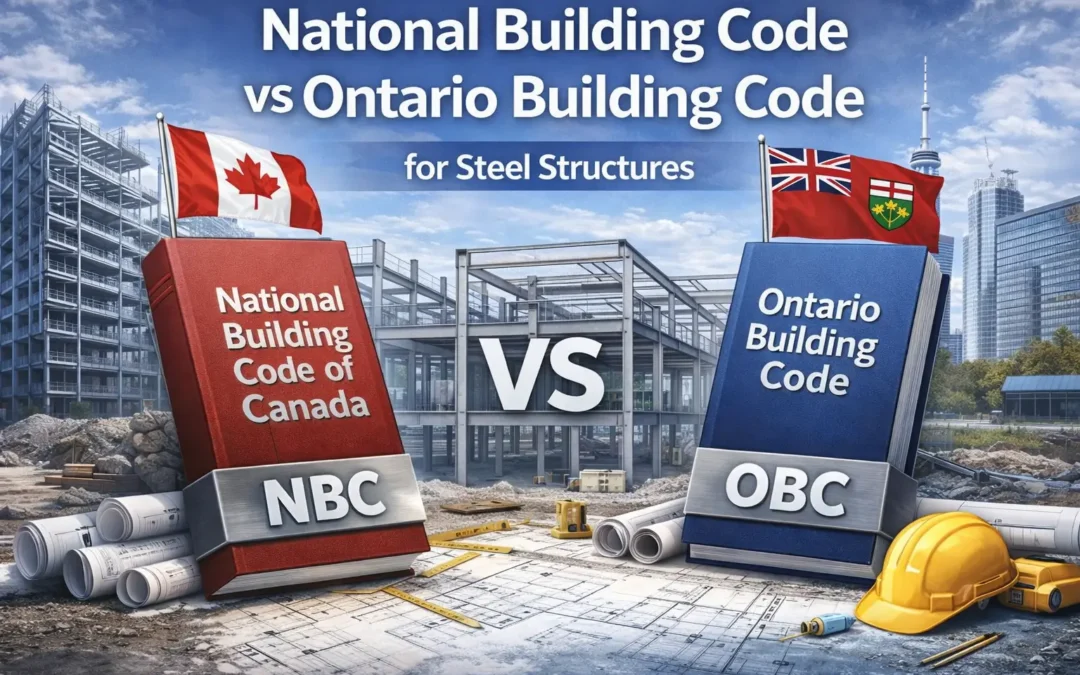
Work with an Ontario-licensed engineer to ensure your steel building meets Ontario Building Code (OBC) standards for:
- Snow and wind loads
- Fire separation
- Structural integrity
- Frost-depth foundations
Tower Steel Buildings provides engineer-stamped drawings for every project, ready for submission.
Step 3: Site Plan Approval (If Required)
For larger commercial or industrial buildings, you may need Site Plan Approval, which evaluates drainage, parking, landscaping, and traffic access.
Step 4: Building Permit Application
Submit the following to your municipality:
- Application form
- Engineered drawings
- Site plan showing setbacks
- Foundation details
- Zoning confirmation letter
Permit fees vary based on square footage and building type.
Step 5: Review and Approval
Most municipalities take 2–6 weeks to review applications. If changes are needed, your engineer can revise drawings to maintain compliance.
5. Avoiding Zoning Delays – Expert Tips
Even experienced builders can run into zoning obstacles.
Here’s how to minimize risks and keep your project on track.
A. Check Local Bylaws Early
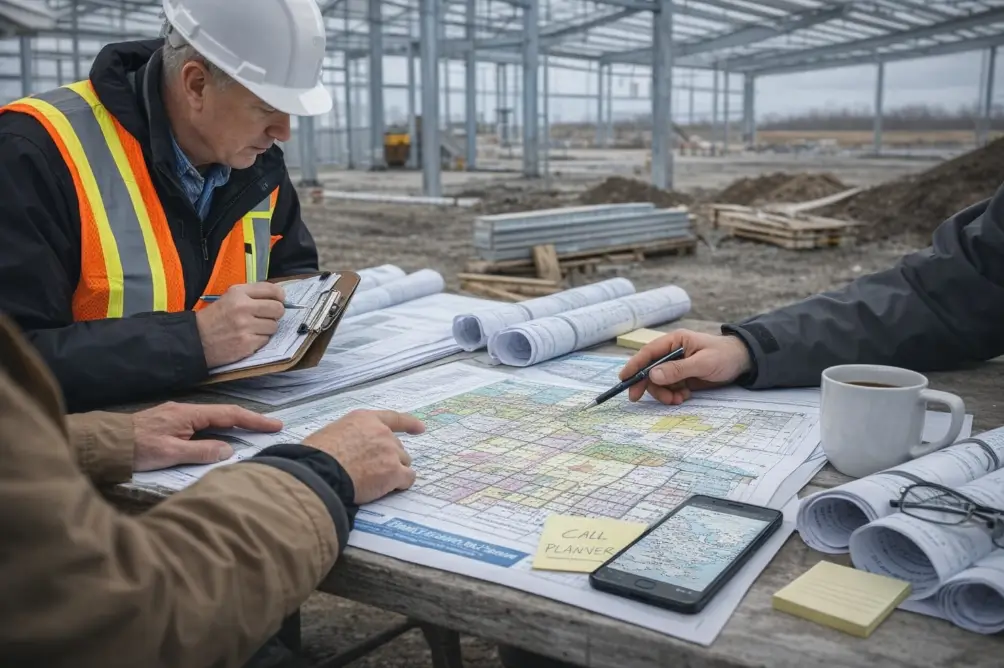
Each municipality publishes zoning maps and bylaws online. Review these before finalizing your layout.
If your property’s zoning doesn’t allow your intended use, you may apply for a Minor Variance or Zoning Amendment-but these take time.
B. Work With an Experienced Steel Building Manufacturer
Companies like Tower Steel Buildings have decades of experience preparing permit-ready designs tailored for Ontario’s municipal requirements.
They understand local setbacks, height restrictions, and fire separation distances.
C. Consider Fire Separation Requirements
If your building is close to another structure or property line, you may need fire-rated walls or non-combustible cladding.
Tower Steel Buildings designs each project to meet or exceed OBC fire safety standards.
D. Plan for Foundation Design Early
Ontario municipalities often require foundation drawings stamped by an engineer, showing proper frost depth (minimum 1.2 metres).
Failing to include these details delays approvals.
E. Prepare Drainage and Grading Information
A simple grading plan can prevent runoff complaints from neighbours or environmental inspectors.
6. Real Ontario Example: Rural Garage Project
A homeowner near Peterborough, Ontario, planned to install a 30×40 steel garage on a rural property.
The first design placed the structure only 1 metre from the side lot line, but the township required 3 metres.
After redrawing the layout and adding a fire-rated wall, the permit was approved in two weeks.
This small change-made before submitting the application-saved the client several weeks of delay and extra re-engineering costs.
7. How Tower Steel Buildings Simplifies the Process
For most Ontario clients, the zoning and permit process can feel overwhelming.
Tower Steel Buildings removes uncertainty by managing the technical and engineering steps for you.
Their in-house team:
- Confirms zoning and building classification before finalizing designs
- Prepares engineer-stamped structural and foundation drawings
- Ensures compliance with snow and wind load zones
- Provides permit-ready documentation customized to your municipality
- Coordinates with inspectors when revisions are requested
This end-to-end approach saves time, avoids rework, and ensures your project is built right the first time.
8. Special Considerations by Property Type
Different property types come with unique zoning and permit requirements:
| Property Type | Key Zoning Considerations |
| Residential | Accessory use limits, height restrictions, setbacks |
| Commercial | Parking, signage, fire separation, accessibility |
| Industrial | Environmental assessments, noise and emissions limits |
| Agricultural | Minimum distance from dwellings, livestock separation |
| Institutional | Parking ratios, public access compliance |
Tower Steel’s experience across these property types ensures every client receives clear, locally compliant designs.
9. Common Mistakes to Avoid
1. Starting Without Checking Zoning
Many first-time builders order a building before confirming land use. Always verify zoning before you buy or sign a contract.
2. Submitting Incomplete Applications
Missing engineer stamps, site plans, or elevation drawings can result in instant rejection.
3. Ignoring Lot Drainage
Drainage and grading issues often cause post-approval conflicts. Address them early.
4. Overlooking Fire Code Requirements
Steel buildings near property lines must meet separation and material standards under the Ontario Building Code.
5. Underestimating Review Time
Permit approvals can take several weeks. Build this into your timeline to avoid rushed construction schedules.
10. Why Ontario Municipalities Trust Tower Steel Designs
Tower Steel Buildings’ drawings are prepared by licensed Ontario engineers who understand both municipal bylaws and structural requirements.
This gives inspectors confidence during the review process and helps clients obtain approvals faster.
Advantages include:
- Engineered to meet OBC standards
- Fire separation and insulation included
- Snow and wind load compliance by region
- Local permit-ready documentation
- Proven track record with multiple Ontario municipalities
When building inspectors recognize the Tower Steel name, approvals often move more efficiently.
11. The Long-Term Value of Compliance
Proper zoning and permitting aren’t just about paperwork-they protect your investment.
If you ever sell your property, a non-permitted building can reduce its value or even complicate the sale.
Ensuring your steel structure meets Ontario Building Code and municipal zoning laws adds long-term value and peace of mind.
Conclusion
Zoning and permit requirements may seem complex, but they’re manageable with the right guidance.
Before you begin construction, confirm your property’s zoning, setbacks, and usage permissions.
Work with a team that understands the Ontario process from design to approval.
With Tower Steel Buildings, you don’t just get a structure-you get complete support from zoning review to final inspection.
Their Ontario-based engineers ensure every project meets regulations and stands strong for decades.
Reviewed by the Tower Steel Buildings Engineering Team
This article was reviewed by the Tower Steel Buildings engineering and design team, who specialize in Ontario zoning and permit-ready steel structures. Their combined expertise ensures accurate, compliant, and build-ready solutions across all property types.
1. Do I need a permit for a steel building in Ontario?
Yes. Any structure larger than 108 square feet requires a building permit under the Ontario Building Code.
2. How long does it take to get a permit?
Most permits take between 2 to 6 weeks, depending on your municipality and whether all documents are complete.
3. What is a setback?
A setback is the minimum required distance between your building and property boundaries. Municipal zoning bylaws define specific distances.
4. Can Tower Steel help with permits?
Yes. Tower Steel Buildings provides permit-ready drawings and works closely with clients to meet zoning and OBC standards.
5. What happens if my zoning doesn’t allow a steel building?
You can apply for a zoning amendment or minor variance. Tower Steel can guide you through this process with proper documentation.