Every durable steel structure begins with one critical element: its foundation. No matter how advanced the framing or insulation may be, a building’s performance depends entirely on the precision and strength of its base. In Ontario, where frost, moisture, and soil movement can compromise poorly designed systems, having an engineered foundation is essential.
This guide explains how steel building foundations in Ontario are designed, the key types of foundation systems used, and how Tower Steel Buildings ensures every project begins on solid ground through certified engineering and code-compliant foundation drawings.
Why the Foundation Is the Most Important Part of Any Steel Building
A steel building transfers its weight and loads into the ground through its foundation. That foundation must safely distribute those forces while resisting movement caused by frost, settlement, and heavy wind or snow loads.
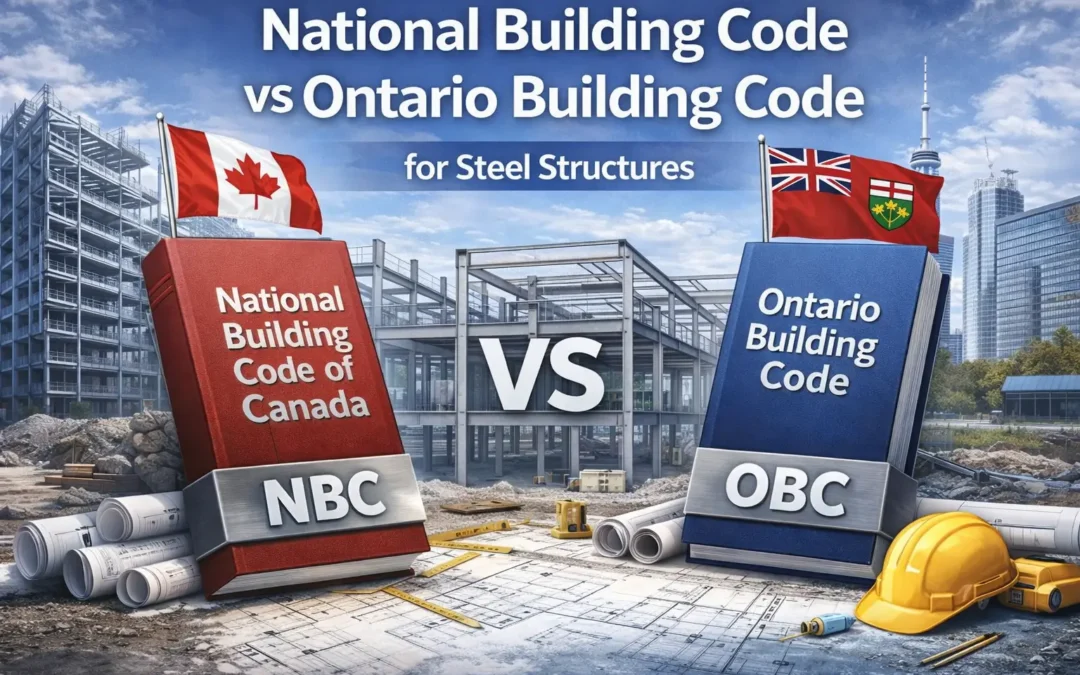
In Ontario, the Ontario Building Code (OBC) mandates that all permanent structures-including pre-engineered steel buildings-have a properly designed and reinforced foundation suitable for the local soil and climate.
A well-engineered foundation does more than support weight. It ensures:
- Structural alignment during steel erection
- Resistance against frost heave and ground movement
- Long-term durability under varying soil moisture and temperature
- Protection of slabs, anchor bolts, and base plates from stress or corrosion
When a foundation is designed incorrectly or constructed without reference to engineered drawings, even the strongest steel building can develop cracks, uneven floors, or misaligned framing.
The Role of Foundation Drawings in Ontario Steel Construction
Before a shovel touches the ground, a project begins with engineered foundation drawings-a precise set of plans that outline how the foundation must be built. These documents bridge the gap between design and construction.
Foundation drawings typically include:
- Footing layouts and slab dimensions
- Anchor bolt locations that match the steel column base plates
- Rebar schedules specifying reinforcement size and spacing
- Concrete strength and curing requirements
- Frost depth protection details based on Ontario’s regional frost line (typically 1.2 metres)
- Elevation and section views showing how the slab or piers integrate with the soil
At Tower Steel Buildings, every foundation drawing is reviewed and stamped by a licensed Ontario Professional Engineer (P.Eng.), ensuring compliance with OBC Part 4 and municipal requirements.
Understanding Foundation Types for Steel Buildings in Ontario
Ontario’s climate and soil diversity make it impossible to rely on one foundation design for every site. The best foundation system depends on the building’s size, intended use, and local soil bearing capacity.
Here are the most common foundation types used in steel building construction across Ontario.
A. Pier Foundation System
Best for:
Workshops, garages, and pre-engineered buildings on stable or rocky ground.
How It Works:
A pier foundation uses isolated concrete pads (or piers) beneath each steel column. The load from the steel frame transfers directly through these piers into the ground. The piers are connected by grade beams or left independent depending on design.
Advantages:
- Cost-effective for smaller buildings
- Minimal excavation required
- Easy to install on uneven or sloped sites
Considerations:
Pier systems must be engineered carefully to prevent differential settlement. Proper frost protection is critical, especially in colder Ontario regions where ground freezing can cause heaving.
Tower Steel Approach:
Tower Steel’s engineering team calculates reaction loads from each steel column and designs piers to exact specifications, including diameter, depth, and rebar reinforcement. Each pier layout is matched precisely to the column base plate configuration for seamless installation.
B. Slab-on-Grade Foundation
Best for:
Warehouses, storage buildings, workshops, and structures that require finished floor surfaces.
How It Works:
A slab-on-grade foundation consists of a thickened concrete slab that serves both as the structural base and the floor surface. Loads are distributed evenly through the slab into compacted soil or granular fill.
Advantages:
- Provides integrated floor and foundation
- Suitable for heated buildings or those with radiant floor systems
- Faster installation for flat Ontario sites
Considerations:
Proper subgrade preparation is vital. Poorly compacted soil or inadequate drainage can lead to cracks or settlement.
Tower Steel Approach:
Engineers design each slab with appropriate thickness (often 6 to 8 inches) and reinforcement, using mesh or rebar grids. Perimeter thickening and insulation layers are added for heated buildings, ensuring long-term energy efficiency and structural stability.
C. Frost-Wall Foundation
Best for:
Larger commercial, agricultural, and multi-bay buildings requiring insulated or semi-heated interiors.
How It Works:
A frost-wall foundation combines a perimeter concrete wall extending below the frost line with an interior slab poured afterward. The wall supports exterior loads, while the slab supports internal loads.
Advantages:
- Superior frost protection
- Excellent insulation potential for temperature-controlled buildings
- Long-term stability in cold Ontario climates
Considerations:
This system involves more excavation and concrete work but provides unmatched protection against frost movement and soil expansion.
Tower Steel Approach:
Each frost-wall foundation is designed with vertical and horizontal rebar reinforcement and moisture barriers. Drainage tile and waterproofing membranes are integrated to prevent water intrusion during spring thaw cycles.
D. Pile or Caisson Foundations
Best for:
Areas with soft, wet, or unstable soils such as near lakes or rivers.
How It Works:
Piles or caissons are deep foundation elements that transfer building loads through weak upper soils into stronger strata below. They can be concrete-filled steel tubes or reinforced concrete shafts.
Advantages:
- Suitable for poor soil conditions
- Prevents uneven settlement
- Ideal for heavy or tall buildings
Tower Steel Approach:
Pile foundations are engineered based on geotechnical reports and designed to precise depth and diameter. Tower Steel coordinates with local geotechnical engineers to ensure load testing and compliance with municipal inspection standards.
Key Engineering Considerations for Ontario Foundations
Designing a foundation for a steel building requires more than just determining footing size. Ontario’s weather extremes and soil diversity demand careful attention to multiple technical factors.
A. Frost Heave Protection
Frost heave occurs when soil moisture freezes, expands, and lifts the foundation. Tower Steel’s engineers mitigate this through proper depth design, insulation, and granular backfill that prevents moisture buildup around the foundation.
B. Drainage and Water Management
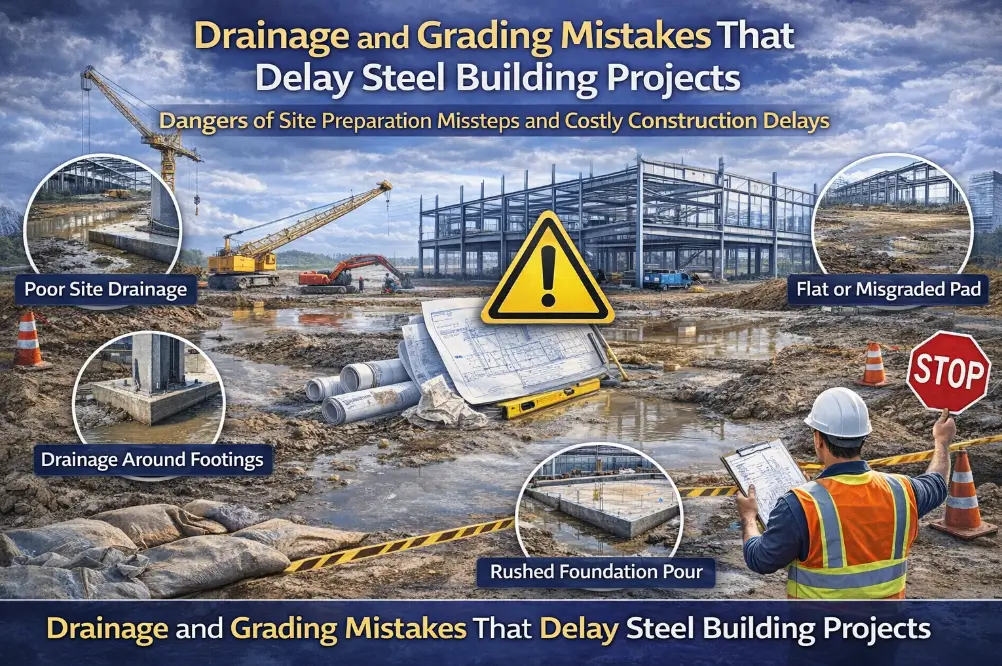
Foundations must include perimeter drains, gravel bases, or French drain systems to manage groundwater. Proper grading ensures water moves away from the structure, reducing long-term maintenance issues.
C. Load Path and Structural Compatibility
The load path – from steel column to footing – must be continuous and aligned. Misaligned anchor bolts or improperly sized footings can cause instability during erection. Tower Steel’s anchor bolt layouts are designed using the same CAD grid as the structural drawings, guaranteeing a perfect fit.
D. Concrete Strength and Reinforcement
Ontario foundations typically use 25 MPa to 35 MPa concrete, depending on load requirements. Reinforcement bars (rebar) and mesh grids control cracking and resist tensile forces.
E. Soil Bearing Capacity
A geotechnical report or soil test determines the allowable bearing pressure, typically ranging from 75 to 150 kPa across Ontario. Foundation size and depth are adjusted accordingly to prevent settlement.
Foundation Construction Process – From Design to Pour
Step 1: Site Evaluation
Before design begins, engineers assess soil conditions, drainage patterns, and frost depth specific to the project’s location.
Step 2: Engineering Design
Tower Steel’s engineering team designs the foundation layout using load data from the building’s steel structure. Each drawing is created in CAD and verified by a Professional Engineer.
Step 3: Permitting
The engineer-stamped foundation drawings are submitted to the municipality for review. Most Ontario jurisdictions require stamped drawings as part of the building permit process.
Step 4: Excavation and Formwork
Contractors excavate to the specified depth, install formwork, and set anchor bolts using templates provided with the engineering package.
Step 5: Concrete Pour and Curing
Concrete is poured according to mix design and allowed to cure under controlled conditions. Tower Steel recommends 28-day curing periods for optimal strength.
Step 6: Foundation Inspection
Before steel erection, an engineer or municipal inspector verifies anchor bolt placement, dimensions, and finish elevation to confirm accuracy.
Why Builders Trust Tower Steel Foundations
Tower Steel Buildings has decades of experience designing and delivering engineered steel building foundations across Ontario. Each project receives attention to structural detail, documentation accuracy, and compliance assurance.
What Clients Receive
- Complete foundation drawings with top, side, and section views
- Anchor bolt templates matching the steel frame
- Engineer’s stamp for permit submission
- Rebar schedules and concrete specifications
- On-site coordination support for accurate installation
Why Tower Steel Stands Out
- In-house engineering: No third-party outsourcing – every drawing is done locally by Ontario-certified engineers.
- OBC compliance: All designs follow Part 4 of the Ontario Building Code and applicable CSA standards.
- Integrated coordination: Foundation drawings and steel fabrication drawings are aligned digitally to prevent field conflicts.
- Proven reliability: Dozens of builders, contractors, and property owners across Ontario rely on Tower Steel for precision-built, long-lasting foundations.
Building on a Strong Foundation – The Ontario Advantage
A steel building’s success depends as much on the ground it stands on as on the structure itself. With proper design, soil preparation, and engineering oversight, Ontario builders can achieve decades of stability and performance.
By choosing Tower Steel Buildings, you’re not just purchasing steel – you’re investing in a complete system that begins with the most reliable foundation possible. Every project reflects years of local experience, engineering accuracy, and a commitment to doing it right the first time.
Reviewed by the Tower Steel Buildings Engineering Team
This guide has been reviewed and approved by the Tower Steel Buildings Engineering Team to ensure accuracy in structural and geotechnical principles aligned with Ontario’s construction standards.