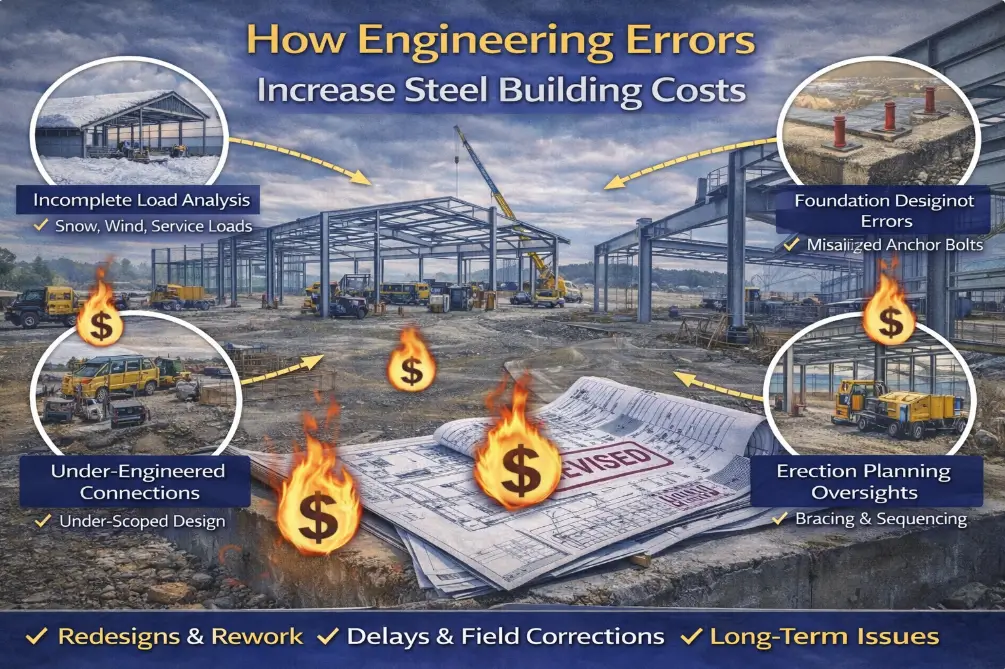
Behind every durable and efficient steel structure lies a process that combines science, engineering, and experience.
From the first sketch to the final bolt, the design and engineering of steel buildings in Ontario demand precision, code compliance, and a deep understanding of local environmental conditions.
Ontario’s snow, wind, and temperature extremes make engineering accuracy critical. A well-designed steel building doesn’t just stand it performs reliably for decades. This is where Tower Steel Buildings stands apart, bringing proven expertise and in-house engineering to every project across the province.
The Foundation of Steel Building Design
Steel building design begins long before materials reach the fabrication floor. It starts with understanding the client’s needs, local regulations, and environmental conditions.
In Ontario, that means designing structures that can withstand heavy snow, strong winds, and temperature swings from +35°C in summer to –30°C in winter.
Core objectives of steel building design:
- Ensure structural integrity and long-term durability.
- Optimize for cost efficiency and material use.
- Meet the Ontario Building Code (OBC) and municipal standards.
- Customize layouts for purpose – whether agricultural, industrial, or commercial.
Every Tower Steel project starts with detailed consultations, allowing the engineering team to tailor each building to the client’s operations, site conditions, and budget.
The Role of Engineering in Steel Structures
Engineering transforms raw steel into a high-performance structure capable of resisting forces like snow, wind, and seismic activity.
In Ontario, engineers must account for multiple load types that affect how a building behaves over time.
Types of engineering loads considered:
- Dead Loads: Weight of structural components such as beams, columns, and roof systems.
- Live Loads: Temporary loads like equipment, workers, or stored goods.
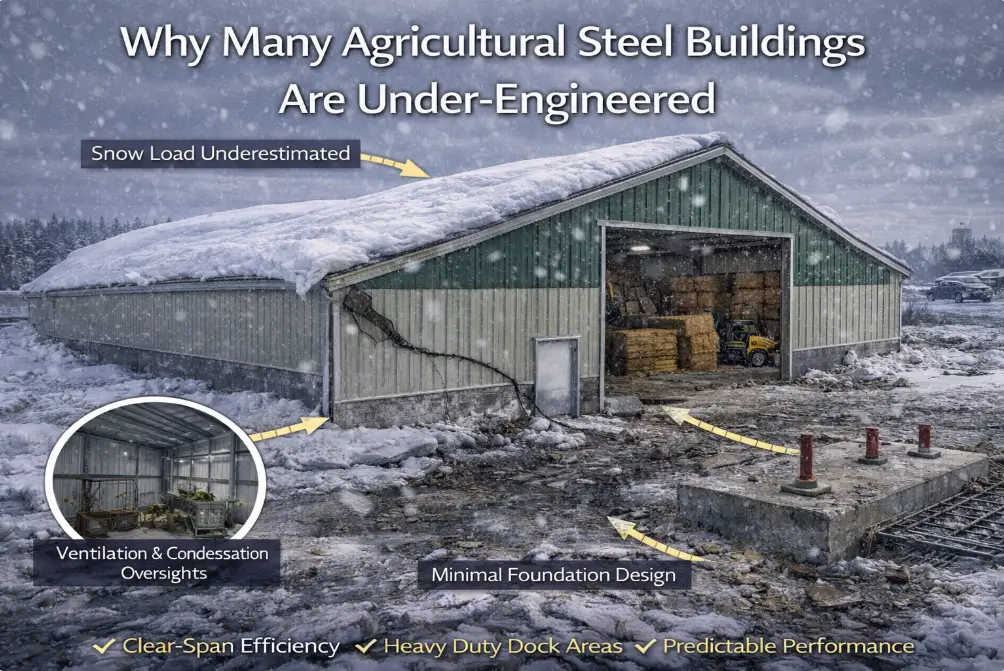
- Snow Loads: Determined by geographic zone and roof slope, following OBC Part 4.
- Wind Loads: Based on exposure category (open, suburban, urban) and height.
- Seismic Loads: Calculated for specific regions using the National Building Code’s seismic hazard index.
By running load simulations and applying advanced design software, Tower Steel engineers ensure every frame, connection, and panel can handle Ontario’s environmental demands without compromise.
Snow and Wind Load Engineering in Ontario
Ontario’s climate poses some of the most challenging conditions for steel buildings in Canada. The Ontario Building Code divides the province into load zones, each with unique requirements.
Snow Load Design
Snow loads vary significantly between regions:
- Southern Ontario (Windsor, London): 1.5 to 2.0 kPa
- Central Ontario (Barrie, Oshawa, Peterborough): 2.5 to 3.0 kPa
- Northern Ontario (Sudbury, Thunder Bay): up to 4.0 kPa or higher
Tower Steel’s engineers use both OBC data and local municipal amendments to determine roof design requirements. For large spans or flat roofs, snow drift zones are analyzed to prevent overloading in specific areas.
Wind Load Design
Wind exposure depends on location and terrain:
- Exposure A: City centres and dense developments (wind slowed by obstructions).
- Exposure B: Suburban zones with moderate exposure.
- Exposure C: Open fields or rural landscapes (higher wind speeds).
Each steel building is modeled to resist uplift, lateral pressure, and torsion, ensuring stability under extreme gusts.
Properly engineered bracing systems – such as portal frames and cross-bracing – prevent sway and distortion.
Pre-Engineered Building (PEB) Design and Efficiency
Pre-engineered steel buildings (PEBs) dominate the Ontario market because they combine engineering accuracy with speed and affordability.
Instead of designing each part from scratch, engineers use modular frameworks optimized for strength and material efficiency.
Key advantages of PEB design:
- Faster design turnaround with proven templates.
- Reduced material waste through precision cutting and fabrication.
- Simplified installation using pre-drilled, pre-marked components.
- Built-in compliance with Ontario’s load and safety standards.
Every PEB system from Tower Steel is customized for site-specific needs – whether it’s a compact farm garage or a 20,000-square-foot industrial plant.
While the base frames follow pre-engineered models, custom options such as mezzanines, insulation packages, and architectural finishes make each project unique.
Foundation and Structural Integration
A strong foundation is essential for any steel structure.
In Ontario, foundations must meet frost protection depths and account for local soil conditions determined by geotechnical testing.
Foundation design considerations:
- Frost depth: Typically 1.2 m in southern regions; deeper in the north.
- Soil bearing capacity: Determines footing size and reinforcement.
- Drainage control: Prevents frost heave and water infiltration.
Tower Steel’s in-house design team provides engineer-stamped foundation drawings coordinated with the building’s column loads.
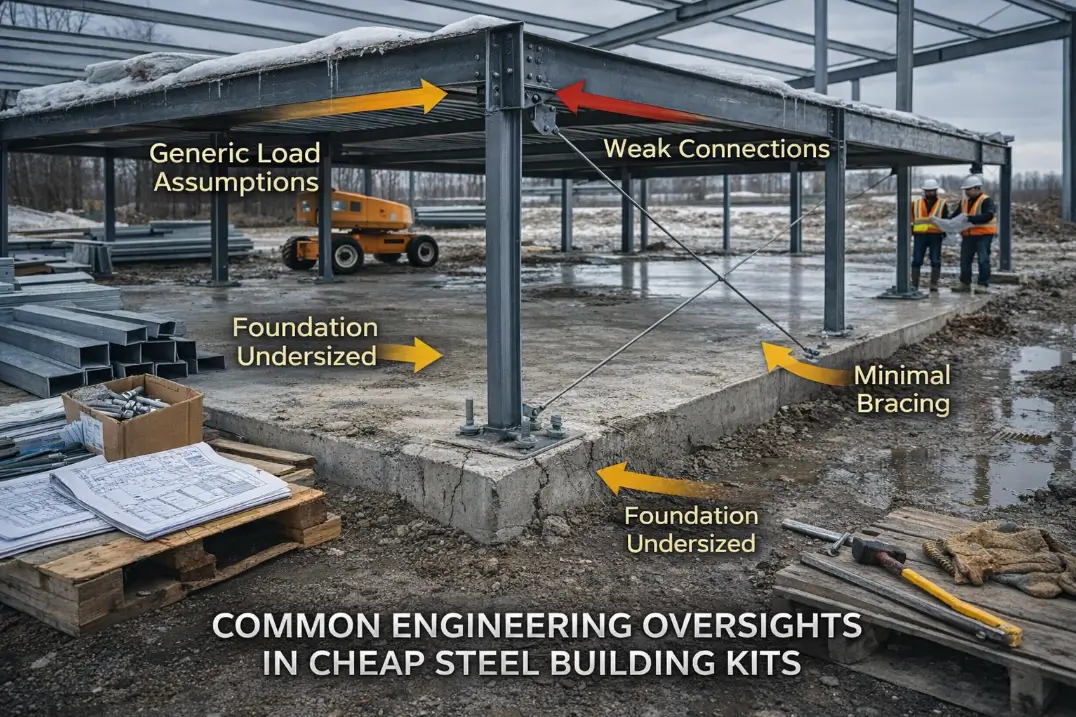
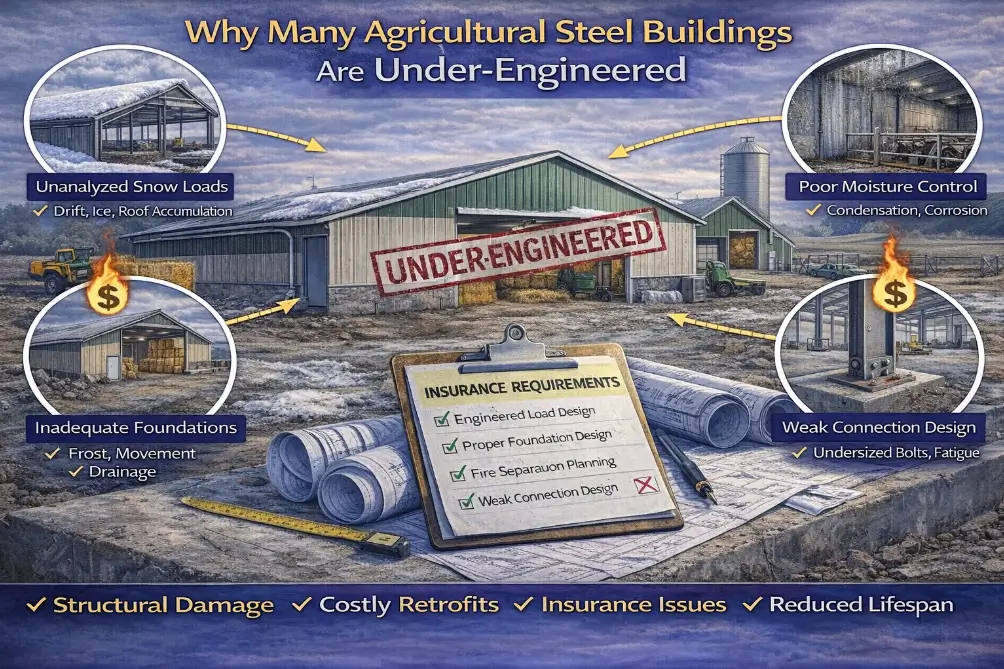
This integration eliminates the common mismatch between structural and foundation engineering often seen in third-party designs.
Structural Design Precision and Fabrication Quality
Precision is what turns engineering theory into reality.
Once the design is approved, detailed fabrication drawings are produced using computer-aided design (CAD) and 3D modeling software.
Every beam, column, and bracket is labeled, measured, and tested for fit before fabrication begins.
Steps in precision design and production:
- 3D modeling and clash detection.
- Material specification using CSA-certified steel.
- Finite Element Analysis (FEA) for load testing.
- Fabrication with CNC cutting and automated welding.
- Quality inspection before shipment.
This process guarantees that every Tower Steel component fits together perfectly on-site, minimizing installation time and ensuring long-term stability.
Custom Design and Architectural Adaptability
Modern steel buildings no longer all look the same.
Ontario clients often request design features that reflect brand identity or enhance usability – from façade treatments to integrated office spaces.
Custom design capabilities include:
- Variable roof slopes and architectural overhangs.
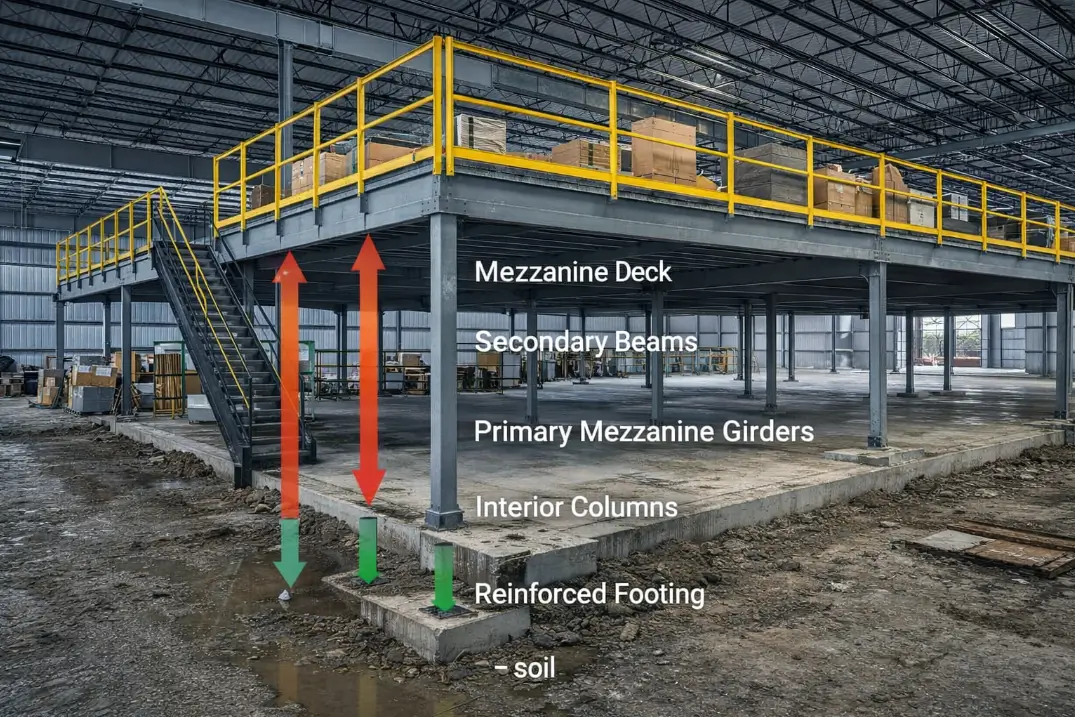
- Mezzanine floors for offices or storage.
- Custom door and window placements.
- Integration of glass, brick, or insulated panels for visual appeal.
By combining engineering precision with architectural design, Tower Steel delivers structures that are both functional and aesthetically refined – suitable for industrial, agricultural, and commercial applications alike.
Energy Efficiency and Sustainable Engineering
Energy performance is an essential part of modern steel building design in Ontario.
Engineers use insulation, coatings, and thermal modeling to reduce energy loss and improve interior comfort.
Techniques used in energy-efficient steel design:
- Insulated metal panels (IMPs): High R-values for walls and roofs.
- Thermal breaks: Reduce heat transfer through framing.
- Reflective coatings: Minimize solar heat gain in summer.
- Air-sealed building envelopes: Prevent drafts and condensation.
Steel’s recyclability also contributes to sustainability. Every Tower Steel building uses materials that can be reused indefinitely, reducing carbon impact compared to concrete or wood construction.
Ontario Engineering Standards and Compliance
All engineering and fabrication for Tower Steel Buildings meet the following Canadian and Ontario standards:
- Ontario Building Code (OBC) Part 4 – Structural Design.
- CSA S16 – Design of Steel Structures.
- CSA G40.21 – Structural Quality Steel Material.
- CSA A23.3 – Concrete Design for Foundation Systems.
- NBC 2015 & Supplementary OBC Updates – Snow, wind, and seismic design.
Every project includes engineer-stamped drawings signed by a Professional Engineer (P.Eng.) licensed in Ontario, ensuring that municipalities and inspectors can approve permits quickly and confidently.
Tower Steel Buildings’ Engineering Advantage
What truly distinguishes Tower Steel Buildings is its in-house engineering and design capability.
Rather than outsourcing, the company maintains a dedicated team of professional engineers and drafting specialists who oversee:
- Load analysis and compliance with OBC.
- Structural modeling and 3D visualization.
- Custom foundation and connection design.
- Project coordination from permit to completion.
This approach results in buildings that are not only strong and efficient but also precisely engineered to Ontario’s conditions.
Clients benefit from smoother permitting, faster delivery, and greater peace of mind knowing their project meets every structural and safety requirement.
Reviewed by the Tower Steel Buildings Engineering Team
This article was reviewed by the Tower Steel Buildings Engineering Team, responsible for the design and structural analysis of pre-engineered steel buildings across Ontario.
Their hands-on experience ensures every design recommendation reflects real engineering performance in Ontario’s environment.
1. Do all steel buildings in Ontario require engineer-stamped drawings?
Yes. The Ontario Building Code mandates that all structural drawings be reviewed and stamped by a licensed Professional Engineer.
2. How are snow and wind loads calculated?
Loads are determined using OBC data for your specific municipality. Tower Steel applies these values to ensure structural safety and compliance.
3. Are pre-engineered buildings customizable?
Yes. Tower Steel customizes layouts, finishes, and features while maintaining the precision and efficiency of pre-engineered systems.
4. What type of steel does Tower Steel use?
All structural components use CSA G40.21-certified steel, ensuring high strength and reliability.
5. Can Tower Steel assist with permits and foundation design?
Yes. The engineering team provides permit-ready, stamped foundation and structural drawings for any Ontario municipality.