Steel buildings are often associated with warehouses, workshops, and agricultural storage. However, many projects fall into a different category entirely: specialized and high-risk steel structures. These buildings carry higher engineering demands, stricter code scrutiny, and greater consequences if design assumptions are wrong.
Examples include crane buildings, cold storage facilities, industrial processing plants, high-occupancy commercial structures, agricultural environments with corrosive exposure, and buildings supporting heavy equipment loads or hazardous operations.
While the exterior may look similar to standard steel buildings, the design approach behind specialized structures is fundamentally different.
Understanding what makes a steel structure “high-risk” helps owners avoid cost overruns, permit delays, performance failures, and long-term operational problems.
What Defines a Specialized or High-Risk Steel Structure?
A steel building becomes specialized or high-risk when its structural performance directly supports operational loads, safety exposure, or environmental conditions beyond typical storage or light commercial use.
These buildings usually involve one or more of the following:
- Heavy concentrated loads
- Dynamic or moving equipment
- High snow, wind, or environmental stress
- Corrosive or moisture-rich environments
- Life-safety occupancy requirements
- Strict operational tolerances
In simple terms, failure margins shrink. Engineering accuracy becomes critical.
Unlike standard buildings that primarily resist weather loads, specialized steel structures must account for real-world operational forces acting on the building every day.
Why These Structures Require a Different Engineering Approach
In conventional steel buildings, design is largely governed by predictable loads such as snow, wind, and dead weight.
In specialized structures, engineers must consider:
- Equipment loads that may exceed roof or floor design norms
- Point loads transferred through columns or slab foundations
- Lateral forces from cranes, conveyors, or suspended systems
- Vibration and fatigue effects
- Chemical or moisture-driven corrosion risks
- Fire separation and life-safety design
- Long-term serviceability, not just strength
This shifts engineering from “code minimum resistance” to “operational performance design.”
A building can technically meet code and still fail functionally if specialized loads were underestimated.
Common Types of Specialized Steel Structures in Canada
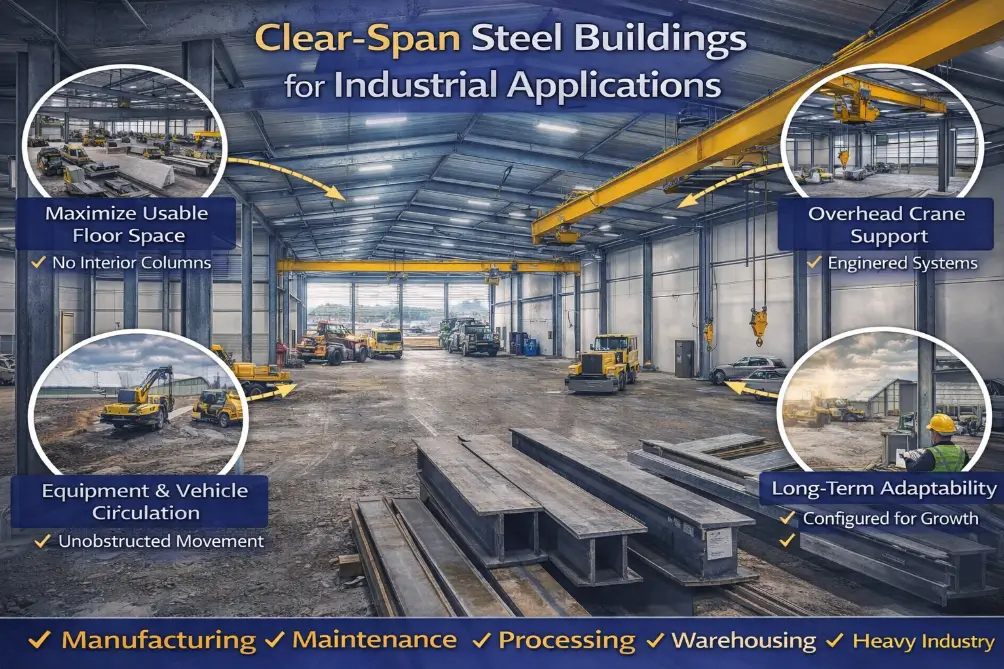
Crane-Supported Industrial Buildings
Overhead cranes introduce horizontal and vertical forces far beyond typical roof loads.
Design must consider:
- Crane capacity and travel speed
- Impact forces during lifting and braking
- Column deflection limits
- Runway beam integration
- Foundation reactions
Small miscalculations can lead to cracking, alignment failure, or structural fatigue.
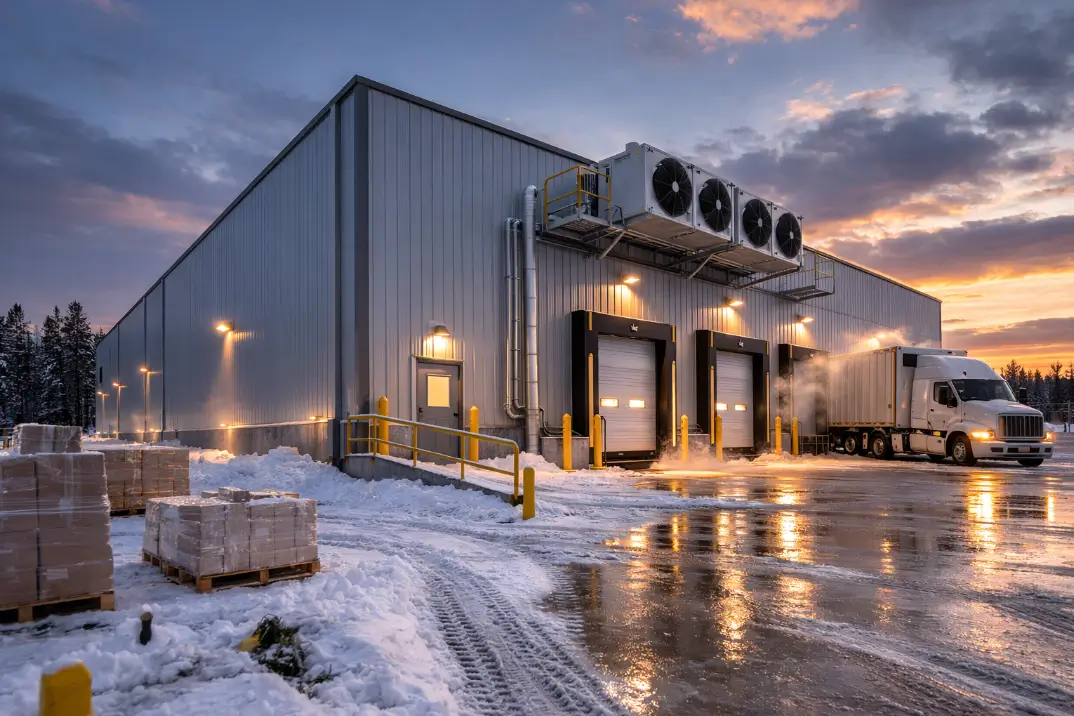
Cold Storage and Refrigerated Facilities
These buildings operate at sub-zero temperatures continuously. Facilities operating at these temperatures require structural detailing similar to cold storage steel buildings in Canada where thermal contraction, vapour control, and frost-protected foundations must be engineered together.
Engineering challenges include:
- Thermal contraction of steel components
- Vapour drive and condensation control
- Insulation system integrity
- Frost-protected foundations
- Roof snow accumulation from heat loss patterns
Energy performance, structural stability, and moisture control are deeply interconnected.
Manufacturing and Processing Plants
These facilities often contain:
- Heavy machinery loads
- Elevated mezzanines
- Conveyor systems
- Equipment vibration
- Chemical exposure
The steel building becomes part of the production infrastructure, not just enclosure.
Load paths must be coordinated with equipment layouts before fabrication begins.
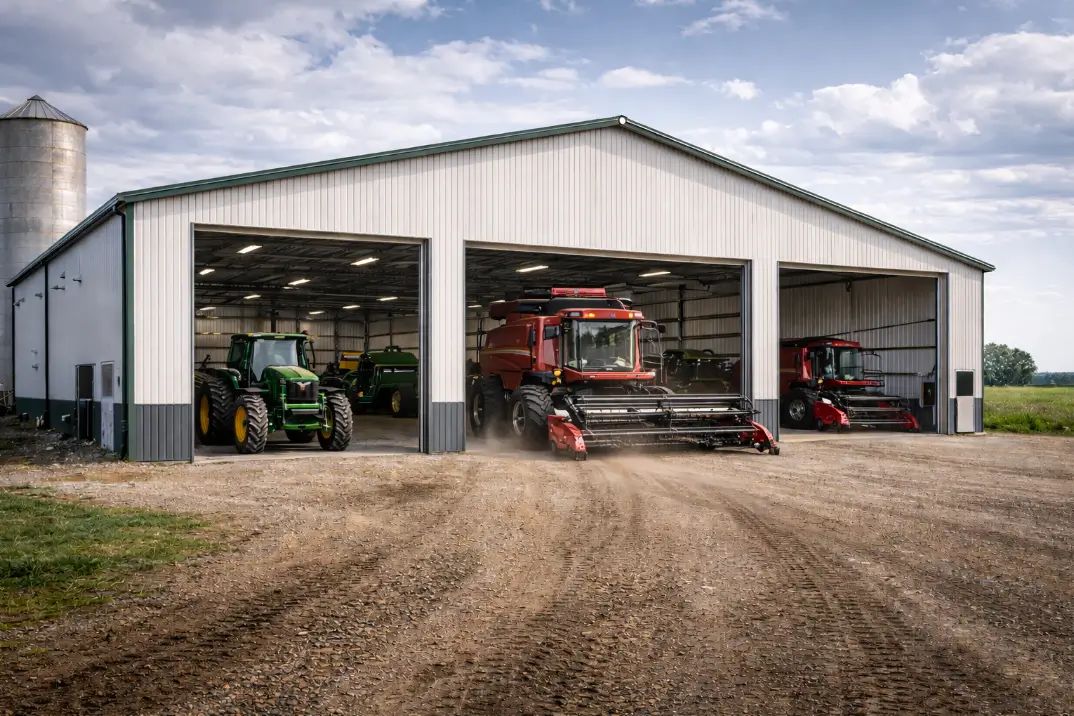
Agricultural Livestock and Storage Structures
These environments create aggressive corrosion conditions.
Key risks include:
- High moisture
- Ammonia and chemical exposure
- Condensation cycles
- Organic material buildup
Steel protection systems, ventilation strategy, and envelope design determine long-term durability.
High-Occupancy Commercial and Public Buildings
Buildings used by large numbers of people involve additional life-safety and serviceability considerations:
- Egress and accessibility requirements
- Fire resistance
- Structural redundancy
- Deflection control for occupant comfort
Design tolerances are much tighter than storage facilities.
The Role of Load Path Engineering in High-Risk Structures
One of the most overlooked aspects of specialized steel buildings is load path continuity.
Load paths describe how forces move through the structure:
Roof → framing → columns → foundations → soil
In high-risk structures, loads rarely flow evenly.
Crane beams, mezzanines, heavy equipment, and suspended systems introduce concentrated forces that must be transferred accurately. Structures designed to support lifting systems must account for these forces through specialized engineering approaches used in crane steel building design.
If any link in that chain is undersized or poorly coordinated, problems emerge such as:
- Foundation cracking
- Column overstress
- Frame distortion
- Roof movement
- Equipment misalignment
Good engineering ensures that every operational load has a clear, continuous, and properly sized load path.
Why “Code-Compliant” Is Not Enough for Specialized Buildings
Building codes establish minimum acceptable safety standards. In Canada, these model construction codes are developed and maintained through the Codes Canada program administered by the National Research Council.
They do not guarantee:
- Operational efficiency
- Long-term durability
- Equipment compatibility
- Low maintenance
- Future adaptability
A structure can meet code yet perform poorly in real industrial or agricultural conditions.
Specialized buildings must be engineered for actual use, not theoretical minimums.
This is where many low-cost building kits fail. A common example is seen in under-engineered farm steel buildings where simplified structural assumptions fail to reflect real agricultural exposure and operational loads.
Environmental Exposure and Long-Term Risk
Specialized steel structures are often exposed to harsher conditions than typical buildings.
Key environmental risks include:
Moisture and Condensation
Repeated wet-dry cycles accelerate corrosion, degrade insulation, and weaken connections.
Chemical Exposure
Fertilizers, livestock gases, manufacturing byproducts, and cleaning agents attack steel coatings over time.
Temperature Extremes
Cold storage and northern climates stress materials through expansion and contraction.
Design must anticipate these conditions from the start. Many structural failures occur when engineers underestimate corrosion risks in steel buildings across Canada in agricultural, coastal, and industrial environments.
The Cost Consequences of Under-Engineering Specialized Structures
When specialized loads or exposures are underestimated, costs rarely appear immediately.
Common long-term consequences include:
- Structural retrofits
- Equipment realignment
- Premature corrosion
- Roof failures
- Foundation repairs
- Insurance complications
- Operational downtime
These expenses often exceed the original building cost difference between proper engineering and minimal design.
Early Coordination Is Critical in High-Risk Projects
Specialized steel buildings require close coordination between:
- Structural engineers
- Equipment suppliers
- Foundation designers
- Mechanical systems
- Envelope designers
- Erection teams
Many failures occur when steel is designed before operational requirements are finalized.
Industry organizations such as the Canadian Construction Association emphasize coordination between engineering disciplines in complex construction projects.
For example:
- Mezzanine loads added after fabrication
- Crane capacity upgraded without frame review
- Equipment relocated without foundation redesign
Successful projects integrate all disciplines early.
Inspection and Approval Scrutiny Is Higher
Municipal reviewers, insurers, and lenders often scrutinize specialized structures more closely. Structural design for steel buildings in Canada also follows engineering standards published by the Canadian Standards Association (CSA).
Expect additional review for:
- Structural calculations
- Foundation reactions
- Load documentation
- Fire separation
- Energy performance
- Safety systems
Incomplete engineering typically leads to delays and redesign.
Well-prepared projects move faster.
When Specialized Design Protects Long-Term Value
Buildings engineered specifically for operational loads and environmental exposure:
- Maintain structural integrity longer
- Require fewer repairs
- Operate more efficiently
- Hold higher resale value
- Attract better financing terms
- Reduce insurance risk
The upfront engineering investment pays back over decades.
Signs Your Steel Building Falls Into the High-Risk Category
Your project likely requires specialized structural engineering if it includes:
- Overhead cranes or hoists
- Heavy industrial equipment
- Refrigeration or freezer environments
- Livestock housing
- Large mezzanines
- High-occupancy use
- Corrosive materials
- Long-span roofs with high snow loads
If any apply, standard steel building assumptions are rarely sufficient.
Why Experience Matters More Than Price in Specialized Structures
Many problems in high-risk steel buildings stem from suppliers treating them like standard kits.
Specialized structures demand:
- Accurate load modelling
- Integrated foundation design
- Operational coordination
- Environmental protection strategies
- Long-term performance planning
Experience reduces assumptions.
Assumptions create cost.
The Long-Term Perspective
Specialized steel buildings are not commodity products.
They are engineered systems supporting real operations, safety, and long-term business function.
When designed correctly, they perform reliably for decades.
When shortcuts are taken, problems compound quietly until repairs become unavoidable.
Final Thought
In steel construction, complexity does not come from size.
It comes from how the building is used.
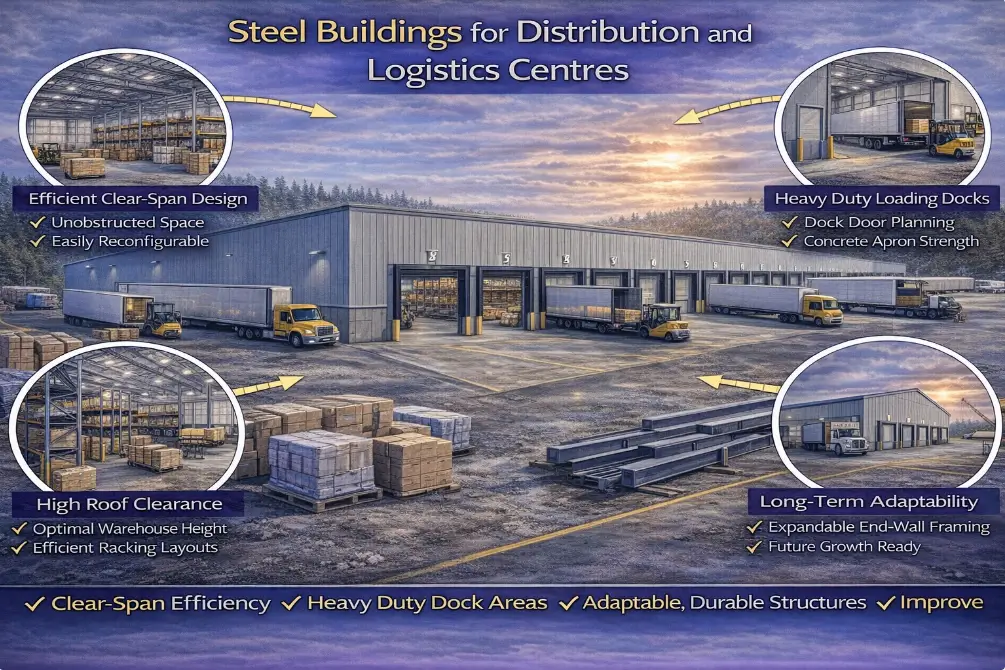
For example, many large facilities rely on clear-span industrial steel buildings to accommodate equipment layouts and operational workflows without interior structural obstructions.
Specialized and high-risk steel structures succeed when engineering reflects operational reality, environmental exposure, and long-term performance goals.
Short-term savings achieved by simplifying design almost always return later as cost, delay, or failure. Many long-term structural issues originate from the types of mistakes explained in engineering errors that increase steel building costs.
In high-risk steel buildings, precision is not an upgrade.
It is the foundation of reliability.
Reviewed by the Tower Steel Buildings Engineering Team
This article has been reviewed by the Tower Steel Buildings Engineering Team, bringing together decades of hands-on experience in structural steel design, industrial construction, and specialized building engineering across Canada.
The review process ensures technical accuracy, alignment with Canadian building codes, real-world constructability, and long-term performance considerations for high-risk steel structures.
1. What qualifies as a high-risk steel building structure?
A steel building is considered high-risk when it supports heavy equipment, cranes, cold storage systems, livestock operations, high occupancy use, or aggressive environmental exposure. These conditions introduce structural loads and durability risks beyond standard weather resistance.
2. Do specialized steel structures require different engineering than standard buildings?
Yes. Specialized structures require detailed load path analysis, equipment coordination, foundation integration, and environmental exposure planning. Standard pre-engineered assumptions are often insufficient for operational loads and long-term performance.
3. Can a steel building be code-compliant but still poorly engineered for its use?
Yes. Building codes establish minimum safety thresholds, not operational suitability. A structure can meet code requirements while still being inadequate for cranes, heavy equipment, moisture exposure, or long-term industrial use.
4. Why are crane buildings considered high-risk steel structures?
Overhead cranes introduce dynamic vertical and horizontal forces that impact frames, columns, and foundations. Improper design can cause deflection, fatigue cracking, alignment issues, and long-term structural damage.
5. How does cold storage affect steel building design?
Cold storage facilities must address thermal contraction, condensation control, insulation integrity, frost-protected foundations, and snow accumulation patterns. These factors significantly influence structural performance and maintenance risk.
6. Are agricultural steel buildings considered high-risk?
Many are. Livestock facilities, fertilizer storage, and moisture-heavy environments expose steel to corrosion, condensation, and chemical degradation, requiring specialized material protection and ventilation strategies.
7. What happens if operational loads are added after a steel building is designed?
Adding cranes, mezzanines, or heavy equipment after fabrication often requires costly structural retrofits or foundation reinforcement. Early coordination prevents redesign and approval delays.
8. Do specialized steel buildings cost more to engineer?
Initial engineering costs may be higher, but properly engineered structures significantly reduce long-term repair, downtime, insurance risk, and retrofit expenses. In most cases, they lower total ownership cost.
9. Will insurers and lenders review specialized steel structures more closely?
Yes. High-risk facilities typically undergo increased scrutiny for structural design, fire separation, load documentation, and long-term durability before insurance coverage or financing is approved.
10. How can owners identify if their project requires specialized structural design?
If your building includes heavy equipment, overhead cranes, refrigeration, livestock operations, large mezzanines, high occupancy use, or corrosive exposure, it should be treated as a specialized structure and engineered accordingly.
11. Why do many low-cost steel building kits struggle in high-risk applications?
Budget kits often rely on simplified design assumptions, limited load modelling, and minimal environmental protection. These shortcuts may meet basic code thresholds but rarely perform well under operational stress.
12. What is the biggest mistake in specialized steel building projects?
The most common mistake is designing the steel structure before fully defining equipment loads, operational layout, and environmental conditions. This leads to redesigns, delays, and long-term performance problems.