Why Code Misunderstanding Is the First Point of Failure in Steel Building Projects
Most steel building buyers believe there is one Canadian building code.
There is not.
There is a national framework, but every province modifies, enforces, and interprets that framework differently. Municipalities then apply their own review processes on top of it.
This creates a three-layer system:
- national code defines methodology
- provincial code modifies requirements
- local authority enforces and interprets
When this system is misunderstood, projects do not fail in construction. They fail at approval.
Typical outcomes:
- permit rejection in first review
- structural redesign after pricing
- foundation revisions
- delayed construction timelines
These downstream impacts are not isolated. They follow the same cost escalation pattern seen in steel building cost per sq ft in Canada when design assumptions do not match real conditions.
Steel building design is not governed by one code.
Material performance and structural design expectations must also align with standards developed by the Canadian Standards Association (CSA), which define engineering and fabrication requirements.
It is governed by how that code is applied at the exact project location.
Steel buildings are approved locally, not nationally.
What Is the Difference Between National and Provincial Building Codes?
The National Building Code of Canada provides a model framework for structural design, fire safety, and construction requirements.
This framework is developed and maintained through the Codes Canada program administered by the National Research Council, which defines the baseline methodology used across the country.
It defines how buildings should be designed but does not enforce compliance.
Provincial codes adopt and modify this framework based on local conditions such as climate, soil, and regulatory processes. Actual permit approval depends on provincial and municipal requirements, not the national code alone.
Why Steel Buildings Are Highly Sensitive to Code Differences
Steel buildings are engineered systems.
Because behaviour is controlled by load input, structural performance changes with regional conditions such as those outlined in steel building snow load zones in Canada.
Small changes in load assumptions or environmental conditions create measurable changes in:
- structural member sizing
- connection demand
- foundation design
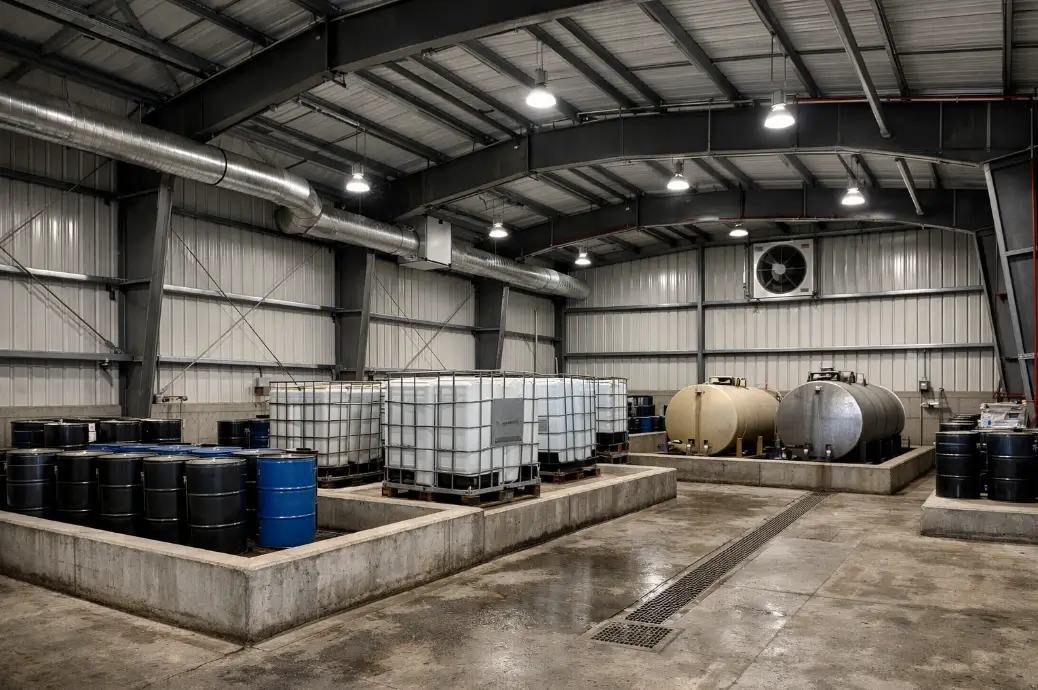
- fire protection systems
Even if geometry remains the same, performance does not.
The same steel building cannot be assumed to behave the same way in different provinces.
Small changes in location inputs do not produce small structural changes. They shift how loads move through the system, increasing demand on members, connections, and foundations in ways that are not visible in basic layouts.
Where Most Steel Building Projects Actually Fail
Most steel building failures do not occur because calculations are wrong.
They occur because inputs are wrong.
Common failure pattern:
generic assumptions used early
→ design completed based on those assumptions
→ real jurisdiction requirements applied later
→ redesign becomes necessary
What this causes:
• structural changes after pricing
• foundation redesign
• permit rejection
• cost escalation
Hard reality:
Most steel building issues are not unexpected. They are the result of decisions made before location-specific data is confirmed.
How Code Differences Translate Into Real Structural Changes
The national code provides formulas. It does not give final values.
Numeric reality
- Snow loads can vary by 20% to 60% depending on region and exposure
- Wind pressures can increase 15% to 30% in open terrain conditions
- Frost depth can vary from 1.2 m to over 2.4 m depending on location
These differences directly affect:
- bending moments in frames
- reactions at columns
- connection forces
- foundation sizing
Load variation at this level must ultimately be resolved through foundation engineering where reactions are transferred into soil conditions specific to the site.
Advanced structural insight
When design inputs change between jurisdictions:
Internal force distribution shifts. Loads move into members and connections that were not originally designed for that level of demand, increasing localized stress and long-term failure risk.
How Building Codes Differ by Province (Real-World Execution)
This is where most content fails.
Below is how each province actually behaves in real steel building projects.
Ontario
Ontario is driven by permit coordination and documentation quality, not extreme structural loads.
What defines Ontario projects
- moderate snow loads with significant drift considerations
- high emphasis on drainage and grading coordination
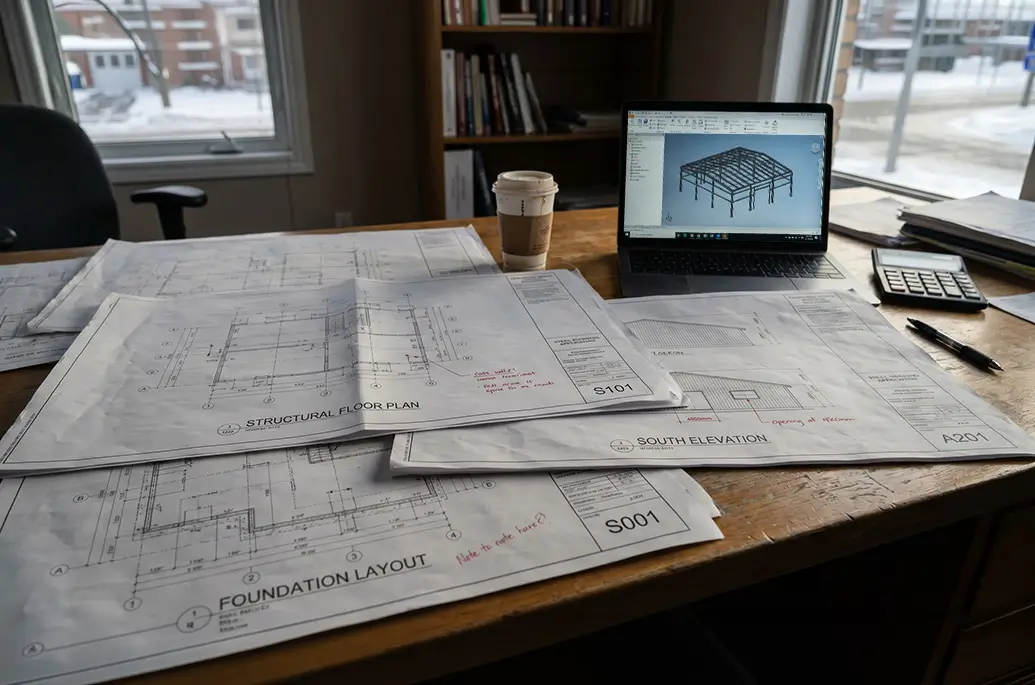
- strict documentation and drawing consistency requirements
What goes wrong
- structural drawings do not align with site plan
- drainage not clearly defined
- occupancy classification unclear
- architectural and structural mismatches
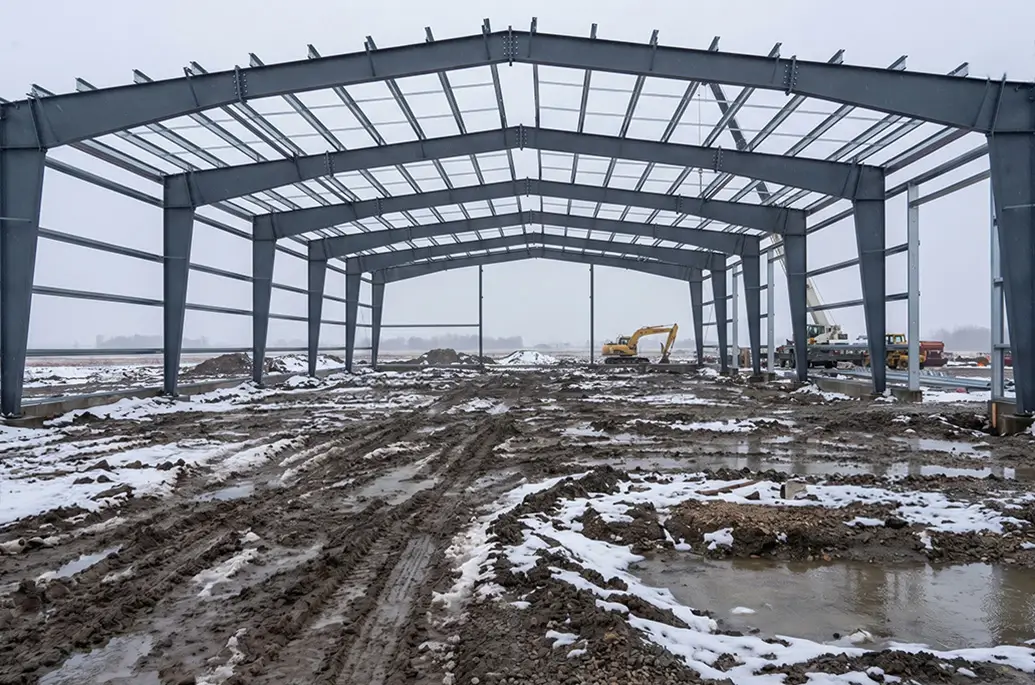
These coordination failures often originate before submission, particularly during steel building site preparation where drainage, grading, and layout should already be defined.
Permit reality
- first review often results in comments
- incomplete submissions are rejected quickly
- multiple review cycles common
Real risk
👉 2 to 6 weeks delay per review cycle
👉 approval held until full coordination is proven
In Ontario, projects fail because they cannot be verified clearly, not because they are structurally impossible.
Alberta
Alberta is driven by environmental forces and early design assumptions.
What defines Alberta projects
- high wind exposure in open terrain
- significant uplift forces
- deep frost penetration
Numeric reality
- wind pressure increases up to 30% in exposed areas
- frost depth commonly 1.5 m to 2.4 m
What goes wrong
- wind loads underestimated
- uplift not fully considered
- foundation depth assumed too shallow
When early assumptions underestimate environmental demand, the issue follows the same pattern described in risk assessment for high-value steel building projects where incorrect inputs lead to redesign.
Result
- structural redesign after engineering
- foundation cost increases
- connection upgrades required
Real risk
👉 10% to 25% increase in foundation cost
👉 structural system changes after pricing
In Alberta, projects fail because early assumptions do not match real environmental demand.
British Columbia
British Columbia is driven by seismic design and energy requirements.
What defines BC projects
- seismic forces control structural behavior
- strict energy code requirements
- system coordination is critical
Structural response in this region is governed by movement, not just load, as outlined in seismic design for steel buildings in Canada.
Numeric reality
- seismic design can increase structural cost by 5% to 20%
What goes wrong
- connections not detailed for seismic demand
- energy requirements ignored early
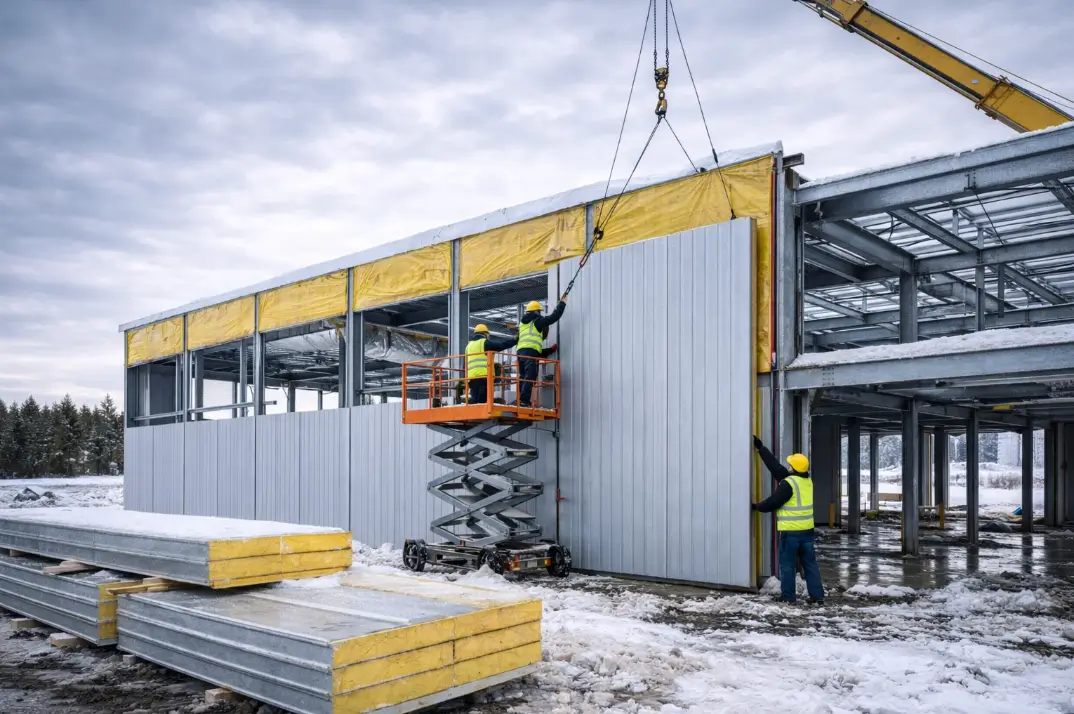
- envelope and structure not coordinated
Result
- redesign required
- cost escalation
- permit delays
Special case
- City of Vancouver uses its own building bylaw
Real risk
👉 late-stage compliance increases cost significantly
In BC, buildings are not just designed for load. They are designed for movement and energy performance.
Quebec
Quebec is driven by code accuracy and energy integration.
What defines Quebec projects
- strict adherence to adopted code editions
- strong energy efficiency requirements
- regulatory precision
What goes wrong
- wrong code edition used
- energy requirements addressed too late
- design not aligned with provincial modifications
Result
- permit rejection
- redesign
- cost increase
In Quebec, “almost correct” is treated as incorrect.
Saskatchewan
Saskatchewan is driven by code version alignment and clarity.
What defines Saskatchewan projects
- clear adoption of NBC 2020
- consistent regulatory baseline
What goes wrong
- outdated assumptions used
- suppliers using older code basis
Result
- permit review flags mismatch
- redesign required
In Saskatchewan, the issue is not complexity. It is using the correct code basis.
Manitoba
Manitoba is driven by foundation performance and soil behavior.
What defines Manitoba projects
- frost-sensitive soils
- moisture-related performance issues
- need for proper foundation coordination
What goes wrong
- soil conditions assumed
- drainage ignored
- foundation treated separately from structure
These failures are typically rooted in how soil conditions are handled during design, similar to issues seen in custom steel buildings for unique site constraints where ground conditions dictate structural response.
Result
- settlement
- slab cracking
- structural misalignment
In Manitoba, steel design fails when the foundation is treated as a secondary issue.
New Brunswick
New Brunswick is driven by submission completeness and transition management.
What defines New Brunswick projects
- transition to updated code editions
- documentation quality
What goes wrong
- incomplete submission packages
- lack of coordination between systems
Result
- permit delays
- resubmission cycles
In New Brunswick, projects fail because submissions are not complete enough.
Nova Scotia
Nova Scotia is driven by climate exposure and phased code implementation.
What defines Nova Scotia projects
- moisture exposure
- wind-driven rain
- staged energy code tiers
What goes wrong
- envelope design not integrated early
- code tier changes not considered
Result
- redesign
- performance issues
In Nova Scotia, building performance depends on early coordination of envelope and structure.
Prince Edward Island
PEI is driven by code adoption clarity and environmental exposure.
What defines PEI projects
- Tier 1 adoption of NBC 2020
- coastal exposure conditions
What goes wrong
- underestimating environmental impact
- using outdated assumptions
Result
- design revisions
- cost increases
In PEI, small market does not mean simple design.
Newfoundland and Labrador
This province is driven by approval process complexity.
What defines projects
- multi-step review process
- municipal + provincial coordination
What goes wrong
- unclear approval path
- missing required documentation
Result
- delays before technical review even begins
In Newfoundland and Labrador, process confusion can delay projects even before design is evaluated.
Why Designs That Meet National Code Still Fail Locally
The national code defines how to calculate.
It does not define:
- exact loads
- exact environmental conditions
- permit expectations
When design is based on generic assumptions:
- loads are incorrect
- fire requirements are incomplete
- foundation design is unreliable
National compliance does not guarantee provincial approval.
The national code defines methodology. It does not define the exact loads, site conditions, or approval requirements that determine whether a building will be accepted.
What Most Buyers Get Wrong About Steel Building Codes
Most buyers assume meeting national code is enough.
It is not.
Common misconceptions:
• national code automatically ensures approval
• suppliers already account for all provincial requirements
• structural design is transferable between provinces
• early pricing reflects final engineered cost
What actually happens:
design is based on incomplete jurisdiction data
→ permit authority applies real requirements
→ design no longer aligns
→ changes become unavoidable
Decision trigger:
If your building is priced before exact jurisdiction and loads are confirmed, the price is not reliable.
Hard reality:
Code misunderstanding is the first point where steel building projects break down.
How to Identify Code Risk Before It Becomes a Problem
Before starting, verify:
- exact project location
- provincial code version
- local load values
- occupancy classification
- permit process
Warning signs
- generic load assumptions
- unclear code references
- missing site-specific data
If present
👉 approval risk is high
👉 cost is unreliable
What Must Be Confirmed Before Design and Pricing
To avoid redesign:
- confirm jurisdiction
- verify provincial code
- confirm loads
- define occupancy
- align structural and site design
If these are not confirmed:
- design is incomplete
- pricing is inaccurate
Final Perspective
There is no single code governing steel buildings.
Designing for the correct jurisdiction is not optional. It defines whether the building will be approved, built, and perform as intended.
Planning a steel building project in Canada requires confirming code, loads, and site conditions before design begins.
There is a system:
- national framework
- provincial modification
- local enforcement
When misunderstood:
- projects fail at approval
- costs increase
- timelines extend
Steel buildings must be designed for the exact jurisdiction where they will be built, not where they were first planned.
Steel buildings are approved locally, not nationally. Ignoring this principle is one of the fastest ways to create redesign, permit delays, and long-term cost escalation.
Reviewed by Engineering Team
This content has been reviewed by the Tower Steel Buildings Engineering Team based on real cross-provincial projects, permit submissions, structural design adjustments, and field performance outcomes.
1. What is the difference between national and provincial building codes for steel buildings?
The national code provides the design framework, including formulas for structural loads, fire safety, and material performance. Provincial codes adopt and modify this framework to reflect local conditions such as climate, soil, and regulatory practices.
Reality:
National code tells you how to design. Provincial code tells you what must actually be designed.
Decision trigger:
If your design only references national code without provincial adjustments, it is incomplete.
2. Why do steel building designs that meet national code still fail at the provincial level?
Because national code formulas require correct inputs.
If the design uses:
- incorrect snow or wind loads
- generic environmental assumptions
- incomplete provincial modifications
the calculations may be correct, but the building is not.
Consequence:
Permit rejection, structural redesign, and cost increases.
3. How do you verify if a steel building design uses the correct provincial code?
You must confirm:
- exact project location
- applicable provincial code version
- location-specific load values
- how provincial modifications were applied
Decision trigger:
If these cannot be clearly documented, the design is not aligned with the jurisdiction.
4. Why is Ontario more difficult for permit approval compared to other provinces?
Because Ontario emphasizes coordination and documentation more than extreme structural loads.
Inspectors expect:
- consistent drawings across all disciplines
- clearly defined drainage and site conditions
- accurate occupancy classification
Consequence:
Even technically correct designs are delayed if they cannot be clearly verified.
5. Why do steel building costs often increase in Alberta after engineering?
Because early pricing is often based on simplified assumptions.
Actual engineering reveals:
- higher wind forces
- stronger uplift conditions
- deeper frost requirements
Consequence:
Structural upgrades and foundation redesign increase total project cost.
6. Why is British Columbia considered the most complex province for steel building design?
Because it combines:
- seismic design requirements
- strict energy code compliance
- complex system coordination
Decision trigger:
If seismic and energy requirements are not addressed early, redesign is almost guaranteed.
Consequence:
Late-stage compliance significantly increases cost and delays approval.
7. Can a steel building design be reused across multiple provinces?
No.
Even identical buildings must be re-engineered for:
- different load conditions
- different foundation requirements
- different fire code interpretations
Reality:
Each province requires its own engineering.
8. How much can code differences impact total steel building cost?
Typical impact:
- 10% to 30% due to structural and foundation changes
- additional 5% to 20% for seismic or energy requirements in certain regions
Consequence:
Pricing based on the wrong jurisdiction is unreliable and often underestimated.
9. Why do permit timelines vary significantly between provinces?
Because each jurisdiction has different:
- review processes
- documentation requirements
- inspection procedures
Decision trigger:
If the permit process is not understood early, scheduling becomes inaccurate.
Consequence:
Delays affect construction timelines, contractor availability, and overall cost.
10. What is the biggest mistake when designing steel buildings across Canada?
Using generic or national-level assumptions instead of location-specific data.
This leads to:
- incorrect load design
- incomplete fire requirements
- misaligned foundation systems
Consequence:
Redesign, delays, and cost escalation.
11. How do provincial code differences affect structural performance?
They change:
- load magnitude
- load distribution
- internal force behavior
When inputs change, loads redistribute across the structure, increasing stress in members and connections that were not designed for that demand.
Consequence:
Localized structural issues and long-term performance risk.
12. What must be confirmed before starting a steel building project in Canada?
You must verify:
- exact project location
- applicable provincial code
- local load values
- occupancy classification
- permit requirements
Decision trigger:
If any of these are unclear, the project is high-risk.
13. Why do steel buildings fail even when designed using correct national code formulas?
Because formulas depend on accurate inputs.
If location-specific loads, environmental conditions, or provincial modifications are incorrect, the calculations remain technically valid but structurally inaccurate.
Reality:
Correct math with wrong inputs produces the wrong building.
Consequence:
Structural underperformance, redesign, or failure under real conditions.
14. How do you verify if your supplier designed for the correct jurisdiction?
Ask directly:
- which code version was used
- what location-specific loads were applied
- how provincial modifications were incorporated
Request documentation.
Decision trigger:
If the supplier cannot clearly answer these questions, the design is not aligned with the project location.
Consequence:
You are likely pricing and building the wrong system.