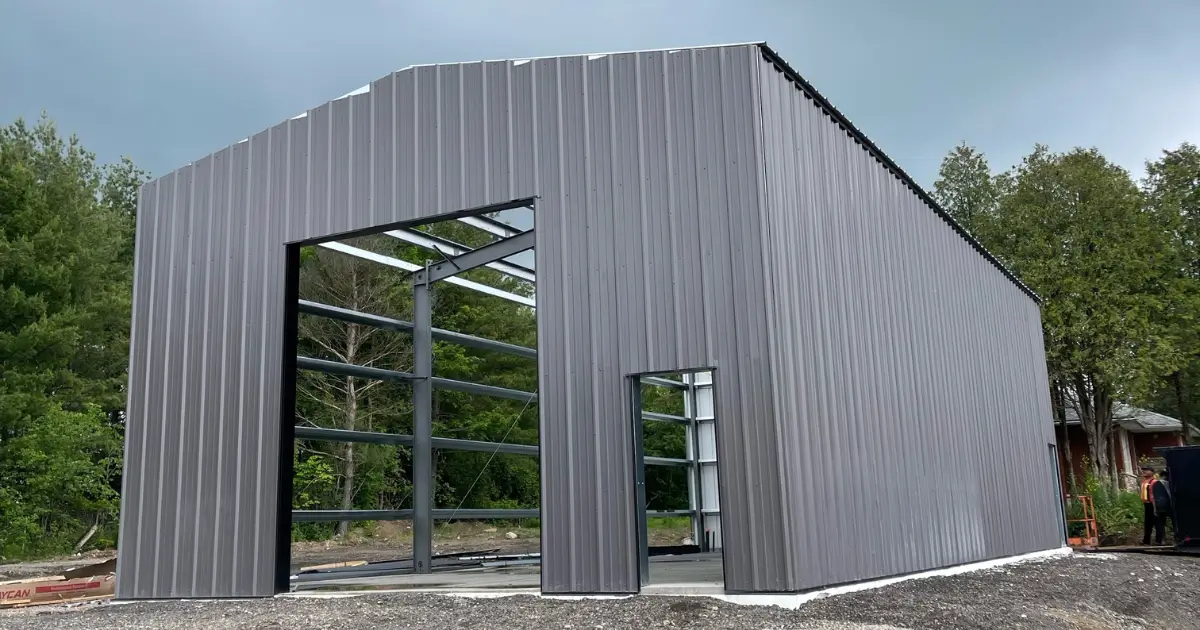
Interior mezzanines are one of the most powerful ways to increase usable space within a steel building without expanding the footprint. In warehouses, manufacturing facilities, commercial spaces, and agricultural operations, mezzanines allow owners to separate workflows, add storage, offices, equipment platforms, and service levels while maintaining open floor areas below.
However, mezzanines are not simply add-on platforms.
They fundamentally change how loads move through a steel building structure.
Poorly planned mezzanine design is one of the most common causes of foundation overstress, column modification, erection delays, and costly structural retrofits in steel building projects across Canada.
This article explains how mezzanines affect interior load design, what engineers must consider, where projects typically go wrong, and how to ensure mezzanine systems perform safely and efficiently over the life of the building.
Why Mezzanines Change Structural Design Completely
Steel buildings are typically engineered with vertical loads flowing from roof systems down through primary frames into foundations.
When a mezzanine is introduced, new structural demands appear inside the building envelope:
- Concentrated floor loads
- Dynamic live loads from equipment or personnel
- Lateral forces transferred through interior framing
- New load paths into columns and foundations
Instead of loads being distributed evenly through perimeter frames, mezzanines often introduce heavy point loads in the middle of the structure.
This requires:
- Interior columns or frames
- Reinforced foundations below mezzanine supports
- Modified primary steel members
- Coordinated slab and footing design
Without this coordination, steel buildings can experience:
- Cracked slabs
- Overloaded footings
- Structural deflection
- Connection failures
- Inspection delays
Mezzanine design is not an architectural feature. It is a structural system. This type of structural integration is a core part of professional steel building design and engineering coordination.
For example, a storage mezzanine designed using generic floor loads may perform adequately for light use but can quickly overstress foundations when palletized materials are introduced. In many retrofit projects across Canada, engineers are forced to install new footings, reinforce slabs, or add interior columns simply to correct loads that should have been addressed during initial design.
Common Uses of Mezzanines in Steel Buildings
Mezzanines appear in many building types, each with different load demands. Mezzanine integration is especially common in modern steel warehouse buildings designed for logistics and distribution.
Warehouses and Distribution Centres
Interior platforms are frequently used in agricultural steel buildings designed for equipment and feed storage.
Used for:
- Pallet storage
- Pick areas
- Conveyor systems
- Office platforms
These typically carry heavy uniform loads and dynamic movement from forklifts or automated systems.
Manufacturing Facilities
Often support:
- Equipment platforms
- Process lines
- Maintenance access levels
- Control rooms
Loads may be highly concentrated and vibration sensitive.
Commercial and Mixed-Use Buildings
Commonly used for:
- Office spaces
- Retail storage
- Showroom viewing platforms
Usually lighter loads but still require full structural integration.
Agricultural and Industrial Storage
May support:
- Feed storage
- Mechanical systems
- Work platforms
Often exposed to moisture and require corrosion-resistant design.
Each application affects load magnitude, spacing, and foundation coordination differently.
Understanding Mezzanine Load Types
In Canadian steel buildings, mezzanine load design must also align with National Building Code of Canada live load classifications, which vary significantly between office occupancy, storage areas, and industrial platforms. Detailed live load requirements and occupancy classifications are defined in the National Building Code of Canada structural loading provisions. Using inappropriate load categories is one of the most common causes of under-designed interior structures.
Structural engineers design mezzanines based on several categories of load.
Dead Loads
Permanent weight including:
- Steel framing
- Decking
- Concrete toppings
- Partitions
- Fixed equipment
These loads are always present.
Live Loads
Variable loads such as:
- People
- Stored materials
- Mobile equipment
- Temporary stacking
Live loads often govern design.
Impact and Dynamic Loads
Common in:
- Manufacturing equipment
- Conveyors
- Forklift movement
- Machinery vibration
These require additional safety factors.
Lateral Loads
Mezzanines must resist:
- Sway
- vibration
- seismic forces
- movement from equipment
Often handled through bracing or moment connections.
Ignoring any of these load types leads directly to overstressed structural systems.
How Mezzanine Loads Transfer Through a Steel Building
Proper interior load design focuses on how mezzanine forces flow into the building.
Typical load path:
Mezzanine deck → secondary beams → primary mezzanine girders → interior columns → foundations → soil
Each transition must be engineered. Structural load paths, connection design, and member capacity for steel systems in Canada are governed by the CSA S16 structural steel design standard.
Common failure points include:
- Underdesigned columns
- Inadequate footings
- Slabs not designed for point loads
- Unreinforced connections
Steel buildings designed without mezzanine consideration often cannot safely accept future interior platforms without major structural upgrades.
Foundation Coordination Is the Most Critical Step
Interior columns supporting mezzanines often carry loads equal to or greater than exterior building frames. Foundation performance and soil bearing behaviour for concentrated structural loads are addressed in the Canadian Geotechnical Society foundation engineering guidelines.
This means:
- larger footings
- deeper foundations
- thicker reinforced slabs
- soil bearing verification
Site-specific bearing capacity and settlement behaviour are discussed in detail in our article on soil conditions affecting steel building foundations in Canada. A common mistake is placing mezzanine columns directly on slab-on-grade floors that were never designed for structural loads.
This leads to:
- slab cracking
- settlement
- column movement
- long-term structural distress
Proper mezzanine projects include:
- engineered footing locations
- reinforced grade beams where needed
- load-rated slabs
- frost protection where applicable
Foundation coordination should occur before concrete is poured, not after steel arrives. Proper load transfer planning requires coordinated structural and footing design, which is explained in our guide to steel building foundation design principles.
Clear-Span vs Interior Column Systems
Some mezzanine designs aim to keep ground floors open by using:
- long-span beams
- trusses
- transfer girders
This reduces column count but increases beam depth and cost.
Other systems use:
- closely spaced interior columns
- shorter beam spans
- simpler foundations
The correct approach depends on:
- workflow needs
- equipment layout
- budget
- future expansion plans
There is no universal “best” system. It must match operational requirements.
Vibration and Deflection Control
Many mezzanine problems are not structural failures but performance issues.
Common complaints include:
- floor bounce
- vibration during walking
- equipment sensitivity
- noise transfer
These result from:
- long spans
- light beam sections
- inadequate stiffness
Engineers often limit:
- deflection ratios
- vibration frequencies
- dynamic response
This is especially critical in:
- office mezzanines
- equipment platforms
- precision manufacturing areas
Designing only for strength without stiffness leads to uncomfortable and disruptive spaces.
Fire and Egress Considerations
Mezzanines often trigger additional code requirements such as:
- fire separations
- protected stairways
- handrails and guards
- sprinkler coverage
- exit travel distances
Structural design must coordinate with life safety planning. Fire protection, access safety, and building occupant protection requirements are outlined in the Canadian Centre for Occupational Health and Safety building safety guidance.
Failure to address these early can force redesign or lost usable space.
Future Flexibility and Expansion
Well-designed mezzanines allow for:
- increased storage loads
- additional platforms
- reconfigured layouts
Poorly designed ones lock buildings into limited capacity.
Forward-thinking engineers may:
- oversize select members
- plan column grids strategically
- leave foundation capacity for expansion
This flexibility often costs little upfront and saves major retrofit expense later. This is particularly valuable in warehouses and agricultural buildings where storage demands often increase as operations scale.
Common Mezzanine Design Mistakes
- Adding mezzanines after building design is complete
- Assuming slabs can carry column loads
- Underestimating live load requirements
- Ignoring vibration behaviour
- Failing to coordinate fire code impacts
- Designing only for current use without growth planning
Each of these leads to cost escalation.
When Mezzanine Planning Should Begin
Ideally:
- During conceptual building layout
- Before foundation design
- Before steel member sizing
Not after construction has started.
Early integration allows:
- optimized steel sizes
- efficient foundations
- cleaner erection sequencing
- predictable budgets
Late additions almost always cost more.
Many of these cost escalations are explored further in our analysis of construction risk in steel building projects.
The Role of Integrated Engineering
Effective mezzanine systems are not standalone structures inside a building.
They are part of the building’s load-resisting system.
Successful projects involve coordination between:
- structural engineers
- steel fabricators
- foundation designers
- mechanical and electrical trades
- operations planners
Effective interdisciplinary planning is discussed in detail in our guide to coordinating trades during steel building construction. This prevents conflicts and ensures long-term performance.
Organizations such as Tower Steel Buildings apply this integrated approach by coordinating structural design, interior loads, and foundation systems early, ensuring mezzanines perform safely under real operational demands.
Final Thoughts
Mezzanines dramatically increase usable space in steel buildings, but they also dramatically change structural behaviour.
When designed properly, they provide:
- efficient space utilization
- long-term flexibility
- safe load performance
- operational efficiency
When treated as add-ons, they become sources of cracking, vibration, redesign, and cost overruns.
In steel construction, interior load planning is not optional engineering.
It is what determines whether a mezzanine becomes an asset or a liability over the life of the building.
In Canadian steel buildings designed for long-term use, mezzanines that are engineered as part of the primary structural system consistently outperform those added later in safety, durability, and total project cost.
Reviewed by the Tower Steel Buildings Engineering Team
This article has been reviewed by the Tower Steel Buildings Engineering Team to ensure technical accuracy, alignment with Canadian building codes, and real-world steel construction practices across industrial, commercial, and agricultural projects.
1. Do mezzanines require separate engineering from the main steel building?
Yes. Mezzanines are structural systems that introduce new load paths, concentrated forces, and foundation demands inside a steel building. They must be fully engineered as part of the overall structural design, not added later as standalone platforms.
2. Can a mezzanine be supported on a standard concrete slab?
In most cases, no. Typical slab-on-grade floors are not designed to carry structural column loads. Mezzanine columns usually require engineered footings or reinforced slab systems specifically designed to handle concentrated loads safely.
3. How much weight can a steel mezzanine hold?
Load capacity depends on the intended use, beam spans, column spacing, and foundation design. Light storage mezzanines may be designed for office-level loads, while industrial mezzanines can be engineered for heavy equipment, pallet storage, or machinery platforms. The required capacity must be defined during engineering.
4. Does adding a mezzanine affect building permits and inspections?
Yes. Mezzanines often trigger additional structural review, fire protection requirements, egress planning, and sometimes zoning considerations. Municipal authorities typically require stamped structural drawings showing how mezzanine loads are transferred to foundations.
5. Can a mezzanine be added after a steel building is already built?
It is possible, but often costly. Existing steel members, foundations, and slabs may not be designed for interior structural loads. Retrofitting usually involves reinforcing columns, cutting slabs for new footings, and modifying steel framing.
6. How do engineers control vibration and floor bounce on mezzanines?
Engineers limit deflection, increase beam stiffness, control span lengths, and account for dynamic loads. Vibration performance is especially important for office spaces, equipment platforms, and high-traffic areas.
7. Are mezzanines considered part of the building structure or temporary platforms?
In most Canadian jurisdictions, mezzanines are considered permanent structural elements and must meet the same engineering and code requirements as the main building frame.
8. Do mezzanines impact fire safety design?
Yes. Mezzanines can require additional fire separations, sprinkler coverage, protected stairways, and exit travel planning. Structural design must coordinate with life safety systems from the beginning.
9. Is it cheaper to design mezzanines during initial construction rather than add them later?
Almost always. Integrating mezzanines during the original engineering phase allows optimized steel sizing, proper foundation design, and cleaner erection sequencing. Post-construction additions typically involve demolition, reinforcement, and redesign costs.
10. Can mezzanines be designed for future expansion?
Yes. Engineers can plan column grids, beam capacities, and foundation strength to allow higher future loads or additional platforms with minimal modification. This is often one of the most cost-effective long-term strategies in steel building projects.