What it takes to design safe, efficient, and durable wide-open steel buildings in Canada
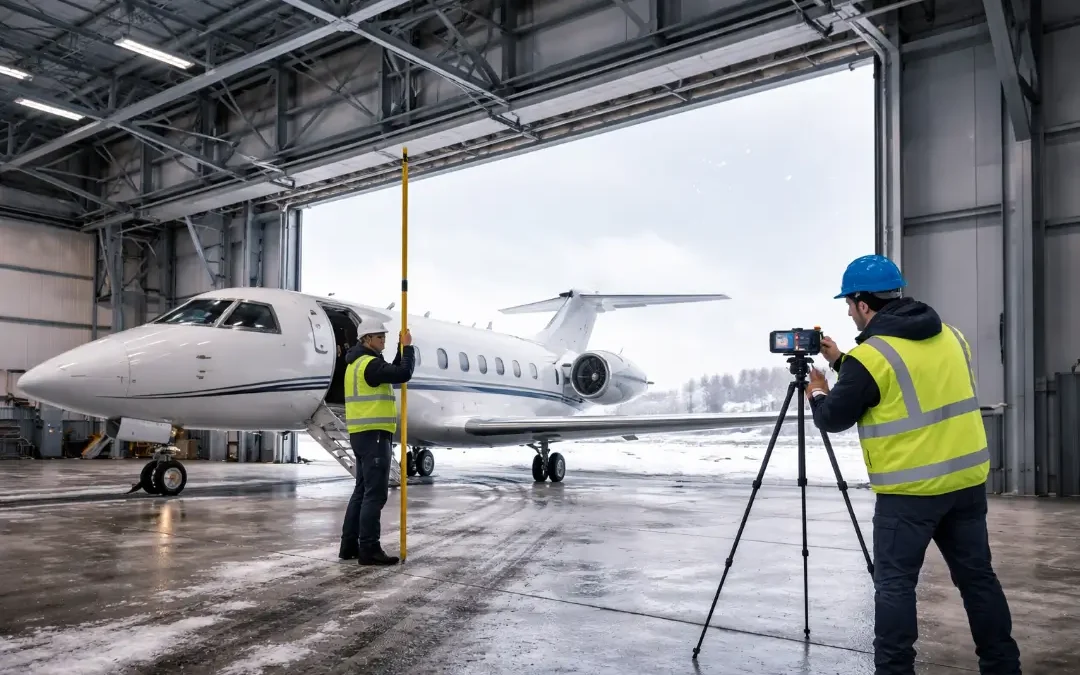
Long-span steel structures make modern industrial, commercial, agricultural, and institutional buildings possible. From aircraft hangars and warehouses to riding arenas, manufacturing plants, and logistics centres, long spans create wide-open interiors without columns interrupting workflow. Applications such as aircraft hangars rely on clear-span structural systems to maintain uninterrupted operational space.
While the concept looks simple on paper, long-span steel engineering is one of the most technically demanding areas of structural design. As span length increases, forces rise non-linearly, tolerances tighten, and small assumptions can become major cost or safety problems.
In Canada, where snow loads, wind exposure, temperature swings, and frost conditions vary widely by region, long-span challenges become even more critical.
Structural design must account for regional snow load variations across Canada where drift accumulation and uneven loading govern long-span performance.
This article explains the real engineering issues behind long-span steel buildings, why they require careful planning, and how experienced design prevents costly performance problems.
What is a long-span steel structure?
A long-span steel structure is a building system designed to create wide-open interior spaces without columns, typically exceeding 40 feet in span, while safely managing snow loads, deflection, and structural forces.
Why Long-Span Steel Structures Are Structurally Different
Short-span buildings distribute loads through many columns and short beam paths. Long-span structures concentrate forces into fewer primary frames.
As spans grow wider:
- Roof loads increase dramatically
- Horizontal thrust forces rise
- Deflection becomes a controlling factor
- Foundations experience larger reactions
- Connection design becomes critical
The building no longer behaves like a simple shed. It becomes a highly engineered system where every component interacts.
A 40-foot span and an 80-foot span are not just twice as wide. Structurally, the longer span can generate several times more stress, movement, and foundation demand.
This is why long-span steel engineering is a specialty, not simply scaled-up design. Long-span performance depends on a properly engineered building design process that evaluates load behaviour, deflection control, and structural interaction at scale.
Managing Snow Loads Across Large Clear Spans
In Canada, snow load is often the single largest governing force in long-span steel structures. Long-span roof systems in Canada must be engineered for region-specific snow loads and drift accumulation, which can significantly exceed uniform design loads in certain conditions.
As spans increase:
- Roof areas collect more snow
- Drift accumulation becomes severe near walls and parapets
- Uneven loading increases frame stress
- Deflection under snow becomes critical for drainage and roofing performance
Long-span roofs are especially sensitive to drift zones created by:
- Adjacent higher buildings
- Roof steps
- Parapet walls
- Wind-driven snow redistribution
A long clear-span building that looks uniform on drawings may experience highly uneven real-world snow loading.
If these drift conditions are underestimated, the result can be:
- Excessive frame movement
- Roof ponding during thaw cycles
- Structural overstress
- Premature fatigue
Engineering for long spans must go beyond average snow depth and account for realistic accumulation patterns.
Controlling Deflection Over Long Distances
Strength alone is not enough in long-span steel design.
Deflection, or how much the structure moves under load, often becomes the limiting factor. Deflection limits in long-span buildings are often governed not just by code but by functional requirements, particularly where equipment, doors, or cladding systems depend on tight tolerances.
Excessive deflection can cause:
- Roof drainage failures
- Cracking in finishes
- Door misalignment
- Equipment vibration problems
- Long-term fatigue in steel members
While codes set maximum deflection limits, long-span buildings often need tighter control to remain functional.
Structural performance requirements in Canada are guided by frameworks developed through the Codes Canada program administered by the National Research Council.
Connection design must also align with standards established by the Canadian Standards Association (CSA) governing structural steel performance and fabrication.
For example:
- Manufacturing cranes require strict movement tolerances
- Warehouses need stable roof lines for racking systems
- Arenas require consistent geometry for cladding systems
Designing simply to minimum code limits may technically pass inspection but still create operational problems.
Experienced engineers evaluate both code compliance and real-world performance.
Connection Design Becomes a Structural System
In small buildings, connections are often standard details.
In long-span structures, connections become part of the structural behaviour.
Key challenges include:
- Managing large moment forces at frame joints
- Accommodating thermal expansion over long lengths
- Preventing fatigue at high-stress points
- Transferring massive roof and wind loads safely
Poorly engineered connections can lead to:
- Cracking
- bolt loosening
- local failures
- excessive movement
Long spans magnify these issues.
Connection design is not simply about bolting members together. It requires full structural analysis, load path understanding, and long-term movement planning.
Foundation Loads Increase Rapidly With Span Length
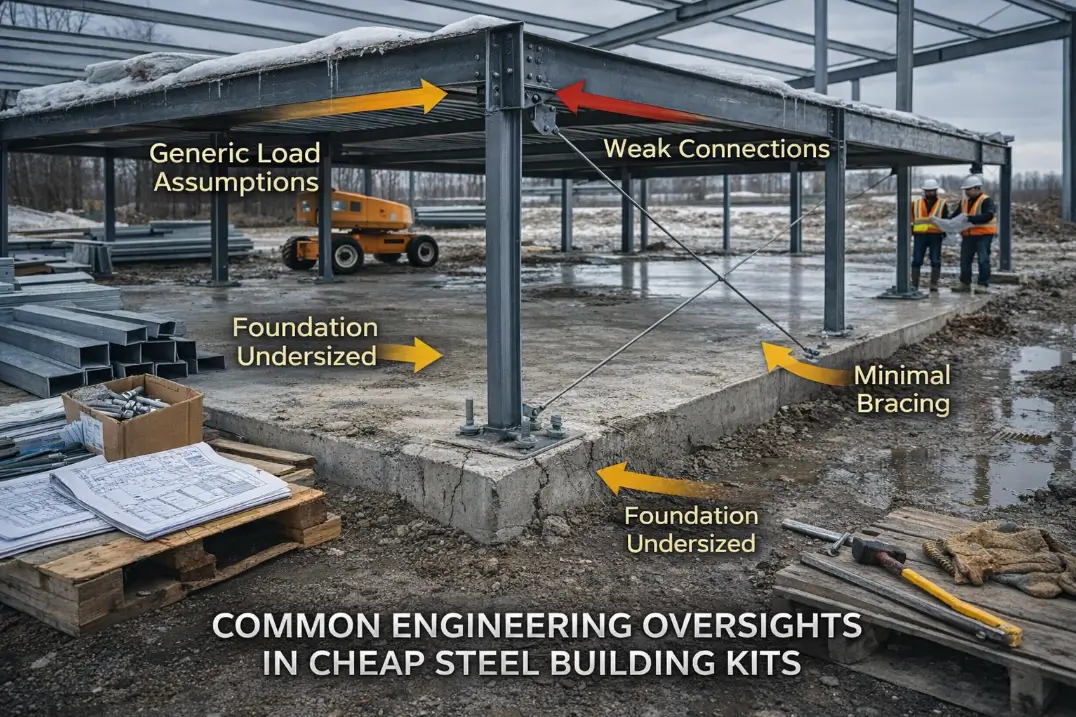
Long-span steel frames push larger concentrated loads into fewer foundation points.
High reaction forces make foundation engineering essential to ensure load distribution, soil compatibility, and long-term structural stability.
As spans increase, structural reactions at columns can grow substantially, requiring larger footings, increased reinforcement, and close coordination with soil conditions.
This creates several challenges:
- Higher bearing pressures
- Larger footing sizes
- Increased reinforcement requirements
- Greater sensitivity to soil conditions
In many projects, foundation cost becomes a major portion of total construction cost specifically because of long-span reactions.
If soil conditions are not properly evaluated early:
- Foundations may require redesign
- Project budgets can change dramatically
- schedules can be delayed
Long-span engineering must always be coordinated closely with geotechnical information.
The structure and the ground must work together as one system.
Wind Loads and Lateral Stability Over Large Roof Areas
Wide-open steel buildings act like massive sails in high winds.
Wind effects on large structures are further detailed in wind load design for steel buildings near Lake Ontario where uplift and lateral forces significantly impact structural behaviour.
Long spans increase:
- Uplift forces on roof panels
- Frame sway potential
- Bracing demands
- connection stresses
Lateral stability systems such as:
- bracing bays
- rigid frames
- diaphragm action
must be carefully planned so they do not interfere with interior operations while still controlling movement.
In long-span buildings, small lateral movements can translate into large roof displacements.
This affects:
- cladding durability
- door function
- structural fatigue
Engineering for wind is not just about strength but about stiffness and control.
Thermal Expansion Across Long Steel Members
Steel expands and contracts with temperature.
Over long spans, this movement becomes significant.
In Canadian climates where temperatures swing widely:
- frames can shift millimetres to centimetres seasonally
- connections must allow controlled movement
- cladding systems must accommodate expansion
If thermal movement is ignored or restricted improperly:
- stress builds up in frames
- cracking occurs at joints
- premature failures develop
Long-span structures require expansion considerations integrated directly into frame layout and detailing.
Erection Tolerances Tighten With Span Length
As span increases, construction tolerances become less forgiving.
Minor misalignments that would be acceptable in short buildings can cause serious issues in long spans.
Common erection challenges include:
- frame squareness drift
- cumulative measurement errors
- bolt hole alignment difficulties
- roof geometry distortions
These can lead to:
- forced connections
- induced stresses
- roof unevenness
- long-term fatigue
Engineering drawings for long spans must include:
- clear erection sequencing
- tolerance control strategies
- alignment reference points
Good design supports good construction.
Coordinating Mechanical and Operational Loads
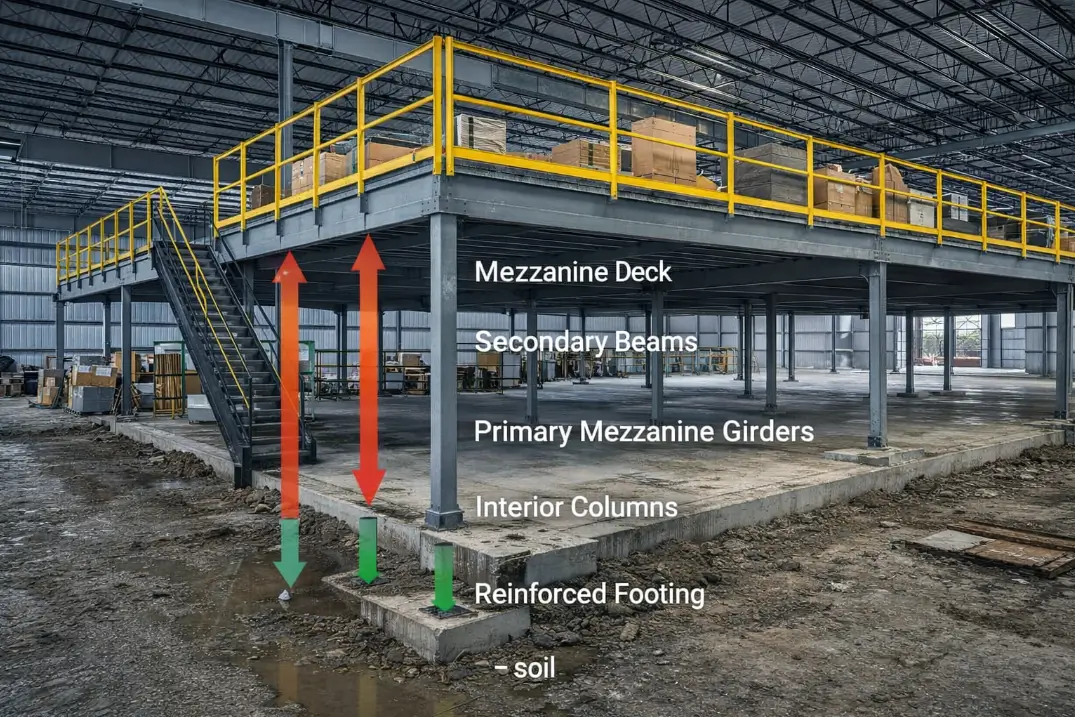
Long-span buildings often house heavy equipment, cranes, conveyor systems, and mezzanines.
These loads must be integrated into the primary structure from the beginning.
Common mistakes include:
- adding crane loads after frame design
- assuming equipment loads are “minor”
- locating heavy systems where frames are weakest
Long spans magnify these issues.
Proper engineering requires:
- early load identification
- dynamic load evaluation
- future expansion allowances
Ignoring operational loads is one of the fastest ways to create costly retrofits.
Balancing Material Efficiency and Performance
Long-span engineering always involves balancing:
- material cost
- stiffness
- constructability
- long-term performance
Over-light designs may meet code but struggle operationally.
Over-heavy designs inflate cost unnecessarily.
Good long-span engineering focuses on:
- accurate load modelling
- realistic performance criteria
- optimized member sizing
- proper detailing
Efficiency is not about using the least steel. It is about using the right steel in the right places.
The Role of Integrated Engineering and Fabrication
Long-span projects benefit enormously when:
- engineers understand fabrication limits
- fabricators understand structural behaviour
- erection planning influences design decisions
When these disciplines operate separately, problems often appear later in the project.
Integrated design reduces:
- connection conflicts
- erection challenges
- material waste
- change orders
Long spans leave little room for disjointed planning.
Why Experience Matters in Long-Span Steel Engineering
Long-span buildings expose every weakness in design assumptions.
They demand:
- advanced structural modelling
- realistic load scenarios
- detailed coordination
- constructability awareness
Engineers who primarily design small buildings may meet code but miss performance issues that only appear at scale.
Experience teaches:
- where drift accumulates
- how frames behave under real snow
- which connections fatigue first
- how erection actually unfolds on site
These lessons rarely appear in textbooks.
When Long-Span Steel Is the Right Solution
Despite the challenges, long-span steel remains the most practical solution for many large buildings because it offers:
- unobstructed interior space
- adaptability for future operations
- high strength-to-weight efficiency
- fast construction timelines
- durability in harsh climates
Clear-span structural systems are widely used in industrial long-span steel buildings in Canada where uninterrupted space is critical for large-scale operations.
When properly engineered, long-span structures perform reliably for decades.
The key is understanding that wide-open spaces require advanced design, not simplified assumptions.
Why Long-Span Steel Buildings Fail Over Time
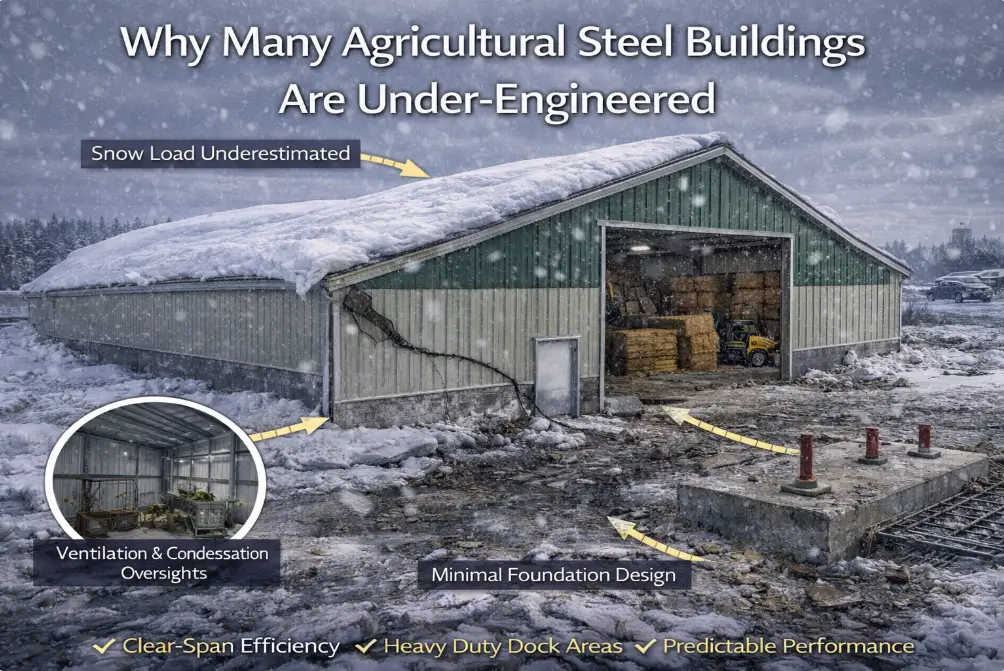
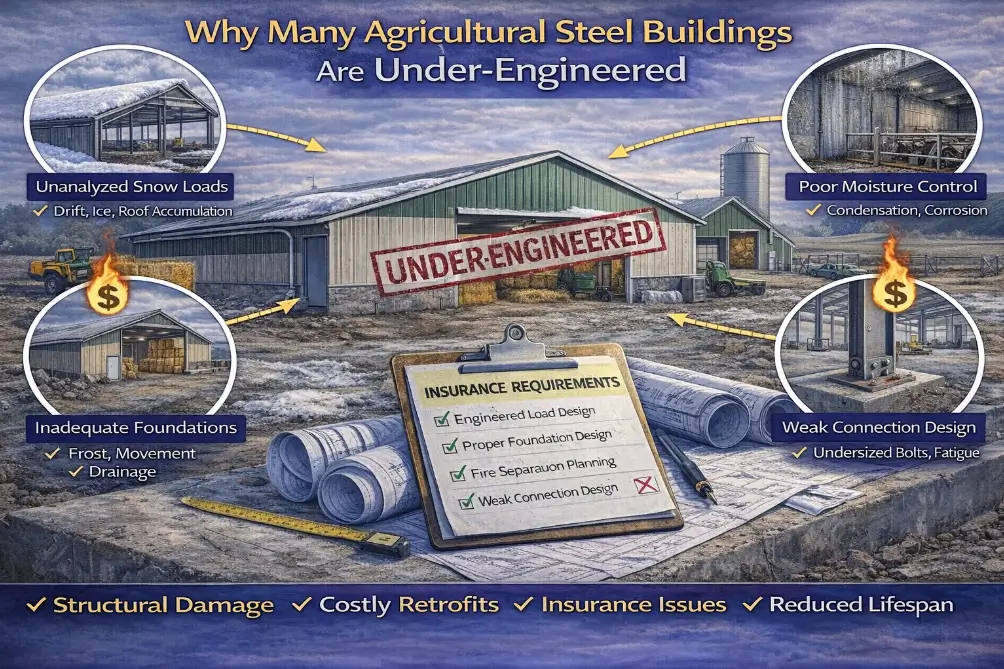
Many long-span structures encounter performance issues when they are designed using assumptions suited to smaller buildings. Common problems include excessive deflection, underestimated snow drift loads, under-designed foundations, and connection fatigue. Long-span steel buildings perform reliably when these factors are fully accounted for in engineering and detailing.
Final Thoughts
Long-span steel structures are among the most impressive and functional building systems in modern construction. They enable large-scale operations, efficient workflows, and flexible space planning.
Long-span steel projects require advanced structural coordination and real-world performance understanding.
Planning a large-span structure requires early engineering input. Requesting a steel building quote should include detailed load, span, and operational requirements to ensure accurate design and pricing.
But with those benefits come engineering realities that cannot be shortcut.
Snow loads grow rapidly. Deflection becomes critical. Foundations carry massive forces. Connections transform into structural systems. Thermal movement matters. Erection precision tightens.
In Canada’s demanding climate conditions, these challenges become even more important.
Long-span steel engineering is not about pushing members farther apart. It is about designing an integrated system that safely manages loads, movement, construction, and long-term performance.
When done properly, long-span steel buildings deliver exceptional value and reliability.
When underestimated, they quickly become some of the most expensive structures to fix.
Understanding these engineering challenges early is what separates successful long-span projects from those plagued by delays, redesigns, and performance issues.
Reviewed by the Tower Steel Buildings Engineering Team
This article has been reviewed by the Tower Steel Buildings Engineering Team to ensure technical accuracy, real-world constructability, and alignment with Canadian structural design practices, climate conditions, and long-span steel building performance requirements.
1. What qualifies as a long-span steel structure?
A long-span steel structure typically refers to buildings with clear spans of 40 feet or more without interior columns. Common examples include aircraft hangars, warehouses, riding arenas, manufacturing facilities, logistics centres, and large agricultural buildings where uninterrupted floor space is essential.
2. Why are long-span steel buildings more difficult to engineer than smaller buildings?
As span length increases, structural forces grow non-linearly. Snow loads, wind forces, deflection, and foundation reactions become significantly larger and more sensitive to design assumptions. Long spans require advanced structural modelling, precise load coordination, and tighter construction tolerances compared to short-span buildings.
3. How do snow loads affect long-span steel roof design in Canada?
Large roof areas collect higher total snow volumes and are highly susceptible to drift accumulation caused by wind, parapets, and adjacent structures. In long-span buildings, uneven snow loading often governs structural design more than average snow depth, making accurate drift analysis essential for safety and performance.
4. Are long-span steel buildings more expensive to build?
They can have higher structural and foundation costs due to larger member sizes and heavier load reactions. However, they often reduce long-term operational costs by eliminating interior columns, improving workflow efficiency, and allowing flexible use of space. When properly engineered, long-span buildings typically deliver strong long-term value.
5. How important are foundations in long-span steel structures?
Foundations are critical because long-span frames concentrate large loads into fewer support points. Soil conditions, bearing capacity, frost depth, and settlement control must be evaluated early. Inadequate foundation coordination is one of the most common sources of cost overruns and performance issues in long-span projects.
6. Do long-span steel buildings move more with temperature changes?
Yes. Steel expands and contracts with temperature, and over long distances this movement becomes significant. Engineers must account for thermal expansion in frame layout, connections, and cladding systems to prevent stress buildup, cracking, and long-term fatigue, especially in Canada’s wide temperature ranges.
7. Can long-span steel buildings support cranes, mezzanines, or heavy equipment?
They can, but only when these loads are integrated into the structural design from the beginning. Cranes, conveyor systems, mezzanines, and heavy machinery impose dynamic and concentrated forces that significantly affect frame sizing, connections, and foundations. Adding them later often leads to costly retrofits.
8. What are the biggest risks of under-engineering long-span steel structures?
Common risks include excessive deflection, roof drainage problems, overstressed connections, foundation settlement, premature fatigue, and performance failures under snow or wind loads. While a structure may meet minimum code requirements, poor engineering can still create long-term operational and maintenance issues.
9. How does integrated engineering and fabrication improve long-span building performance?
When structural engineers, fabricators, and erection planners work together early, designs are optimized for load paths, connection efficiency, constructability, and tolerance control. This reduces change orders, erection delays, material waste, and long-term performance problems, which is especially important in complex long-span projects.