Fire separation is one of the most misunderstood design requirements in agricultural and mixed-use steel buildings. Many owners assume rural structures are exempt from fire protection standards or that open farm layouts eliminate the need for compartmentalization. In reality, Canadian building codes apply specific fire separation rules based on occupancy, use, and risk exposure.
When farm operations include equipment storage, workshops, processing areas, fuel handling, or residential components, fire separation becomes critical to safety, compliance, and insurance approval.
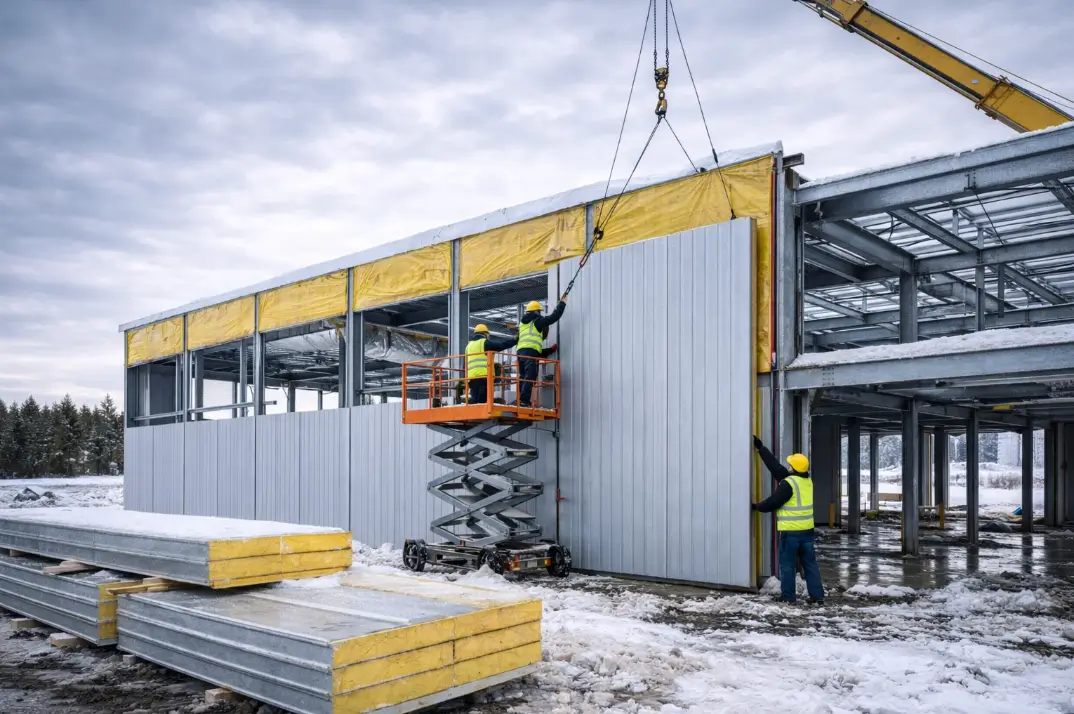
Understanding how fire separation works and why it matters helps owners avoid costly redesigns, permit delays, and long-term safety issues. Modern farm steel buildings often combine livestock housing, equipment storage, and workshops, which makes proper fire compartmentalization essential for safety and code compliance.
What Fire Separation Means in Agricultural and Mixed-Use Buildings
Fire separation refers to the construction methods used to slow or prevent fire spread between different areas of a building. This typically involves:
- Fire-rated walls and floors
- Fire-resistant materials
- Protected structural elements
- Sealed penetrations and openings
The goal is to compartmentalize high-risk zones so that a fire in one area does not quickly compromise the entire structure.
In farm environments, this often applies between:
- Livestock housing and equipment storage
- Workshops and hay or feed storage
- Fuel or chemical rooms and occupied spaces
- Residential units and agricultural operations
Fire separation is not about aesthetics or unnecessary construction. It is about controlling fire behaviour long enough for evacuation, firefighting response, and damage limitation.
Why Farm and Mixed-Use Buildings Require Special Fire Planning
Agricultural facilities face unique fire risks compared to standard commercial buildings. Farm fire prevention practices are also addressed by the Canadian Agricultural Safety Association through national agricultural safety programs.
Common contributing factors include:
- Combustible dust from grain, hay, and feed
- Electrical equipment exposed to moisture and debris
- Welding and repair operations
- Stored fuels, lubricants, and chemicals
- High airflow that can accelerate flame spread
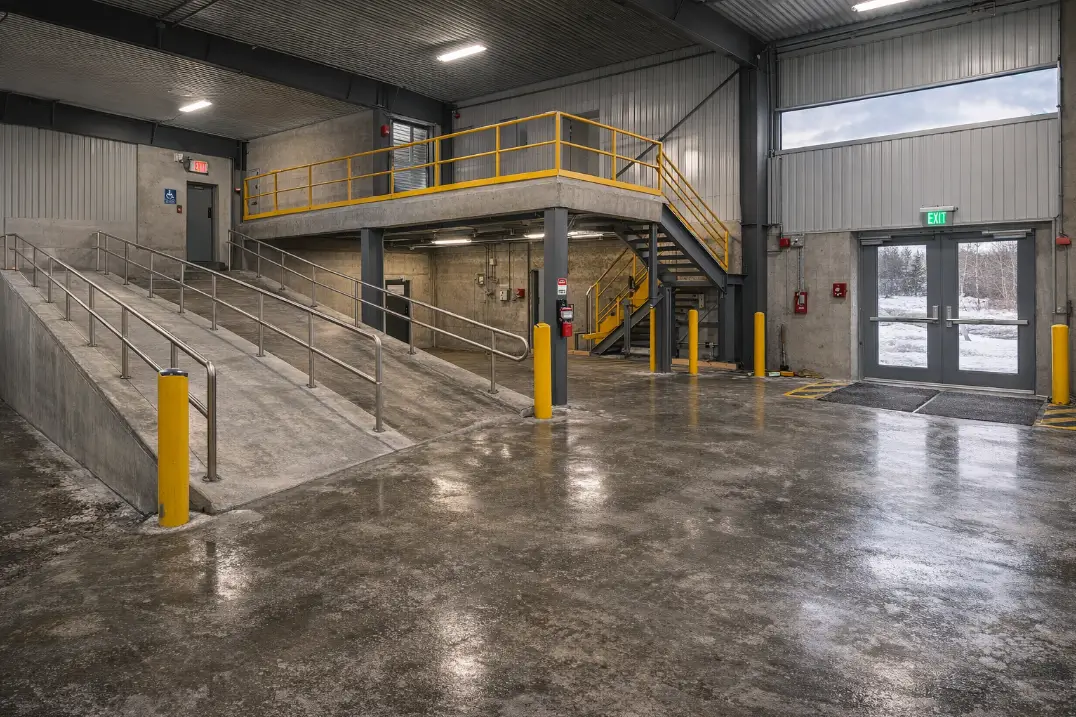
Mixed-use buildings add additional complexity because different occupancies carry different risk profiles. Many agricultural operations today function as commercial steel buildings that include storage, processing, and retail functions within a single structure. A workshop attached to a livestock barn or a farm store connected to storage areas triggers stricter separation requirements than single-use structures.
These risks are why Canadian building codes apply fire separation rules even in rural construction.
How Canadian Building Codes Approach Fire Separation
While provinces adopt variations of the National Building Code of Canada, the underlying fire safety principles remain consistent. The full requirements are outlined in the National Building Code of Canada, which governs life-safety standards across Canadian construction.
Fire separation requirements are typically determined by:
- Occupancy classification
- Building size and height
- Presence of hazardous materials
- Distance to property lines
- Whether residential spaces are included
Higher-risk uses require stronger fire barriers.
For example:
- Livestock housing may have lower separation needs than workshops
- Equipment repair bays often require fire-rated walls from storage areas
- Residential areas must be separated from agricultural operations
Municipal inspectors review these conditions carefully, even in remote locations.
Common Areas Where Fire Separation Is Required on Farms
Although every project differs, fire separation frequently applies in the following zones:
Equipment and Repair Areas
Welding, cutting, grinding, and electrical work increase ignition risk. These spaces typically require fire-rated separation from barns, feed storage, and hay lofts.
Fuel and Chemical Storage
Diesel, gasoline, oils, pesticides, and fertilizers create high fire loads. Dedicated fire-separated rooms or detached structures are often required.
Hay and Bedding Storage
Dry organic material burns rapidly and can ignite through friction heat or electrical faults. Separation from occupied spaces significantly reduces catastrophic loss.
Residential or Office Areas
Where living quarters or farm offices exist within the same structure, strict separation protects occupants and limits smoke spread.
Processing and Packaging Zones
Operations involving machinery, dust, or heat sources often require fire-rated partitions.
Fire Separation in Steel Buildings
Steel buildings perform well in fire conditions due to their non-combustible framing. However, steel alone does not provide fire separation.
Fire-rated assemblies usually involve:
- Insulated fire-rated wall systems
- Gypsum or cementitious boards
- Mineral wool insulation
- Fire-resistant coatings
- Rated doors and windows
Proper detailing is critical. Unsealed penetrations for electrical, plumbing, or ventilation can completely defeat fire-rated assemblies. Many of these failures occur when trades are not coordinated during construction, a problem explained in coordinating trades in steel building construction.
Steel buildings often make separation easier to integrate, but they must be designed intentionally.
Mixed-Use Structures and Occupancy Transitions
Mixed-use farm buildings are increasingly common.
Examples include:
- Barn with attached shop
- Equipment storage with farm store
- Processing area connected to cold storage
- Residential loft above operations
Each occupancy type has its own fire risk category.
Where these uses intersect, fire separation becomes mandatory.
Without proper design:
- Permits may be denied
- Insurance coverage may be limited
- Future expansion becomes difficult
Fire separation allows diverse operations to function safely within one structure.
Fire Ratings Explained Simply
Fire separation assemblies are assigned ratings based on how long they resist fire spread. Fire resistance testing and classification standards used globally are published by the National Fire Protection Association (NFPA).
Common ratings include:
- 30 minutes
- 45 minutes
- 60 minutes
- 90 minutes
- 120 minutes
Higher hazard zones require longer resistance times.
This does not mean the building will burn after the rating expires. It means the assembly maintains integrity long enough to slow fire growth and protect other areas.
Designers select ratings based on occupancy risk and code requirements.
Typical Mistakes That Create Compliance Problems
Many farm projects run into fire separation issues due to design assumptions.
Common mistakes include:
- Treating agricultural buildings as exempt from fire code
- Connecting workshops directly to barns without rated walls
- Storing fuels inside non-separated areas
- Cutting unprotected penetrations through fire-rated walls
- Failing to use rated doors in separation zones
These issues often surface during inspection, when changes are far more expensive. Some of these problems originate in under-engineered farm steel buildings where fire safety considerations were underestimated during design.
Fire Separation and Insurance Requirements
Insurance providers increasingly review fire compartmentalization in agricultural buildings. Fire safety planning is also a major component of steel building construction risk management for agricultural facilities.
Proper separation:
- Reduces premium costs
- Improves insurability
- Limits total loss risk
- Protects equipment investments
Poor fire design can result in coverage exclusions or refusal to insure high-risk operations.
Planning Fire Separation Early Saves Money
Integrating fire separation during design is far more efficient than retrofitting later.
Early coordination allows:
- Optimized wall layouts
- Structural compatibility
- Efficient routing of services
- Clear inspection pathways
Late-stage changes often require demolition, redesign, and permit amendments. Integrated delivery models such as turnkey steel building construction help coordinate fire-rated assemblies, structural layouts, and service penetrations during early project planning.
How Fire Separation Improves Long-Term Farm Operations
Beyond compliance, proper fire separation improves:
- Worker safety
- Equipment protection
- Business continuity
- Property value
- Expansion flexibility
Many farm fires that destroy entire complexes could have been contained with basic compartmentalization.
Investigations frequently show that the absence of fire-rated separation allowed small ignition events to spread uncontrollably.
Fire Separation Is Not Overbuilding
Some owners worry that fire-rated construction is excessive.
In reality:
- It reflects real risk exposure
- It aligns with insurance expectations
- It protects major capital investments
Fire separation is a cost-control strategy over the life of the building, not just a regulatory hurdle.
Designing Steel Farm Buildings With Fire Safety in Mind
Modern steel building design allows:
- Integrated fire-rated assemblies
- Efficient compartment layouts
- Durable protective systems
- Clear inspection compliance
When planned correctly, fire separation blends seamlessly into the structure without compromising workflow or usability.
Why Fire Separation Is Becoming More Important in Agriculture
Farms today house:
- Larger equipment
- Higher-value livestock
- Processing operations
- Energy systems
- Commercial functions
As agricultural facilities evolve into complex operations, fire risk management becomes essential.
Canadian codes and insurance standards continue to evolve accordingly.
Final Thoughts
Fire separation rules for farm and mixed-use buildings are not arbitrary obstacles. They exist because agricultural environments contain high ignition risk, combustible materials, and interconnected operations that can escalate fires rapidly.
Proper compartmentalization protects people, animals, equipment, and long-term investment.
When integrated into steel building design from the beginning, fire separation improves safety, compliance, insurability, and operational resilience.
In agricultural construction, fire planning is not an add-on. It is a foundational part of responsible building design.
Reviewed by the Tower Steel Buildings Engineering Team
This article has been reviewed by the Tower Steel Buildings Engineering Team to ensure accuracy in fire safety principles, Canadian building code considerations, and real-world agricultural construction practices.
1. Do agricultural steel buildings in Canada require fire separation?
Yes. While some small or low-risk farm structures may have reduced requirements, most agricultural buildings that include workshops, fuel storage, livestock housing, processing areas, or mixed uses must incorporate fire separation based on occupancy type and risk exposure under Canadian building codes.
2. When is fire separation required between a barn and a workshop?
Fire separation is typically required whenever repair, welding, or mechanical work areas are attached to livestock housing or storage spaces. These areas carry higher ignition risk and must be compartmentalized using fire-rated wall assemblies and protected openings.
3. Are rural farm buildings exempt from fire protection rules?
No. Rural location does not remove fire safety requirements. Municipal authorities still apply fire separation rules based on building use, hazard level, and occupancy, regardless of whether a structure is in an urban or agricultural zone.
4. How do fire ratings work in steel farm buildings?
Fire ratings measure how long a wall, floor, or assembly resists fire spread. Common ratings range from 30 to 120 minutes depending on hazard classification. These ratings are achieved through specific material systems, not steel framing alone.
5. Does steel construction eliminate the need for fire separation?
No. Steel is non-combustible, but fire separation depends on fire-rated assemblies that limit heat transfer and flame spread. Proper wall systems, insulation, and sealed penetrations are still required.
6. Can fire separation reduce farm insurance costs?
Often yes. Buildings with properly designed fire compartments typically present lower total loss risk, which can improve insurability and in some cases reduce premiums, especially where fuel storage, machinery, or livestock are involved.
7. What are the most common fire separation inspection failures on farms?
Typical issues include missing fire-rated walls between high-risk zones, unprotected service penetrations, use of non-rated doors, improper material substitutions, and connecting workshops directly to storage or livestock areas without compartmentalization.
8. Are residential spaces allowed inside agricultural steel buildings?
They can be, but only with strict fire separation between living areas and agricultural operations. Residential occupancy triggers much higher fire safety standards and requires properly rated assemblies.
9. Can fire separation be added after a building is constructed?
It is possible but often expensive and disruptive. Retrofitting usually requires demolition, new structural detailing, permit revisions, and inspection re-approval. Integrating fire separation during design is far more efficient.
10. Does every farm building require the same level of fire protection?
No. Fire separation requirements scale based on use, hazard exposure, size, and occupancy mix. A simple equipment shelter differs greatly from a mixed-use processing and livestock facility. Proper engineering assessment determines the correct level of protection.