A steel building is only as strong as the foundation beneath it. No matter how well-engineered or precisely fabricated your structure is, it depends entirely on the stability and accuracy of the concrete base. For Ontario builders, where frost, moisture, and temperature swings can create significant challenges, a properly designed and poured foundation is critical for long-term performance.
This guide explains how concrete foundations in Ontario are built to support steel buildings, what makes them unique, and how Tower Steel Buildings works with certified structural engineers to ensure every base meets the highest standards of safety and precision.
The Role of Concrete Foundations in Steel Construction
The foundation is more than just a slab of concrete. It transfers the weight of your steel structure to the ground evenly, prevents shifting or cracking, and keeps the building aligned over decades of use.
A well-built foundation ensures:
- Structural alignment for columns and anchor bolts
- Load distribution to prevent settling or shifting
- Resistance against Ontario’s frost heave and freeze-thaw cycles
- A level base for steel frame installation
In short, a properly designed and constructed foundation protects your investment and guarantees that the building performs as engineered.
Common Types of Concrete Foundations Used in Ontario
Different steel building projects call for different foundation types depending on size, soil conditions, and intended use. Here are the most common foundation styles in Ontario:
a. Slab-on-Grade Foundation
This is the most popular foundation for garages, workshops, and warehouses. A reinforced concrete slab is poured directly on compacted soil or gravel, serving as both the foundation and the finished floor. It’s ideal for level sites with good drainage.
Advantages:
- Fast to install
- Economical for smaller buildings
- Excellent load distribution
Key Consideration:
Proper insulation and moisture control are essential for Ontario’s cold seasons to prevent frost heave.
b. Pier Foundation
Concrete piers or footings are poured under each steel column location. The building frame is then anchored to these isolated points. This foundation type works well for uneven or sloped terrain.
Advantages:
- Reduces excavation and concrete volume
- Ideal for rural or rocky sites
- Easier drainage control
Key Consideration:
Requires accurate layout and alignment to match steel column base plates precisely.
c. Frost Wall or Grade Beam Foundation
A frost wall or grade beam system extends below the frost line (typically 4 feet or more in Ontario). It connects perimeter walls with continuous concrete beams and supports a slab poured afterward.
Advantages:
- Provides superior frost protection
- Supports heavy loads
- Allows for insulated, heated interiors
Key Consideration:
Best suited for commercial or industrial steel buildings requiring deep frost protection and mechanical rooms.
Concrete Mixes and Strength Requirements
Not all concrete is created equal. For Ontario’s climate and building loads, the right mix design ensures durability, strength, and frost resistance.
Typical Mix Components
- Cement: Type GU (General Use) Portland cement
- Aggregate: Clean crushed stone or gravel for strength and stability
- Sand: Provides workability and consistency
- Water: Clean, controlled ratio for proper hydration
- Admixtures: Air-entraining agents and plasticizers for freeze-thaw durability
Compressive Strength Targets
For steel building foundations, compressive strength typically ranges from 25 MPa to 35 MPa, depending on structural requirements. Engineering drawings specify exact strength levels based on soil bearing capacity and building load.
Reinforcement: The Backbone of Every Foundation
Steel reinforcement (rebar or mesh) adds tensile strength to the concrete, preventing cracking and improving load capacity.
Common Reinforcement Practices
- Rebar Grids: Placed horizontally and vertically to control cracking
- Anchor Bolts: Installed during or immediately after pouring to secure steel columns
- Footing Reinforcement: Larger rebar sizes used in footing zones for concentrated loads
Tower Steel Buildings ensures all reinforcement layouts match engineer-stamped drawings. Each footing, slab, and pier is reviewed for correct rebar size, spacing, and positioning before concrete placement.
Pouring and Curing: The Critical Phases
Even with perfect design, the success of a foundation depends on how it’s poured and cured.
Before Pouring
- The site is excavated and compacted to required levels
- Formwork and rebar are inspected
- Anchor bolts are positioned according to layout drawings
During Pouring
- Concrete is poured continuously to avoid cold joints
- Vibrators remove trapped air for density and strength
- Surface is leveled using laser-guided screeds for accuracy
After Pouring
Curing is a vital process that allows concrete to gain strength and durability. Moist curing for at least 7 days is standard practice, with longer periods recommended during cold or dry weather. Proper curing prevents surface cracking and ensures maximum compressive strength.
Frost Protection and Drainage for Ontario Conditions
Ontario’s freeze-thaw cycles can cause foundations to move, crack, or shift if not properly insulated and drained.
Frost Protection Methods
- Below-Frost Footings: Extend foundation footings at least 4 feet below grade
- Rigid Insulation: Insulate perimeter footings or slabs with polystyrene panels
- Heated Slabs: For workshops or warehouses, radiant heating prevents frost heave
Drainage Considerations
- Gravel Base: Promotes drainage under slabs and piers
- Perimeter Drains: Direct groundwater away from foundation edges
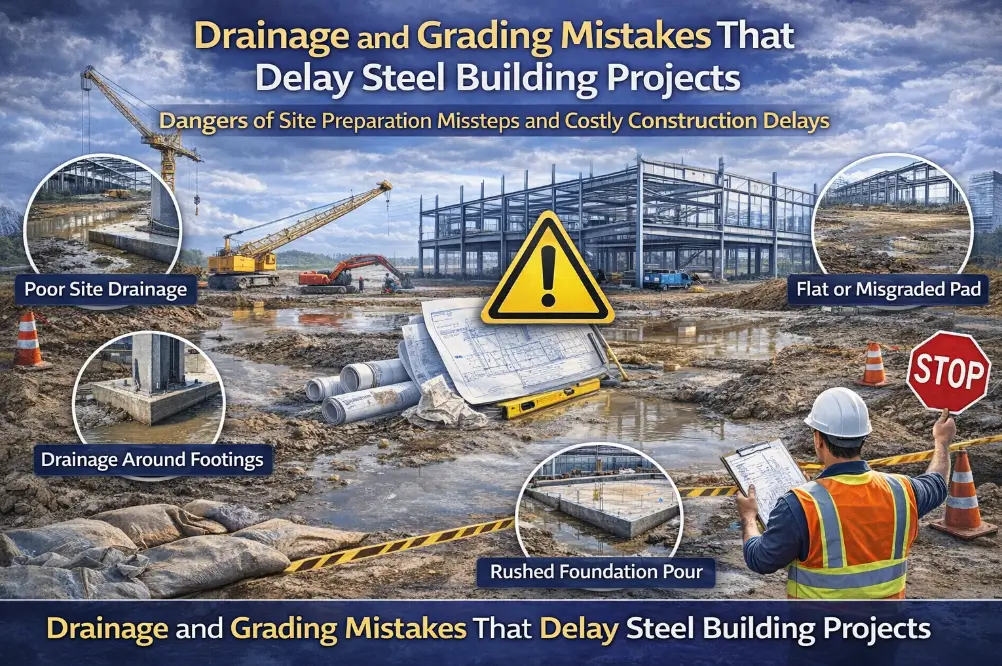
- Slope Grading: Ensures surface water flows away from the structure
Tower Steel Buildings includes these protective measures in every engineered foundation design, ensuring the structure remains stable year-round.
How Tower Steel Buildings Coordinates Foundation Design
Unlike generic building suppliers, Tower Steel Buildings manages foundation planning as part of its full-service approach. Every project includes collaboration between the engineering team and the erection crew to ensure the base is built to exact tolerances.
Coordination Process:
- Engineering Review: Foundation loads and soil conditions are analyzed by certified engineers.
- Stamped Drawings: Clients receive detailed, Ontario-certified foundation drawings.
- Contractor Coordination: Tower’s team works directly with local concrete contractors to verify rebar layout, bolt placement, and elevation accuracy.
- Inspection and Verification: Before steel delivery, engineers review site photos or perform inspections to confirm foundation readiness.
This seamless integration ensures that your foundation perfectly matches your steel structure’s anchor points and load requirements.
Common Foundation Mistakes to Avoid
Even small errors during the foundation phase can lead to major issues later. Here are common mistakes Ontario builders should avoid:
- Incorrect Anchor Bolt Placement: Misalignment can delay erection or require re-drilling.
- Poor Soil Compaction: Leads to settlement or uneven slabs.
- Inadequate Curing: Weakens the concrete surface and shortens its lifespan.
- Ignoring Frost Line Depth: Can cause frost heave and structural movement.
- Skipping Inspections: Minor oversights in rebar or formwork can become expensive corrections later.
With Tower Steel Buildings, these risks are minimized through experienced oversight and clear communication between engineering, contractors, and clients.
Cost Considerations for Ontario Concrete Foundations
Foundation costs in Ontario vary depending on soil type, size, and design complexity. As a general range:
- Slab-on-Grade: $10–$15 per square foot
- Pier or Footing Foundation: $8–$12 per square foot
- Frost Wall or Grade Beam: $15–$25 per square foot
These costs include excavation, forming, reinforcement, and pouring but may vary based on site access and material prices. Tower Steel Buildings provides transparent, itemized estimates as part of every quote.
Inspections and Quality Assurance
Ontario municipalities require foundation inspections at multiple stages — typically after excavation, before pouring, and post-cure. Tower Steel Buildings ensures clients have all required documents and engineer stamps for these reviews.
Every project includes:
- Engineer-signed load calculations
- Foundation drawings stamped for Ontario
- Inspection documentation for municipal submission
This documentation not only meets code but also protects your investment with traceable quality records.
Why Choose Tower Steel Buildings for Your Foundation and Structure
Tower Steel Buildings combines engineering expertise, local experience, and construction precision under one roof. By handling both the steel design and the foundation coordination, the company guarantees compatibility and reduces the risk of project delays.
Key Advantages:
- Certified Ontario foundation drawings
- In-house coordination between engineers and erection crews
- Clear communication with contractors
- Proven experience in all Ontario climates
From small garages to large commercial projects, Tower Steel Buildings ensures every foundation is built for strength, accuracy, and long-term stability.
Reviewed by the Tower Steel Buildings Engineering Team
This article was reviewed and verified by the Tower Steel Buildings Engineering Team for accuracy and compliance with Ontario building standards.