Steel building kits are often marketed as fast, affordable, and simple solutions for storage buildings, workshops, agricultural facilities, and even commercial structures. For some light-duty uses, kit systems can serve a purpose.
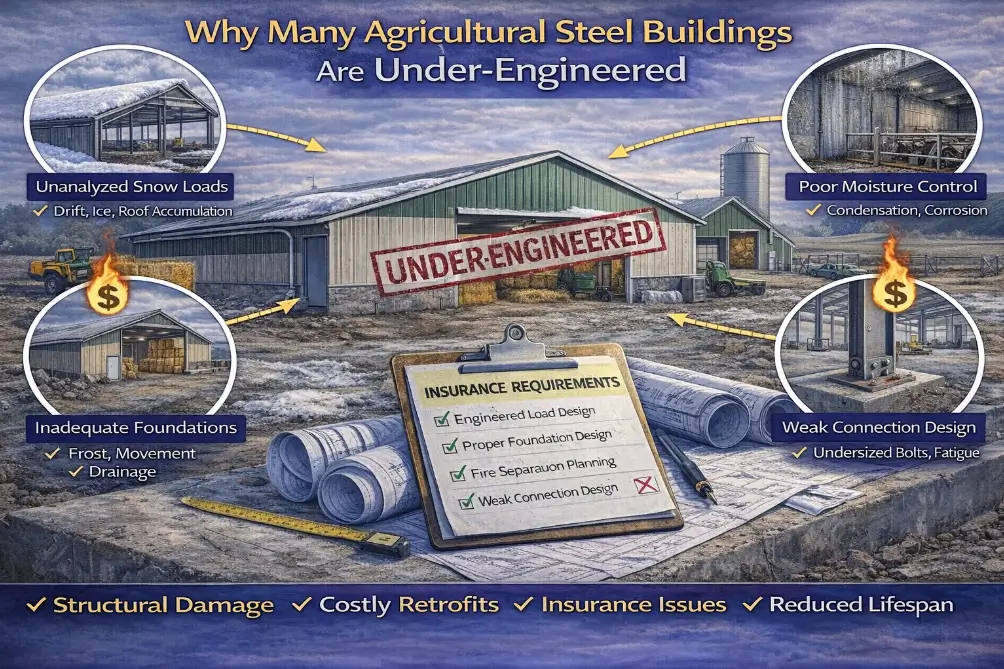
However, many low-cost steel building kits are engineered only to minimum assumptions or generic conditions. In Canada’s variable climate and regulatory environment, these shortcuts frequently lead to foundation issues, permit delays, structural deficiencies, and costly retrofits.
Understanding the most common engineering oversights in cheap steel building kits helps owners avoid long-term performance problems and unexpected expenses.
Why Kit Pricing Often Hides Engineering Gaps
Low-cost steel building kits compete primarily on upfront price. To achieve those numbers, engineering is often simplified, deferred, or reduced to basic load tables rather than project-specific structural analysis.
Common cost-cutting approaches include:
- Generic design loads instead of site-specific snow and wind values
- Minimal connection detailing
- Foundation design excluded or loosely defined
- Limited bracing assumptions
- Partial engineering stamps
- No erection sequencing considerations
While these shortcuts may reduce initial pricing, they frequently shift risk and cost onto the building owner later.
Canadian structural loading requirements are defined in the National Building Code of Canada structural loading provisions.
Oversight 1: Generic Snow and Wind Load Assumptions
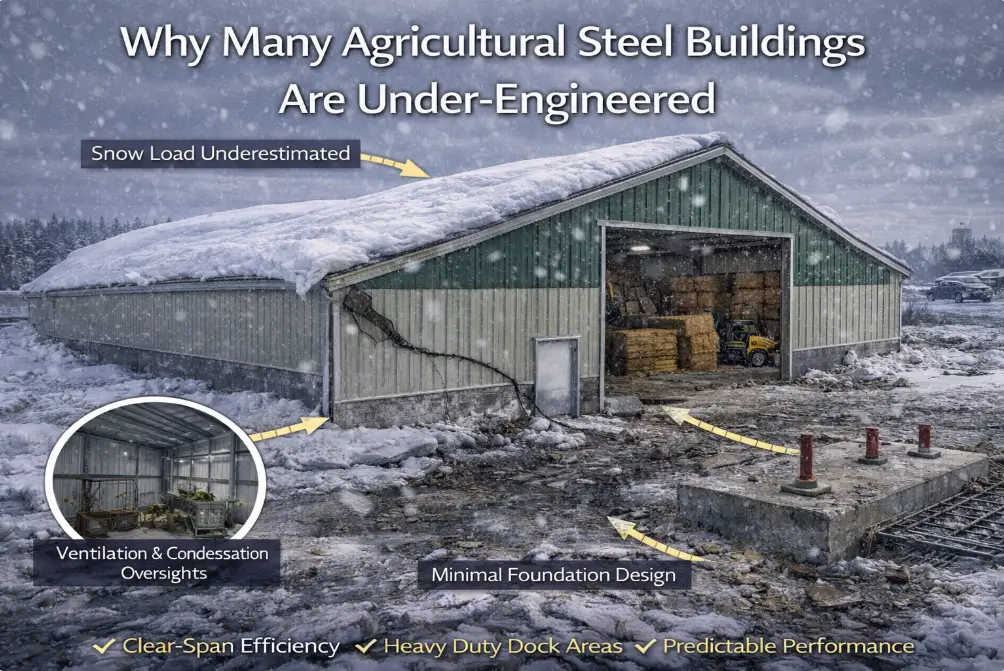
One of the most common engineering failures in cheap kits is using standardized load assumptions across multiple regions. Proper structural performance begins with site-specific snow load engineering for steel buildings in Canada.
In Canada, snow loads and wind exposure vary dramatically by:
- geographic location
- elevation
- terrain roughness
- proximity to open fields or water
- roof geometry and drift zones
Many low-cost kits apply conservative but generic load values or outdated regional tables.
The result:
- under-designed primary frames
- insufficient roof purlin capacity
- excessive deflection under snow accumulation
- permit rejection or forced redesign
What passes in one region can be structurally inadequate in another.
Oversight 2: Incomplete Structural Connection Design
Steel buildings rely heavily on properly engineered connections to transfer loads safely. Connection design and load path verification are governed by the CSA S16 structural steel design standard.
Cheap kits often provide:
- simplified bolted joint assumptions
- generic gusset plates
- minimal bracing attachment details
- unverified connection forces
Without full connection engineering:
- load paths become unclear
- localized overstress develops
- erection becomes difficult or unsafe
- long-term fatigue risks increase
Municipal reviewers frequently flag these omissions during permit review, forcing costly revisions.
Oversight 3: Foundation Engineering Left to Guesswork
Many steel building kits exclude foundation design entirely or provide “typical” footing sketches. Coordinated structural load transfer is explained further in our guide to steel building foundation design principles.
This creates major risks.
Steel structures transfer concentrated loads at column bases, not evenly across slabs. Without engineered foundation coordination:
- footings may be undersized
- slab thickness may be insufficient
- frost protection may be miscalculated
- uplift resistance may be ignored
In Canadian climates with frost heave, soil variability, and seasonal moisture changes, improper foundations often become the largest cost correction after purchase.
Foundation performance and frost behaviour are addressed by the Canadian Geotechnical Society foundation engineering guidelines.
Oversight 4: Bracing Systems Designed Only in Concept
Bracing is critical to steel building stability under wind, seismic, and erection conditions.
Low-cost kits frequently show:
- conceptual X-bracing layouts
- minimal rod sizes
- no force calculations
- no erection stability checks
Real engineering requires:
- quantified lateral load paths
- member force verification
- anchorage design
- construction phase stability analysis
When these are missing, structures may meet theoretical strength but lack real-world resilience.
Oversight 5: No Allowance for Operational Loads
Cheap kits are often engineered only for basic roof and wall loads.
They frequently ignore:
- overhead doors and framing reinforcement
- crane systems
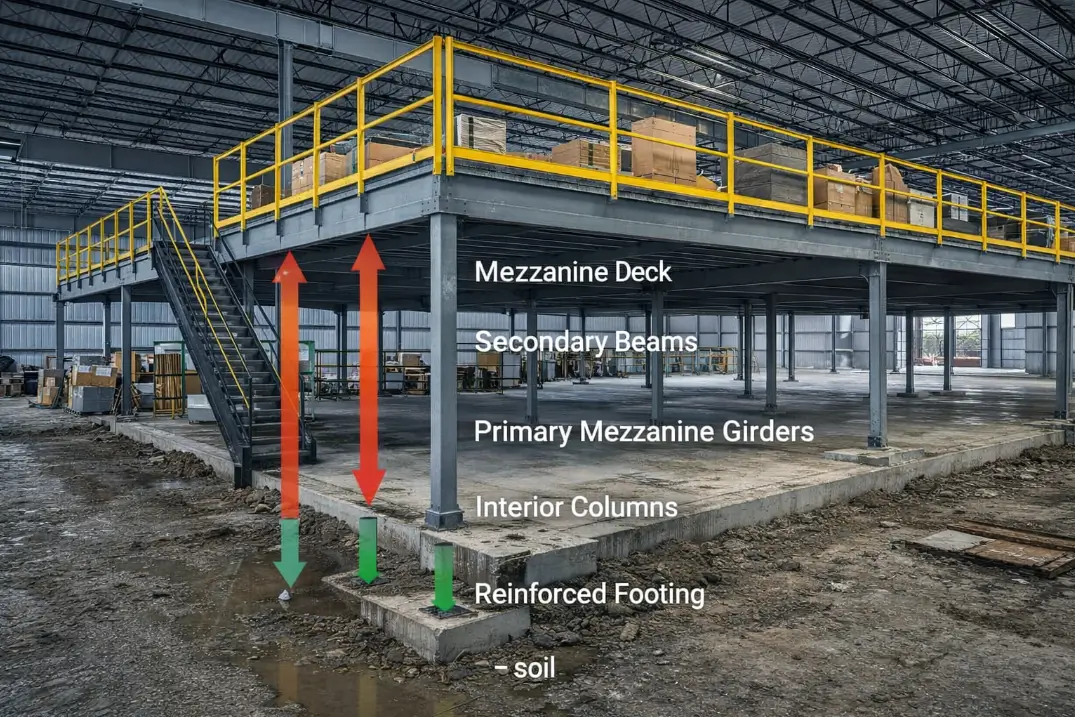
- mezzanine loads
- mechanical equipment
- snow drift from adjacent buildings
- future expansion allowances
Interior structural platforms require full integration as outlined in our article on mezzanines and interior load design in steel buildings.
When owners later add equipment or structural modifications, the original steel often cannot support the loads without major reinforcement.
Oversight 6: Minimal Deflection and Serviceability Control
Structural strength is only part of performance.
Many kits meet minimum strength criteria but allow excessive deflection.
Consequences include:
- roof ponding under snow melt
- wall panel distortion
- door misalignment
- vibration issues
- premature cladding wear
Serviceability design is one of the first things stripped from low-cost engineering.
Oversight 7: Permitting Reality Ignored
Cheap kit designs are often created without understanding Canadian municipal review processes.
Common permit issues include:
- missing engineering stamps for all components
- unclear load assumptions
- non-compliant foundation details
- insufficient drawings
- incomplete code references
The result is redesign after purchase, delayed approvals, and unexpected professional fees.
Oversight 8: Erection Sequencing Not Engineered
Steel buildings experience their highest instability during erection.
Low-cost kits rarely consider:
- temporary bracing requirements
- unbalanced frame loading
- construction wind exposure
- sequence-dependent stability
Without erection engineering, projects face:
- unsafe working conditions
- damaged members
- project stoppages
- liability risks
Oversight 9: Corrosion and Environmental Exposure Ignored
Long-term moisture damage is explored in our technical guide to condensation failures in agricultural steel buildings.
Canadian environments introduce:
- moisture cycling
- condensation
- agricultural ammonia exposure
- salt spray near roads or coastal areas
Cheap kits often use minimal coatings and no exposure classification.
Long-term consequences include:
- accelerated corrosion
- connection degradation
- cladding failure
- shortened building lifespan
Oversight 10: No Integrated Performance Planning
Well-engineered steel buildings consider the full lifecycle:
- structural performance
- maintenance exposure
- future adaptability
- operational loads
- environmental conditions
Cheap kits focus only on initial material quantity.
A structured review process is outlined in our checklist for engineering review before finalizing a steel building design.
This short-term approach almost always increases total project cost.
Why These Oversights Lead to Higher Long-Term Costs
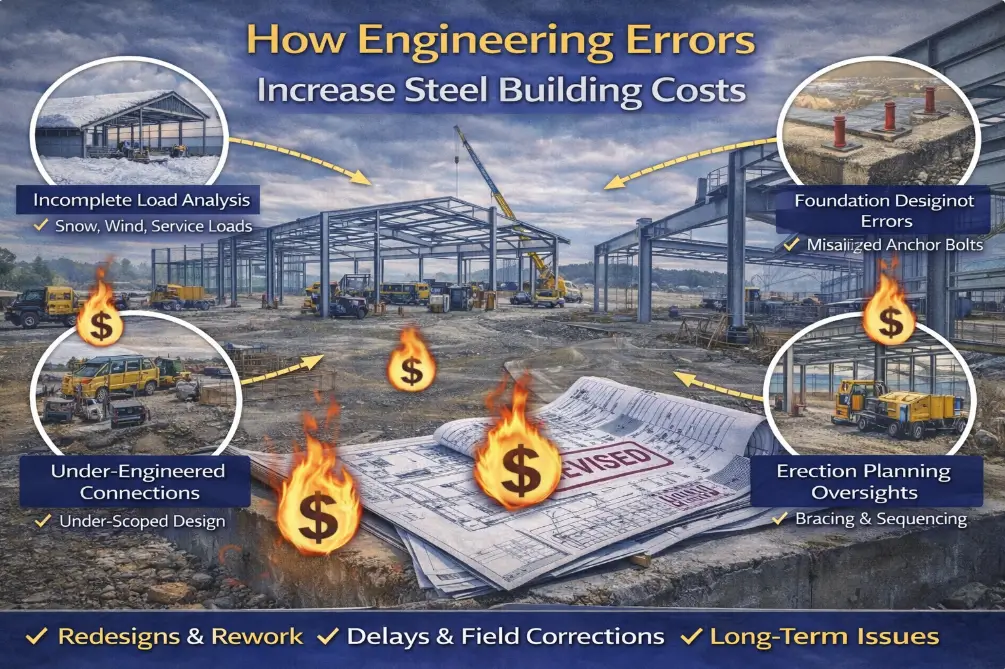
While low-cost kits may appear attractive initially, engineering corrections typically occur through:
- redesign fees
- material reinforcement
- foundation modifications
- permit delays
- construction disruptions
- early maintenance failures
In most projects, the savings disappear quickly.
Many of these downstream corrections are examined in detail in our article on construction risk in steel building projects.
Often the total cost exceeds what a properly engineered building would have cost from the start.
When Steel Building Kits Can Make Sense
Not all kits are inherently wrong.
They may suit:
- temporary storage structures
- lightly loaded shelters
- short-term enclosures
- non-permitted uses
Problems arise when kit systems are used for permanent buildings requiring full code compliance and long-term performance.
How Proper Engineering Prevents These Issues
Well-engineered steel buildings incorporate:
- site-specific load analysis
- full connection design
- coordinated foundation engineering
- erection stability planning
- serviceability control
- environmental durability
- permit-ready documentation
This approach reduces:
- change orders
- delays
- risk exposure
- long-term operating costs
The Real Cost Difference Is Usually Engineering, Not Steel
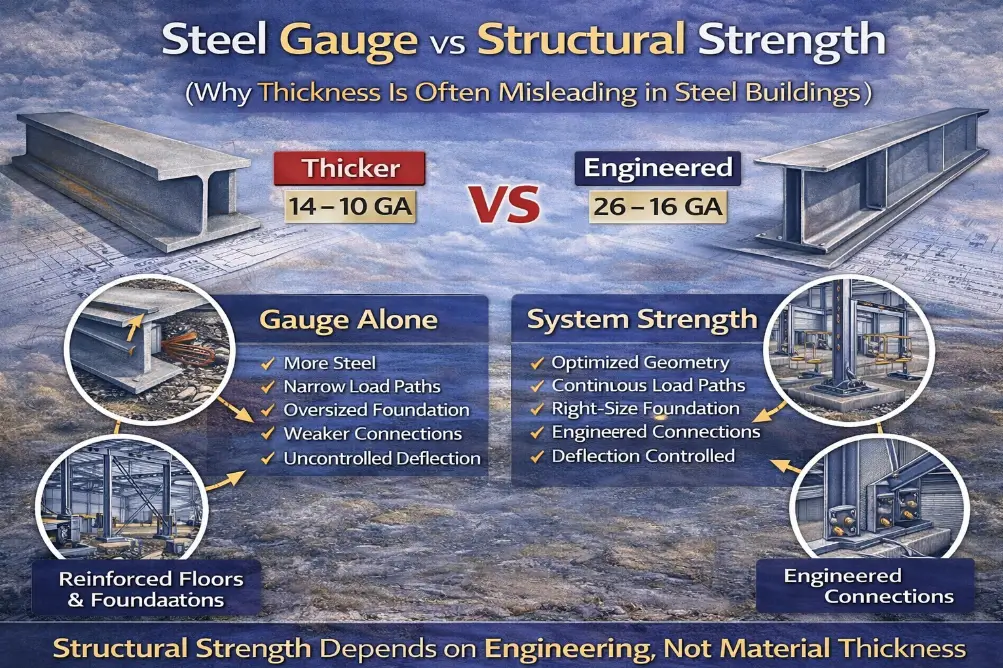
Most steel tonnage differences between cheap kits and engineered buildings are small.
The price gap largely reflects:
- depth of engineering
- design verification
- documentation completeness
- lifecycle performance planning
When engineering is removed, risk is transferred to the owner.
Final Perspective
Cheap steel building kits often look similar to engineered buildings at first glance. The difference lies beneath the surface in structural analysis, foundation coordination, connection detailing, and long-term performance planning.
This coordination gap is often visible when comparing kits to fully planned projects following steel building project readiness planning.
In Canadian construction, where climate, regulation, and operational demands are significant, engineering shortcuts rarely stay hidden.
They surface through delays, retrofits, safety concerns, and rising maintenance costs.
In steel construction, accuracy costs less than correction.
Reviewed by the Tower Steel Buildings Engineering Team
This article has been reviewed by the Tower Steel Buildings Engineering Team to ensure technical accuracy, alignment with Canadian building codes, and real-world construction best practices.
1. Are cheap steel building kits engineered to Canadian building codes?
Some kits claim compliance, but many rely on generic load assumptions rather than site-specific Canadian snow, wind, and foundation conditions. True code compliance requires project-specific engineering stamped by licensed professionals, not generalized design tables.
2. Why do kit buildings often fail during permit review?
Most issues arise from incomplete engineering, missing connection details, and uncoordinated foundation design. Municipal reviewers require full structural documentation that many low-cost kits do not provide upfront.
3. Can foundations really make or break a steel building project?
Yes. Steel buildings transfer concentrated loads at column bases. Without engineered footing and frost protection design, settlement, cracking, and uplift issues commonly occur, especially in Canadian soil and climate conditions.
4. Are steel building kits suitable for permanent commercial or farm buildings?
They can be, but only when fully engineered for site conditions, operational loads, and regulatory compliance. Problems occur when lightly engineered kits are used for permanent structures without proper structural coordination.
5. Why do many cheap kits develop roof deflection and door alignment problems?
Minimal serviceability design allows excessive movement under snow and wind loads. While the structure may not collapse, long-term performance issues often follow, including ponding, panel distortion, and hardware failure.
6. Who is responsible when a kit building requires redesign or reinforcement?
In most cases, the building owner bears the cost. Kit suppliers typically limit responsibility to material supply, not engineering adequacy for site-specific conditions or permitting outcomes.
7. Do cheap kits account for future expansion or equipment loads?
Rarely. Most are designed only for basic roof and wall loads. Cranes, mezzanines, mechanical systems, and building modifications usually require structural upgrades later.
8. How much more does proper engineering usually cost compared to a kit system?
The steel material difference is often small. The real investment is in engineering depth, documentation, and coordination, which typically saves far more in avoided delays, redesigns, and long-term maintenance.
9. What should buyers ask before purchasing a steel building kit?
Key questions include:
- Are loads site-specific?
- Are all connections engineered and stamped?
- Is foundation design coordinated?
- Are erection stability requirements provided?
- Does the package meet full municipal permitting standards?
10. Is a higher-priced engineered building usually cheaper over its lifespan?
In most cases, yes. Proper engineering reduces retrofits, maintenance issues, downtime, and regulatory delays, resulting in lower total ownership cost.