Ontario’s aviation industry depends on precision, safety, and durability. Whether it’s a private airstrip, regional airport, or commercial carrier facility, the hangar protecting each aircraft must perform flawlessly under demanding conditions. From snow and wind loads to operational safety and accessibility, every detail counts.
That’s where aircraft hangar manufacturers in Ontario come in – combining structural steel engineering with aviation expertise to deliver facilities that stand up to Canada’s climate and meet strict regulatory standards.
At Tower Steel Buildings, each hangar is designed and fabricated to meet Transport Canada and Ontario Building Code (OBC) requirements while offering flexible layouts for aircraft storage, maintenance, and operations.
This guide explores how custom steel hangars are designed, why steel is the preferred choice for aviation structures, and how Tower Steel Buildings brings precision, compliance, and reliability to every project.
Why Steel is the Standard for Aircraft Hangars
Aviation facilities demand high-performance structures. Hangars must resist strong winds, handle snow accumulation, provide large open spans without interior columns, and ensure safety for aircraft worth millions of dollars.
Durability and Longevity
Steel offers superior structural strength compared to traditional materials like wood or concrete. It resists warping, cracking, and decay while maintaining load-bearing capacity for decades.
Properly galvanized and painted steel components resist corrosion, even in Ontario’s humid or coastal environments. With minimal maintenance, steel hangars often last 50 years or more.
Large Clear Spans
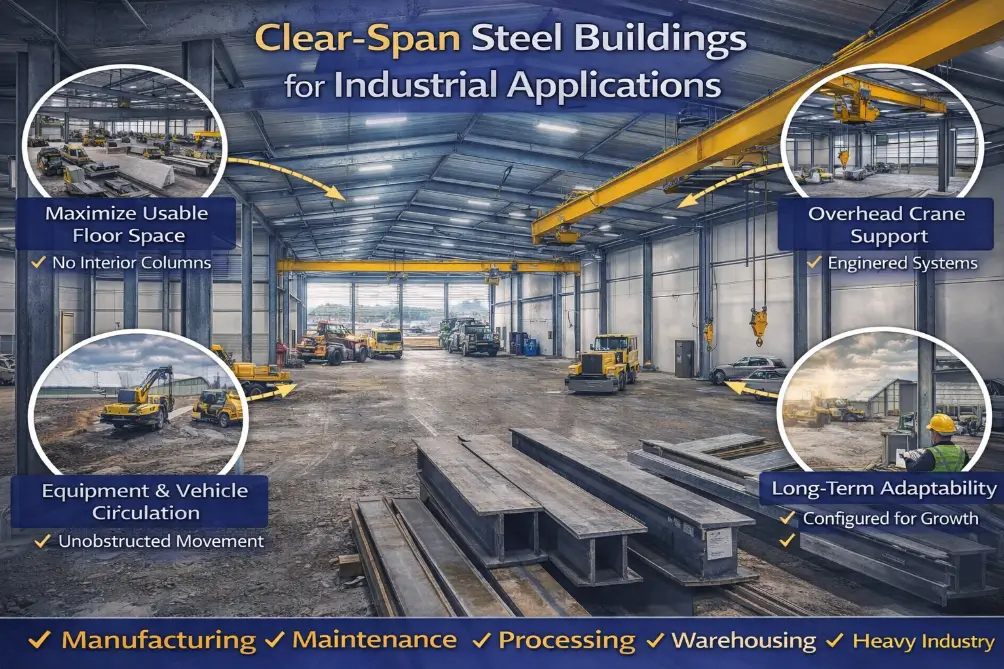
Aircraft require unobstructed interior space for maneuvering, storage, and maintenance. Pre-engineered steel systems can achieve clear spans up to 200 feet, making them ideal for small airstrips and large airports alike.
Design Flexibility
Steel construction allows for custom door systems, ventilation, mezzanines, and office integration. Whether it’s a single-aircraft hangar or a multi-bay commercial operation, each design can be tailored to specific aircraft types and operational needs.
The Role of an Aircraft Hangar Manufacturer
A qualified manufacturer does more than fabricate steel. They act as your engineering, design, and compliance partner from concept to completion.
a. Design and Engineering
Every hangar begins with engineered drawings. Tower Steel Buildings’ design team calculates wind loads, snow loads, and building geometry to meet OBC and Transport Canada requirements. Door height, width, and frame spacing are adjusted to accommodate specific aircraft dimensions – whether it’s a Cessna, Beechcraft, or regional jet.
b. Fabrication and Quality Control
Once approved, the hangar’s steel components are precision-cut, welded, and pre-drilled using automated fabrication equipment. Each part is inspected to ensure dimensional accuracy, surface finish, and coating quality before shipping to the job site.
c. Delivery and Erection Coordination
Manufacturers coordinate directly with erection crews and contractors to ensure proper handling, unloading, and assembly. Tower Steel Buildings provides site-specific erection drawings and on-site guidance for accurate installation.
Key Design Elements of Modern Steel Aircraft Hangars
Aviation facilities are unique in that they must balance open space with technical infrastructure. The following features define a well-engineered steel hangar in Ontario:
Clear-Span Structural Frames
Open-span rigid frames provide uninterrupted interior space for aircraft movement. Column-free layouts allow efficient use of space for parking, repairs, and storage.
Customized Hangar Doors
The choice of door system significantly influences the building design. Popular options include:
- Bi-fold Doors: Space-efficient and ideal for large openings.
- Hydraulic Swing Doors: Smooth operation with full vertical clearance.
- Sliding Doors: Cost-effective for smaller or multiple hangar bays.
Each system is engineered to integrate seamlessly with the structural frame.
Ventilation and Air Circulation
Proper airflow prevents condensation and maintains air quality. Louvers, ridge vents, and optional mechanical ventilation systems are incorporated into designs for optimal comfort and safety.
Insulation and Thermal Performance
Ontario’s cold winters make insulation crucial. High R-value systems with vapor barriers maintain internal temperature stability, reducing heating costs and preventing condensation around aircraft and equipment.
Fire Safety and Electrical Systems
Tower Steel Buildings designs hangars to meet OBC fire safety codes, incorporating non-combustible materials, fire-rated separations, and clear pathways for suppression systems and electrical conduits.
Engineering for Ontario’s Climate
Ontario’s diverse geography presents engineering challenges that demand experience and precision. From the snow belts of Muskoka to the wind-prone Lake Erie corridor, every region has unique structural requirements.
Snow and Wind Load Design
Engineers calculate regional loads using the National Building Code of Canada (NBCC) standards. Hangar roofs are sloped and reinforced to shed snow efficiently, preventing ice accumulation that could strain the structure.
Frost and Foundation Design
Foundations are designed below frost lines – typically four feet or deeper – to prevent heaving. Tower Steel Buildings provides certified foundation drawings, ensuring a strong, level base for hangar erection.
Thermal and Condensation Control
Insulated metal panels, vapor barriers, and reflective insulation systems are selected based on each site’s temperature profile. These features keep interiors dry, comfortable, and corrosion-free year-round.
Compliance and Permitting for Aviation Facilities
Building an aircraft hangar in Ontario involves strict compliance with municipal and federal regulations. Tower Steel Buildings guides clients through this process to ensure fast, accurate approvals.
Key Compliance Areas:
- Zoning: Verifying property use for aviation and storage facilities.
- Building Permits: Submitting engineered drawings and load calculations.
- Fire Code Compliance: Ensuring egress, separation, and suppression systems meet OBC standards.
- Transport Canada Coordination: For airport sites, maintaining required distances from runways and taxiways.
Tower Steel Buildings provides full documentation, including engineer-stamped drawings and foundation layouts tailored for local municipal review.
Customization Options for Aircraft Hangars
Each aviation facility has distinct operational needs. Steel hangars allow complete customization to match those requirements.
Popular Custom Features Include:
- Office and pilot lounge integration
- Maintenance and storage areas
- Overhead cranes and hoists
- Skylights and translucent wall panels for daylighting
- Radiant floor heating systems
- Insulated walls and roofs for climate control
- Pre-finished cladding in custom colours to match airport branding
By combining function with aesthetic design, Tower Steel Buildings delivers hangars that are both operationally efficient and visually professional.
The Tower Steel Buildings Advantage
As one of Ontario’s leading aircraft hangar manufacturers, Tower Steel Buildings offers full in-house services – from concept design to erection support. Every hangar is backed by detailed engineering, precision fabrication, and a focus on long-term reliability.
Integrated Design and Engineering
Tower Steel Buildings’ engineering team uses advanced CAD and 3D modeling software to simulate structural loads and connections before fabrication begins. This reduces errors and ensures perfect alignment during erection.
Local Manufacturing
All components are fabricated in Ontario, minimizing shipping delays and ensuring faster project completion. Local manufacturing also supports Canadian steel suppliers and regional contractors.
End-to-End Project Coordination
From permitting assistance to foundation and erection planning, Tower Steel Buildings coordinates every step. The result is a seamless construction process that keeps projects on schedule and within budget.
Cost Considerations for Steel Hangars in Ontario
Hangar pricing varies based on size, complexity, and customization. Typical costs for a steel aircraft hangar in Ontario range from $25 to $45 per square foot, depending on foundation type, insulation, and door systems.
Factors Influencing Cost:
- Width and clear-span requirements
- Door system selection
- Insulation type and thickness
- Foundation design complexity
- Site location and soil conditions
Tower Steel Buildings provides transparent, itemized quotes so clients can understand every cost component before fabrication begins.
Long-Term Benefits of Steel Aviation Buildings
Steel hangars are an investment that pays off over time. With minimal maintenance and high energy efficiency, they provide long-term savings compared to conventional structures.
Benefits include:
- Extended service life with minimal upkeep
- Lower insurance premiums for non-combustible structures
- Reduced energy use due to insulation and reflective coatings
- Enhanced property value and resale potential
When built correctly, a steel aircraft hangar remains structurally sound and cost-efficient for decades – even in Ontario’s most demanding weather.
Why Ontario Aviation Operators Trust Tower Steel Buildings
With decades of experience in pre-engineered steel structures, Tower Steel Buildings has earned the trust of aviation clients across Ontario. From private aircraft owners to airport authorities, the company’s track record is built on precision, transparency, and compliance.
Each project receives:
- Engineer-stamped drawings
- Foundation coordination and documentation
- Site-specific snow and wind load design
- On-site guidance for erection teams
The result is a safe, efficient, and durable aviation facility built for decades of reliable service.
Reviewed by the Tower Steel Buildings Engineering Team
This article has been reviewed and verified by the Tower Steel Buildings Engineering Team for technical accuracy and adherence to Ontario building standards.