
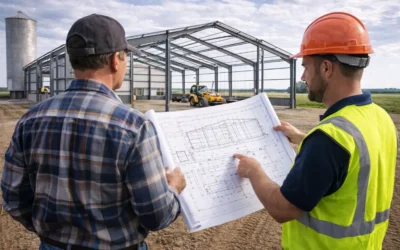
Questions Farmers Should Ask Before Building With Steel
Steel buildings have become the backbone of modern agricultural infrastructure across Canada. Many modern farm steel buildings are designed to accommodate equipment storage, livestock housing, and maintenance areas within the same structural system. From equipment...
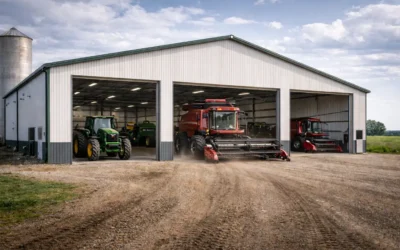
Steel Buildings for Farm Equipment Storage
Modern farming relies on equipment that represents significant capital investment. Agricultural equipment modernization trends are regularly analyzed by Agriculture and Agri-Food Canada which tracks technology adoption and machinery investment across the country....
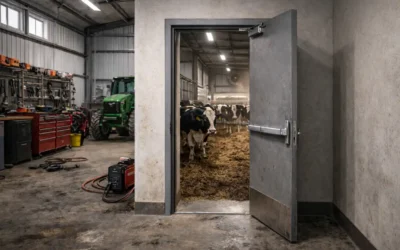
Fire Separation Rules for Farm Buildings and Mixed-Use Buildings
Fire separation is one of the most misunderstood design requirements in agricultural and mixed-use steel buildings. Many owners assume rural structures are exempt from fire protection standards or that open farm layouts eliminate the need for compartmentalization. In...
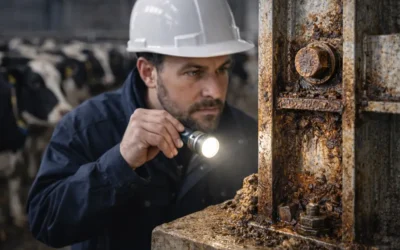
Ammonia Corrosion Risks in Livestock Steel Buildings
Steel buildings have become the preferred choice for modern livestock operations across Canada due to their strength, fire resistance, and long-term structural reliability. However, agricultural environments introduce chemical exposures that do not exist in most...
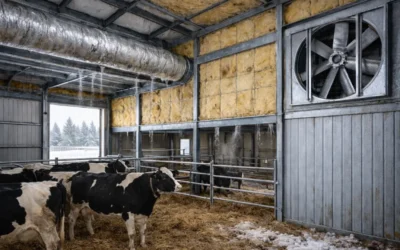
Ventilation vs Insulation in Livestock Steel Buildings
Why Both Systems Must Work Together for Long-Term Performance Livestock steel buildings operate under some of the most demanding moisture conditions in Canadian construction. Warm interior air, constant animal respiration, bedding moisture, and daily washdown routines...
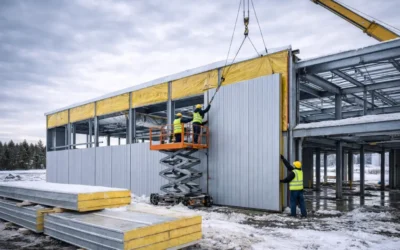
Energy Code Compliance for Commercial Steel Buildings
Energy performance has become one of the most influential design drivers in commercial construction across Canada. For steel building projects, energy code compliance now affects permitting approval, operational costs, building envelope design, insulation systems,...
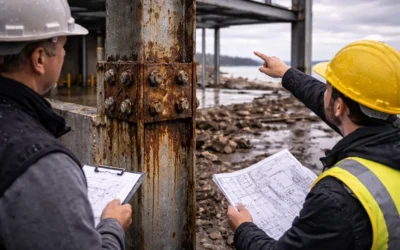
Corrosion Risks in Coastal and High-Moisture Areas
Steel buildings perform exceptionally well across Canada when properly engineered and protected. However, in coastal regions and high-moisture environments, corrosion becomes one of the most significant long-term risks affecting structural integrity, maintenance...
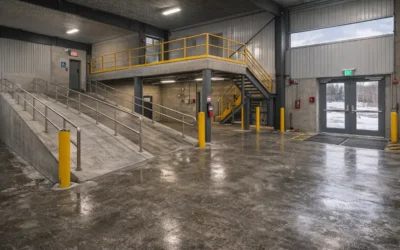
Accessibility and Egress Requirements for Commercial Steel Buildings
Commercial steel buildings are often selected for their flexibility, durability, and long-term operational value. However, no matter how well engineered a structure may be, it cannot be legally occupied or insured without meeting accessibility and egress requirements...
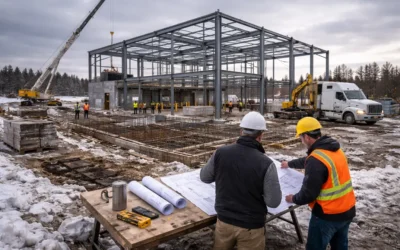
Turnkey vs Partial Steel Building Construction Explained
Steel buildings across Canada are used for warehouses, manufacturing facilities, agricultural operations, commercial spaces, and long-term asset development. Yet one of the most misunderstood decisions in a steel building project is not the size, insulation, or...
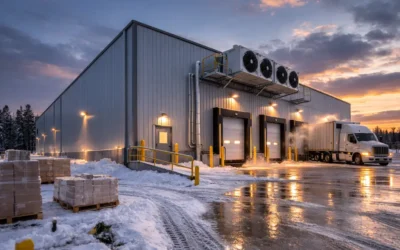
Steel Buildings for Cold Storage and Refrigeration
Cold storage facilities place some of the most demanding performance requirements on building structures in Canada. Unlike standard warehouses or industrial buildings, refrigerated environments must control temperature, moisture movement, structural loads, and energy...

Urban vs Rural Steel Building Approval Challenges
Steel buildings are used across Canada in everything from downtown commercial developments to remote agricultural operations. While the structural principles may be similar, the approval process for steel buildings can vary dramatically depending on whether a project...
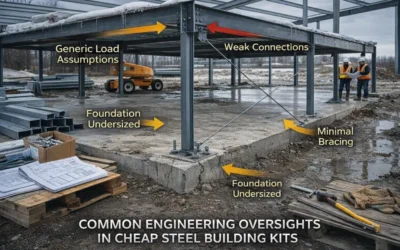
Common Engineering Oversights in Cheap Steel Building Kits
Steel building kits are often marketed as fast, affordable, and simple solutions for storage buildings, workshops, agricultural facilities, and even commercial structures. For some light-duty uses, kit systems can serve a purpose. However, many low-cost steel building...