One of the most common misunderstandings in steel building projects is the belief that thicker steel automatically means a stronger building. Buyers often compare quotes based on gauge numbers or steel thickness alone, assuming heavier material equals better...
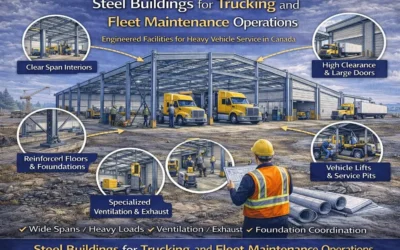
Steel Buildings for Trucking and Fleet Maintenance Operations
Trucking and fleet maintenance facilities place very different demands on a building than standard commercial or light industrial structures. These are high-use, heavy-load environments where vehicle size, traffic flow, maintenance workflow, and long-term durability...
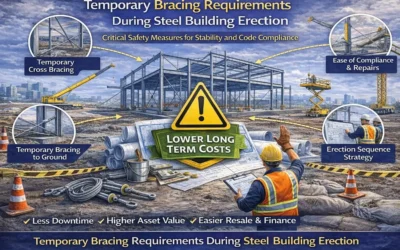
Temporary Bracing Requirements During Steel Building Erection
Temporary bracing is one of the most misunderstood and underestimated aspects of steel building construction. It rarely appears in marketing material, is often assumed to be “handled on site,” and is typically only noticed when something goes wrong. In reality,...
How Long-Term Maintenance Costs Affect Steel Building ROI
When buyers evaluate steel buildings, initial price often receives the most attention. That focus is understandable, but it is incomplete. For permanent steel buildings intended to operate for decades, long-term maintenance costs are one of the most significant...
Steel Building Lead Times and Their Impact on Total Project Cost
When buyers evaluate a steel building project, most focus on the quoted price of the structure itself. Size, clear span, insulation, doors, and finishes usually dominate early discussions. What often receives far less attention is lead time, even though it can quietly...
Ontario Climate Zones and How They Affect Steel Building Design
Ontario’s climate is not uniform, and that reality directly affects how steel buildings must be designed, engineered, and constructed. A steel building that performs well in Southern Ontario may face serious structural, condensation, or durability issues if the same...
Crane Access and Equipment Planning for Steel Building Erection
When buyers think about erecting a steel building, most attention goes to the structure itself. Frame spacing. Clear spans. Roof height. Door openings. What often gets overlooked is the logistics required to physically assemble that structure on site. Crane access and...
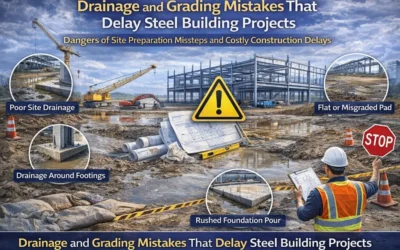
Drainage and Grading Mistakes That Delay Steel Building Projects
Drainage and grading issues are one of the most common reasons steel building projects stall after permits are issued. They are also among the most misunderstood. Many owners assume that once a site looks flat and dry, it is ready for foundations and steel delivery....
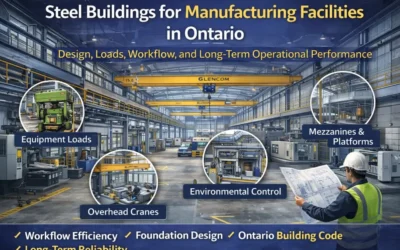
Steel Buildings for Manufacturing Facilities in Ontario
Design, Loads, Workflow, and Long-Term Operational Performance Manufacturing facilities are not generic buildings. They are working environments where structure, workflow, equipment loads, and long-term durability directly influence productivity, safety, and operating...
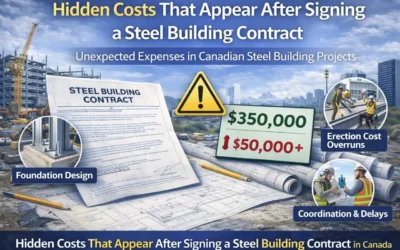
Hidden Costs That Appear After Signing a Steel Building Contract
Steel buildings are often chosen for their predictability. Pre-engineered systems promise efficiency, durability, and cost control. Yet many Canadian buyers discover additional expenses only after a steel building contract has been signed. These hidden costs in steel...
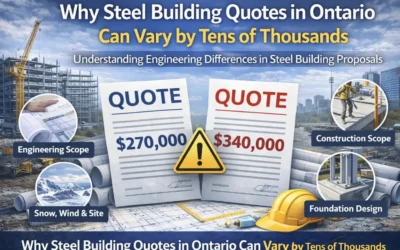
Why Steel Building Quotes in Ontario Can Vary by Tens of Thousands
If you have requested multiple steel building quotes in Ontario, you may have been surprised by how far apart the numbers can be. Two quotes for buildings with the same footprint and height can differ by tens of thousands of dollars, sometimes without an obvious...
How Design Changes Impact Steel Building Pricing
Design changes are one of the most common reasons steel building projects exceed their original budget. In most cases, the cost increase does not come from material price spikes or contractor behaviour. It comes from decisions made after pricing assumptions are...