Planning a steel building project in Ontario is not only an engineering exercise. It is also a zoning and land-use challenge that varies significantly from one municipality to another. While the Ontario Building Code establishes province-wide technical standards for safety and structural performance, zoning bylaws are local, and they often determine whether a steel building can be approved, how large it can be, and how it can be used.
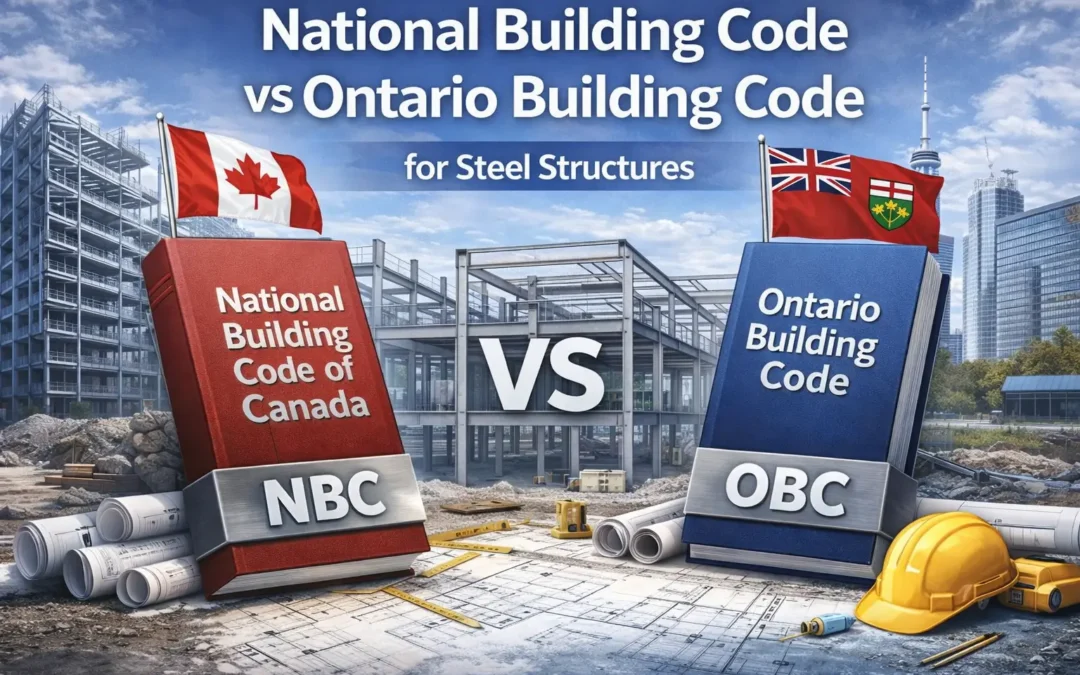
Technical requirements are defined in the Ontario Building Code official regulation.
Understanding zoning variation early is one of the most important steps in avoiding redesigns, delays, and unexpected cost increases on steel building projects across Ontario.
This evaluation should begin during site selection planning for steel buildings in Ontario.
Who This Article Is For
This article is intended for owners, developers, farmers, and business operators planning permanent steel buildings in Ontario where municipal approvals, inspections, and long-term use matter. It may not apply to temporary structures or lightly regulated accessory buildings where zoning review is minimal.
Zoning vs Building Code: Two Different Gatekeepers
A common misconception is that compliance with the Ontario Building Code is enough to move a steel building project forward. In practice, zoning approval usually comes first.
Municipal zoning authority is established under the Ontario Planning Act zoning framework.
Zoning bylaws regulate:
- Land use
- Building size and placement
- Height and coverage
- Parking, access, and buffering
- Permitted and conditional uses
The Ontario Building Code regulates:
- Structural safety
- Fire protection
- Life safety
- Energy efficiency
- Accessibility
A steel building can be fully code-compliant and still be rejected at the zoning stage if it does not meet local land-use rules.
This disconnect often occurs when zoning is reviewed separately from steel building design and engineering coordination.
Zoning vs Site Plan Control: Permission vs Implementation
For many owners, zoning and site plan control are often confused.
In simple terms:
- Zoning determines whether a building and its intended use are allowed on a property
- Site plan control governs how that approved use is physically implemented on the site
This process is authorized through Ontario municipal site plan control legislation.
Zoning answers the question, “Can I build this here?”
Site plan control answers, “How exactly will it function on this property?”
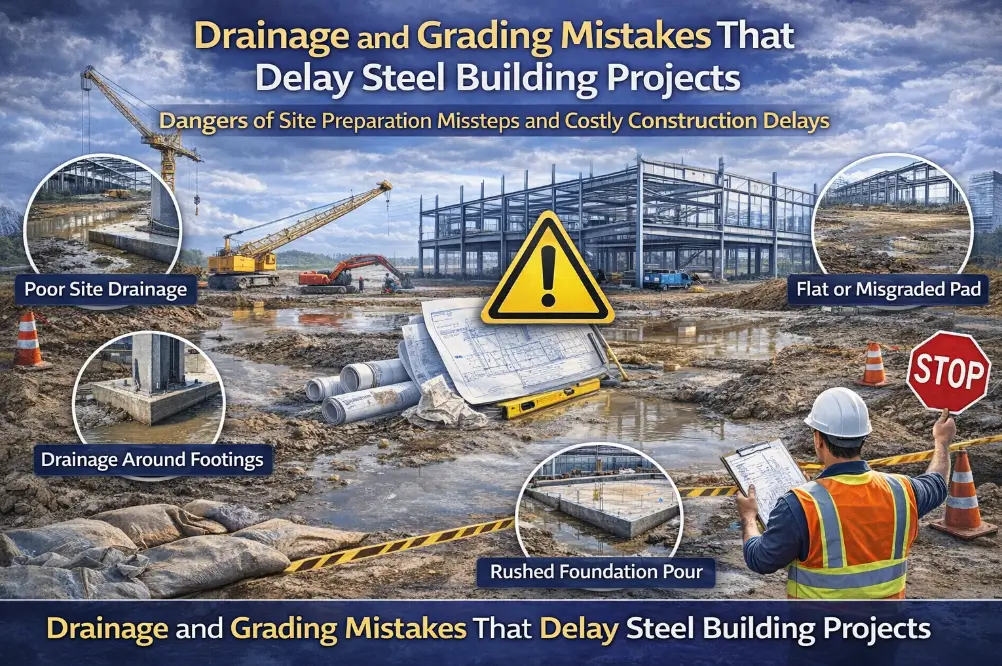
Steel building projects frequently pass zoning review but encounter delays during site plan approval due to loading layout, drainage, access routes, fire lanes, or building orientation. Understanding this distinction early prevents false assumptions that zoning approval equals construction readiness.
Why Zoning Variations Matter More for Steel Buildings
Steel buildings are often selected for their flexibility, clear spans, and scalability. That flexibility, however, can clash with zoning constraints if not addressed early.
Steel buildings frequently raise zoning questions because they are used for:
- Commercial and industrial operations
- Agricultural processing and storage
- Warehousing and logistics
- Fleet and equipment storage
- Mixed-use or expandable facilities
These uses are treated differently by different municipalities, even when projects are only a few kilometres apart.
A Common Early-Failure Scenario
Many zoning issues surface only after design effort has already been invested.
This typically indicates insufficient steel building project readiness planning before design begins.
For example, it is not uncommon for a steel warehouse to be structurally approved, only to be denied zoning clearance because the intended use was described as “storage” rather than “distribution.” In other cases, a building clears structural review but exceeds a municipal height limit by a small margin, triggering a minor variance. In some municipalities, loading bay requirements surface late and force site redesign after drawings are completed.
These are not engineering failures. They are zoning alignment failures.
Common Zoning Differences Across Ontario Municipalities
While every municipality has its own zoning bylaw, several recurring areas of variation affect steel building projects.
Permitted Uses and Use Definitions
One of the biggest sources of confusion is how a municipality defines a use.
For example:
- A warehouse in one municipality may be considered light industrial
- The same building in another municipality may be classified as storage, distribution, or logistics
- Agricultural steel buildings may be permitted outright in rural zones but restricted if processing or commercial activity is involved
Even minor differences in wording can trigger zoning interpretation requests, minor variances, or rezoning applications.
Building Height Limits
Steel buildings often achieve greater clear heights than conventional construction, which can create zoning conflicts.
Municipal height limits may:
- Measure height to roof peak or mean roof height
- Restrict clear height indirectly through overall height caps
- Vary between industrial, commercial, and rural zones
A structurally efficient steel building may still require redesign if zoning height limits are exceeded.
Lot Coverage and Building Footprint
Steel buildings are commonly designed for efficiency, which often means maximizing footprint. Zoning bylaws may limit:
- Maximum lot coverage percentage
- Building area relative to parcel size
- Accessory building size relative to primary use
This affects warehouse layouts, agricultural storage, fleet facilities, and multi-bay commercial structures.
Zoning-driven revisions frequently result in design changes that increase steel building pricing.
Setbacks and Spatial Separation
Setback requirements control how close a steel building can be to:
- Property lines
- Roads
- Watercourses
- Adjacent residential zones
These rules vary significantly and influence steel building placement, door orientation, and fire access planning.
Parking and Loading Requirements
Zoning bylaws often prescribe:
- Minimum parking ratios
- Loading dock quantities
- Truck maneuvering space
For steel warehouses and logistics facilities, loading requirements often influence building orientation more than structure.
Architectural and Aesthetic Controls
In many urban and employment areas, zoning or site plan control imposes architectural standards.
Steel buildings typically comply structurally but may require facade coordination to satisfy municipal design guidelines. This affects cladding systems, insulation assemblies, and trim rather than primary framing.
Rural vs Urban Municipal Differences
Rural municipalities often allow:
- Larger accessory steel buildings
- Agricultural steel structures with fewer restrictions
- Streamlined zoning review
Urban municipalities often require:
- Detailed site plan control
- Traffic and servicing studies
- Urban design review
- Public consultation for variances
Project planning timelines differ significantly as a result.
Minor Variances and When They Are Required
Many steel building projects encounter minor variances due to:
- Height exceedances
- Setback conflicts
- Lot coverage limits
- Use interpretation differences
A minor variance adds time and uncertainty, but many can be avoided with early zoning-aware design.
How Zoning Affects Steel Building Cost and Schedule
Zoning rarely changes steel tonnage, but it affects total project cost through:
- Redesign cycles
- Permit delays
- Holding costs
- Consultant fees
- Construction sequencing impacts
Most schedule delays blamed on steel supply originate earlier during zoning or site plan review.
These approval delays are a major contributor to construction risk in steel building projects.
Best Practices for Navigating Zoning Variation
Successful steel building projects across Ontario typically follow these principles:
- Confirm zoning classification before finalizing design
- Align use descriptions carefully with municipal definitions
- Coordinate site layout and building geometry together
- Plan realistically for municipal review timelines
- Avoid designing exactly to zoning limits without buffer
Why Zoning Knowledge Is a Competitive Advantage
Projects that move smoothly through municipal approvals are not lucky. They are planned.
Zoning fluency reduces more than approval delays. It reduces redesign risk, consultant churn, schedule uncertainty, and downstream construction disruption. Owners who treat zoning as a design input rather than an administrative hurdle experience more predictable outcomes and lower overall project risk.
Final Perspective
Steel buildings offer structural efficiency and adaptability, but in Ontario, zoning determines whether that efficiency can be realized.
Projects move most efficiently when zoning review is integrated with turnkey steel building project delivery. Municipal zoning does not limit good steel building projects. Lack of zoning awareness does.
Owners who align design, use, and site planning with municipal requirements early avoid unnecessary delays and protect long-term project value.
Reviewed by the Tower Steel Buildings Engineering Team
This article has been reviewed by the Tower Steel Buildings Engineering Team, bringing together practical experience from steel building design, municipal permitting, and project coordination across Ontario. The review reflects real-world zoning challenges encountered during planning, approvals, and construction of commercial, industrial, agricultural, and logistics steel buildings throughout the province.
1. How does zoning affect whether I can build a steel building in Ontario?
Zoning determines whether a steel building is permitted on a specific property, how large it can be, how tall it can be, and how it may be used. Even if a steel building meets the Ontario Building Code, it cannot proceed without zoning compliance or approved variances.
2. Can a steel building be denied even if it meets the Ontario Building Code?
Yes. The Ontario Building Code governs structural safety, not land use. A steel building can be structurally compliant and still be denied if zoning regulations related to use, height, setbacks, or lot coverage are not met.
3. Are zoning rules the same across all Ontario municipalities?
No. Zoning bylaws are written and enforced at the municipal level. Definitions, permitted uses, height limits, and site requirements can vary significantly between municipalities, even within the same region.
4. What is the difference between zoning approval and site plan approval?
Zoning approval determines whether a building and its intended use are allowed on a property. Site plan approval governs how that approved building is implemented, including access, drainage, loading areas, fire routes, and building placement.
5. Do agricultural steel buildings still require zoning approval in Ontario?
Yes. While many agricultural steel buildings are permitted in rural zones, zoning approval is still required. Additional review may apply if the building supports processing, commercial activity, or non-farm uses.
6. Why do loading docks and parking often trigger zoning or site plan issues?
Many municipalities regulate loading docks, parking ratios, and truck circulation separately from structural design. These requirements often affect building orientation and site layout and can delay approvals if not addressed early.
7. What happens if my steel building exceeds a zoning height limit by a small amount?
Even small height exceedances can trigger a minor variance process. This adds time, public notice requirements, and uncertainty. Designing with a margin below zoning limits can help avoid this.
8. Can zoning issues delay steel building construction schedules?
Yes. Zoning and site plan delays are among the most common causes of project schedule extensions. Most erection delays originate before steel arrives on site due to unresolved municipal approvals.
9. Who is responsible for zoning compliance on a steel building project?
Ultimately, the property owner is responsible, but successful projects involve early coordination between the owner, designer, steel supplier, and planning consultants to ensure zoning requirements are addressed before final design.
10. How early should zoning be reviewed in a steel building project?
Zoning should be reviewed before finalizing building size, height, use description, or site layout. Early zoning alignment prevents redesign, resubmissions, and unexpected cost escalation later in the project.
11. Do zoning requirements affect steel building cost?
Indirectly, yes. Zoning-driven redesigns, site plan changes, or variances can increase professional fees, extend timelines, and introduce construction inefficiencies that affect total project cost.
12. Why is zoning knowledge considered a competitive advantage in steel construction?
Because smoother approvals are planned, not accidental. Teams that understand zoning constraints early reduce risk, avoid delays, and deliver more predictable outcomes across Ontario municipalities.